The border search exception allows border officials to conduct searches without warrants or suspicion because borders are seen as special areas where security interests outweigh privacy rights. This applies to belongings, digital devices, and even smartphones, depending on circumstances. While courts support broad authority at borders, rulings vary on digital searches, sometimes requiring suspicion or warrants. To understand how these rules affect you and your rights, keep exploring these legal boundaries further.

Get smart everyday buys delivered free — and shop member deals
- Fast, free delivery on millions of items
- Access to Prime Big Deal Days deals on October 6–7
- Prime Video, Amazon Music and more included
Key Takeaways
- Warrantless border searches are permitted because borders are considered zones of exclusive government control with relaxed Fourth Amendment protections.
- Routine searches of belongings and digital devices at borders generally do not require warrants or suspicion.
- Courts have upheld warrantless searches at borders, citing national security interests outweigh privacy rights.
- Searches of electronic devices may sometimes require reasonable suspicion or warrants, depending on jurisdiction and case specifics.
- The border search exception prioritizes border security, allowing searches without warrants unless specific legal limits apply.
As an affiliate, we earn on qualifying purchases.
The Foundations of the Border Search Exception

The border search exception is rooted in the recognition that borders and entry points are unique areas where law enforcement can conduct searches without the usual Fourth Amendment protections. Courts have long acknowledged that the government’s interest in security outweighs individual privacy at these entry points. This exception allows officers to perform routine searches of your belongings and digital devices without needing a warrant or individualized suspicion. The Supreme Court has upheld this principle in cases like United States v. Ramsey and United States v. Flores-Montano, emphasizing the border’s special status. Because borders are considered zones of exclusive governmental control, law enforcement has broader authority to search and seize, prioritizing border security over the privacy expectations that normally govern searches elsewhere. Additionally, this area’s status as a high-security zone means that legal protections are intentionally relaxed to facilitate border enforcement. Recognizing the importance of border security helps justify the broad scope of permissible searches at these points. This legal framework balances individual rights with the security needs inherent in protecting national borders. Furthermore, courts have recognized that the border search exception is necessary to maintain the effectiveness of border enforcement efforts. The ability to conduct searches swiftly at borders is also linked to the preventive approach that aims to deter illegal activities before they occur.
As an affiliate, we earn on qualifying purchases.
Legal Rulings Shaping Border Searches
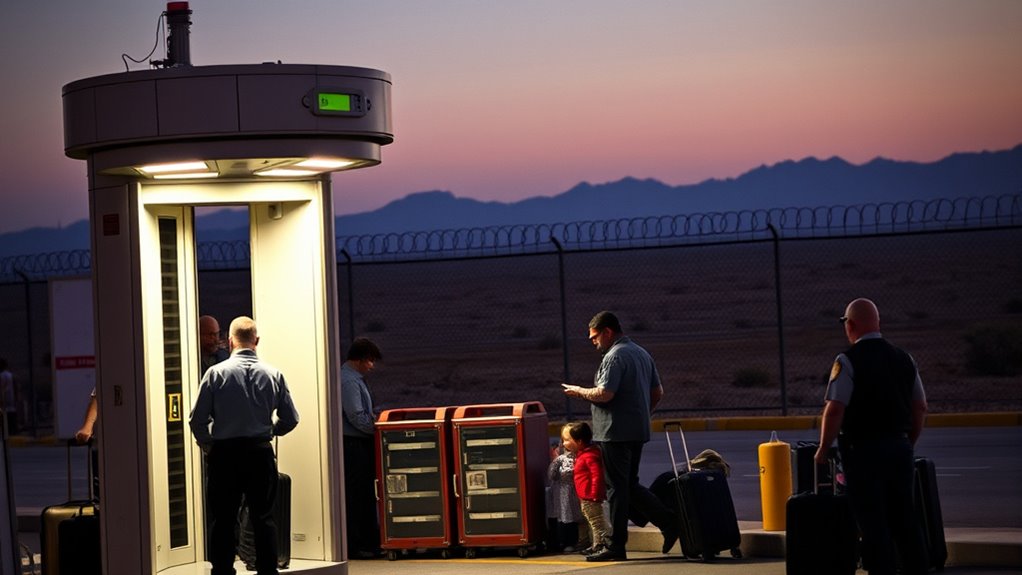
Legal rulings by the Supreme Court and federal circuits have firmly established the boundaries of the border search exception. The Court has recognized the border as a “special” area where law enforcement can conduct searches without warrants or individualized suspicion, citing national security interests. In United States v. Ramsey (1977) and United States v. Flores-Montano (2004), the Court upheld warrantless searches at borders, affirming their routine nature. However, recent cases like Sultanov challenge whether digital device searches qualify as “routine,” suggesting heightened standards. Circuits differ on the scope: some permit searches based on reasonable suspicion, especially for electronic devices, while others require warrants. These rulings reflect ongoing debates over privacy and security in the digital age, particularly as AI-enabled tools increasingly impact how searches are conducted and scrutinized.
As an affiliate, we earn on qualifying purchases.
Digital Devices and the Scope of Warrantless Searches

As border enforcement agencies inspect electronic devices, they often do so without warrants or individualized suspicion, citing the border search exception. This means your smartphones, laptops, tablets, and storage devices can be searched at the border without prior approval. Courts differ on how far this extends; some limit searches to digital contraband, while others permit broader searches if there’s reasonable suspicion of any crime. Recent rulings question whether such searches are truly routine, especially given the vast personal data stored on modern devices. The government argues that digital searches are necessary for security, but privacy advocates warn they threaten individual rights. As technology evolves, courts are increasingly scrutinizing these searches, raising questions about the balance between safety and privacy at our borders. Additionally, understanding the subconscious power during sleep can help travelers and border agents alike manage stress and maintain a clear mindset during inspections. Moreover, courts are considering the impact of digital privacy rights in these legal debates, emphasizing the need for clear guidelines. Recognizing the importance of technological advances highlights the ongoing debate over the extent of permissible searches without a warrant. Furthermore, the integration of cybersecurity principles into legal frameworks could influence future border search policies. It is also crucial to consider how personal data protection is evolving in response to these legal challenges.
travel security RFID blocking wallet
As an affiliate, we earn on qualifying purchases.
As an affiliate, we earn on qualifying purchases.
Divergent Courts and Privacy Implications

Different federal courts interpret the scope of digital device searches at the border in ways that can considerably impact your privacy rights. Some courts, like the Ninth Circuit, limit searches to digital contraband, only allowing searches for evidence of specific crimes. Others, such as the Second Circuit, permit searches with reasonable suspicion of any criminal activity, broadening the intrusion. Meanwhile, courts like the Eastern District of New York require warrants before searching electronic devices, emphasizing privacy protections. This split creates uncertainty about what standards law enforcement must meet at the border. As a result, your privacy rights can vary depending on where you’re detained or questioned. The divergence highlights ongoing debates over digital privacy and security, with courts weighing the border’s unique status against modern privacy expectations. Additionally, the evolving tuning of legal standards reflects broader concerns about balancing national security with individual rights.
Navigating Privacy Rights at International Borders
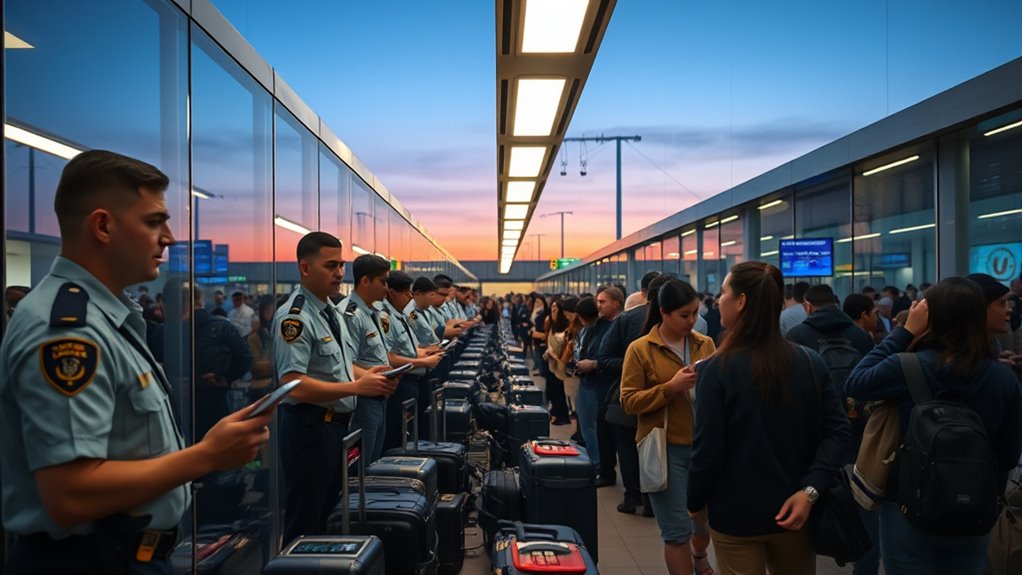
Managing your privacy rights at international borders can be complex, especially because law enforcement officials have broad authority to search your belongings without a warrant or suspicion. Customs agents often justify these searches by citing national security concerns, but this can feel invasive. You might wonder what rights you retain during border crossings. While courts recognize the border as a unique zone with fewer privacy protections, there are limits—particularly for digital devices. Recent rulings suggest that warrantless searches of phones and laptops could require suspicion or a warrant. Staying informed about your rights helps you navigate these encounters more confidently and understand when your privacy may be compromised. Additionally, understanding search and seizure laws related to border searches can help you better protect your digital privacy. Recognizing the differences in privacy expectations at borders compared to other settings is crucial for maintaining your rights. Being aware of digital privacy protections can also empower you to take steps to secure your information before crossing borders. For example, some legal frameworks indicate that meditation practices can help maintain a sense of calm and clarity during stressful border encounters. Moreover, knowing about privacy rights at borders can help you prepare and respond appropriately when faced with searches.
Frequently Asked Questions
Can Border Searches Ever Be Challenged Legally in Court?
Yes, border searches can be challenged in court, especially if authorities conduct highly intrusive searches or violate your privacy rights. You might argue that the search was unreasonable or exceeded the scope allowed under law, particularly for digital devices like smartphones. Courts are increasingly scrutinizing these searches, especially with digital data, and some require warrants or probable cause. Your challenge depends on the circumstances and jurisdiction, but legal avenues do exist.
How Do Digital Searches at Borders Impact Fourth Amendment Rights?
Think of your digital life as an open book, yet border searches threaten your privacy. When authorities search your devices without warrants, your Fourth Amendment rights are at risk, especially as courts debate whether such searches are “routine.” This intrusion can expose personal data, making you vulnerable. While security concerns justify some searches, you must remain vigilant, knowing that your digital privacy is increasingly challenged at international borders.
Are There Any Recent Changes to Border Search Policies?
Recent changes to border search policies include courts increasingly requiring warrants for digital device searches, especially outside the border or at interior checkpoints. Some jurisdictions, like the Eastern District of New York, now demand probable cause before searching electronic devices. These developments reflect growing privacy concerns and judicial scrutiny, signaling a shift toward stricter standards. However, there’s no uniform national policy yet, so legal standards continue to evolve in response to technological advances.
What Specific Digital Data Can Authorities Access During Border Searches?
During border searches, authorities can access digital data like photos, emails, contacts, browsing history, and app data on your smartphones, laptops, and tablets. They may also examine storage devices and cloud backups. While some courts limit searches to contraband or suspicious activity, others permit broader access to personal information. You should be aware that digital data is increasingly scrutinized, and legal standards vary across jurisdictions, affecting what authorities can lawfully access.
How Do International Agreements Influence Border Search Practices?
You might think international agreements are just polite handshakes, but they actually shape border search practices profoundly. They often require cooperation, information sharing, and adherence to standards that can expand or limit your privacy rights. While these treaties aim to streamline security, they sometimes give customs officials extra leeway, allowing more invasive searches. So, your privacy at borders is not just a national matter—it’s influenced by global accords you rarely see.
Conclusion
As you navigate the border, remember that the border search exception often allows searches without warrants, much like a knight’s shield in medieval times. While it safeguards security, it also raises privacy questions, especially with digital devices. Courts remain divided, so stay informed about your rights. Think of it as a modern-day “Sting” — balancing security and privacy in a world where borders are ever more complex. Stay vigilant, and don’t let your digital castle be breached unguarded.
Fall Picks
fall essentials
As an affiliate, we earn on qualifying purchases.