

Choose a financial planning book that fits your current money goals, check that its guidance matches your circumstances, and turn its ideas into a short action plan. This guide is for beginners who want to use books to organize budgeting, debt repayment, saving, investing, or retirement planning. Allow 2-4 hours over several days to compare titles, read useful sections, and write down your next steps.

Get smart everyday buys delivered free with Prime
- Fast, free delivery on millions of items
- Prime Video, Amazon Music and more included
- Member-only deals all year

The Total Money Makeover Updated and Expanded: A Proven Plan for Financial Peace
- ✔ Author: Dave Ramsey
- ✔ Edition: Updated and expanded
- ✔ Subject: Personal finance
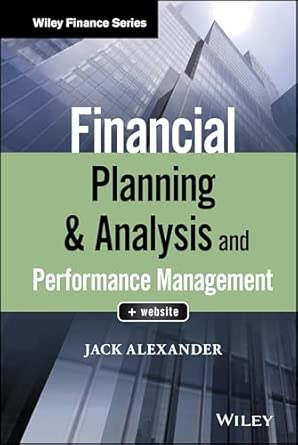
Financial Planning & Analysis and Performance Management (Wiley Finance)
- ✔ Series: Wiley Finance
- ✔ Subject: Financial planning and analysis
- ✔ Additional focus: Performance management
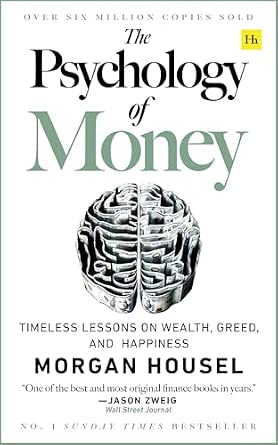
The Psychology of Money: Timeless lessons on wealth, greed, and happiness
- ✔ Author: Morgan Housel
- ✔ Subject: Money psychology
- ✔ Themes: Wealth, greed, and happiness
Difficulty: Beginner | Time: 2-4 hours over several days
What You’ll Need
Tools & Materials:
- Notebook or digital notes app
- Calculator or spreadsheet
- Access to a library, bookstore, or book retailer
Knowledge:
- Basic familiarity with your income, regular expenses, debts, and savings
- A general idea of the financial question you want to address
Gather approximate figures for monthly take-home income, essential spending, debt balances and interest rates, savings, and any employer retirement contributions. You do not need to share account numbers or other sensitive information with a book, website, or adviser.
The Total Money Makeover Updated and Expanded: A Proven Plan for Financial Peace
For readers who want a defined route through personal finances, The Total Money Makeover is the most direct fit in this lineup. Its title promises a proven plan, which makes it the natural starting point for people trying to organize debt reduction, saving, and everyday money decisions around a clear sequence. That emphasis gives it a more practical planning role than The Psychology of Money, which is centered on behavior, and makes it far more relevant to household finances than the corporate focus of Financial Planning & Analysis and Performance Management.That clarity is also its main tradeoff. A prescriptive framework can give readers momentum, but it may feel too rigid for people facing unusual income patterns, competing obligations, or goals that do not align with the approach. We should see it as a structured personal-finance starting point rather than a complete answer to every investing, tax, or retirement question. Readers who want to understand why people make different money choices may get more from Housel, while finance professionals need the specialized business-planning material in the Wiley title. For household readers who want a plan to follow, however, this is the strongest match.
Pros:
- Personal-finance focus aligns with household planning needs.
- A plan-centered approach can help readers turn intentions into steps.
- More directly actionable for individuals than the corporate FP&A reference.
- Updated and expanded edition framing signals a revised version.
Cons:
- A defined method may not fit every household’s constraints or priorities.
- Its focus should not be mistaken for comprehensive technical guidance across all financial topics.
- Readers seeking behavioral analysis may prefer The Psychology of Money.
Best for: Readers who want a clear, action-oriented framework for improving household money habits and working toward financial stability.
Not ideal for: Readers looking for advanced investment, tax, or retirement planning detail, or who prefer a flexible approach over a prescribed plan.
Bottom line: We recommend it first for readers who want a structured household finance plan and can work within a prescriptive approach.
“We recommend it first for readers who want a structured household finance plan and can work within a prescriptive approach.”
Financial Planning & Analysis and Performance Management (Wiley Finance)
This is the specialist choice in our comparison. Financial Planning & Analysis and Performance Management points toward organizational finance: planning and analyzing business results, supporting forecasts, and evaluating performance. That makes it a more relevant option for finance teams and professionals than either personal-finance title. It is not a household budgeting guide, and we should not choose it simply because its title contains the words “financial planning.”Compared with The Total Money Makeover, this book is aimed at decisions inside organizations rather than a reader’s personal balance sheet. Compared with The Psychology of Money, it appears more technical and work-focused, with less emphasis on personal behavior and broad money lessons. That specialization is its strength for the right reader, but it also narrows its audience substantially. Someone new to managing personal money may find its subject matter removed from immediate needs, while an experienced professional looking for a broad behavioral read may find Housel more approachable. We rank it third for this general roundup because its usefulness is high within its intended professional context but limited for most individual financial planning decisions.
Pros:
- Clearly oriented toward business finance and organizational planning.
- Distinct professional role fills a gap the two personal-finance books do not address.
- Useful framing for readers whose planning work involves forecasts and performance.
- Wiley Finance designation signals a specialist finance reference.
Cons:
- Its professional scope is a poor match for ordinary household financial planning.
- The title suggests a technical focus that may not suit casual readers.
- It does not replace behavioral guidance or an individual action plan.
Best for: Finance professionals, analysts, and business readers seeking a reference centered on financial planning and performance management in organizations.
Not ideal for: Households seeking help with budgeting, debt, saving, or personal investing, and casual readers looking for an accessible money mindset book.
Bottom line: We would choose this specialist reference when our planning work concerns organizational finance rather than personal money decisions.
“We would choose this specialist reference when our planning work concerns organizational finance rather than personal money decisions.”
The Psychology of Money: Timeless lessons on wealth, greed, and happiness
The Psychology of Money takes the broadest, least procedural route through this group. Its subtitle centers wealth, greed, and happiness, pointing readers toward the attitudes and decisions that shape financial outcomes. That makes it a useful choice when our challenge is not simply knowing what to do, but understanding how emotions, expectations, and personal history can affect money choices. In contrast, The Total Money Makeover is the clearer pick for readers who want a defined plan, while the Wiley title speaks to business planning rather than personal behavior.Its broader lens is valuable, but it is not a substitute for a detailed planning manual. Readers who need a step-by-step household system may find Ramsey’s more structured approach easier to apply directly. Those who need professional methods for forecasting or performance management should look to Wiley instead. Housel’s book makes the most sense as a perspective-building read, particularly for people who want to reflect on how they approach wealth and risk. We place it between the two more specialized picks because its themes can resonate across a wide audience, even though readers still need another resource when they want concrete planning procedures.
Pros:
- Centers the human behavior and values that influence money decisions.
- Broader personal relevance than a corporate FP&A reference.
- Pairs well with a more procedural household finance guide.
- Offers a distinct perspective from the plan-first approach of The Total Money Makeover.
Cons:
- Not positioned as a detailed budgeting or debt-reduction manual.
- Does not address organizational performance planning like the Wiley title.
- Readers seeking technical financial instructions may need a more specialized resource.
Best for: Readers who want to think more carefully about the behavioral and emotional side of wealth and financial decision-making.
Not ideal for: Readers who need a step-by-step debt or budgeting plan, or a technical reference for business finance.
Bottom line: We recommend it for readers who want a more thoughtful perspective on money behavior, with a separate guide for detailed planning steps.
“We recommend it for readers who want a more thoughtful perspective on money behavior, with a separate guide for detailed planning steps.”
As an Amazon Associate we earn from qualifying purchases.
Before You Start
Write down one main goal before browsing. A book on investing may not help if your immediate task is getting current on bills or building a spending plan. Treat broad advice as educational, since tax rules, investment accounts, benefits, and consumer protections vary by location and change over time. For decisions involving substantial assets, tax consequences, or complex debt, check current local guidance or consult a qualified professional.
Step-by-Step Instructions
Step 1: Define the question you want to solve
Write one sentence describing the money task in front of you, such as “I want to make a monthly budget I can follow” or “I want to understand my retirement account choices.” Add a target date or a practical result if you can. Keep the first goal narrow enough that one book could help you make progress.
Tip:If several problems compete for attention, list them and choose the one with the nearest deadline or the greatest effect on your financial stability.
Check: You have one specific question and can describe what a useful answer would let you do.
Step 2: Choose the right category of book
Match your question to a book category. Look for budgeting and cash-flow guidance for tracking income and spending; debt books for repayment strategies; saving books for emergency funds and goals; investing books for asset allocation and long-term risk; or retirement books for income planning and account decisions. Choose a general personal finance book only if you need a broad starting point.
Tip:Check the publication date when the book discusses tax limits, interest rates, account rules, or specific financial products. Use a current official source to confirm details that may have changed.
Check: The book’s stated focus addresses your main question rather than merely mentioning it in passing.
Read the author biography, introduction, table of contents, and a sample chapter. Look for relevant experience or clearly explained research, transparent assumptions, and advice that distinguishes general principles from personal recommendations. Check whether the book promotes a product, paid service, or single strategy as the answer to every problem.
Tip:Be cautious with promises of guaranteed returns, rapid debt elimination without trade-offs, or claims that one investment works for everyone.
Check: You can explain who wrote the book, what perspective it takes, and whether any commercial interest may shape its recommendations.
Step 4: Compare a short list of titles
Select two or three possible books and compare their contents, intended audience, publication dates, and sample pages. Read a few reviews for patterns about clarity and usefulness, but do not treat ratings as proof that financial claims are sound. Prefer the title that answers your specific question in language you can follow.
Tip:Borrowing through a library lets you inspect a book before buying it. Check whether the book is written for your country; account names, tax treatment, and legal protections may differ.
Check: You have selected one book and can name the chapter or section most likely to help with your goal.
Step 5: Read the sections that serve your goal
Start with the introduction and the relevant chapter instead of trying to memorize the entire book. Mark the author’s main recommendation, the assumptions behind it, and any steps that fit your situation. Record questions where the advice depends on facts you have not checked, such as your interest rate, workplace benefits, or local tax rules.
Tip:Separate the book’s general principles from specific product names, forecasts, and examples. Those details can become outdated or may not apply to you.
Check: Your notes contain a few clear ideas, plus any facts you need to verify before acting.
Step 6: Check advice against your own numbers
Use your notes, calculator, or spreadsheet to compare the book’s example with your actual income, expenses, debts, savings, and time horizon. Test the recommendation with realistic figures. For example, if a debt strategy requires extra monthly payments, check whether you can make them after covering essentials and minimum payments.
Tip:Do not copy example budgets or investment percentages without checking local costs, account terms, fees, taxes, and your ability to handle losses.
Check: You can state which parts of the recommendation fit your circumstances and which need more information.
Step 7: Verify time-sensitive and high-impact details
Confirm current tax rules, contribution limits, interest rates, account fees, and eligibility requirements with relevant official sources or your financial institution. For consequential choices, such as selling investments, withdrawing retirement savings, or changing a debt agreement, compare the book’s advice with qualified local guidance before committing.
Tip:A book can explain concepts and questions to ask; it may not account for your full financial or legal situation.
Check: You have checked the facts that could materially change the recommendation and know where the information came from.
Step 8: Turn the useful advice into a small plan
Write down up to three actions, each with a deadline and a way to measure completion. Examples include recording expenses for one month, comparing debt interest rates, setting an automatic savings transfer, or reviewing workplace retirement fees. Start with a step you can complete soon, and note what information or support it requires.
Tip:Keep the plan manageable. A practical first action is more useful than a long list of changes you cannot maintain.
Check: Each action has a clear next move, a time frame, and a visible way to tell whether you completed it.
Common Mistakes to Avoid
- Choosing a book because it is popular, even though it addresses a different financial problem. — Define your main question first, then compare the book’s contents and sample chapter against it.
- Following outdated account, tax, or investment details as if they still apply. — Check publication dates and confirm time-sensitive facts with current official or provider sources.
- Applying a sample plan without checking whether its assumptions fit your income, costs, debts, or location. — Run the recommendation against your own figures and identify details that require local advice.
Troubleshooting
Problem: The book uses unfamiliar financial terms.
Solution: Write down each term, use the book’s glossary, and consult a reliable educational source. Choose a more introductory book if key ideas remain unclear.
Problem: The advice conflicts with another book or source.
Solution: Compare the assumptions, intended audience, publication date, and incentives behind each recommendation. Verify current rules and avoid acting on a high-impact choice until you understand the difference.
Problem: You finish a chapter but do not know what to do next.
Solution: Restate the chapter’s recommendation in your own words, list the information it depends on, and choose one small action that can be completed or verified.
What Success Looks Like
You have selected a book suited to a specific financial question, evaluated its author and claims, checked relevant advice against your own circumstances, and written a short action plan with deadlines. You can identify which recommendations are ready to use and which require current information or professional guidance.
Next Steps
Complete the first action on your plan and record the result. Review progress after a month or at the deadline you set, then update the figures and choose another task if needed. Keep your notes with your budget or financial records, and revisit book recommendations when rules, fees, income, or goals change.
Frequently Asked Questions
Should I read a financial planning book cover to cover?
Not always. Start with the introduction and the chapters related to your goal. Read further when a recommendation depends on ideas explained elsewhere in the book.
How can I tell whether a financial planning book is trustworthy?
Check the author’s background, the sources and assumptions behind claims, the publication date, and whether the book sells or promotes a product. Treat guaranteed results and universal investment promises with caution.
Can one book tell me exactly how to invest?
A book can explain concepts and help you form questions, but it usually cannot account for your full financial situation, local rules, risk tolerance, and time horizon. Verify current details before making investment decisions.
What should I do if the book is written for another country?
Use it for general concepts, then verify account types, taxes, consumer protections, and product rules with current sources in your own country. Do not assume that local examples transfer directly.
Fall Picks

Samsung Essential S3 27-Inch FHD Curved Monitor (S36GD)
As an affiliate, we earn on qualifying purchases.