

Beginners comparing The Psychology of Money and I Will Teach You to Be Rich are choosing between two different ways to get financially organized. Morgan Housel’s book explores the behavior, luck, risk, and long-term thinking behind money decisions. Ramit Sethi’s book turns personal finance into a set of actions, including managing accounts, paying down debt, investing, and spending intentionally.

Get smart everyday buys delivered free with Prime
- Fast, free delivery on millions of items
- Prime Video, Amazon Music and more included
- Member-only deals all year

Personal Finance For Dummies
- ✔ Format: Book
- ✔ Primary subject: Personal finance
- ✔ Stated audience: General readers
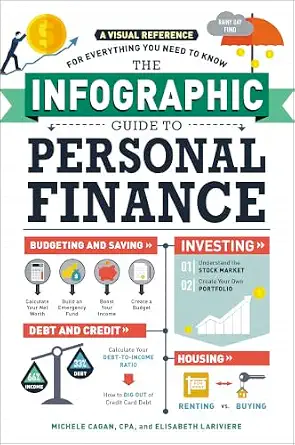
The Infographic Guide to Personal Finance: A Visual Reference for Everything You Need to Know
- ✔ Format: Visual reference guide
- ✔ Primary subject: Personal finance
- ✔ Series: Infographic Guide Series

Financial Literacy for Young Adults Simplified
- ✔ Format: Book
- ✔ Primary subject: Financial literacy
- ✔ Stated audience: Young adults
The main tradeoff is reflection versus implementation. Housel is the stronger first choice for readers who want to understand why financial decisions go wrong and build patience. Sethi is the better fit for readers who want a plan they can start following. Both can help beginners, but the more useful one depends on whether the immediate need is perspective or a working money system.
At a Glance
| Criteria | The Psychology of Money by Morgan Housel | I Will Teach You to Be Rich by Ramit Sethi | Winner |
|---|---|---|---|
| Practical action plan | Principles and examples; few step-by-step setup instructions | Clear system for organizing accounts, debt, saving, and investing | B |
| Money behavior and mindset | Strong focus on risk, patience, luck, and personal behavior | Encourages conscious spending and behavior change | A |
| Coverage of everyday finances | Broad ideas about saving, wealth, and financial choices | Covers multiple personal finance tasks in one framework | B |
| Beginner accessibility | Readable essays with little technical knowledge required | Direct, conversational guidance with more actions to complete | Tie |
| Investing guidance | General principles rather than a detailed investing setup | More applied guidance, though details can date | B |
| Long-term relevance | Timeless behavioral lessons, though not a current how-to manual | Useful framework, but readers should check current financial rules | A |
| Value for money | Good value for insight; may need a practical companion | Strong value when readers put its system into practice | Depends |
Personal Finance For Dummies
Personal Finance For Dummies leads this comparison because its title makes the broadest promise for someone new to personal finance. A beginner often needs an entry point that can orient them across money decisions rather than focus on one age group or one presentation style. Of these three listings, this is the most natural first candidate for that role. However, the supplied product information offers no chapter list or topic breakdown, so we should not assume it provides a complete financial plan or covers every subject a reader needs.Compared with The Infographic Guide to Personal Finance, this pick is less explicit about how information is presented; readers choosing between them should check whether they want a conventional guide or a visual reference. Compared with Financial Literacy for Young Adults Simplified, it appears less age-specific and may make more sense for an adult beginner whose priorities are not limited to early adulthood. The drawback is that the listing gives us little to assess beyond its general subject and title, so readers seeking a defined focus or confirmed step-by-step instruction should inspect the contents before buying.
Pros:
- Broad personal-finance framing suits readers who are still identifying their main planning questions.
- Its general audience positioning is less restrictive than the young-adult-specific alternative.
- A straightforward candidate to compare against more specialized formats.
- May work as a single starting point if its contents match the reader’s needs.
Cons:
- The supplied description gives no confirmed topic list or learning features.
- The listing does not establish whether it offers practical exercises or a step-by-step plan.
- Its broad framing may feel less tailored than the young-adult guide.
Best for: Beginners who want a broadly framed personal-finance book and do not need a guide tailored to a particular age group.
Not ideal for: Readers who specifically want visual learning, confirmed chapter-level coverage, or a book explicitly written for young adults.
Bottom line: Choose this as our general-purpose starting candidate, then confirm its contents cover the money decisions you need to make.
“Choose this as our general-purpose starting candidate, then confirm its contents cover the money decisions you need to make.”
The Infographic Guide to Personal Finance: A Visual Reference for Everything You Need to Know
The Infographic Guide to Personal Finance is the format choice in this group. Its title describes a visual reference, which can be helpful for readers who want financial ideas organized in a graphic-led way instead of meeting every topic in dense prose. It belongs to the Infographic Guide Series, giving us a clear clue about its presentation. For a beginner who is intimidated by unfamiliar terms, that visual emphasis may make it easier to browse and revisit concepts.Against Personal Finance For Dummies, this option has a more distinctive stated format but a less clear indication of breadth in the supplied data: its subtitle makes a wide claim, yet no contents are provided to show how thoroughly topics are explained. Compared with Financial Literacy for Young Adults Simplified, it is not described as serving a particular age group, so the format rather than audience is its differentiator. The main tradeoff is that a visual reference may not be the best fit for readers who want sustained explanations, practice exercises, or a detailed sequence for putting a plan into action. Those features are not confirmed here.
Pros:
- The visual-reference approach is clearly signaled by the title.
- Series placement identifies it as part of a visual guide format.
- A distinct alternative to the more general framing of Personal Finance For Dummies.
- Its general personal-finance subject may appeal across age groups.
Cons:
- No supplied contents list confirms which planning topics are covered.
- The description does not establish the depth behind its broad subtitle.
- The available information does not confirm exercises or a sequential plan.
Best for: Beginners who prefer visual explanations and want a reference they can browse by topic.
Not ideal for: Readers who learn best from extended prose or need verified step-by-step financial planning instruction.
Bottom line: Pick this when visual presentation is your priority, while checking that its actual contents go deep enough for your planning needs.
“Pick this when visual presentation is your priority, while checking that its actual contents go deep enough for your planning needs.”
Financial Literacy for Young Adults Simplified
Financial Literacy for Young Adults Simplified is the most targeted pick here. The supplied description names young adults as its audience and identifies money management, saving, and investing as subject areas. That makes its intended reader easier to recognize than in the other listings: someone building independent financial habits early in adult life can start with topics that align with those decisions. Its specific audience is an advantage when it fits, rather than a reason to assume the material is more comprehensive.Compared with Personal Finance For Dummies, this book offers a clearer audience cue but may be less suitable for readers outside that group. Compared with The Infographic Guide to Personal Finance, its distinction is the stated focus and topic set, not a confirmed visual format. The description says it aims to help readers build a secure and independent financial future, but it does not provide chapter details or explain how the topics are taught. If you need a broad household plan or want to know whether it covers debt, taxes, insurance, or retirement, verify the contents first.
Pros:
- The intended audience is explicitly young adults.
- The description names money management, saving, and investing.
- Its focused framing can help readers with early-adult financial questions choose a relevant starting point.
- The stated aim connects financial literacy with independence.
Cons:
- The age-specific framing may be less relevant to older beginners.
- No chapter list or detailed explanation of the teaching approach is supplied.
- Coverage of debt, taxes, retirement, and other planning areas is not confirmed.
Best for: Young adults who want an introductory guide centered on managing money, saving, and investing.
Not ideal for: Readers seeking a broadly age-neutral reference or confirmed coverage beyond the listed topics.
Bottom line: Choose this over the broader guides when you are a young adult and its named topics match your first financial questions.
“Choose this over the broader guides when you are a young adult and its named topics match your first financial questions.”
As an Amazon Associate we earn from qualifying purchases.
Key Differences
The clearest difference is how each book helps a beginner move forward. The Psychology of Money uses short stories and observations to show why financial success depends on behavior as much as knowledge. It can help readers accept that risk, luck, and personal circumstances shape outcomes. Its advice is memorable, but readers looking for a checklist to open accounts or allocate savings will need another source.
I Will Teach You to Be Rich is designed to help readers take action across everyday financial tasks. It offers a framework for automating money, managing debt, investing, and spending on what matters to the reader. That practical breadth is useful when finances feel scattered, though account procedures, products, and rules can change. Readers should verify current details before acting.
The books are complementary, but if buying only one, match it to the problem at hand. Choose Housel if impulsive decisions, fear, or unrealistic expectations are the obstacle. Choose Sethi if the obstacle is not knowing what to do next. A beginner who wants both perspective and implementation could read Housel for context and then use Sethi’s framework as a starting plan.
Detailed Comparison
Practical action plan (I Will Teach You to Be Rich by Ramit Sethi wins — major)
I Will Teach You to Be Rich wins by a major margin for readers who want instructions they can put into practice. It addresses tasks such as organizing accounts, automating finances, handling debt, and investing. The Psychology of Money offers ideas that can change a reader’s approach, but it does not lay out an equivalent sequence of setup steps. In practice, Sethi is more likely to help a beginner leave the book with a money routine.
Money behavior and mindset (The Psychology of Money by Morgan Housel wins — moderate)
The Psychology of Money wins by a moderate margin. Its central strength is explaining how emotions, patience, luck, and risk affect decisions over time. Sethi also asks readers to think deliberately about spending, but his focus is more on applying a system. Readers who know the mechanics yet struggle to stick with a plan may get more from Housel’s perspective.
Coverage of everyday finances (I Will Teach You to Be Rich by Ramit Sethi wins — moderate)
I Will Teach You to Be Rich wins by a moderate margin because it connects several parts of personal finance in one practical framework. Housel discusses saving, wealth, and financial choices at a broader level, rather than walking through common tasks. A beginner seeking guidance across day-to-day money management will find Sethi’s coverage more immediately useful.
Beginner accessibility (minor difference)
This is a tie. Both are written for general readers and do not require financial expertise. Housel’s short, self-contained chapters can be easier to read a little at a time. Sethi’s direct style can suit readers who prefer explicit instructions, though its action-oriented approach requires more follow-through. The better fit depends on whether a beginner prefers reflection or tasks.
Investing guidance (I Will Teach You to Be Rich by Ramit Sethi wins — moderate)
I Will Teach You to Be Rich wins by a moderate margin for applied guidance, because it places investing within a broader personal finance system. Housel offers useful perspective on long horizons, risk, and staying invested, but not a detailed account setup or investment walkthrough. Neither book should replace current, situation-specific financial guidance; product and tax details can change.
Long-term relevance (The Psychology of Money by Morgan Housel wins — minor)
The Psychology of Money wins by a minor margin. Lessons about patience, risk, and human behavior tend to remain useful even as financial products change. Sethi’s overall framework can still help, but specific processes and recommendations may need checking against current rules and offerings. Readers can preserve the value of either book by treating time-sensitive details as a starting point, not a permanent rule.
Value for money (moderate difference)
The winner depends on what the reader will use. Sethi offers stronger practical value if its system prompts concrete changes to saving, debt, and investing. Housel can be better value for a reader who needs a lasting shift in how they think about risk and wealth. If a reader already has a workable financial routine, paying for another action plan may add less than gaining a new perspective.
The Psychology of Money by Morgan Housel: Pros and Cons
Pros:
- Clear, memorable lessons about behavior, risk, luck, and patience
- Short chapters make it easy to read in stages
- Many ideas remain useful as financial products change
Cons:
- Does not provide a detailed step-by-step financial setup
- Readers may need a second book or trusted current resource to act on its ideas
- Its story-led approach may feel indirect to someone seeking immediate tasks
I Will Teach You to Be Rich by Ramit Sethi: Pros and Cons
Pros:
- Gives readers an actionable framework for several money tasks
- Connects saving, debt, accounts, investing, and intentional spending
- Can help turn a vague goal into a routine
Cons:
- Some procedures or product details may need updating
- Readers who want broad reflection may find the system-focused approach less compelling
- A plan only helps if the reader adapts it to their finances and follows through
Who Should Choose What
Choose The Psychology of Money by Morgan Housel if:
- You want to understand the habits and emotions that shape your financial choices.
- You have basic money knowledge but struggle with patience, risk, or consistency.
- You prefer reflective chapters over a sequence of financial tasks.
Choose I Will Teach You to Be Rich by Ramit Sethi if:
- You want a concrete starting framework for organizing and automating your finances.
- You are unsure how to connect saving, debt management, and investing into a routine.
- You learn best from direct guidance and are ready to take action as you read.
Skip both if: Your immediate need is personalized help with taxes, legal or estate decisions, complex debt, or investment choices tied to your circumstances; use a qualified professional or current, authoritative guidance for those decisions.
Value for Money
At typical book prices, either title can be a modest investment, but the value comes from what changes afterward. Paying for I Will Teach You to Be Rich makes sense if you will use its framework to organize accounts, automate saving, and make a plan for debt and investing. Its practical breadth can save a beginner time, although current procedures and rules still need checking.
Paying for The Psychology of Money makes sense if your main barrier is how you respond to uncertainty or make decisions. Its lessons are less like a workbook and more like durable context for choices you will face repeatedly. If you already have a solid system, that perspective may be a better use of your money. For a reader needing both, buying both is reasonable over time; start with the one that addresses the current obstacle rather than treating two books as a substitute for taking action.
Final Verdict
For most beginners who want to get their finances organized, choose I Will Teach You to Be Rich. It is the more useful single starting point when the next step is unclear because it connects several practical tasks into one framework. Check time-sensitive details against current sources and adapt the plan to your circumstances.
Choose The Psychology of Money if your finances are already organized but your decisions are often driven by fear, impatience, or unrealistic expectations. The biggest deciding factor is whether you need a system to follow or a better way to think about money. If you want actions, pick Sethi; if you want perspective that can improve your choices over time, pick Housel.
Frequently Asked Questions
Which book should a beginner read first?
Read I Will Teach You to Be Rich first if you need concrete steps for organizing your finances. Read The Psychology of Money first if you want to understand your habits around risk, saving, and spending.
Is The Psychology of Money a practical personal finance guide?
It is practical as a guide to judgment and financial behavior, but it is not a detailed how-to manual for setting up accounts, managing debt, or choosing investments. Pair its ideas with a current source when you need specific steps.
Does I Will Teach You to Be Rich explain investing for beginners?
It includes applied investing guidance within a larger money-management framework. Treat specific processes and recommendations as material to verify, since available products and financial rules can change.
Is it worth reading both books?
Yes, if you want both a practical routine and a stronger understanding of the behavior behind money decisions. Start with the book that addresses your most immediate gap, then use the other to fill in what is missing.
Halloween Picks
halloween
As an affiliate, we earn on qualifying purchases.