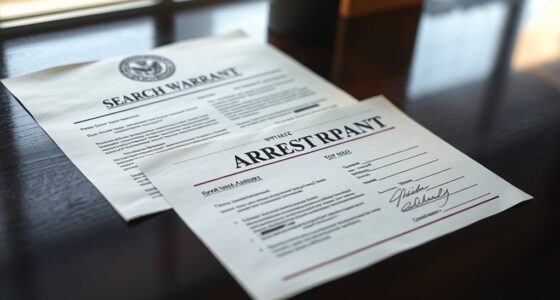

When a warrant is served at your home, you have the right to see the warrant first, which should specify what and where they can search. Police will typically announce themselves and explain their purpose. You should cooperate politely, ask to see the warrant if it’s unclear, and avoid interfering. Stay calm and observe their actions while understanding your rights. If you’re curious about what happens next or how to protect yourself, keep exploring this topic further.

Get smart everyday buys delivered free with Prime
- Fast, free delivery on millions of items
- Prime Video, Amazon Music and more included
- Member-only deals all year
Key Takeaways
- Police typically announce themselves and present the warrant before conducting the search.
- The warrant specifies the areas and items law enforcement is authorized to search and seize.
- Residents have the right to see and review the warrant before entry or search begins.
- During the search, residents should remain present, observe, and document the process respectfully.
- After the search, residents can ask about charges, legal rights, and consult an attorney if necessary.

Receiving a warrant at your home can be an overwhelming experience, but understanding what’s happening can help you respond effectively. When law enforcement officers arrive with a warrant, it’s important to stay calm and remember that you have legal rights. Knowing these rights allows you to handle the situation confidently and guarantees that police procedures are followed appropriately. Typically, officers will present the warrant before entering your home, and you have the right to see it. The warrant should specify the area to be searched and what they’re looking for. If it’s unclear or if the officers don’t produce the warrant, you can politely ask to see it before allowing entry.
Your immediate response should be to remain calm and avoid any aggressive or confrontational behavior. You don’t have to consent to a search beyond what’s specified in the warrant, and you’re entitled to ask if you’re being detained or if you’re free to leave. If officers do begin the search, try to be present and observe what they’re doing, but don’t interfere. Remember, you’re within your rights to record or document the process if you wish, but do so respectfully and without obstructing law enforcement. It’s also helpful to familiarize yourself with police procedures, so you know what to expect during a warrant service. Additionally, understanding search and seizure laws can help you recognize if your rights are being infringed upon.
Police procedures during a warrant service are generally structured to ensure safety and legality. Officers will typically announce themselves and state their purpose before entering. They may ask for your identification and the identities of other household members. It’s crucial to cooperate politely, but you’re not required to answer questions beyond identifying yourself. If at any point you feel your rights are being violated, you can calmly state that you do not consent to the search and request legal counsel. Being aware of home security systems and how they can impact a search might also be useful, especially if you have surveillance in place. Knowing about cybersecurity vulnerabilities and how they can be exploited may help you understand potential risks associated with device security during law enforcement activities. You have the right to remain silent and to speak with an attorney before answering any questions.
Once the search is complete, officers may seize evidence or make arrests, depending on what’s outlined in the warrant and what they find. If you’re arrested, ask to be informed of the charges and remember that you have the right to legal representation. After the officers leave, review the situation carefully. If you believe your rights were violated, consider consulting a lawyer to discuss potential remedies. Overall, knowing your legal rights and understanding police procedures can help you navigate this challenging situation with confidence and protect your interests.
As an affiliate, we earn on qualifying purchases.
Frequently Asked Questions
Can Officers Search Areas Beyond the Warrant’s Scope?
When officers serve a warrant, they must stick to the search scope defined by the warrant. They can’t search areas beyond its limitations unless they obtain additional consent or a new warrant. If they do, the search could be deemed illegal, and any evidence found might be inadmissible in court. So, it’s essential for officers to follow warrant limitations strictly to avoid violating your rights.
What Rights Do Residents Have During a Home Warrant Service?
You have constitutional protections and privacy expectations that officers must respect during a home warrant service. You can calmly ask to see the warrant, and you have the right to remain silent. Officers can only search areas specified in the warrant, and you’re entitled to be present unless they have a separate court order. Stay aware of your rights and assert them politely for a smooth process.
Are Neighbors Allowed to Witness the Warrant Execution?
Neighbors are generally allowed to witness a warrant being served, as long as they’re not interfering with law enforcement’s actions. Their rights to witness the event depend on local laws, but usually, they can observe from a distance. If you want to witness a warrant being served, stay on public property and avoid interfering. Law enforcement may ask neighbors to step back for safety and privacy reasons.
What Should I Do if I Feel My Rights Are Violated?
If you feel your rights are violated during a warrant service, you should calmly state your concerns and refuse to consent to any searches beyond what’s legally authorized. Remember, your privacy expectations protect you, but illegal searches can lead to serious legal consequences. Contact an attorney immediately to review the situation. Staying silent and documenting everything can also help protect your rights if legal action becomes necessary.
How Long Does a Warrant Service Typically Take?
The warrant process usually takes anywhere from a few minutes to an hour, depending on the situation. Law enforcement follows legal procedures, ensuring they have proper authorization before serving it. During this time, officers may search your home and seize evidence if the warrant specifies. Stay calm, know your rights, and cooperate while being mindful of your legal options. If needed, consult an attorney promptly to understand your rights.
personal safety recording device
As an affiliate, we earn on qualifying purchases.
As an affiliate, we earn on qualifying purchases.
Conclusion
When a warrant is served at your home, it’s natural to feel overwhelmed, but knowing your rights can help you handle the situation better. Remember, studies show that about 80% of warrant executions involve some form of cooperation, which can influence the outcome. Stay calm, ask to see the warrant, and don’t hesitate to consult a lawyer. Being informed and respectful can make the process less stressful and guarantee your rights are protected.
As an affiliate, we earn on qualifying purchases.
legal rights during police search
As an affiliate, we earn on qualifying purchases.
As an affiliate, we earn on qualifying purchases.
Fall Picks
fall essentials
As an affiliate, we earn on qualifying purchases.