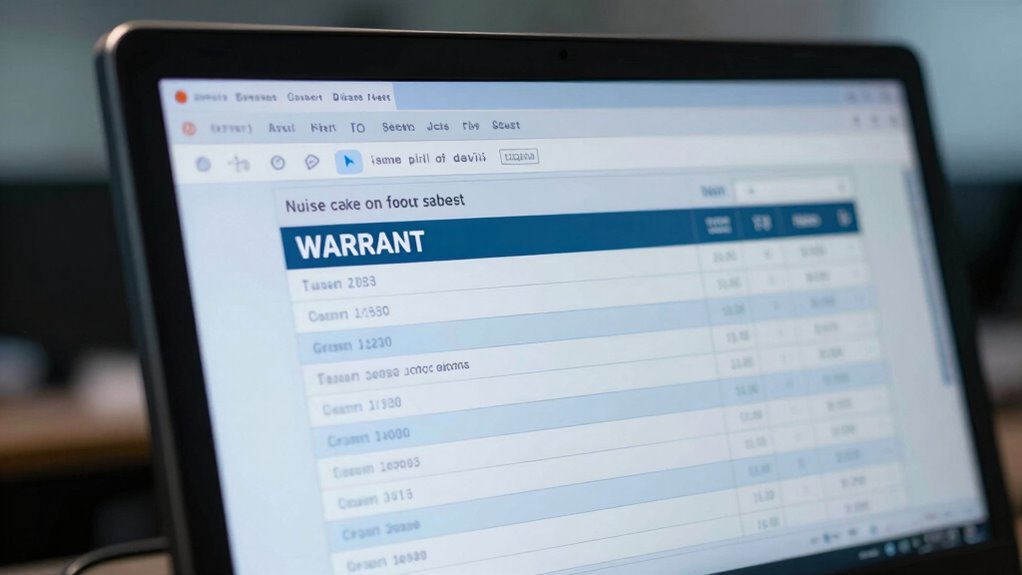

When a warrant is entered into a database, it means law enforcement officially records your legal status, making the warrant accessible across various agencies. This entry helps officers quickly identify if you have an active warrant during routine stops or investigations. It also updates your arrest records, affecting future legal or employment situations. Understanding how your warrant is logged shows how law enforcement monitors legal matters efficiently. Keep exploring to discover more about what this process really involves.

Get smart everyday buys delivered free with Prime
- Fast, free delivery on millions of items
- Prime Video, Amazon Music and more included
- Member-only deals all year
Key Takeaways
- It indicates that law enforcement has officially recorded the individual’s warrant in a legal database.
- The entry creates a permanent record accessible to police, courts, and other agencies.
- It updates the person’s legal profile with details like offense, case status, and issuance date.
- The database entry facilitates quick identification during arrests or routine stops.
- It signals ongoing monitoring and potential legal action if the warrant remains active.
Have you ever wondered what happens behind the scenes when a warrant is officially recorded? When a warrant gets entered into a database, it marks a formal step in the legal process, signaling that law enforcement authorities have identified a person of interest for an alleged crime or violation. This entry isn’t just a note; it becomes part of a larger system used by police, courts, and other agencies to track individuals involved in legal matters. Once a warrant is entered, it’s added to a centralized database that law enforcement can access quickly, allowing officers to check if someone has an outstanding warrant during routine stops or investigations.
When a warrant is recorded, it becomes part of a system used by law enforcement to track individuals involved in legal matters.
When a warrant is entered, it often relates to various reasons, such as failure to appear in court, probation violations, or suspicion of committing a crime. Probation violations are a common cause for warrants, especially when someone doesn’t adhere to the conditions set by the court. If you’re on probation and miss a scheduled meeting with your officer or fail a drug test, a warrant might be issued against you. Once this warrant is entered, it appears in the arrest records associated with your name, alerting law enforcement across jurisdictions. This means that even if you’re in another city or state, your warrant can be flagged during routine background checks or arrests.
The process of entering a warrant isn’t just about tracking offenders; it also involves updating arrest records, which serve as official documents recording your legal history. These records include details like the date the warrant was issued, the nature of the offense, and the status of the case. When a warrant is entered, it’s often linked to other records, such as court cases or probation details, creating an extensive picture of your legal standing. This interconnected system helps authorities ensure they’re aware of outstanding warrants when they’re making arrests or conducting investigations. Additionally, the system used for warrant entry often incorporates criminal record systems, which help streamline the identification process and improve law enforcement efficiency. Understanding how these systems work highlights the importance of timely legal compliance and the impact of arrest records on future legal and personal situations.
For you, understanding that a warrant is entered into a database highlights the importance of addressing legal issues promptly. Ignoring a warrant can escalate situations, leading to arrest, additional charges, or complications with your probation. It also means that your arrest records will reflect this warrant, which can affect your future background checks, employment opportunities, or even travel plans. So, when a warrant is recorded, it’s a clear indication that the legal system is actively monitoring your case, and it’s a reminder to handle your legal matters responsibly and promptly to avoid further complications.
As an affiliate, we earn on qualifying purchases.
Frequently Asked Questions
How Long Does a Warrant Stay in the Database?
A warrant stays in the database until it’s either executed, canceled, or expires. Warrant expiration varies depending on jurisdiction, but generally, if not acted upon within a certain period, it becomes invalid. Maintaining database accuracy is essential, so outdated warrants are removed or updated to prevent confusion. You should regularly check with local authorities or online systems to confirm a warrant’s current status, especially if you suspect one might be active.
Can a Warrant Be Removed From the Database?
You might think warrants are forever etched in history, but surprisingly, they can be removed from the database. When a warrant expires or gets retrieved—say, after resolution or clearance—it’s often deleted or marked inactive. Ironically, this means that even a warrant’s digital footprint isn’t permanent, allowing for a clean slate. Just remember, warrant expiration and retrieval are the keys to disappearing from the database, at least officially.
Who Has Access to Warrant Information in the Database?
You usually have access to warrant information in the database if you’re a law enforcement officer or authorized personnel, following legal procedures. Privacy concerns are important; access is restricted to protect individuals’ rights. Agencies implement strict protocols to make certain only those with legitimate reasons can view warrant details. Unauthorized access can lead to legal consequences, so agencies prioritize security and privacy to balance law enforcement needs with individual rights.
Is There a Fee to Check Warrant Status Online?
Like a modern-day detective, you can check warrant status online without paying a fee, making background checks more accessible. However, some jurisdictions might charge for detailed reports, so it’s wise to verify. Keep in mind, accessing warrant information has legal implications—using it responsibly guarantees you respect privacy and avoid potential misuse. Always check official sources to stay accurate and avoid unintended consequences.
How Often Is Warrant Data Updated in the Database?
Warrant data in the database is typically updated regularly, often daily or weekly, depending on the jurisdiction. This frequent updating helps maintain warrant validity and guarantees database accuracy, so you can rely on current information. However, the exact update schedule varies by agency, so it’s wise to check with local authorities for the most precise details. Staying informed ensures you understand the latest warrant status and avoid surprises.
As an affiliate, we earn on qualifying purchases.
Conclusion
When a warrant gets entered into a database, it’s like leaving a trail that can’t be easily erased. You’ll be flagged if authorities run your name through the system, which could lead to arrests or further investigation. It’s important to stay aware of your legal standing because once something’s in the database, it’s hard to sweep it under the rug. Remember, you don’t want to find yourself caught in a web you can’t untangle.
As an affiliate, we earn on qualifying purchases.
legal record management software
As an affiliate, we earn on qualifying purchases.
As an affiliate, we earn on qualifying purchases.
Halloween Picks
halloween
As an affiliate, we earn on qualifying purchases.