

When authorities issue a material witness warrant, they can detain witnesses if their testimony is considered essential to a case and less restrictive options won’t guarantee their appearance. You’ll find that the process involves a court review, probable cause hearings, and strict procedures to protect the witness’s rights. Detention must be justified and limited in duration, often requiring ongoing review. To understand how these warrants work in detail, keep exploring the legal standards and safeguards involved.

Get smart everyday buys delivered free with Prime
- Fast, free delivery on millions of items
- Prime Video, Amazon Music and more included
- Member-only deals all year
Key Takeaways
- Witnesses can be detained when their testimony is deemed material and necessary for ongoing criminal proceedings.
- Detention requires a court-issued warrant based on probable cause demonstrating the witness’s importance and potential flight risk.
- A hearing is typically held to determine if detention is justified, ensuring procedural safeguards and the witness’s rights.
- Detention duration is limited and subject to periodic review; indefinite detention without court approval is unlawful.
- Proper procedures, including bail options and protections against mistreatment, must be followed to uphold legal and constitutional rights.
legal reference books on material witness warrants
As an affiliate, we earn on qualifying purchases.
As an affiliate, we earn on qualifying purchases.
Understanding the Role of Material Witnesses in Legal Proceedings

Material witnesses play a critical role in legal proceedings because their testimony can be pivotal to the outcome of a case. They possess information that’s directly relevant to key facts or events, often providing unique insights that others cannot. Your presence as a material witness can influence whether the case results in conviction, acquittal, or dismissal. Courts consider their testimony indispensable, especially when other evidence is insufficient. To secure their participation, authorities may seek material witness warrants if they believe the witness won’t respond to a subpoena or may flee. Their testimony can clarify complex issues and guarantee justice. Recognizing the importance of material witnesses helps maintain the integrity of legal processes and guarantees that crucial facts are fully examined. Additionally, understanding warrant hours is essential for knowing how long these legal processes may take and when witnesses might be detained. The duration of detention often correlates with local alimony laws, which can influence the timing of legal proceedings in some cases.
courtroom witness testimony equipment
As an affiliate, we earn on qualifying purchases.
As an affiliate, we earn on qualifying purchases.
Legal Foundations and Statutes Governing Material Witness Warrants

Legal statutes provide the foundational authority for issuing material witness warrants, ensuring that law enforcement and courts can secure essential testimony when a witness’s presence cannot be guaranteed through subpoenas. In the United States, 18 U.S.C. § 3144 authorizes federal courts to detain suspected material witnesses if their attendance is deemed necessary and they are unlikely to respond voluntarily. State laws, like New York’s CPL Article 620 and New Jersey statutes, establish procedures for applying, including requirements for probable cause and showing that the witness’s presence can’t be secured otherwise. These statutes specify the conditions for issuing warrants, bail provisions, and hearings. They collectively aim to balance the need for testimony with safeguards for the witnesses’ rights, ensuring lawful and fair detention practices. Additionally, the input lag of projectors can influence the effectiveness of live testimony presentations in courtroom settings. Recognizing the importance of procedural safeguards helps maintain fairness and legal integrity throughout the process.
As an affiliate, we earn on qualifying purchases.
The Process of Applying for a Material Witness Warrant

How does one go about applying for a material witness warrant? First, you need to prepare an application, usually in writing, that clearly states the reason for detention. This includes a detailed affidavit demonstrating that the witness possesses material information vital to the case and explains why they won’t respond to a subpoena. The application must also specify why less restrictive options won’t guarantee their appearance. You then submit this to a judge or magistrate, who reviews the evidence to determine if probable cause exists. In federal and many state courts, the judge may require a hearing before issuing the warrant. Once approved, the warrant authorizes law enforcement to arrest and detain the witness to guarantee their presence at trial or hearings. Additionally, understanding the legal standards for issuing such warrants can help ensure proper compliance with procedural requirements. It is important to note that the enforcement procedures for executing these warrants are governed by specific legal protocols to protect the rights of the individual being detained. Moreover, familiarity with essential legal concepts can assist law enforcement in conducting the process appropriately. For example, knowledge of trauma management techniques derived from somatic therapy principles can be useful in handling witnesses with emotional distress during detention processes.
witness detention legal resources
As an affiliate, we earn on qualifying purchases.
As an affiliate, we earn on qualifying purchases.
Conducting Hearings and Establishing Probable Cause

When conducting hearings to determine if a material witness warrant should be issued, the court must actively assess whether there’s reasonable cause to believe the witness holds crucial information and is unlikely to respond to a subpoena. You need to evaluate the strength of the evidence linking the witness to the case. Focus on:
- Whether the witness’s testimony is essential to the proceedings
- The likelihood the witness will flee or avoid service
- The credibility of the affidavit supporting the warrant
The court reviews the facts presented, ensuring there’s a clear showing that detention is necessary. This process prevents unnecessary deprivation of liberty while safeguarding the integrity of the investigation. Establishing probable cause is a critical step before issuing a warrant or detaining a witness. Proper legal procedures and understanding of the requirements help ensure the process is fair and justified. Incorporating auditory cues can enhance the accuracy of evidence evaluation and ensure thorough consideration of the witness’s potential testimony. Additionally, understanding the diverse designs of potential evidence can support more comprehensive assessments during hearings. Recognizing the importance of home decor & design principles can also contribute to creating a conducive environment for legal proceedings. Furthermore, leveraging security zone info insights can help in assessing the overall safety environment surrounding the case.
Conditions and Constraints of Detaining Material Witnesses

Detaining a material witness is subject to strict conditions that prioritize their rights and limit the duration and scope of detention. You must have a court order based on probable cause that the witness possesses material information and is unlikely to respond to a subpoena. The detention cannot be indefinite; courts typically set time limits and require periodic review. You’re not allowed to punish or mistreat the witness—detention is solely for ensuring attendance. Bail is often an option, and courts may impose conditions such as supervised release or restrictions on harassment. The detention must be necessary, meaning less restrictive measures wouldn’t guarantee attendance. Overall, these conditions aim to balance the needs of justice with protecting the witness’s fundamental rights. Supporting emotional well-being during detention can also be important for the witness’s mental health, especially considering the rights of the accused to fair treatment. Ensuring that detention conditions uphold due process rights is essential for maintaining justice and fairness throughout the legal process.
Variations in State Laws and Interjurisdictional Cooperation
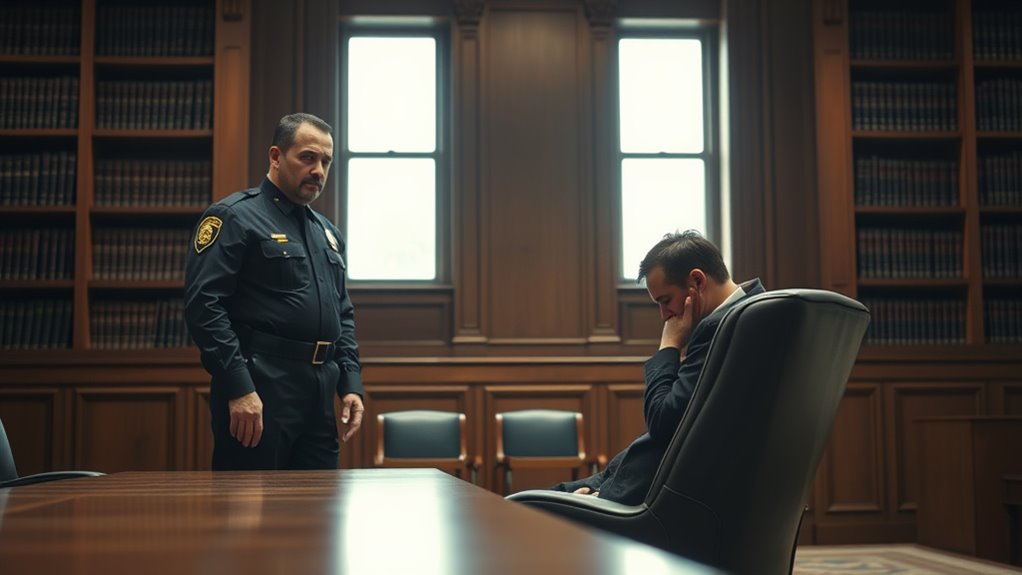
States have developed their own laws and procedures for handling material witness warrants, leading to notable differences in how these cases are managed across jurisdictions. Some states require a formal hearing before issuing warrants, while others rely on affidavits. Cooperation between states varies, affecting interstate witness attendance. You might encounter:
- Different standards for issuing warrants, such as probable cause or reasonable belief
- Variations in bail and detention rules for witnesses from other states
- Procedures for summoning witnesses across state lines, including protective measures
- Legal standards influence the procedures and requirements for issuing warrants and detaining witnesses. Additionally, the interstate legal framework plays a crucial role in facilitating or complicating cooperation between jurisdictions. These differences influence how efficiently witnesses are detained or encouraged to appear. Interjurisdictional cooperation can streamline processes or create delays, depending on the legal frameworks and relationships between states. Understanding these variations helps you navigate the complexities of material witness proceedings effectively.
Rights and Protections Afforded to Material Witnesses

Material witnesses are entitled to important rights and protections to guarantee their fair treatment during legal proceedings. You have the right to a hearing where the court determines whether detention is justified, making certain your detention isn’t arbitrary. Bail may be granted, allowing you to remain free until your testimony is needed, and this decision must be approved by the court. You are also protected from harassment or intimidation, with courts able to enforce measures for your safety. If you’re a foreign national, immigration considerations might influence your detention, but your rights remain protected under due process. Additionally, you have the right to legal counsel to help navigate the process. These safeguards ensure your treatment aligns with constitutional and legal standards while facilitating the administration of justice. Maintaining proper procedures can also help ensure your rights are upheld throughout the process, including protections related to detention and release. Recognizing narcissistic manipulation can be important for understanding the dynamics involved in legal and personal situations. Being aware of trial procedures helps ensure that your rights are protected throughout the legal process, especially regarding residency requirements and other procedural mandates.
Challenges and Debates Surrounding Material Witness Detention

The detention of witnesses raises significant legal and ethical challenges, especially when courts prioritize securing testimony over individual rights. You may worry about the potential for abuse or overreach, as detention can infringe on personal freedoms. Debates focus on balancing the need for effective justice with protecting constitutional protections. Key issues include:
- Ensuring detention is genuinely necessary and not punitive
- Preventing detention from being used to intimidate or harass witnesses
- Upholding due process rights during the detention process
Critics argue that detention may violate constitutional guarantees and lead to unnecessary deprivation of liberty. Courts must carefully weigh the probative value of testimony against the risks of infringing on individual rights, making the debate complex and ongoing.
Frequently Asked Questions
What Are the Legal Limits on Detaining a Material Witness?
You can’t detain a material witness indefinitely; detention is limited to ensuring their appearance when their testimony is essential. Courts require a showing of probable cause or reasonable cause, and detention must be necessary because the witness can’t be secured by subpoena. Bail may be granted, and due process protections apply, including hearings and the right to counsel. Detention must be proportionate and based on law, not punishment.
How Long Can a Material Witness Be Detained Without Trial?
You can’t detain a material witness indefinitely; federal law limits detention to a reasonable period, usually until their testimony is secured or the case concludes. Courts must justify continued detention, often through hearings, ensuring the witness isn’t held longer than necessary. Generally, detention spans days or weeks, not months, and must align with constitutional protections, preventing prolonged deprivation of liberty without a trial or proper judicial review.
Are Foreign Nationals Protected From Detention as Material Witnesses?
Foreign nationals are generally protected from indefinite detention as material witnesses, but they can be detained if authorities demonstrate necessity, like concerns over flight or enforcement issues. Courts must follow legal procedures, including providing hearings and bail options, and guarantee their rights are preserved. You need to understand that protections vary by jurisdiction, but the law aims to balance witness attendance with safeguarding foreign nationals’ rights.
Can a Material Witness Refuse to Testify After Being Detained?
Did you know that less than 10% of witnesses refuse to testify after detention? You might wonder if a detained material witness can refuse to testify. Generally, once you’re detained under a material witness warrant, you’re legally compelled to testify. Refusing could lead to contempt charges. Courts prioritize your testimony because it’s deemed essential. So, while you can technically refuse, consequences often outweigh that choice, making compliance necessary.
What Procedures Ensure the Safety of Detained Material Witnesses?
You guarantee the safety of detained material witnesses by following court-ordered protections, such as providing secure detention facilities and restricting their contact with potential threats. Courts may also assign officers to guard witnesses, prevent harassment, and monitor their well-being. Additionally, witnesses have the right to be protected from intimidation and to access legal counsel. These procedures help maintain their safety and uphold their rights throughout the legal process.
Conclusion
Just like a tightrope walker balances carefully, you must comprehend the delicate line between securing justice and protecting individual rights when it comes to material witness warrants. By knowing the legal foundations, procedures, and your rights, you can better navigate this complex area. Staying informed helps ensure witnesses are treated fairly and law enforcement acts within bounds. Ultimately, understanding these processes keeps the legal system fair and balanced, like a well-tuned instrument.
Halloween Picks
halloween
As an affiliate, we earn on qualifying purchases.