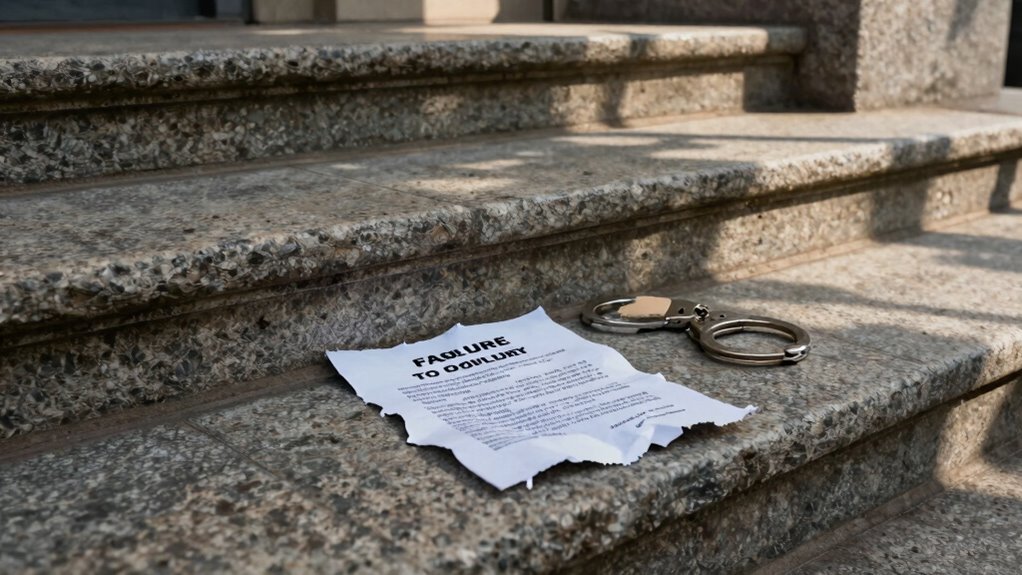

Failure to appear means you miss a scheduled court date before your hearing, which can lead to a warrant for your arrest. Failure to comply, on the other hand, happens when you don’t follow court orders after your appearance, like ignoring probation or sentencing rules. Both can result in serious penalties, but they happen at different times in your case. If you want to understand how these situations impact your legal status, there’s more to uncover.

Get smart everyday buys delivered free with Prime
- Fast, free delivery on millions of items
- Prime Video, Amazon Music and more included
- Member-only deals all year
Key Takeaways
- Failure to appear occurs before the scheduled court date, while failure to comply happens during ongoing case proceedings.
- Missing a court date can lead to a warrant; failing to comply involves violating court orders after appearance.
- Failure to appear often results in a bench warrant; failure to comply may trigger contempt of court charges.
- The key difference is that failure to appear is about absence; failure to comply relates to disregarding court directives.
- Addressing failure to appear prevents warrants, whereas addressing failure to comply involves resolving violations of court orders.

Failure to appear, on the other hand, involves not showing up for a scheduled court date, which can be a misdemeanor or even a felony depending on the case. This omission can lead to a warrant for your arrest, additional charges, and increased penalties. It’s a clear breach of legal procedures because court mandates require your presence; ignoring these can jeopardize your case and complicate legal proceedings further. Additionally, courts may interpret repeated failure to appear as a sign of non-compliance, potentially leading to more severe sanctions.
Failure to comply, on the other hand, involves not following court orders after your initial appearance. This could mean ignoring probation conditions, refusing to pay fines, or not submitting required documentation. Unlike failure to appear, which occurs before a court date, failure to comply happens during the course of your case or sentencing. It signifies that you’re not respecting the court’s directives, which can lead to contempt of court charges, revocation of probation, or even jail time. The key difference is timing and context—failure to appear is about missing a scheduled appearance, while failure to comply relates to violating ongoing court mandates.
In both situations, understanding the legal procedures involved is crucial. When you fail to appear, the court typically issues a bench warrant for your arrest, and law enforcement is authorized to apprehend you. Once arrested, you may face a hearing to explain your absence and potentially face additional penalties. Recognizing legal procedures and how they function can help you better navigate these violations and their consequences. Conversely, failure to comply often results in contempt proceedings, where the court may impose fines, extend supervision, or modify your obligations to ensure compliance. Recognizing the importance of navigating legal procedures can help mitigate the consequences of these violations and demonstrate your commitment to resolving the situation responsibly.
Additionally, the use of projectors in various legal or educational settings highlights the importance of clear visual communication, which relies on proper calibration and technology to ensure accurate image quality. Proper understanding of nail biology and hygiene can similarly be enhanced through visual aids, ensuring better care and maintenance of nails. Legal procedures are designed to keep the process fair and transparent, but missing court dates or ignoring orders can severely disrupt these procedures. If you’re facing either situation, it’s vital to seek legal advice promptly. Addressing failure to appear or failure to comply early can help minimize penalties and demonstrate your willingness to cooperate. Remember, courts take these violations seriously because they threaten the integrity of the judicial process, and failing to meet your obligations can lead to more severe consequences than you might anticipate. Staying proactive, attending all scheduled appearances, and following court orders are the best ways to protect your rights and ensure your case proceeds smoothly.
As an affiliate, we earn on qualifying purchases.
Frequently Asked Questions
Can Failure to Appear Lead to Criminal Charges?
Yes, failure to appear can lead to criminal charges. When you don’t show up for your court date, it triggers legal consequences like a bench warrant and potential arrest. This also impacts bail procedures, as authorities may revoke your bail, making it harder to secure it again. Missing court shows a disregard for legal processes, resulting in additional charges that can complicate your case and lead to further penalties.
What Are Common Reasons for Failing to Comply?
Imagine missing a step on a staircase—this is how failing to comply often happens. Common reasons include forgetfulness, misunderstanding court procedures, or personal emergencies. You might also skip compliance due to fear of legal consequences or feeling overwhelmed. These actions can lead to additional penalties or warrants. Staying aware of court procedures and communicating promptly with your legal team helps prevent these issues, ensuring you stay on the right side of the law.
How Long Does a Failure to Appear Suspension Last?
A failure to appear suspension typically lasts until you resolve the underlying issue with the court. Court procedures require you to address the missed court date to lift the suspension. During this time, your bail conditions are violated, which can lead to additional penalties. To get your license reinstated, you must usually pay fines, attend hearings, or fulfill other court requirements. Always stay in contact with the court to expedite the process.
Are Penalties Different for Failure to Comply?
Yes, penalties for failure to comply can be more severe than failure to appear. When you don’t follow court procedures, legal consequences escalate, leading to harsher fines or even arrest. Imagine the courtroom’s tense silence as authorities enforce these penalties. The stakes are higher because failure to comply indicates a refusal to adhere to court orders, risking additional charges and complicating your legal situation. Stay compliant to avoid these escalating consequences.
Can You Appeal a Failure to Appear Judgment?
Yes, you can appeal a failure to appear judgment, but it’s complex. You’ll need to show valid reasons for missing court, like a mistake or emergency. The appeal process involves challenging the legal consequences tied to bail procedures and the court’s decision. Keep in mind, failure to appear often results in a warrant, so acting quickly and consulting an attorney can help you navigate the process and possibly reduce penalties.
As an affiliate, we earn on qualifying purchases.
Conclusion
Understanding the difference between failure to appear and failure to comply is like spotting two distinct stars in the night sky—each shining with its own significance. When you fail to appear, you’re missing the scheduled light, while failing to comply dims the ongoing glow of your responsibilities. Recognize these differences, and you’ll navigate the legal landscape more clearly. After all, knowing which star you’re dealing with helps you steer your course away from darkness and toward the right path.
probation violation monitoring device
As an affiliate, we earn on qualifying purchases.
As an affiliate, we earn on qualifying purchases.
As an affiliate, we earn on qualifying purchases.
Halloween Picks
halloween
As an affiliate, we earn on qualifying purchases.