

A bench warrant is a court order that lets law enforcement arrest you if you miss a court date, fail to pay fines, or violate court rules. Ignoring this warrant can result in immediate arrest, additional charges, or increased penalties. Courts usually recall warrants after you address the underlying issue, like attending a hearing or paying fines. Understanding how these warrants work can help you take steps to resolve them—keep going to learn more.

Get smart everyday buys delivered free with Prime
- Fast, free delivery on millions of items
- Prime Video, Amazon Music and more included
- Member-only deals all year
Key Takeaways
- Bench warrants are court orders for arrest issued when a person fails to appear for scheduled court dates.
- Failure-to-appear warrants are specifically issued when individuals do not attend court as required.
- These warrants remain active until the person addresses the underlying case or is arrested.
- Law enforcement can execute warrants during routine stops or home visits, leading to immediate arrest.
- Promptly resolving warrants through court hearings prevents additional penalties and legal complications.
legal self-help books for court procedures
As an affiliate, we earn on qualifying purchases.
As an affiliate, we earn on qualifying purchases.
Understanding What a Bench Warrant Is

A bench warrant is a court order that authorizes law enforcement to arrest someone who has failed to appear in court or follow court orders. Unlike a typical arrest warrant, which is issued for suspected criminal activity, a bench warrant focuses on non-compliance with court procedures. It’s usually issued when you miss a scheduled court date, neglect to pay fines, or violate probation conditions. Once issued, the warrant stays active indefinitely until you resolve it. Law enforcement can arrest you anytime, whether during a traffic stop, at home, or in public. The warrant is entered into law enforcement databases and remains valid until you address the issue in court. Ignoring a bench warrant can lead to serious legal consequences, so understanding its nature is vital. Additional enforcement actions may be taken if you fail to resolve the warrant promptly.
As an affiliate, we earn on qualifying purchases.
Common Reasons for Issuance of Bench Warrants
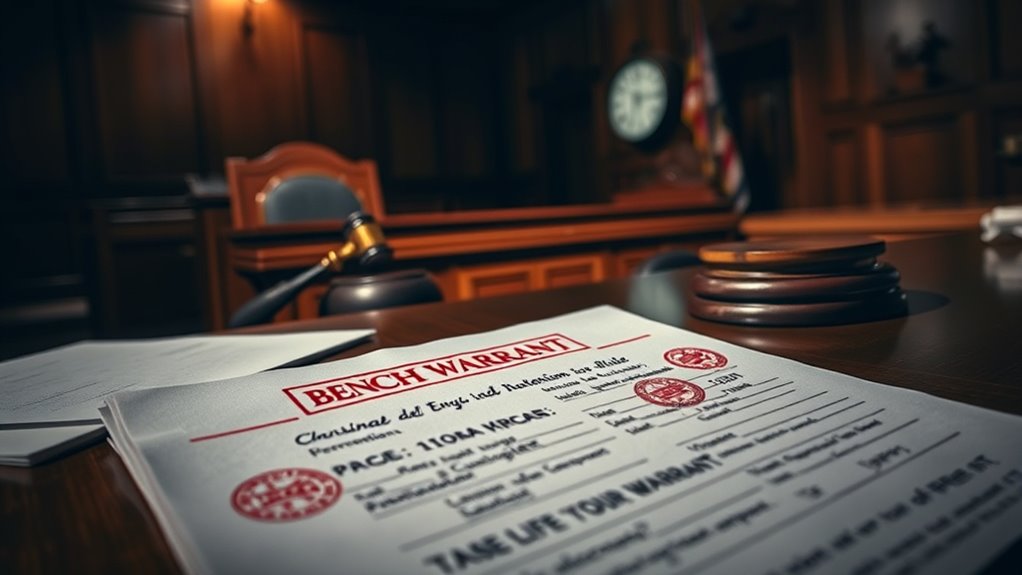
Failure to appear in court is the most common reason for the issuance of a bench warrant, as missing scheduled proceedings like arraignments, trials, or sentencing can lead the judge to order an arrest. You might also face a warrant if you neglect to pay fines, court fees, or child support as required by court orders. Violations of probation or parole, such as failing to report or participate in mandated programs, can trigger a warrant too. Additionally, contempt of court, including disrespectful behavior or obstruction, often results in a bench warrant. Ignoring administrative orders, like traffic violations or court-mandated actions, can also lead to one. Basically, non-compliance or failure to follow court directives are primary reasons courts issue these warrants. Essential oils for court stress relief might help in calming anxiety during legal proceedings. Understanding the importance of court compliance can help prevent future warrants and legal complications. Being aware of the consequences of non-compliance can motivate individuals to adhere to court orders and avoid unnecessary legal issues. Recognizing the role of local legal resources can also assist individuals in navigating court requirements more effectively.
As an affiliate, we earn on qualifying purchases.
How Law Enforcement Executes Bench Warrants

When a bench warrant is issued, law enforcement agencies take immediate steps to execute it. Officers often look for the individual during routine stops, home visits, or in public places. They can arrest you anywhere the warrant is active, whether at work, in your car, or walking down the street. Once located, you’re taken into custody, processed—fingerprinted, photographed, and booked—and held until a court hearing. Here’s how they organize their efforts:
| Step | Action Taken | Location Where It Occurs |
|---|---|---|
| 1 | Search during stops | Traffic or public areas |
| 2 | Home visits | Residential addresses |
| 3 | Surveillance | Known locations or routines |
| 4 | Check databases | Law enforcement systems |
| 5 | Arrest during encounters | Any lawful contact |
This proactive approach guarantees warrants are enforced swiftly and effectively. Additionally, surveillance techniques can influence how clearly law enforcement can identify individuals during surveillance or public encounters. Employing database checks enables law enforcement to efficiently locate individuals across various locations. Conducting background investigations can further assist in locating suspects swiftly and accurately. Incorporating technological tools enhances the precision and speed of executing warrants, ensuring law enforcement can respond promptly.
As an affiliate, we earn on qualifying purchases.
The Role of Court Hearings in Resolving Warrants

Court hearings play an essential role in resolving bench warrants by providing an opportunity for you to address the underlying issues that led to the warrant’s issuance. During the hearing, the judge reviews your case and considers your reasons for missing court or failing to comply. You may:
- Explain your absence or non-compliance and present any valid reasons.
- Negotiate new court dates or conditions for your release.
- Request bail or argue for warrant recall if appropriate.
- Respond to additional court orders, such as payments or community service.
Attending the hearing shows your willingness to resolve the issue and can lead to the warrant being recalled or reduced. Active participation helps you move toward compliance and avoid further penalties. Knowing your legal options can improve your chances of a favorable outcome.
Legal Consequences of Ignoring a Bench Warrant
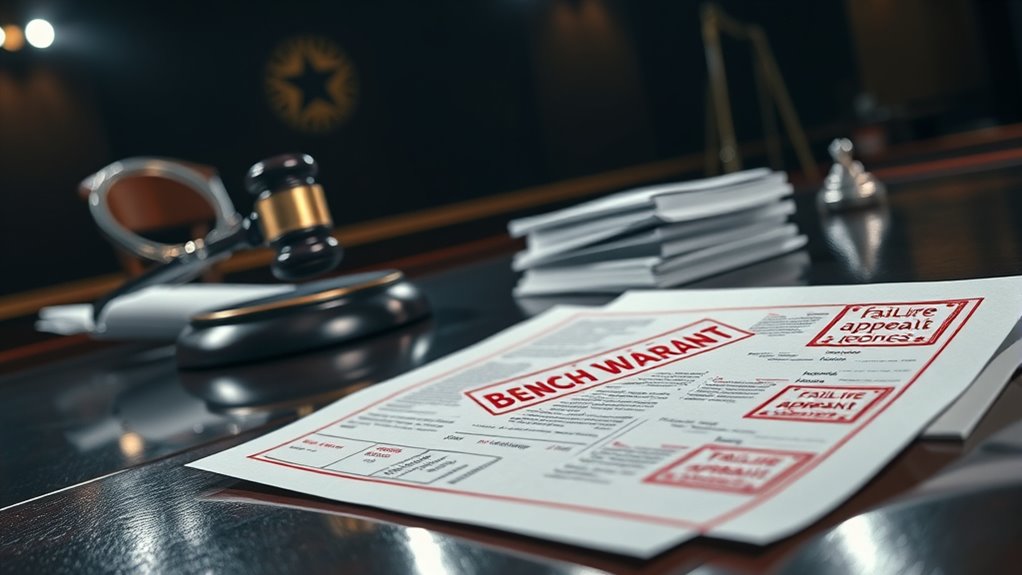
Ignoring a bench warrant puts you at risk of immediate arrest and detention without warning. You could face additional fines, criminal charges, or even jail time if you don’t address the warrant promptly. Failing to respond only worsens your legal situation and makes future court interactions more complicated.
Arrest and Detention Risks
Failing to address a bench warrant can lead to immediate arrest and serious legal consequences. When law enforcement finds you, they can:
- Arrest you during routine stops, at home, or in public locations without prior notice.
- Detain you in jail while processing occurs, including fingerprinting and booking.
- Hold you until a court hearing, which might be the next business day.
- Increase your bail or impose additional detention if you try to evade arrest.
Ignoring or avoiding a bench warrant heightens your risk of extended detention and additional charges. Law enforcement agencies keep warrants active indefinitely, and they can act at any time. Not resolving the warrant promptly can escalate the legal risks and complicate your situation.
Legal Penalties and Consequences
When a bench warrant remains unresolved, the legal penalties can escalate quickly and severely. Ignoring the warrant may lead to immediate arrest during routine encounters or on sight, often without warning. Once detained, you could face additional charges, such as contempt of court or failure to appear, which carry their own penalties. Your license could be suspended, and you might owe hefty fines or be held in jail until the warrant is addressed. Failing to resolve the warrant promptly can also result in increased bail amounts and extended detention. Courts view unaddressed warrants as a sign of non-compliance, making future legal proceedings more challenging. Ultimately, ignoring a bench warrant risks lasting damage to your legal standing and personal freedom. Additionally, failure to address the warrant can negatively impact your ability to securing employment or housing, as legal issues are often checked during background screenings. Moreover, persistent non-compliance can lead to additional legal complications, including arrest during routine checks, further complicating your situation.
Strategies for Addressing and Clearing Warrants

To effectively address and clear a warrant, it’s essential to take proactive steps rather than waiting for further complications. Here are key strategies:
- Contact the court promptly to understand your case status and specific requirements.
- Surrender voluntarily at the court or law enforcement agency to begin the resolution process.
- Pay any owed fines or fees, or fulfill court-ordered programs to demonstrate compliance.
- Seek legal advice to navigate proceedings, negotiate bail, or request a warrant recall.
- Be aware of your options for user privacy management and how they may impact your case process. Being informed about warrant procedures can help you better understand the steps involved in resolving your case.
- Understanding the hours of operation of local courts and law enforcement agencies can facilitate timely action and reduce delays. Additionally, knowing the types of warrants issued against you can help tailor your approach to resolving the issue.
- Familiarizing yourself with ID Times can provide additional resources and updates on warrant statuses and related legal processes.
Taking these actions shows good faith and can help reduce penalties. Staying informed about your case status and maintaining communication with your attorney increases your chances of resolving the warrant efficiently. Addressing the issue proactively minimizes risks and helps you regain legal standing.
Tips for Staying Compliant and Preventing Future Warrants

To stay compliant and avoid future warrants, you need to keep your court appointments organized and never miss scheduled hearings. Respond promptly to any notices from the court to show you’re taking your obligations seriously. If you’re unsure about your situation or need assistance, seek legal guidance to navigate your responsibilities effectively. Additionally, understanding warrant types and how they are issued can help you better prepare and avoid unnecessary legal complications. Being aware of the emotional support available can also help you manage stress during legal proceedings. Regularly reviewing your court documentation can help you stay informed about upcoming dates and requirements. Familiarizing yourself with the reviews of legal resources can provide insights into how to handle your case effectively.
Keep Court Appointments Organized
Staying organized with your court appointments is essential for avoiding bench warrants and staying compliant with legal requirements. When you keep track of your scheduled dates, you reduce the risk of missing a court appearance and facing unnecessary legal trouble. Here’s how to stay on top of your appointments:
- Use a digital calendar or reminder app to mark court dates and set alerts.
- Confirm your upcoming appointments with the court or your attorney a few days in advance.
- Keep all related documents, like notices and court papers, in one accessible place.
- Notify the court immediately if you have conflicts or need to reschedule, following proper procedures.
Staying proactive and organized helps ensure you don’t miss critical court dates, avoiding warrants and unnecessary complications.
Respond Promptly to Notices
Responding promptly to notices from the court is essential for maintaining compliance and avoiding future warrants. When you receive a summons, hearing notice, or any court-related communication, don’t delay in taking action. Ignoring or postponing responses can lead to misunderstandings, missed deadlines, or the issuance of a bench warrant. Always review notices carefully to understand what’s required, whether it’s attending a scheduled hearing, paying fines, or providing documentation. If you need more time or have concerns, contact the court immediately to explain your situation. Staying proactive shows your willingness to comply and helps prevent escalation. Keeping open communication and acting quickly reduces the risk of arrest, additional penalties, and ongoing legal complications.
Seek Legal Guidance When Needed
Seeking legal guidance can substantially improve your chances of remaining compliant with court requirements and avoiding future warrants. When you’re unsure about court dates, fines, or conditions, consulting an attorney helps clarify your responsibilities and options. Here’s how legal guidance can help:
- It ensures you understand court orders and deadlines, reducing the risk of missed appearances.
- An attorney can negotiate on your behalf for bail or alternative arrangements if issues arise.
- They assist in addressing fines, fees, or probation violations proactively.
- Legal counsel can help you prepare for hearings, present your case effectively, and advocate for warrant recall if needed.
Getting professional advice keeps you informed, confident, and better equipped to stay compliant and prevent future warrants.
Frequently Asked Questions
How Long Does a Bench Warrant Stay Active Before Resolution?
A bench warrant stays active indefinitely until you resolve it. It doesn’t expire over time, so law enforcement can arrest you anytime. To get it resolved, you need to contact the court, surrender voluntarily, or appear for the scheduled hearing. Ignoring it only makes things worse, potentially leading to additional charges or penalties. The sooner you address the warrant, the better your chances of avoiding further legal complications.
Can a Bench Warrant Be Issued for Minor Traffic Violations?
Imagine this: in the age of dial-up internet, a bench warrant can be issued for minor traffic violations if you ignore court notices. Yes, even small infractions like unpaid fines or missed court dates related to traffic can lead to a warrant. Law enforcement has the authority to arrest you anytime, whether during a routine traffic stop or at home. It’s best to address violations promptly to avoid unnecessary arrest or legal trouble.
Is It Possible to Get a Bench Warrant Dismissed Without Court Appearance?
Yes, you can often get a bench warrant dismissed without appearing in court by working with your attorney or contacting the court directly. You might be able to resolve the issue by paying fines, providing proof of compliance, or explaining your situation. Some courts allow you to handle certain violations through online or phone communication, but it’s best to consult with a legal professional to guarantee proper steps and avoid arrest.
What Are the Risks of Ignoring a Bench Warrant?
Ignoring a bench warrant might seem like a free pass, but it’s a risky game you’re playing. You could get arrested unexpectedly during a routine traffic stop or even at home, with no warning. The longer you wait, the worse it gets—possible additional charges, higher bail, or jail time. It’s smarter to face it head-on, resolve it quickly, and avoid turning minor issues into serious legal nightmares.
How Can I Find Out if I Have a Bench Warrant Against Me?
You can find out if you have a bench warrant against you by checking online court records or contacting the clerk of the court where your case was heard. Visit the court’s website or call their office directly. Some jurisdictions offer online warrant searches. Alternatively, consult a legal professional who can perform a thorough check and advise you on your options for resolving any warrants.
Conclusion
Ignoring a bench warrant is like leaving a ticking time bomb in your path, ready to explode when you least expect it. To stay clear of trouble, stay informed and proactive. Attend court dates, address any issues promptly, and keep your records clean. When you face a warrant, face it head-on before it shadows your life like an ever-present storm. Taking control now can help you navigate toward calmer waters ahead.
Halloween Picks
halloween
As an affiliate, we earn on qualifying purchases.