When you’re arrested, bail is the money you pay directly to the court to secure your temporary release, and it’s refundable if you show up for your court dates. A bond, usually handled by a bail bondsman, involves paying a non-refundable fee in exchange for them posting your bail. Understanding these differences helps you navigate the legal process more effectively—continue with this overview to learn more about how these options work in detail.

Get smart everyday buys delivered free with Prime
- Fast, free delivery on millions of items
- Prime Video, Amazon Music and more included
- Member-only deals all year
Key Takeaways
- Bail is money paid directly to the court for defendant release; bond is a contractual agreement with a bondsman.
- Bail is refundable if the defendant appears; bond involves paying a non-refundable fee to a bondsman.
- Bail can be in cash or property; bonds usually require a fee (8-15%) and possibly collateral.
- Missing court deadlines risks bail forfeiture; bonds may include collateral or legal action if the defendant fails to appear.
- Bail is set by the court; bonds are arranged through a bail bondsman to secure release.
As an affiliate, we earn on qualifying purchases.
What Is Bail and How Does It Work?

What is bail and how does it work? Bail is money or property you pay directly to the court to guarantee you’ll appear for your scheduled court dates. It serves as a temporary release from jail while your case proceeds. The court sets the bail amount based on factors like the seriousness of the offense and your flight risk. You can pay bail in cash, property, or other accepted forms, and it’s usually refundable if you show up for all your court hearings. If you can’t afford the full bail, you might turn to a bail bondsman who posts bail on your behalf in exchange for a fee. Failing to appear can lead to forfeiture of bail and additional legal consequences. Understanding bail bonds and how they function can help you navigate the process more effectively. Being aware of bail process details can also prevent misunderstandings and ensure proper compliance. Additionally, knowing about the costs associated with bail can help you better prepare financially for your release. It’s important to note that the risk assessment conducted by the court considers your background and the likelihood of fleeing, which can influence bail decisions.
As an affiliate, we earn on qualifying purchases.
The Role of Bonds in the Legal System

Bonds play a crucial role in the legal system by providing a way for defendants to secure their temporary release from jail while awaiting trial. When bail is too expensive or unavailable, a bail bondsman steps in to post bond on your behalf. You or your family pay a non-refundable fee (usually 8-15% of the bail amount) to the bondsman, who then guarantees the court that you’ll appear for your scheduled hearings. This process helps defendants avoid lengthy detention and maintains the presumption of innocence until proven guilty. Bonds also shift some financial responsibility from the court to the bondsman, who may seek collateral or employ recovery methods if you fail to appear. Additionally, understanding the difference between bail and bonds is essential for navigating the legal process effectively. Overall, bonds facilitate the judicial process by balancing individual rights with court requirements.
As an affiliate, we earn on qualifying purchases.
How Bail Is Set and Paid
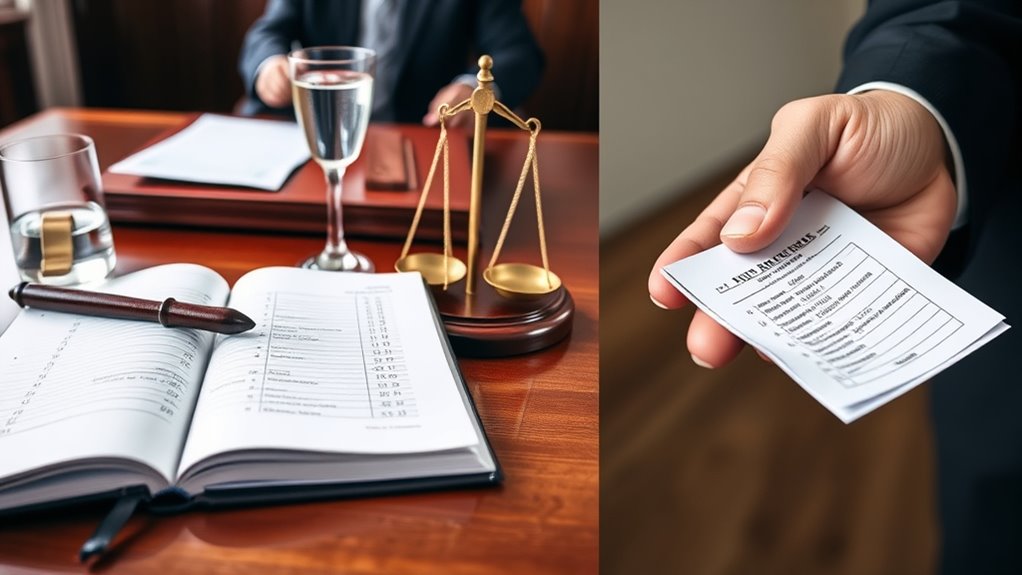
The process of setting and paying bail directly impacts your ability to secure immediate release from jail. First, a judge or court determines the bail amount based on factors like the severity of the offense and your flight risk. Bail can vary widely depending on local laws and may follow a standard schedule or rely on judicial discretion. To get out, you or your family must pay the full bail amount directly to the court, using cash, property, or other accepted forms. This money acts as collateral, ensuring you’ll return for your court dates. If you appear as scheduled, the court refunds the bail. If not, the bail is forfeited, and authorities may take further action. The bail schedule often helps streamline this process by providing predefined amounts for common offenses. Additionally, understanding the bail bond process can offer alternative options for securing release without paying the full amount upfront. Studies indicate that the presence of security systems can significantly deter criminal activity, which may influence bail considerations in some cases. Familiarity with local bail laws can also aid in navigating the process more effectively.
As an affiliate, we earn on qualifying purchases.
The Process of Posting a Bond

When you need to post a bond, the first step is contacting a bondsman who can help you navigate the process. You’ll evaluate your options, including bond types and costs, to find the best solution. Once you choose, you’ll sign an agreement and provide the necessary collateral or payment to secure the release. Understanding input lag and how it affects the process can be especially helpful if you’re dealing with high-tech equipment like projectors in your home or facility. Additionally, being aware of diverse planter designs can be useful if you’re also interested in enhancing your indoor environment or creating a more aesthetically pleasing space during your recovery process. Familiarizing yourself with comfort solutions for sofa beds can also make your time at home more relaxing, especially if you anticipate needing to rest comfortably during recovery.
Contact a Bondsman
Are you wondering how to post a bond for someone in jail? To get started, you’ll need to contact a bail bondsman. Call or visit their office to discuss the case and bail amount. The bondsman will ask for details about the defendant, including their name, booking number, and charges. Once they assess the situation, they’ll explain the fee, typically 8-15% of the bail amount, which is non-refundable. You’ll also need to provide collateral, such as property or assets, to secure the bond. After signing a contract, the bondsman will post the full bail amount with the court. This process guarantees the defendant’s release while protecting the bondsman’s financial investment if the defendant skips court. Understanding the bail process can help reduce stress and ensure a smoother experience. Additionally, knowing the difference between a bail and a bond can clarify your responsibilities throughout the process. It’s also helpful to understand how cosmic influences are sometimes thought to relate to personal traits, although this is not scientifically proven. Educating yourself about bail bonds can make the entire process more transparent and manageable. Moreover, familiarizing yourself with the role of collateral can help you better prepare for the requirements involved in securing a bond.
Evaluate Bond Options
Evaluating bond options involves appraising the different ways you can secure a defendant’s release through a bond. First, consider the type of bond available—cash bonds, surety bonds, or unsecured bonds—based on your financial situation. Cash bonds require paying the full bail amount upfront, which is refundable if the defendant appears in court. Surety bonds involve working with a bail bondsman who posts bail on your behalf, charging a non-refundable premium (usually 8-15%). Unsecured bonds may be granted in some cases, where only a promise to pay is required if the defendant fails to appear. Assess your ability to pay, the risks involved, and the specific court’s rules. This evaluation helps you choose the most practical, affordable option to ensure the defendant’s timely release. Understanding the role of affiliate relationships can also inform your decision-making process by providing transparency about associated costs and services. Additionally, considering the performance of different bond types can help you select the most reliable and appropriate method for your situation. Reviewing the success rates of bond types can further guide you in making an informed choice that aligns with your circumstances. Moreover, analyzing the cost-effectiveness of bonds may help you determine the most budget-friendly solution for your situation.
Sign Agreement and Post
To post a bond, you’ll first need to sign a legal agreement with the bail bondsman that outlines your responsibilities and the terms of the bond. Once signed, you’ll pay the premium fee, which is usually a percentage of the bail amount. After that, the bondsman posts the full bail with the court, securing your release. Imagine:
- Signing a document that spells out your obligations and potential consequences.
- Handing over payment or collateral, like cash or property, to the bondsman.
- Watching as the bondsman communicates with the court to arrange your release.
- Receiving a receipt or paperwork confirming your bond is active and posted.
This process guarantees everyone understands the conditions and your legal commitment to appear in court.
Financial and Legal Differences Between Bail and Bond

Understanding the financial and legal differences between bail and bond is essential because they involve distinct processes and obligations. When you pay bail, you hand over money or property directly to the court, which is refundable if you meet all court appearances. With a bond, you pay a non-refundable fee to a bail bondsman, who posts bail on your behalf. The bondsman assumes financial responsibility, often requiring collateral, and charges a percentage of the bail amount. Legally, bail is a direct deposit held by the court, while a bond is a contractual agreement between the court, you, and the bondsman. If you skip court, bail can be forfeited, and the bondsman may seek collateral or legal action to recover costs.
What Happens If You Miss a Court Date?
If you miss a court date, the consequences can be serious and immediate. You risk forfeiting your bail or bond, meaning you lose any money paid or collateral posted. A warrant may be issued for your arrest, making it harder to stay free. Your reputation with the court could be damaged, affecting future bail or bond decisions. Here’s what might happen:
Missing a court date can lead to bail loss, arrest warrants, and damage to your legal reputation.
- Warrant Issuance: Law enforcement will seek to find and arrest you.
- Bail or Bond Forfeiture: You’ll lose any money or collateral posted.
- Additional Charges: Missing court can lead to new charges like contempt of court.
- Difficulty Securing Future Release: Courts may deny bail or bond until your case is resolved.
Skipping court jeopardizes your freedom and complicates your legal situation.
Types of Bonds and Their Variations

Various types of bonds exist to accommodate different circumstances and risk levels, giving you and the courts flexibility in managing pretrial release. Secured bonds require collateral, like property or valuables, to guarantee the defendant’s court appearance. Unsecured bonds, or signature bonds, don’t need collateral and rely on your promise to appear. Percentage bonds involve paying a percentage (usually 10%) of the total bail to a bail bondsman, who then posts the full amount. Surety bonds are issued by a bail bondsman, guaranteeing the court that the defendant will appear. Partially secured bonds combine collateral with a percentage payment. Some jurisdictions also offer release on recognizance or conditional bonds, where no money is involved, based on trust and legal conditions. Each type varies by state and case specifics.
The Purpose Behind Bail and Bond Systems

You need to understand that bail and bond systems are designed to make sure defendants show up in court while respecting their rights. They also aim to keep the community safe by preventing flight risks and ensuring accountability. Striking this balance is essential to maintaining fairness and order in the justice process.
Ensuring Court Attendance
The primary goal of bail and bond systems is to make certain that defendants appear in court as scheduled. These systems motivate you to attend your hearings by holding collateral or requiring a financial commitment. Imagine:
- You deposit money or property, creating a tangible link to your court date.
- A bondsman signs a contract, promising to guarantee your appearance.
- The court releases you, knowing there’s a financial incentive to return.
- If you skip, collateral is seized or the bondsman pays the full bail, encouraging your compliance.
These mechanisms work to secure your presence at each hearing, preventing unnecessary delays and safeguarding the legal process. They serve as a financial reminder to fulfill your court obligations, ensuring justice moves forward smoothly.
Balancing Rights and Safety
Balancing individual rights with public safety is the primary purpose of bail and bond systems. You want to guarantee that those accused of crimes have the opportunity for temporary release, respecting their presumption of innocence. At the same time, these systems protect the community by incentivizing defendants to appear in court and preventing potential risks. Bail allows you to secure a defendant’s release while maintaining accountability. Bonds help those who can’t afford bail still access freedom, but they also include safeguards like collateral and contractual obligations. This balance aims to uphold fairness for the accused without compromising public safety. Ultimately, bail and bonds serve to respect your rights while ensuring the legal process proceeds smoothly and securely.
Preventing Flight Risks
Preventing flight risks is a core goal of bail and bond systems; without these safeguards, defendants might evade court proceedings. To reduce this risk, the system uses various measures.
- You might pay bail or a bond premium to motivate your appearance, knowing forfeiting means losing money.
- Bondsmen often require collateral, like property or valuables, providing extra security if you skip court.
- Bounty hunters or legal authorities are employed to find defendants who abscond, increasing the chance of return.
- Courts may impose stricter conditions or revoke bail if they believe you’re a flight risk, ensuring you’re less likely to run.
These steps work together to keep defendants accountable and ensure court appearances, protecting the integrity of the justice process.
Criticisms and Reforms in Bail and Bond Practices
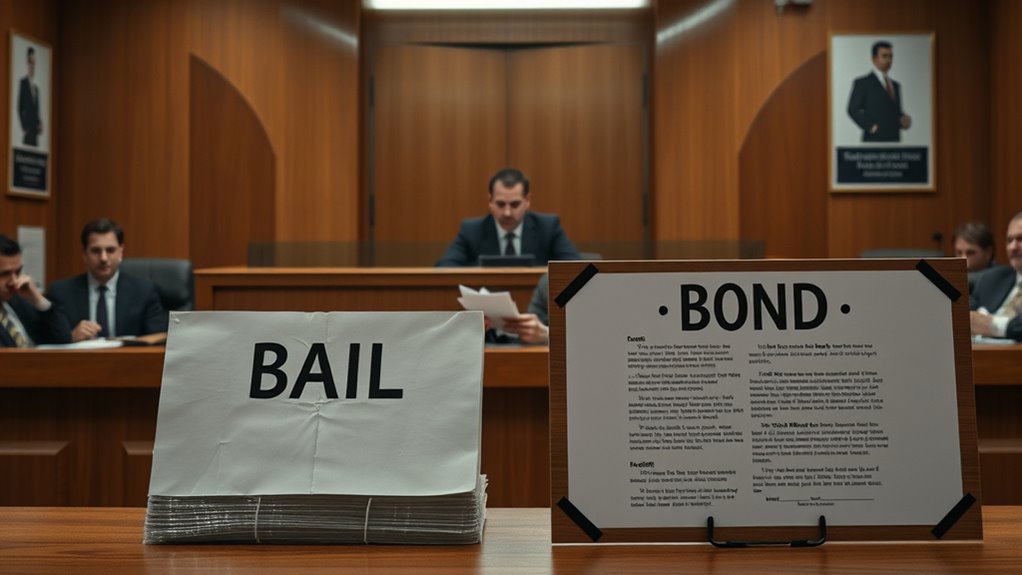
Criticisms of bail and bond practices often focus on how they can unfairly impact low-income defendants. You might find that the system favors those who can afford hefty bail amounts or pay non-refundable bonds, leaving poorer defendants jailed simply because they can’t pay. This creates a two-tier justice system, where wealth determines freedom. Reforms aim to address these disparities by promoting alternatives like release on recognizance, supervised release, or bail schedules based on offense severity rather than financial means. Some jurisdictions have eliminated cash bail altogether, reducing pretrial detention for those who pose no flight risk. Critics also highlight that bondsmen profit from vulnerable defendants, and reform efforts seek to curb this industry’s influence. Overall, reforms endeavor to make bail and bond practices fairer and more equitable.
Alternatives to Traditional Bail and Bond Methods

You can explore options like release on recognizance, where you’re trusted to appear without paying bail. Supervised release programs offer monitored freedom, reducing reliance on money-based systems. Additionally, payment alternatives such as installment plans can make temporary release more accessible for some defendants.
Release on Recognizance
Release on recognizance (ROR) offers an alternative to traditional bail and bond methods by allowing you to be released without paying money upfront. Instead, the court trusts you’ll return for your court dates based on your character and community ties. Imagine standing before a judge, your record clear, and the judge deciding your fate simply by recognizing your responsibility. Visualize these scenarios:
- You’re handed a court order, no cash exchanged.
- The judge reviews your background and community connections.
- You’re released with a promise to appear in court.
- You attend your hearings, proving your reliability.
This process reduces financial burdens and emphasizes trust rather than payment. ROR is often granted to defendants with strong ties, stable jobs, or minimal flight risk, promoting fairness without monetary exchange.
Supervised Release Programs
Have you ever wondered how courts guarantee defendants attend their hearings without relying solely on money-based bail? Supervised release programs offer an alternative by monitoring defendants through mandated check-ins, drug testing, or electronic monitoring. These programs focus on risk assessment, ensuring compliance without financial burdens. They are especially useful for low-risk offenders or those facing minor charges, reducing jail overcrowding and addressing fairness concerns.
| Aspect | Supervised Release Programs |
|---|---|
| Purpose | Ensure court attendance and compliance |
| Financial Requirement | Typically none or minimal fees |
| Enforcement Methods | Check-ins, electronic monitoring, reporting |
Payment Alternatives Options
Are traditional bail and bond methods leaving some defendants behind due to high costs or limited access? Fortunately, alternatives exist. You might consider:
- Release on Recognizance (ROR): You’re trusted to appear without paying anything upfront, based on your community ties and risk level.
- Payment Plans: Some courts allow you to pay bail in installments, easing the financial burden.
- Supervised Release Programs: Instead of bail, you agree to regular check-ins or electronic monitoring while awaiting trial.
- Third-Party Guarantees: Family or community members pledge collateral or promise to ensure your court appearance, reducing the need for cash or bonds.
These options aim to make release more accessible and fair, especially for those facing financial hardships.
Frequently Asked Questions
Can a Defendant Use Property Instead of Cash for Bail?
Yes, you can use property instead of cash for bail. Courts often accept property like real estate or valuable assets as collateral, especially if you can’t pay cash. You’ll need to prove ownership and have the property appraised. The court holds the property until your case concludes, and if you appear in court as scheduled, you get the property back. If not, the court can seize it to cover your bail.
Are Bail Bond Premiums Refundable if Court Dates Are Missed?
They say, “You get what you pay for,” but with bail bond premiums, that’s not always true. If you miss court dates, the premium you paid to the bondsman isn’t refundable. You’ve already paid for their service, and failure to appear means you lose that money, plus the bondsman may seek collateral or take other actions to recover costs. So, don’t think of premiums as an investment—you won’t get them back.
How Does Bail Differ for Federal Versus State Crimes?
When dealing with federal versus state crimes, you’ll notice bail policies differ. For federal crimes, bail is often set higher and more strictly enforced, with less flexibility for alternatives. State crimes usually have more varied procedures and lower bail amounts. You might find states offer more options like release on recognizance or payment plans. In federal cases, bail is more regulated, and courts prioritize ensuring the defendant doesn’t flee.
What Collateral Is Typically Required for a Bail Bond?
You typically need to provide collateral when getting a bail bond to protect the bondsman’s financial interest. Common collateral includes property, vehicles, jewelry, or other valuable assets. The amount and type depend on the bail bond company’s policies and the bond’s size. By offering collateral, you help secure the bond, and if the defendant skips court, the bondsman can seize it to cover any losses.
Is Bail Available for All Types of Criminal Charges?
Surprisingly, not all criminal charges qualify for bail, even though it might seem like a basic right. For minor misdemeanors, bail is often granted, but serious offenses like murder or certain drug crimes usually don’t get bail, or it’s very limited. Courts decide based on the charge’s severity, flight risk, and public safety. So, in some cases, you might find yourself stuck without the option of bail.
Conclusion
Think of bail and bonds as your ticket and escort in a busy city. Bail is like paying a fee to stay out of jail, while a bond is trusting someone else to vouch for you. Understanding these tools helps you navigate the justice system more confidently. Just as a lighthouse guides ships safely home, knowing the differences guarantees you avoid getting lost in legal complexities, steering toward clearer, fairer paths.
Halloween Picks
halloween
As an affiliate, we earn on qualifying purchases.