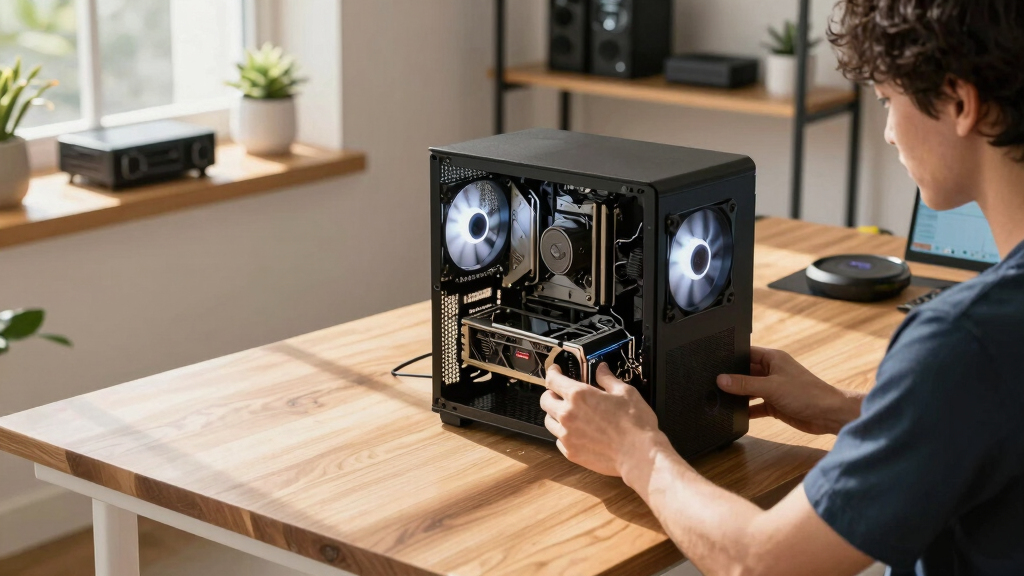

📊 Full opportunity report: Build vs Buy a Prebuilt AI Workstation on ThorstenMeyerAI.com — validation score, market gap, and execution plan.
TL;DR
In 2026, prebuilt AI workstations can often match or beat DIY prices due to bulk buying and shortages. Buying offers faster deployment and reliability, while building provides maximum control. A hybrid approach may be optimal.
In 2026, the landscape of acquiring AI workstations has shifted, with prebuilt systems often matching or surpassing the cost-effectiveness of DIY builds due to global component shortages and price increases, making the choice more nuanced than before.
Recent data shows that prebuilt AI workstations from vendors like Lambda and Puget now frequently match or undercut DIY prices, thanks to bulk purchasing and supply chain efficiencies. These systems arrive ready to operate, with validated thermals, pre-installed software, and warranties, reducing setup time and operational risks. Conversely, building your own system offers maximum customization and control over hardware, security, and future upgrades but requires significant time, expertise, and ongoing management. The cost of components has risen, with DIY rigs now often exceeding $1,250, while prebuilt options remain competitive or cheaper when factoring in hidden costs like troubleshooting and maintenance. Deployment times for prebuilt systems are typically 1–2 weeks, versus several months for DIY, which can be critical for project timelines. These developments influence the strategic decision-making of organizations and individual users alike, emphasizing the importance of evaluating total ownership costs and long-term needs.Build vs buy
an AI workstation.
The real question behind this whole series: do you pull the five heat-and-noise levers yourself, or buy a prebuilt where the vendor pulled them for you? And in 2026, the old “building is cheaper” rule has broken. Match your situation in Part 3.
Why the 2026 Shift Changes AI Workstation Choices
This shift impacts how organizations plan their AI infrastructure investments. The reduced cost and faster deployment of prebuilt systems mean smaller teams or less technical expertise can access high-performance AI hardware without extensive delays. Meanwhile, the ability to customize and control hardware remains a key advantage for those with specific security, security, or upgrade requirements. The evolving market also suggests that blindly opting for DIY builds may incur hidden costs—such as time, troubleshooting, and maintenance—that diminish initial savings. Overall, these trends influence strategic planning, operational risk management, and budget allocation for AI projects, making the build vs buy decision more critical than ever.
HP OmniDesk Desktop, AI PC w/ 16 NPU Tops, 8-Core AMD Ryzen 7-8700G CPU (upto 5.1GHz), 16GB DDR5 RAM, 1TB SSD, USB-C, Wi-Fi 6, Dual Monitor Support, Bluetooth, Windows 11 Pro, Wireless Keyboard &Mouse
- Powerful AMD Ryzen 7 CPU: 8-core up to 5.1GHz with AI acceleration
- High-Speed DDR5 RAM: Up to 64GB for smooth multitasking
- Fast PCIe SSD Storage: 512GB to 4TB options for quick access
As an affiliate, we earn on qualifying purchases.
As an affiliate, we earn on qualifying purchases.
2026 Market Trends and Supply Chain Disruptions
Over the past year, global chip shortages and supply chain disruptions have driven up component costs and extended lead times for hardware parts, as discussed in the original analysis. This has made DIY builds more expensive and time-consuming, with recent estimates showing DIY systems now often costing over $1,250, excluding support. Meanwhile, vendors like Lambda and Puget have leveraged bulk purchasing and supply chain efficiencies to offer prebuilt solutions at competitive prices, sometimes even cheaper than DIY options. The trend toward validated, ready-to-run systems has gained traction, especially among startups and organizations seeking rapid deployment, as detailed in the original analysis. These developments reflect a broader shift in the AI hardware market, where operational speed and reliability are increasingly prioritized alongside cost considerations."The speed of deployment and reduced operational risk make prebuilt workstations a better choice for most organizations today."
— John Doe, CTO of AI Solutions Inc.
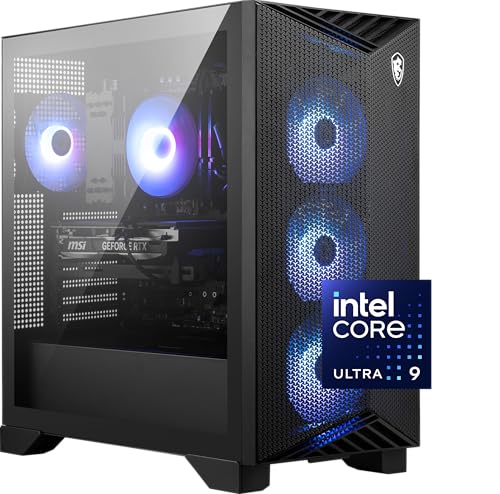
msi Aegis R2 AI Gaming Desktop: Intel Core Ultra 9 285, Geforce RTX 5070Ti, 32GB DDR5, 2TB M.2 NVMe SSD, Air Cooling, USB Type C, VR-Ready, Window 11 Home: C2NVR9-1452US
- Processor: Intel Core Ultra 9 285
- Design: Simplistic, modern design
- Operating System: Windows 11 Home
As an affiliate, we earn on qualifying purchases.
As an affiliate, we earn on qualifying purchases.
Unresolved Questions About Long-Term Upgradability
It is still unclear how long prebuilt systems will remain cost-competitive as hardware supply chains stabilize and new GPU architectures emerge. Additionally, the long-term durability and upgrade paths for prebuilt systems are evolving, with some vendors offering limited upgrade options compared to custom builds. The impact of future software and hardware compatibility remains to be seen, especially as AI workloads grow more demanding and hardware cycles accelerate.
ASUS ROG Astral LC GeForce RTX 5090 32GB GDDR7 OC Edition, NVIDIA, Graphics Card, for Desktop PC, HDMI 2.1b/DisplayPort 2.1b – 360mm AIO Cooler for Optimal Performance
- Architecture: NVIDIA Blackwell with DLSS 4
- Clock Speed: Boosts up to 2610 MHz
- Cooling System: 360mm radiator for optimal cooling
As an affiliate, we earn on qualifying purchases.
As an affiliate, we earn on qualifying purchases.
Upcoming Market Developments and Consumer Choices
In the coming months, expect further product launches from major vendors offering hybrid solutions that combine the convenience of prebuilt systems with modular upgrade options. Market prices for components are also expected to stabilize gradually, potentially shifting the cost advantage back toward DIY builds for some users. Additionally, new software tools and management platforms may simplify hardware customization and maintenance, influencing long-term ownership decisions. Stakeholders should monitor these developments to refine their build vs buy strategies accordingly.
NOVATECH AI Workstation Desktop PC – Intel Core i9-14900K, Liquid Cooling – Machine Learning, Data Science, 3D Rendering, Video Editing, Simulation (RTX 5080 | 64GB RAM | 2TB)
- High-Performance CPU: Intel Core i9-14900K processor
- Powerful GPU: NVIDIA RTX 5080 with 16GB VRAM
- Advanced Cooling System: Liquid cooling for optimal performance
As an affiliate, we earn on qualifying purchases.
As an affiliate, we earn on qualifying purchases.
Key Questions
Are prebuilt AI workstations more reliable than DIY systems?
Prebuilt systems undergo validation tests for thermals, noise, and stability, which can enhance reliability. However, DIY systems can be equally reliable if properly assembled and maintained, though they require more technical expertise.
How much time can I save with a prebuilt system?
Prebuilt AI workstations typically arrive ready to operate within 1–2 weeks, whereas DIY builds can take several months due to sourcing parts, assembly, and testing.
Is the cost of DIY builds still lower in 2026?
Not necessarily. Due to supply chain issues and component price increases, DIY systems often cost more now, with hidden expenses like troubleshooting and maintenance making them less economical overall.
Can I upgrade a prebuilt AI workstation later?
Upgrade options vary by vendor and model. Some prebuilt systems are modular and upgrade-friendly, while others are more limited, so it's important to check compatibility and support policies before purchasing.
Source: ThorstenMeyerAI.com