
📊 Full opportunity report: Build vs Buy a Prebuilt AI Workstation on ThorstenMeyerAI.com — validation score, market gap, and execution plan.

Get smart everyday buys delivered free with Prime
- Fast, free delivery on millions of items
- Prime Video, Amazon Music and more included
- Member-only deals all year
TL;DR
In 2026, the traditional cost advantage of building your own AI workstation has diminished due to component shortages and price spikes. Buyers now must weigh cost, time, thermal control, and warranty options more carefully. The decision depends on individual needs and preferences.
In 2026, the long-standing advantage of building your own AI workstation has largely evaporated, as component shortages and price spikes have made prebuilt systems competitively priced or even cheaper in some configurations, according to industry sources.
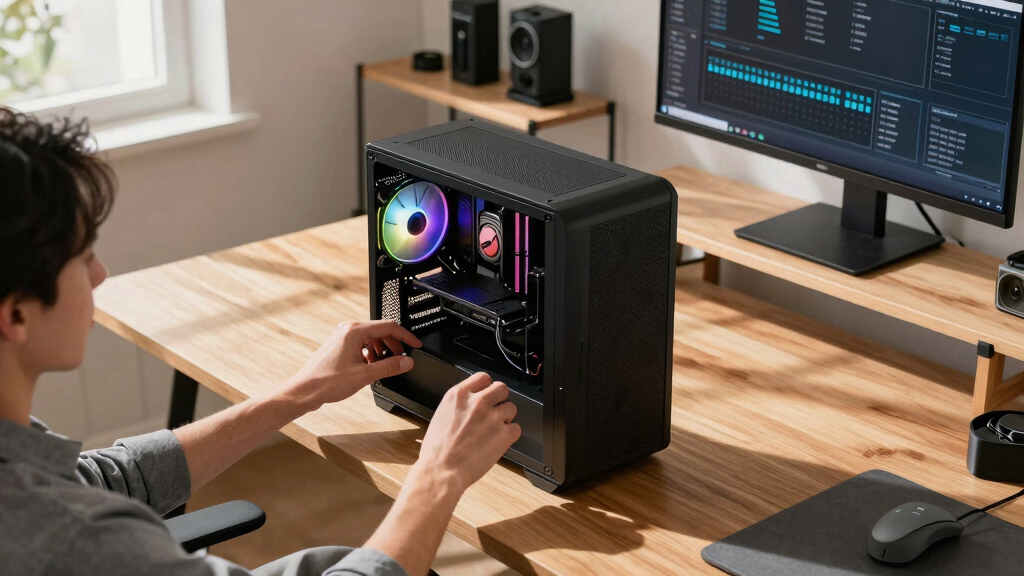
Traditionally, DIY AI workstations were cheaper because users sourced components individually, tuning the hardware for optimal thermal and noise performance. However, recent market disruptions, including shortages of DDR5 RAM, GPUs, and SSDs, have driven up component prices, making custom builds more expensive or comparable to prebuilt options. Major vendors like Lambda and BIZON now offer validated, thermally optimized systems with warranties, often at prices that are difficult to match through DIY. These prebuilt systems undergo extensive burn-in testing, thermal validation, and include support, reducing the risk and time investment for users. Conversely, building your own rig remains attractive for hobbyists, students, or those seeking maximum control and upgradeability, especially if they enjoy the process and have the time to tune thermal and noise settings themselves.Build vs buy
an AI workstation.
The real question behind this whole series: do you pull the five heat-and-noise levers yourself, or buy a prebuilt where the vendor pulled them for you? And in 2026, the old “building is cheaper” rule has broken. Match your situation in Part 3.
Why 2026 Changes the Build vs Buy Equation
The shift in component pricing and availability means that consumers and professionals can no longer assume DIY is always cheaper. This impacts decision-making for those investing in high-power AI workstations, influencing cost, time, thermal management, and support considerations. Understanding this new landscape helps buyers make more informed choices aligned with their needs and budgets.As an affiliate, we earn on qualifying purchases.
Market Disruptions and the Rise of Validated Prebuilts
Since 2026, global component shortages and price spikes—particularly in DDR5 RAM, GPUs, and SSDs—have altered the traditional economics of building AI workstations. Vendors like Lambda, Puget, and BIZON have responded by offering prebuilt systems that are extensively tested for thermal performance and come with warranties, often at competitive prices. Meanwhile, DIY builders face higher costs and more complex thermal tuning, especially for multi-GPU setups. The industry shift reflects a broader trend where prebuilt solutions are no longer just time-savers but also cost-competitive options for high-end AI workloads."The decades-old rule that building is always cheaper has broken in 2026, making the decision more about time, control, and risk than just cost."
— Thorsten Meyer, AI hardware expert
As an affiliate, we earn on qualifying purchases.
Unresolved Questions About Long-Term Upgrades
It is still unclear how the evolving component market will affect prices and availability later in 2026. Additionally, the long-term upgradeability of prebuilt systems versus custom builds remains a topic of debate, especially as new GPU architectures and memory standards emerge.thermal management GPU workstation
As an affiliate, we earn on qualifying purchases.
As an affiliate, we earn on qualifying purchases.
Future Trends in AI Workstation Procurement
Manufacturers are expected to continue refining prebuilt systems with better thermal management and upgrade paths, while DIY builders may focus on niche optimizations. Market prices and component availability will influence the ongoing balance between build and buy options, with consumers needing to reassess their choices periodically. Further developments in modular design and thermal engineering are likely to shape the landscape in the coming months.As an affiliate, we earn on qualifying purchases.
Key Questions
Is building my own AI workstation still cheaper in 2026?
Not necessarily. Due to component shortages and price spikes, prebuilt systems from reputable vendors can now be competitively priced or even cheaper than DIY options for similar configurations.
What are the main advantages of buying a prebuilt AI workstation?
Prebuilts offer plug-and-play convenience, validated thermal performance, warranties, and support, reducing setup time and risk of thermal or hardware issues under sustained load.
Can I upgrade a prebuilt AI workstation later?
It depends on the system. Some prebuilt models are designed for easy upgrades, but others may have limited upgrade paths. DIY builds generally offer more flexibility for future expansion.
How do thermal management considerations influence the build-vs-buy decision?
High-power AI workloads generate significant heat. Vendors validate and optimize thermal performance in prebuilt systems, while DIY builders must tune and engineer cooling solutions themselves, which can be complex and time-consuming.
Source: ThorstenMeyerAI.com
Fall Picks
fall essentials
As an affiliate, we earn on qualifying purchases.