TL;DR
Czech National Bank Governor Aleš Michl said an AI-assisted model forecasts current-quarter GDP about as well as economists. The bank developed its short-term forecasting approach using fast-moving indicators and machine learning, but the speech provides no accuracy statistics or details about the comparison.
The Czech National Bank’s AI-assisted model forecasts current-quarter GDP about as well as economists, Governor Aleš Michl said in a November 13 lecture at Kyoto University. His account describes the bank’s use of machine learning and timely economic indicators, but does not provide accuracy figures or explain how the model’s performance was compared with economists’ forecasts.

Get smart everyday buys delivered free with Prime
- Fast, free delivery on millions of items
- Prime Video, Amazon Music and more included
- Member-only deals all year
Michl said the central bank began developing short-term GDP forecasting methods during the Covid pandemic, when conventional economic data were delayed or blurred. To get a faster read on activity, the bank examined indicators including electricity consumption and highway truck traffic, then built a weekly index from such data.
Machine learning was added in 2023, Michl said. He cited the forecast for GDP in the current quarter as an example of the resulting approach and said it performed as well as economists. The speech does not specify whether those economists worked inside or outside the bank, which forecast period was tested, or what measure of accuracy was used.
Michl presented the forecasting work as one part of the bank’s use of AI. He said the central bank runs a hybrid system: its own servers and graphics processing units, using open-source models for sensitive data, alongside cloud-based AI tools. The bank has a rule governing what information may be sent to the cloud and what must remain on its own systems.
Faster Signals for GDP Forecasts
GDP figures are released after economic activity has taken place and can be revised as more information becomes available. A forecast built from weekly indicators could give policymakers an earlier estimate of whether the economy is expanding or weakening while official data are still incomplete. That timing matters to central banks making decisions about interest rates and the economic outlook.
The Czech bank’s account points to a practical role for AI: combining frequent signals, such as traffic and electricity use, to produce a current-quarter estimate. It does not show that AI replaces economists or improves policy decisions. The reported comparison is limited to forecast performance, and the speech gives no numerical results with which readers could judge how close the forecasts were or whether any advantage persisted over time.
Products Worth Considering
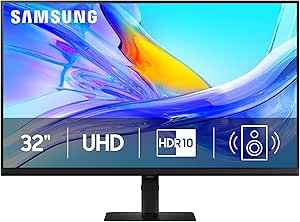
Samsung 32-inch ViewFinity S8 4K UHD IPS Monitor with USB-C and KVM

Dell XPS Tower 8960 Desktop, Intel Core i7-13700, NVIDIA GeForce RTX 4060, 16GB DDR5, 512GB SSD

Logitech MX Mechanical Mini for Mac Wireless Keyboard, Space Gray
As an affiliate, we earn on qualifying purchases.
From Pandemic Data to Machine Learning
The bank’s approach developed in response to a specific problem: during the pandemic, standard data releases were less timely or harder to interpret. Michl said the central bank turned to higher-frequency indicators, including electricity consumption and truck traffic, and assembled them into a weekly index. The method was later supplemented with machine learning in 2023.
In his lecture, Michl described AI use as part of a wider technology program at the Czech National Bank. He said the bank established the Czech National Bank Lab in 2025, separate from monetary policy, to test technologies including AI and digital assets. The GDP forecasting example was presented alongside that work, rather than as a claim that the bank has delegated monetary-policy decisions to AI.
How Forecast Accuracy Was Compared
The speech does not provide forecast error rates, a test period, or a named comparison group. It is not clear whether the comparison was based on forecasts made in real time or assessed retrospectively, or whether it covered one quarter or a longer series. The bank also does not state how the model performed against a simple statistical benchmark.
Michl’s statement is therefore a summary of the bank’s reported experience, not enough information to independently assess the model’s accuracy. The speech does not say whether the AI forecast is used directly in the central bank’s official projections, how much weight policymakers give it, or whether the model has been tested in different economic conditions.
Further Evidence Needed on Performance
The next useful evidence would be a published evaluation setting out the model’s forecasts alongside those of economists and other benchmarks, with the forecast dates, methods, and error measures specified. That would help show whether the reported performance holds across quarters and economic conditions, rather than in a single example.
Michl’s lecture did not announce a release date for such an evaluation or describe a new milestone for the GDP model. For now, the confirmed development is that the Czech National Bank uses machine learning in short-term forecasting and that its governor says the current-quarter GDP forecast performs about as well as economists’ forecasts.
Key Questions
What did the Czech National Bank say its AI can forecast?
Governor Aleš Michl said the bank uses AI to help forecast inflation and GDP. His example concerned GDP for the current quarter.
What data does the GDP forecasting approach use?
Michl said the bank examined electricity consumption and highway truck traffic to create a weekly index of economic activity. It added machine learning in 2023.
Did the bank publish accuracy figures?
No accuracy statistics or detailed comparison were included in the speech. It does not identify the economists used as a benchmark or state the time period and measurement method.
Does this mean AI makes the Czech central bank’s policy decisions?
The speech describes AI as a forecasting aid. It does not say that the system makes interest-rate decisions or replaces the bank’s economists and policymakers.
Source: bis.org