

The best personal finance book for beginners is The Simple Path to Wealth, because it teaches investing and money management in plain language without overwhelming a first-time reader with jargon. If you want a structured, workbook-style approach instead, Personal Finance QuickStart Guide breaks budgeting and saving into small, achievable steps. For total newcomers who need the absolute basics, Finance for Beginners: 101 Concepts covers fundamentals like bank accounts, credit, and interest from scratch. The main tradeoff in this category is between depth and digestibility — some books go deep on investing but assume prior knowledge, while others stay beginner-friendly but stay shallow. Price differences are small, so the real question is which teaching style matches how you learn. Keep reading for the full breakdown of all 15 titles.

Get smart everyday buys delivered free with Prime
- Fast, free delivery on millions of items
- Prime Video, Amazon Music and more included
- Member-only deals all year
Key Takeaways
- The top picks separated themselves by pairing clear explanations with concrete action steps — books that only described concepts without telling readers what to do next ranked lower.
- Age-targeted titles (Personal Finance for Teens and Young Adults, Money Skills for Teens, Financial Literacy for Young Adults) were consistently more engaging for younger readers but too narrow for anyone managing a household budget or debt.
- The two For Dummies titles overlapped heavily; Financial Literacy Essentials For Dummies is the better entry point because it is shorter and cheaper, while the full Personal Finance For Dummies suits readers who want one book to keep as a reference.
- Visual learners have a genuinely distinct option in The Infographic Guide to Personal Finance — the only pick in the lineup whose format, not just content, is its differentiator.
- Debt-focused beginners are better served by The Total Money Makeover than by any general primer, though its investment advice is thin compared with The Simple Path to Wealth.
| Finance for Beginners: 101 Concepts |  | Best Glossary-Style Reference | Format: Paperback / Digital | Audience Level: Beginner | Structure: 101 concept-based entries | VIEW LATEST PRICE | See Our Full Breakdown |
| Personal Finance for Teens and Young Adults: Learn Money Skills Not Taught in School |  | Best for Teens and Students | Format: Paperback / Digital | Target Age: Teens and young adults | Core Topics: Budgeting, saving, investing | VIEW LATEST PRICE | See Our Full Breakdown |
| Personal Finance For Dummies |  | Best Overall | Format: Paperback | Series: For Dummies | Audience Level: Beginner | VIEW LATEST PRICE | See Our Full Breakdown |
| Financial Literacy for Adults Unlocked: Take Control of Your Money, Spend Smarter, Build a Budget That Works, Grow Your Savings, and Invest with Confidence |  | Best for Adults Starting Late | Format: Paperback / Digital | Audience Level: Beginner adults | Core Topics: Budgeting, smarter spending, savings growth, investing basics | VIEW LATEST PRICE | See Our Full Breakdown |
| Personal Finance QuickStart Guide: The Simplified Beginner’s Guide to Eliminating Financial Stress, Building Wealth, and Achieving Financial Freedom |  | Best Fast-Track Read | Format: Paperback / Digital | Series: QuickStart Guide | Audience Level: Beginner | VIEW LATEST PRICE | See Our Full Breakdown |
| Financial Literacy Essentials For Dummies |  | Best Quick Reference | Format: Paperback | Series: For Dummies (Essentials edition) | Topic Coverage: Financial literacy, budgeting, investing basics | VIEW LATEST PRICE | See Our Full Breakdown |
| Money Skills for Teens: A Beginner’s Guide to Budgeting, Saving, and Investing |  | Best for Teen Gift-Giving | Format: Paperback | Target Audience: Teenagers (roughly 13-17) | Topic Coverage: Budgeting, saving, investing fundamentals | VIEW LATEST PRICE | See Our Full Breakdown |
| The Simple Path to Wealth: Your Road Map to Financial Independence and a Rich, Free Life |  | Best Wealth Mindset Pick | Format: Paperback / Kindle | Focus: Financial independence and wealth building | Topic Coverage: Index investing, F-you money, long-term strategy | VIEW LATEST PRICE | See Our Full Breakdown |
| Financial Literacy for Young Adults: How to Manage, Save, and Invest Money |  | Best for Your First Paycheck | Format: Kindle / Paperback | Target Audience: Young adults (18-25) | Topic Coverage: Money management, saving, investing basics | VIEW LATEST PRICE | See Our Full Breakdown |
| How to Adult: Personal Finance for the Real World |  | Best for Life After College | Format: Kindle / Paperback | Target Audience: New adults and recent graduates | Topic Coverage: Budgeting, bills, credit, everyday financial planning | VIEW LATEST PRICE | See Our Full Breakdown |
| The Total Money Makeover: A Proven Plan for Financial Peace |  | Best for Debt Payoff | Format: Paperback, Kindle, Audiobook | Focus Area: Debt reduction, budgeting, wealth building | Experience Level: Beginner to intermediate | VIEW LATEST PRICE | See Our Full Breakdown |
| Before Personal Finance: A Beginner’s Guide to the Future |  | Best True First Step | Format: Kindle, Paperback | Focus Area: Foundational financial concepts | Experience Level: Absolute beginner | VIEW LATEST PRICE | See Our Full Breakdown |
| Personal Finance 101: From Saving and Investing to Taxes and Loans, an Essential Primer on Personal Finance |  | Best All-Around Reference | Format: Paperback, Kindle | Focus Area: Saving, investing, taxes, loans | Experience Level: Beginner | VIEW LATEST PRICE | See Our Full Breakdown |
| The Infographic Guide to Personal Finance: A Visual Reference for Everything You Need to Know | 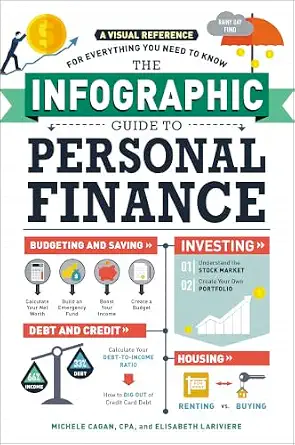 | Best Visual Learners’ Pick | Format: Paperback, Kindle | Focus Area: Budgeting, investing, financial planning | Experience Level: Beginner | VIEW LATEST PRICE | See Our Full Breakdown |
| Personal Finance for Beginners: A Comprehensive Guide to Managing Finances, Raising Your Credit Score, and Achieving Financial Freedom |  | Best for Credit Building | Format: Kindle, Paperback | Focus Area: Money management, credit scores, financial freedom | Experience Level: Beginner | VIEW LATEST PRICE | See Our Full Breakdown |
| personal finance books for beginner | Format | Experience Level | Depth |
|---|---|---|---|
| Finance for Beginners: 101 Con | Paperback / Digital | — | Introductory overview |
| Personal Finance for Teens and | Paperback / Digital | — | Beginner / introductory |
| Personal Finance For Dummies | Paperback | — | Introductory to intermediate |
| Financial Literacy for Adults | Paperback / Digital | — | Introductory |
| Personal Finance QuickStart Gu | Paperback / Digital | — | Simplified introductory |
| Financial Literacy Essentials | Paperback | Beginner | — |
| Money Skills for Teens: A Begi | Paperback | Absolute beginner | — |
| The Simple Path to Wealth: You | Paperback / Kindle | Beginner to intermediate | — |
| Financial Literacy for Young A | Kindle / Paperback | Beginner | — |
| How to Adult: Personal Finance | Kindle / Paperback | Beginner | — |
| The Total Money Makeover: A Pr | Paperback, Kindle, Audiobook | Beginner to intermediate | — |
| Before Personal Finance: A Beg | Kindle, Paperback | Absolute beginner | Introductory |
| Personal Finance 101: From Sav | Paperback, Kindle | Beginner | Introductory to moderate |
| The Infographic Guide to Perso | Paperback, Kindle | Beginner | Introductory overview |
| Personal Finance for Beginners | Kindle, Paperback | Beginner | Introductory to moderate |
More Details on Our Top Picks
Finance for Beginners: 101 Concepts
Finance for Beginners: 101 Concepts takes a different approach than most entries in this lineup: instead of walking you through a financial journey, it breaks personal finance into 101 discrete, digestible concepts. This structure makes it the closest thing here to a reference dictionary, which is exactly why it earns its spot. Compared with Personal Finance For Dummies, which flows as one long tutorial, this format lets a reader look up compound interest or credit utilization without wading through chapters. The tradeoff is real, though — concept lists sacrifice narrative momentum, so readers who need motivation and a step-by-step plan will likely stall out. It also lacks the depth that The Simple Path to Wealth offers for investing. This pick makes the most sense as a companion volume sitting next to a more action-oriented guide, not as your only finance book.
Pros:- Clear, plain-language explanations of core financial concepts
- Bite-size structure makes it easy to read in short sessions
- Covers investing, budgeting, and money management in one volume
- Works well as a reference to return to later
Cons:- Lacks in-depth analysis for readers ready to move past basics
- No step-by-step action plan or workbook-style exercises
- Fragmented format can feel dry compared with narrative-driven guides
Best for: Readers who want a quick-reference companion to look up terms like ETFs, APR, and credit scores on demand
Not ideal for: Anyone seeking a structured, motivational plan — the list format gives knowledge, not a roadmap
- Format:Paperback / Digital
- Audience Level:Beginner
- Structure:101 concept-based entries
- Topics Covered:Personal finance, investing, money management
- Reading Style:Reference / glossary-style
- Depth:Introductory overview
Our verdict“Buy this as a lookup-and-learn reference alongside a more actionable book, not as your sole starting point.”
Personal Finance for Teens and Young Adults: Learn Money Skills Not Taught in School
This title carves out the youngest audience niche in the roundup, and that focus is its whole value proposition. While How to Adult: Personal Finance for the Real World targets recent graduates facing rent and paychecks for the first time, this book starts earlier — covering budgeting, saving, and investing basics for readers who may only have an allowance or first part-time job. The framing around skills schools skip resonates with parents buying for teens. The tradeoffs: because it pitches to a young audience, the tone will feel condescending to anyone over 25, and it stops well short of topics like taxes, insurance, or retirement accounts that Personal Finance 101 handles. Sparse reviews also mean buyers are taking something of a chance compared with established franchises like the For Dummies series.
Pros:- Addresses the school-gap in practical money education
- Covers the three core skills teens need: budgeting, saving, investing
- Accessible tone for readers with zero financial background
- Early start on financial independence mindset
Cons:- Very limited reviews and ratings to judge quality by
- Skips advanced topics like taxes, insurance, and retirement planning
- Age-specific framing limits its usefulness beyond the teen years
Best for: Parents buying for teens, or students aged 14–22 getting their first income and bank account
Not ideal for: Adults with established finances — the tone and content are pitched too young to be useful
- Format:Paperback / Digital
- Target Age:Teens and young adults
- Core Topics:Budgeting, saving, investing
- Positioning:Skills not taught in school
- Goal:Financial independence foundations
- Depth:Beginner / introductory
Our verdict“A solid gift pick for a teenager just starting to earn, but adults should choose a broader guide.”
Personal Finance For Dummies
Personal Finance For Dummies earns the top spot because it does the most things competently for the most readers. The For Dummies franchise formula — plain language, clear chapter organization, no assumed knowledge — is exactly what a nervous beginner needs, and the coverage spans budgeting, saving, investing, and future planning in one volume. Compared with Finance for Beginners: 101 Concepts, it offers a coherent learning path rather than scattered entries; compared with Financial Literacy for Adults Unlocked, it benefits from a decades-old editorial machine that knows how to explain without condescending. The drawbacks are the flip side of breadth: nothing gets explored deeply, readers who already budget and invest will outgrow it quickly, and its size can feel intimidating to someone wanting a weekend read like the Personal Finance QuickStart Guide.
Pros:- Broadest topic coverage in this batch — budgeting through retirement planning
- Trusted franchise with a proven, beginner-friendly teaching format
- Modular chapters let you skip to what you need
- Jargon-free explanations suitable for zero-knowledge starters
Cons:- Wide but shallow — advanced investors will find little of substance
- Longer and denser than quick-start alternatives
- Generic advice not tailored to specific situations or goals
Best for: First-time finance readers who want one trustworthy, all-in-one book covering every major topic
Not ideal for: Intermediate readers who already know the basics and want depth on investing or taxes
- Format:Paperback
- Series:For Dummies
- Audience Level:Beginner
- Topics Covered:Budgeting, saving, investing, future planning
- Structure:Chaptered tutorial format
- Reading Style:Complete guide / reference
- Depth:Introductory to intermediate
Our verdict“If you’re buying exactly one beginner finance book and want maximum topic coverage, this is the safest choice.”
Financial Literacy for Adults Unlocked: Take Control of Your Money, Spend Smarter, Build a Budget That Works, Grow Your Savings, and Invest with Confidence
This book addresses a persona most beginner guides quietly ignore: the adult playing catch-up. Its promise — take control, spend smarter, build a working budget, invest with confidence — speaks to someone in their 30s or 40s who has made money mistakes and feels behind. Compared with Personal Finance for Teens and Young Adults, the starting assumptions are entirely different: this assumes existing bills, debt, and habits that need correcting. The empowerment framing is its strength over drier options like Personal Finance 101, but it also means less hard-edged specificity. There are no worksheets or tools included, the content runs basic for anyone already investing, and the subtitle oversells what a single beginner book can deliver. Still, for a discouraged adult who needs a confidence-building entry point, it fills a genuine gap.
Pros:- Specifically addresses adults correcting course, not just starting out
- Action-oriented framing around spending, budgeting, and saving
- Confidence-building tone for readers anxious about money
- Covers the full arc from budgeting to first investments
Cons:- No included tools, templates, or exercises to apply the advice
- Too elementary for readers who already invest regularly
- Subtitle promises more depth than a beginner book delivers
Best for: Adults in their 30s–50s who feel behind financially and want an encouraging restart guide
Not ideal for: Detail-oriented readers who want worksheets, calculators, or rigorous strategy — none are included
- Format:Paperback / Digital
- Audience Level:Beginner adults
- Core Topics:Budgeting, smarter spending, savings growth, investing basics
- Positioning:Empowerment / take-control guide
- Included Tools:None
- Depth:Introductory
Our verdict“Choose this if you’re an adult restarting your financial life and want encouragement over spreadsheets.”
Personal Finance QuickStart Guide: The Simplified Beginner’s Guide to Eliminating Financial Stress, Building Wealth, and Achieving Financial Freedom
The QuickStart Guide wins on speed and accessibility. Where Personal Finance For Dummies asks for a multi-week commitment, this is built to be finished in days, not months, with simplified strategies aimed squarely at readers paralyzed by financial stress. That emotional hook — eliminating stress before optimizing returns — differentiates it from wealth-focused titles like The Simple Path to Wealth, which assumes you’re already past the anxiety stage. The simplification is also the compromise: complex topics get compressed, advanced strategies are absent, and there are no tools or worksheets to bridge reading and doing. Readers who finish it will likely want a follow-up volume. As a first domino for an overwhelmed beginner, though, it’s arguably the least intimidating entry point in this entire lineup.
Pros:- Short, fast read that respects limited attention and time
- Directly addresses financial stress and anxiety
- Practical, simplified wealth-building steps
- Lowest intimidation factor of any full guide in this batch
Cons:- Lacks detailed or advanced financial strategies
- No included tools, templates, or resources
- Most readers will outgrow it and need a second book
Best for: Overwhelmed beginners who want a short, low-commitment book to build momentum fast
Not ideal for: Readers wanting depth, worksheets, or advanced strategy — this is deliberately simplified
- Format:Paperback / Digital
- Series:QuickStart Guide
- Audience Level:Beginner
- Core Topics:Stress reduction, budgeting, wealth building, financial freedom
- Reading Commitment:Short / fast-read format
- Included Tools:None
- Depth:Simplified introductory
Our verdict“The right first book if money anxiety has stopped you from reading anything else — just plan to follow it up.”
Financial Literacy Essentials For Dummies
For readers who want broad coverage without wading through a 400-page manual, this condensed entry in the For Dummies line fills a specific gap. Compared with Personal Finance For Dummies, which runs long and assumes patience, this trimmed version delivers the core vocabulary of budgeting, saving, and investing in a format someone can finish in a weekend. The chapters function well as a reference — useful when a term like an index fund or credit utilization comes up and you just need a clear definition fast. The tradeoff is depth: anyone comparing it to The Simple Path to Wealth will notice it explains concepts but rarely argues for a strategy. This pick makes the most sense for beginners who want a dictionary-plus-primer hybrid, not a philosophy of money.
Pros:- Clear, jargon-free explanations of core financial concepts
- Compact and quick to finish compared with full-length Dummies editions
- Works well as an ongoing reference rather than a one-time read
- Covers budgeting, saving, and investing in one slim volume
Cons:- Stops short of advanced topics like tax planning or real estate
- No workbook elements, digital tools, or supplementary materials
- More descriptive than prescriptive — few concrete action plans
Best for: Beginners who want a fast, scannable overview of financial terms and basics before committing to a longer book
Not ideal for: Readers seeking a step-by-step wealth-building plan or actionable investment strategy — this is vocabulary-first, not action-first
- Format:Paperback
- Series:For Dummies (Essentials edition)
- Topic Coverage:Financial literacy, budgeting, investing basics
- Experience Level:Beginner
- Supplementary Materials:None included
- Reading Style:Reference-friendly, modular chapters
Our verdict“Choose this if you want a fast, digestible financial glossary-and-primer rather than a motivational or tactical money book.”
Money Skills for Teens: A Beginner’s Guide to Budgeting, Saving, and Investing
Most beginner finance books are written for people who already have paychecks and bills; this one starts earlier, which is exactly why it earns its spot. Where How to Adult assumes its reader has landed a first job and apartment, Money Skills for Teens works with allowance money, first part-time wages, and the temptation of online spending. The language is deliberately plain, and the budgeting-first structure mirrors how teens actually encounter money. Compared with Personal Finance for Teens and Young Adults, it trades depth for approachability — a reasonable exchange when the goal is getting a 15-year-old to actually finish the book. The drawback is ceiling: an 18-year-old with a brokerage account will outgrow it within months, and the investing section stays at surface level throughout.
Pros:- Age-appropriate examples grounded in teen spending situations
- Language simple enough for reluctant readers
- Balanced coverage of budgeting, saving, and first investing concepts
- Short enough to hold a teenager’s attention
Cons:- Content becomes basic quickly for teens already handling real accounts
- No workbook exercises or interactive tools to reinforce habits
- Investing coverage is introductory at best
Best for: Parents and grandparents gift-shopping for teens aged 13-17 who have no financial foundation yet
Not ideal for: College grads or young adults with income and real bills — the teen framing will feel patronizing and the content too thin
- Format:Paperback
- Target Audience:Teenagers (roughly 13-17)
- Topic Coverage:Budgeting, saving, investing fundamentals
- Experience Level:Absolute beginner
- Tone:Conversational, teen-friendly
- Supplementary Materials:None listed
Our verdict“A solid first money book for a teenager, as long as nobody expects it to carry them past the basics.”
The Simple Path to Wealth: Your Road Map to Financial Independence and a Rich, Free Life
Unlike the reference-style books in this lineup, The Simple Path to Wealth is built around one coherent argument: financial independence is achievable through a small set of consistent behaviors, not clever tactics. Compared with Financial Literacy Essentials For Dummies, which surveys many topics shallowly, this book goes narrow and deep on a single philosophy — and that focus is why it resonates with readers who feel paralyzed by money advice. The ‘F-you money’ framing and index-fund-centric approach give beginners an actual worldview to adopt. The tradeoff is that it is light on mechanics: a reader who wants budget templates or step-by-step account setup will get more from How to Adult. It also assumes a US context, which matters for international readers. This is the book for someone who needs motivation and direction first, spreadsheets later.
Pros:- Presents one clear, coherent wealth-building philosophy rather than scattered tips
- Genuinely motivating for readers stuck in financial paralysis
- Accessible writing despite covering long-term investing concepts
- Strong on the psychology of money and independence
Cons:- Limited detail on day-to-day budgeting mechanics
- US-centric investment and tax assumptions
- No companion resources, tools, or workbook included
Best for: Beginners who want a persuasive philosophy of money and financial independence rather than a how-to manual
Not ideal for: Hands-on readers who want templates, worksheets, and granular budgeting instructions — the tactical detail is thin
- Format:Paperback / Kindle
- Focus:Financial independence and wealth building
- Topic Coverage:Index investing, F-you money, long-term strategy
- Experience Level:Beginner to intermediate
- Regional Focus:United States
- Supplementary Materials:None included
Our verdict“Pick this if you want a mindset and roadmap for financial independence, not a checklist of money tasks.”
Financial Literacy for Young Adults: How to Manage, Save, and Invest Money
This book occupies the space between teen-oriented titles and full adult money manuals, and that positioning is its main strength. A reader graduating from Money Skills for Teens will find the natural next step here: first salaries, emergency funds, and opening a first investment account. Compared with The Simple Path to Wealth, it spends far more time on the mechanics of managing and saving money day to day, which matters more to a 22-year-old than a FIRE roadmap. The independence-focused framing speaks directly to readers leaving home for the first time. Where it falls short is investing: the strategies stay general, so a reader ready to pick actual funds will need a follow-up book. For someone with their first real income and no plan, though, this option stands out as the most age-calibrated starting point in this lineup.
Pros:- Directly addresses first-job financial situations like first budgets and emergency funds
- Balances managing, saving, and investing without overwhelming newcomers
- Tone matched to readers just leaving home or starting work
- Builds a clear foundation before introducing investing concepts
Cons:- Investment strategies lack actionable depth
- Overlaps heavily with general beginner titles once you move past the young-adult framing
- No worksheets or digital resources provided
Best for: Young adults aged 18-25 handling their first real income who need a managing-money foundation
Not ideal for: Readers wanting concrete investment guidance or portfolio specifics — the investing chapters stay introductory
- Format:Kindle / Paperback
- Target Audience:Young adults (18-25)
- Topic Coverage:Money management, saving, investing basics
- Experience Level:Beginner
- Primary Focus:Building financial independence early
- Supplementary Materials:None provided
Our verdict“The right first book for someone with their first paycheck and zero financial plan — just plan to supplement it on investing later.”
How to Adult: Personal Finance for the Real World
Of all the books in this roundup, this one leans hardest into everyday adult logistics — rent, bills, insurance, credit, and the unglamorous paperwork nobody teaches you. Where Financial Literacy for Young Adults stops at managing and saving, How to Adult extends into the practical responsibilities of running a household, making it the better fit for someone already living independently. Compared with The Simple Path to Wealth, the ambition is smaller but more immediate: survival and stability before wealth. The relatable, slightly humorous tone lowers the intimidation factor for readers who find denser finance books alienating. The cost of that accessibility is depth — investing gets minimal treatment, and readers past the struggle phase will find little here. This pick makes the most sense for someone drowning in new adult responsibilities, not optimizing a portfolio.
Pros:- Covers real-world adult topics like bills, credit, and insurance that many finance books skip
- Approachable, relatable tone that reduces intimidation
- Practical budgeting guidance aimed at actual living expenses
- Well suited to readers with zero financial background
Cons:- Investing coverage is minimal compared with wealth-focused titles
- Content becomes irrelevant quickly once basics are mastered
- Little guidance on long-term planning or tax strategy
Best for: Recent graduates and twenty-somethings newly managing rent, bills, and credit who feel unprepared for adult money tasks
Not ideal for: Readers with stable finances seeking wealth-building strategy — the investing and advanced-planning content is thin
- Format:Kindle / Paperback
- Target Audience:New adults and recent graduates
- Topic Coverage:Budgeting, bills, credit, everyday financial planning
- Experience Level:Beginner
- Tone:Casual and practical
- Supplementary Materials:None included
Our verdict“Ideal for someone learning to run their financial life for the first time; too basic for anyone past the survival stage.”
The Total Money Makeover: A Proven Plan for Financial Peace
The Total Money Makeover stands out for readers who want a step-by-step plan rather than a survey of financial concepts. Where Personal Finance 101 explains what saving and investing are, this book tells you exactly what to do first, second, and third — its debt snowball method is the reason it has become a default recommendation for people drowning in consumer debt. Compared with Personal Finance for Beginners, it is far more disciplined and prescriptive, which is both its strength and its weakness. The tradeoff: readers searching for nuanced investing guidance will find the advice thin and opinionated in places. This pick makes the most sense for someone who wants a coach, not a textbook, and is ready to commit to following the plan in order.
Pros:- Clear, sequenced action plan rather than abstract theory
- Proven debt snowball framework with motivating success stories
- Updated and expanded edition reflects current financial realities
- Strong behavioral focus that addresses the psychology of spending
Cons:- Requires genuine commitment to follow the full plan sequentially
- Investing guidance is oversimplified and ideologically rigid
- Not designed for readers wanting quick or passive fixes
Best for: Readers carrying credit card or student loan debt who want a strict, ordered payoff plan
Not ideal for: Debt-free readers focused on investing strategy — the plan’s early chapters will feel irrelevant and the investing section is shallow
- Format:Paperback, Kindle, Audiobook
- Focus Area:Debt reduction, budgeting, wealth building
- Experience Level:Beginner to intermediate
- Structure:Sequential step-by-step plan
- Signature Method:Debt snowball
- Edition:Updated and expanded
Our verdict“Buy this if debt is your biggest obstacle and you want a no-nonsense playbook to eliminate it.”
Before Personal Finance: A Beginner’s Guide to the Future
This is the gentlest on-ramp in the entire lineup. Before Personal Finance is built for readers who feel intimidated even opening a book like Personal Finance 101, which assumes at least passing familiarity with financial vocabulary. Here, every concept starts from zero, which makes it the natural prequel to more detailed guides — read this, then graduate to something heavier. The tradeoff is real: compared with The Total Money Makeover, there is no plan to follow, and compared with The Infographic Guide to Personal Finance, there are no visuals to speed comprehension. What it does offer is a judgment-free starting point that builds confidence before accountability. This pick makes the most sense for someone who has never budgeted, never opened a savings account intentionally, and needs permission to start small.
Pros:- Assumes zero prior knowledge, unlike most beginner guides
- Approachable tone that reduces intimidation
- Establishes vocabulary needed for more advanced books
- Short enough to finish before losing momentum
Cons:- Lacks detailed strategies or actionable frameworks
- No worksheets, tools, or supplementary resources
- Content readers will quickly outgrow
Best for: Complete novices who feel overwhelmed by finance jargon and want the simplest possible entry point
Not ideal for: Readers ready to act — there’s no budgeting template, plan, or actionable framework here
- Format:Kindle, Paperback
- Focus Area:Foundational financial concepts
- Experience Level:Absolute beginner
- Structure:Conceptual overview
- Depth:Introductory
- Best Use:Pre-study before a full personal finance guide
Our verdict“Choose this only as a confidence-builder before moving to a structured guide.”
Personal Finance 101: From Saving and Investing to Taxes and Loans, an Essential Primer on Personal Finance
Personal Finance 101 earns its place as the most balanced primer in this lineup — it covers saving, investing, taxes, and loans with enough depth to be useful but enough clarity that a beginner won’t drown. Where Before Personal Finance stops at definitions, this book explains how the pieces connect: why a tax-advantaged account matters, how loan terms change total cost. Compared with The Infographic Guide to Personal Finance, it trades visual speed for substantive explanation, making it the better choice for readers who want to understand rather than skim. The drawback is that it’s a reference, not a plan — unlike The Total Money Makeover, it won’t tell you what to do next Tuesday. Readers who already know the basics will find it too introductory to justify the shelf space.
Pros:- Broad coverage spanning saving, investing, taxes, and loans in one volume
- Clear explanations that connect concepts rather than isolating them
- Works as both a read-through and a later reference
- Balanced tone without ideological agenda
Cons:- No step-by-step plan or worksheets
- Content may feel basic for readers with existing financial literacy
- No companion digital tools or updates
Best for: Self-directed beginners who want one book that covers the full landscape before making decisions
Not ideal for: Advanced readers or people seeking a specific action plan — it explains topics rather than prescribing steps
- Format:Paperback, Kindle
- Focus Area:Saving, investing, taxes, loans
- Experience Level:Beginner
- Structure:Topic-by-topic primer
- Depth:Introductory to moderate
- Best Use:Complete financial literacy foundation
Our verdict“The best single book for a beginner who wants broad understanding before committing to any strategy.”
The Infographic Guide to Personal Finance: A Visual Reference for Everything You Need to Know
For readers whose eyes glaze over at dense paragraphs, The Infographic Guide to Personal Finance solves a real problem: it communicates budgeting, investing, and planning through charts and diagrams that can be absorbed in minutes. Compared with Personal Finance 101, this option trades depth for speed — you’ll grasp the shape of a concept quickly, but you won’t get the underlying reasoning spelled out. It also outperforms Before Personal Finance as a quick-reference desk companion, since you can find a chart faster than you can locate a paragraph. The tradeoffs: complex topics like tax strategy or retirement accounts get compressed to the point of oversimplification, and there are no digital extras. This pick makes the most sense for visual learners, busy readers, or anyone who wants a refresher they’ll actually revisit.
Pros:- Infographic format makes concepts graspable in minutes
- Works exceptionally well as an ongoing quick reference
- Covers budgeting, investing, and planning in one visual volume
- Less intimidating than text-heavy alternatives
Cons:- Lacks the depth needed for advanced financial decisions
- No accompanying digital resources or downloadable tools
- Some complex topics are oversimplified by necessity
Best for: Visual learners and busy readers who want fast comprehension and a re-skimmable reference
Not ideal for: Readers who need detailed explanations of investing or tax mechanics — the visuals compress away the nuance
- Format:Paperback, Kindle
- Focus Area:Budgeting, investing, financial planning
- Experience Level:Beginner
- Structure:Infographic-based visual reference
- Depth:Introductory overview
- Best Use:Quick reference and visual learning
Our verdict“Pick this if you learn by seeing and want a reference you’ll return to instead of a book you’ll read once.”
Personal Finance for Beginners: A Comprehensive Guide to Managing Finances, Raising Your Credit Score, and Achieving Financial Freedom
What separates Personal Finance for Beginners from the rest of this lineup is its dedicated focus on credit scores — a topic most general primers, including Personal Finance 101, treat as an afterthought. For readers whose financial pain point is a thin or damaged credit file rather than debt or investing, this is the more targeted choice, with practical tactics for raising your score and building toward financial freedom. Compared with The Total Money Makeover, it’s less rigid and more holistic, though that comes at a cost: the investing coverage is thin, so anyone whose next step is portfolio-building will need another book. The framing around long-term financial independence gives beginners a motivating destination, not just chores. This pick makes the most sense for credit-focused readers who want broader context around that goal.
Pros:- Credit score guidance that most beginner books gloss over
- Frames basics around the motivating goal of financial freedom
- Practical tips rather than pure theory
- Broad enough to serve as a general starting guide
Cons:- Investment strategies lack detail and depth
- Overlaps significantly with cheaper, more established alternatives
- No supplementary tools or worksheets
Best for: Beginners whose primary goal is repairing or building credit while learning money management basics
Not ideal for: Readers focused on investing strategy — the investment sections are too thin to act on
- Format:Kindle, Paperback
- Focus Area:Money management, credit scores, financial freedom
- Experience Level:Beginner
- Structure:Comprehensive topical guide
- Depth:Introductory to moderate
- Best Use:Credit building within a broader beginner framework
Our verdict“Buy this if your credit score is the obstacle standing between you and your financial goals.”

How We Picked
I evaluated each book on five factors: accessibility for true beginners (no assumed jargon or prior knowledge), actionability (does the reader finish with concrete next steps?), coverage breadth (budgeting, saving, credit, investing, and debt), engagement (whether a new reader is likely to actually finish it), and value for money relative to competing titles. Books that duplicated another pick’s content with less clarity ranked lower, which is why several similar-sounding titles sit far apart in the final order.
The ranking also reflects audience fit. A book that is excellent for a 16-year-old can be a poor choice for a 35-year-old with credit card debt, so I weighted versatility — how many types of beginners a book genuinely serves — heavily at the top of the list. Niche picks that do one job exceptionally well earned their places by being the clear best option for that job, not by trying to compete as all-around primers.
| personal finance books for beginner | Depth | Experience Level |
|---|---|---|
| Finance for Beginners: 101 Con | Introductory overview | — |
| Personal Finance for Teens and | Beginner / introductory | — |
| Personal Finance For Dummies | Introductory to intermediate | — |
| Financial Literacy for Adults | Introductory | — |
| Personal Finance QuickStart Gu | Simplified introductory | — |
| Financial Literacy Essentials | — | Beginner |
| Money Skills for Teens: A Begi | — | Absolute beginner |
| The Simple Path to Wealth: You | — | Beginner to intermediate |
| Financial Literacy for Young A | — | Beginner |
| How to Adult: Personal Finance | — | Beginner |
| The Total Money Makeover: A Pr | — | Beginner to intermediate |
| Before Personal Finance: A Beg | Introductory | Absolute beginner |
| Personal Finance 101: From Sav | Introductory to moderate | Beginner |
| The Infographic Guide to Perso | Introductory overview | Beginner |
| Personal Finance for Beginners | Introductory to moderate | Beginner |
Factors to Consider When Choosing Personal Finance Books For Beginners
Choosing a beginner finance book is less about finding the “best” book overall and more about matching the book to your starting point and your goal. Before buying, think through the following factors.Match the Book to Your Life Stage
A book written for teenagers will waste chapters explaining what a paycheck is, while a book aimed at working adults may skip basics you genuinely need. Teens and students get more from titles focused on first paychecks, student loans, and building habits early. Adults juggling rent, credit card balances, or family expenses need a book that addresses debt payoff and cash flow management head-on. The most common buying mistake is grabbing a bestseller without checking its target audience — many popular finance books assume the reader already has income, savings, or investments to optimize. Read the subtitle and table of contents before buying; it usually reveals the intended reader within a minute.
Decide Whether You Want Concepts or a Plan
Some books teach you how money works — what compound interest is, how credit scores are calculated — while others hand you a step-by-step system to follow. Neither approach is wrong, but they serve different needs. If you feel confused about finance in general, a concepts-first book builds the foundation you need before any plan makes sense. If you already know the basics but feel stuck, a prescriptive plan-style book gives you the momentum of checking off steps. Buyers who pick the wrong type often abandon the book halfway through, which is the most expensive mistake of all since an unread book teaches nothing.
Check the Coverage Against Your Actual Problems
Sit down and list your top three money concerns — common ones include debt, no savings, bad credit, or not knowing how to invest. Then compare that list to the book’s table of contents. A book with brilliant investing chapters will not help if your real problem is a credit score in the 500s. General primers try to cover everything, which means each topic gets limited depth; that is fine for orientation but frustrating if one issue dominates your finances. Specialized depth usually costs the same price as broad coverage, so buy the book that spends the most pages on your specific situation.
Format Matters More Than You Think
Finance content is dense, and the format that gets you to finish the book beats the format that looks impressive on a shelf. Visual learners often stall on dense text but retain information from illustrated or infographic-style guides, which is why at least one visual pick belongs in this category. Audio editions work well for commuters but make it harder to absorb worksheets, tables, and step-by-step exercises. If a book includes budgeting templates or planning worksheets, the print or ebook version usually delivers more value than the audiobook. Be honest about how you actually consume information, not how you wish you did.
Beware of Books That Sell a Philosophy
Some finance books are really vehicles for a specific money philosophy — a particular debt method, investing strategy, or worldview. These can be motivating, but beginners rarely have the context to know which claims are consensus advice and which are one author’s opinion. A good habit is to pair a strong-opinion book with a neutral primer so you can tell the difference. Check the publication date, too: books covering taxes, retirement account rules, or loan programs age faster than books about general money habits. Core principles like budgeting and compound interest hold up for decades; specifics about account limits and tax brackets do not.
Price Should Be Your Last Filter
Most beginner finance books sit in a narrow price band, so a few dollars’ difference should rarely decide your purchase — the wrong cheap book costs more in wasted time than the right slightly pricier one. Where price does matter is with series titles: publishers often sell both a short essentials edition and a full-length edition of nearly the same content. Buying the shorter edition first and upgrading later is a legitimate strategy if you are unsure how much depth you need. Library availability is also worth checking before purchasing, since many of these titles circulate widely. Spend your decision energy on fit, not on saving three dollars.
Frequently Asked Questions
Should I start with a general primer or a book focused on my biggest problem, like debt?
Start with whichever issue is actively costing you money. If high-interest debt is your dominant problem, a debt-focused plan book will deliver results faster than a broad primer that spends only one chapter on the topic. If your finances feel generally confusing rather than broken, a concepts-first primer builds the foundation that makes a debt plan easier to stick with later. Many readers do best reading a specialized book first for quick wins, then a general primer a few months later to fill gaps. The mistake to avoid is buying both at once and reading neither.
Are the big-name bestsellers like The Total Money Makeover still worth reading as a beginner?
Yes, but with expectations set correctly. The Total Money Makeover excels at debt motivation and gives a clear, sequential plan, which is exactly what many overwhelmed beginners need. Its weakness is that it goes light on investing mechanics, and its philosophy on credit and investing is one author’s strong opinion rather than neutral consensus. A beginner who reads it should treat the debt-payoff system as the core value and seek a second book for investing specifics. Pairing it with something like The Simple Path to Wealth covers both sides well.
Do I need multiple books, or is one enough to get started?
One well-chosen book is enough to take real action — opening the right accounts, building a budget, starting an emergency fund. Multiple books become valuable when they cover genuinely different ground, such as one for debt and one for investing, or when the first book’s teaching style did not click. What does not work is stacking three general primers on top of each other, since they repeat the same 80% of content. A practical approach is to finish one book, act on it for a month, and only then decide whether a second is needed. Action between books matters more than the number of books themselves.
Are the teen and young adult titles useful for adults, or should I skip them?
Adults can learn from them, but they are rarely the best use of reading time. These books spend significant space on first-job basics, allowance-style budgeting, and explaining what banks do — material most working adults can skim past. Where they genuinely shine is engagement: their tone and examples are often less intimidating than adult-focused books, which matters if past finance books have made you feel stupid. An adult with zero financial background and low confidence may actually finish a young-adult title where a denser book would get abandoned. Otherwise, an adult beginner is better served by a standard primer.
How current do these books need to be, given that tax rules and account limits change?
Core money skills — budgeting, saving, compound interest, debt payoff — do not expire, so a slightly older edition of a well-regarded book remains very useful. What ages quickly is anything with specific numbers: retirement contribution limits, tax brackets, student loan program details, and interest rate assumptions. If a book leans heavily on those specifics, buy the most recent edition available. If it focuses on habits and frameworks, an older edition at a lower price is usually a smart buy. For anything touching taxes or loan programs, verify current figures on official government sites rather than relying on any book’s numbers.
Conclusion
For best overall, The Simple Path to Wealth earns the top spot because it balances accessibility, actionability, and depth better than anything else in the lineup. The best value pick is Financial Literacy Essentials For Dummies, which delivers the core curriculum at the lowest commitment of time and money. If you want the most thorough single purchase, Personal Finance for Dummies or Personal Finance for Beginners: A Comprehensive Guide work as full reference books you will return to for years. True beginners who feel intimidated should start with Finance for Beginners: 101 Concepts or, for visual learners, The Infographic Guide to Personal Finance. For specific needs: The Total Money Makeover for debt payoff, Money Skills for Teens or Personal Finance for Teens and Young Adults for younger readers, and How to Adult for recent graduates facing real-world expenses for the first time. Whichever you choose, the deciding factor should be the book you will actually finish — a completed average book beats an abandoned perfect one every time.