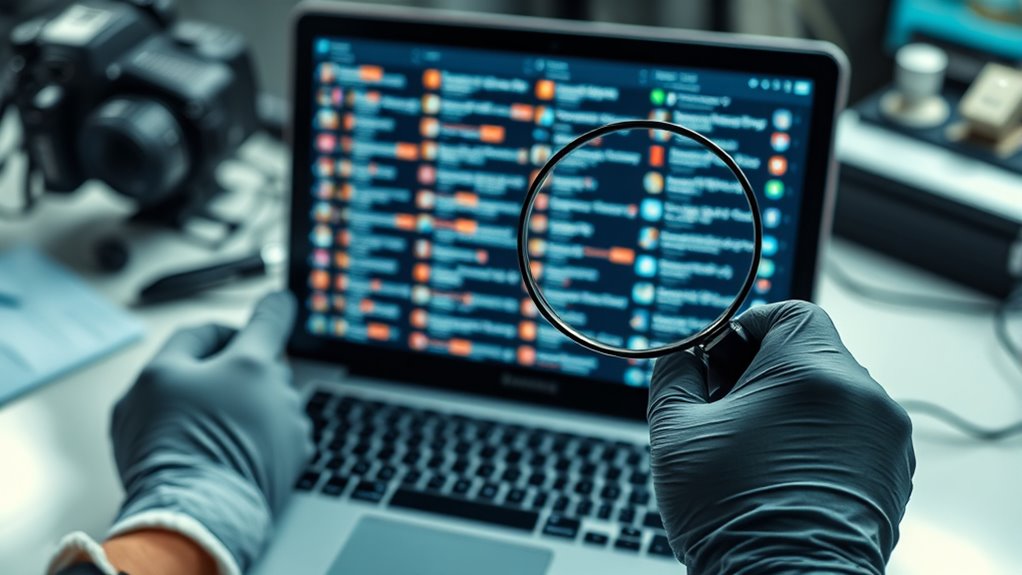

Journalists can uncover your past tweets by using archival searches that dig into stored data, snapshots, and public archives of social media pages. They employ monitoring tools to track keywords, mentions, and related content over time, even if you’ve deleted or hidden posts. These techniques reveal digital footprints that might otherwise be lost. If you want to know how to keep your online history private, discover the strategies that can help you stay protected.

Get smart everyday buys delivered free with Prime
- Fast, free delivery on millions of items
- Prime Video, Amazon Music and more included
- Member-only deals all year
Key Takeaways
- Journalists use archival social media tools to retrieve deleted or hidden tweets from stored data repositories.
- Monitoring tools track keywords, hashtags, or users to discover relevant past tweets, even if removed.
- Archived searches allow access to static snapshots of social profiles, revealing content no longer visible publicly.
- To clean your online footprint, delete inappropriate tweets and regularly review privacy settings to control future visibility.
- Being aware of digital footprints emphasizes proactive management, as past tweets can resurface through archives or monitoring.

Have you ever wondered how journalists manage to find old tweets that you thought were long forgotten? It’s no coincidence that your past social media posts sometimes resurface during news reports or investigations. Journalists use a combination of techniques, with archival searches and social media monitoring being two of the most common methods to track down those digital remnants you might prefer to keep hidden.
Archival searches involve digging through stored data repositories, sometimes years old, to retrieve content that’s no longer visible on your profile. Media organizations and investigative teams often utilize specialized tools that archive social media activity, either through partnerships with data providers or public archives. These archives preserve snapshots of social media pages, allowing journalists to access past tweets even if you’ve deleted them or they’ve been hidden from your regular feed. This process is akin to flipping through old newspapers or archived documents, but in a digital format. It’s especially useful when trying to establish a timeline of events or verify claims, as it offers concrete evidence of what you posted at a specific time.
Social media monitoring, on the other hand, involves actively tracking social platforms for content related to specific keywords, phrases, or individuals. Journalists set up monitoring tools that scan public posts in real-time or periodically check for mentions of particular topics or names. These tools can pick up on old tweets that match certain criteria, especially if they’ve been retweeted, replied to, or linked to in other posts. Monitoring also helps journalists discover content you might have forgotten about or didn’t realize was still accessible. For example, if you posted a controversial comment years ago, social media monitoring tools might flag it when a journalist searches for related terms.
Together, these techniques make it possible for journalists to piece together your online history, even if you think you’ve moved past it. The key is that social media platforms retain data in various forms, and with the right tools, journalists can access and analyze this information. If you’re concerned about your digital footprint, understanding these methods underscores the importance of managing your online presence carefully. Regularly reviewing your privacy settings and deleting posts you no longer want public can help, but remember — once something is out there, it’s often just a matter of time before it’s rediscovered through archival searches or social media monitoring.
As an affiliate, we earn on qualifying purchases.
Frequently Asked Questions
Can Journalists Access Deleted Tweets?
Journalists can sometimes access deleted tweets through archiving practices or search engine caches. Even if you delete a tweet, it might still appear in archives or cached pages stored by search engines. These snapshots can be retrieved, so your deleted content isn’t entirely gone. To protect your privacy, consider regularly reviewing your privacy settings and understanding how archiving practices and search engine caches work, as they can preserve your tweets longer than you expect.
Do Private Accounts Get Investigated?
You might wonder if private accounts get investigated, and the answer is yes, sometimes they do. Journalists and investigators can explore privacy concerns by requesting account information or using other methods, even if your account is private. While account privacy offers some protection, it doesn’t guarantee complete safety from scrutiny. Always remember that your privacy settings are important, but they aren’t foolproof against persistent inquiries.
How Far Back Can Tweets Be Retrieved?
Ever wonder how far back your tweets can be retrieved? Thanks to archiving practices and advanced tweet retrieval methods, journalists and researchers can access tweets from years ago, sometimes even before your account was active. Social media platforms don’t always delete old content completely, making it possible to uncover past messages. So, if you’re concerned about your digital footprint, it’s wise to review your tweets regularly and be mindful of what you share.
Are Third-Party Tools Used by Journalists?
Yes, journalists often use third-party tools like archival services and social media monitoring platforms to find your past tweets. These tools allow them to access archived content and track social media activity over time, making it easier to uncover old posts. By using these tools, they can efficiently dig through your online history, so it’s wise to be mindful of what you share publicly, knowing it could be retrieved later.
How Can I Prevent My Tweets From Being Found?
Think of your tweets as messages in a bottle floating in the internet ocean. To prevent them from being found, set your privacy settings to private, so only approved followers see them. Regularly review your tweet archiving, deleting any that could be embarrassing later. This way, you’re controlling your digital footprint, making it less accessible to journalists or anyone else hunting for your past online, keeping your online reputation safer.
As an affiliate, we earn on qualifying purchases.
Conclusion
Remember, your tweets are like footprints in the sand—easily traced back to you. Journalists have the tools to follow every mark you leave behind, revealing parts of your story you might wish to hide. But just as tides can wash away footprints, you can clean your digital trail. Be mindful of what you share and act now to clear the path before someone uncovers a chapter you’d rather keep hidden.
private social media browsing tools
As an affiliate, we earn on qualifying purchases.
As an affiliate, we earn on qualifying purchases.
online reputation management software
As an affiliate, we earn on qualifying purchases.
As an affiliate, we earn on qualifying purchases.
Fall Picks
fall essentials
As an affiliate, we earn on qualifying purchases.