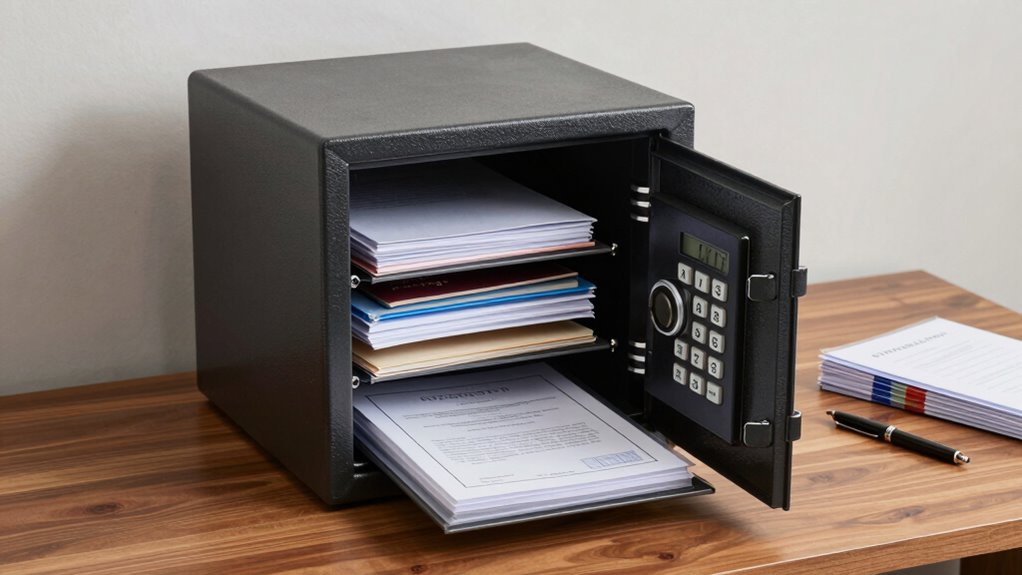

To store legal and identity documents safely, encrypt digital copies with strong software and keep encryption keys secure. Use fire-resistant safes to protect physical documents, and store backups in multiple secure locations, like a trusted relative’s home or safety deposit box. Organize and label all records clearly, updating them regularly. Combining digital encryption, fireproof safes, and multiple backups creates a layered security system. If you want to learn more about securing your important documents, keep exploring ways to enhance your protection strategy.

Get smart everyday buys delivered free with Prime
- Fast, free delivery on millions of items
- Prime Video, Amazon Music and more included
- Member-only deals all year
Key Takeaways
- Encrypt digital copies with strong software and keep encryption keys secure.
- Store physical documents in fire-resistant safes, securely bolted and discreetly located.
- Maintain multiple copies both digitally (encrypted) and physically in separate, safe locations.
- Organize and label documents clearly, updating regularly to ensure accuracy.
- Use advanced security tools like biometric safes and implement layered storage strategies.
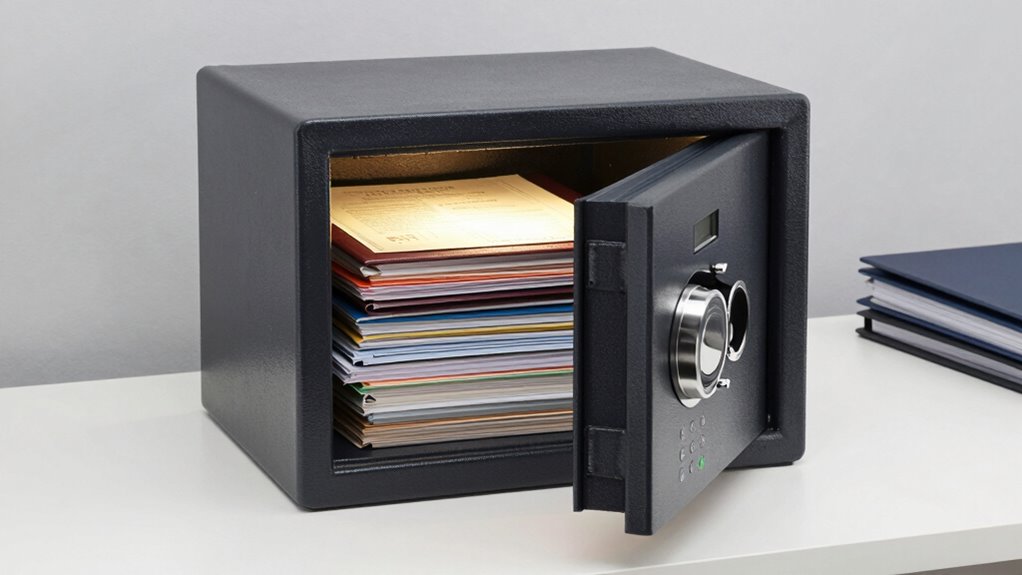
Have you ever wondered what the best way is to keep your legal and identity documents safe? Protecting these sensitive papers is crucial, especially given how easily they can be lost, stolen, or damaged. One of the most effective methods is to use digital encryption for electronic files. When storing digital copies of your documents, ensure your files are encrypted with strong, reliable software. Digital encryption converts your data into a coded format, making it unreadable without a decryption key. This prevents unauthorized access even if your device or cloud storage gets compromised. Always keep your encryption keys secure and avoid sharing passwords. Using secure cloud services that offer end-to-end encryption adds an extra layer of protection, so your documents remain private regardless of where you access them. Additionally, understanding the importance of privacy and consent in digital spaces helps you stay compliant with regulations and maintain trust. Physical storage also plays a vital role. Fire resistant safes are an excellent investment, especially if you want to protect physical copies from fire, water, or theft. These safes are designed to withstand extreme temperatures and keep your documents intact during disasters. When choosing a fire resistant safe, look for one with a high fire rating and adequate size to hold all your important papers. Keep the safe in a discreet, secure location within your home, ideally bolted to the floor or wall to prevent theft. Remember, a safe is only effective if it’s both fireproof and securely locked. Regularly check the safe’s condition and replace it if it shows signs of wear or damage. Incorporating proper documentation practices can further enhance your overall security strategy. It’s also helpful to familiarize yourself with regional security regulations, which can vary depending on your location and might influence how you store sensitive documents. In addition to digital encryption and fire resistant safes, consider creating multiple copies of your important documents. Store some copies digitally in encrypted files and keep physical copies in the safe. It’s also wise to keep a backup in a separate location, such as a trusted relative’s house or a safety deposit box at your bank. This way, even if a disaster destroys your primary storage, you’ll still have access to essential documents. Always keep your records organized, label everything clearly, and update your copies periodically to reflect any changes. Properly organizing documents can make retrieval easier during emergencies. Using advanced security tools, such as biometric safes or electronic lock systems, can further improve your document protection. By combining digital encryption, fire resistant safes, and strategic backup plans, you significantly reduce the risk of losing or compromising your legal and identity documents. Protecting these vital records ensures you’re prepared for emergencies and can access what you need when it matters most.
As an affiliate, we earn on qualifying purchases.
Frequently Asked Questions
How Often Should I Update My Stored Documents?
You should update your stored documents whenever there’s a significant change, like a new address or updated legal status. Regularly review and refresh your documents to guarantee accuracy. Use document encryption to protect sensitive info and adjust access permissions if you share storage with others. This way, you’re keeping your legal and identity documents secure, current, and accessible only to trusted individuals, reducing risks of fraud or loss.
Are Digital Backups Legally Acceptable?
Digital backups are legally acceptable if you use proper security measures. You should guarantee your files are protected with strong digital encryption, making unauthorized access nearly impossible. Additionally, rely on reputable cloud security providers to safeguard your documents. These precautions help guarantee your legal and identity documents retain their integrity and legality, giving you peace of mind that your important information is both accessible and secure in the domain.
What Are the Best Fireproof Storage Options?
The best fireproof storage options include fire-resistant safes and waterproof storage containers. Fire resistant safes are designed to withstand high temperatures, protecting your documents from fire damage. Waterproof containers add an extra layer of security against water or flood damage. You should choose a safe with a high fire rating and a durable waterproof container to guarantee your legal and identity documents stay safe during emergencies.
How Can I Prevent Identity Theft With Stored Documents?
To prevent identity theft with stored documents, you should focus on secure storage and careful document organization. Use a locked, fireproof safe for physical documents and avoid sharing access. Regularly monitor your accounts for suspicious activity, and consider shredding unnecessary documents. When needed for identity verification, only present essential documents securely. Keeping your documents organized helps you quickly find what you need and minimizes the risk of accidental exposure.
Should I Store Documents in a Safe Deposit Box?
Storing your documents in a safe deposit box is like placing treasures in a vault, offering top-tier storage security. It’s a smart choice for important legal and identity documents, providing protection from theft, fire, and natural disasters. To guarantee proper document organization, keep a detailed inventory. While safe deposit boxes excel in security, also consider having digital backups and secure home storage options for quick access when needed.
digital document encryption software
As an affiliate, we earn on qualifying purchases.
As an affiliate, we earn on qualifying purchases.
Conclusion
By securely storing your legal and identity documents, you protect yourself from identity theft, loss, or damage. Consider using a fireproof, waterproof safe and keeping digital copies in encrypted cloud storage. For example, a recent case involved a woman whose home was burglarized, but her essential documents were safely stored online, allowing her to quickly recover her identity and avoid legal complications. Taking these steps guarantees your important documents are always protected and accessible when needed.
As an affiliate, we earn on qualifying purchases.
As an affiliate, we earn on qualifying purchases.
Halloween Picks
halloween
As an affiliate, we earn on qualifying purchases.