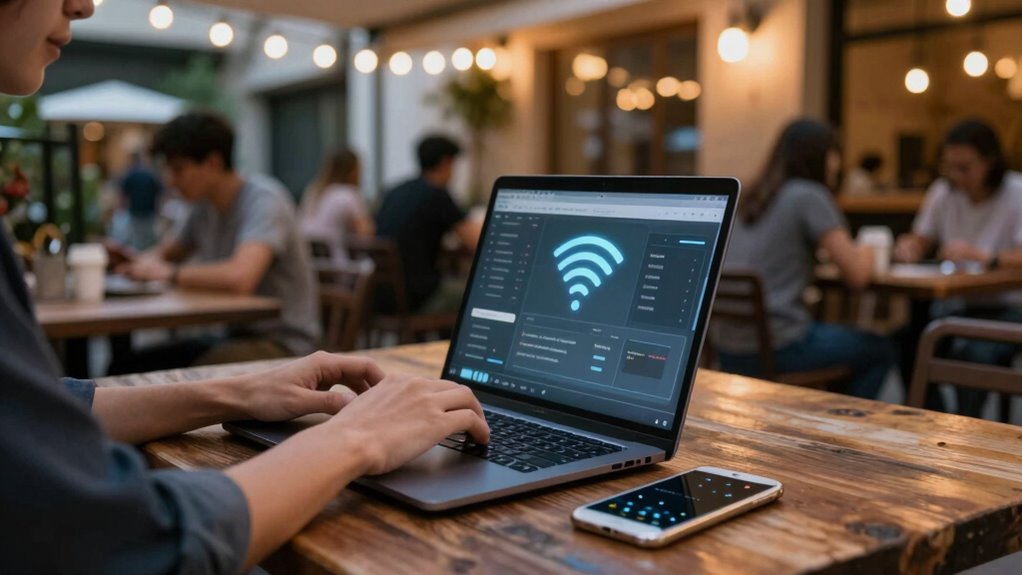

Public Wi-Fi networks can put your personal data at serious risk. Hackers often monitor open networks, intercepting unencrypted data like passwords, banking info, and social media login details in real time. Malicious hotspots may even trap users into revealing sensitive information. To stay safe, use secure networks with encryption, employ a VPN, and avoid sharing personal or financial details on public Wi-Fi. Keep going to discover more ways to protect yourself from these hidden dangers.

Get smart everyday buys delivered free — and shop member deals
- Fast, free delivery on millions of items
- Access to Prime Big Deal Days deals on October 6–7
- Prime Video, Amazon Music and more included
Key Takeaways
- Public Wi-Fi networks often lack encryption, making personal data vulnerable to interception by cybercriminals.
- Hackers can set up malicious hotspots to capture unencrypted information from unsuspecting users.
- Data transmitted over open networks can be monitored and manipulated in real-time by malicious actors.
- Sensitive information like passwords and banking details are at higher risk of theft on unsecured public Wi-Fi.
- Without proper security measures, public Wi-Fi increases the likelihood of identity theft and financial loss.

Public Wi-Fi networks are convenient, but they come with considerable security risks that you can’t afford to ignore. When you connect to a public hotspot, your personal data becomes vulnerable to cybercriminals who are always on the lookout for easy targets. One of the primary dangers is that data transmitted over open networks often isn’t encrypted, meaning anyone nearby can potentially intercept your information. Without proper data encryption in place, sensitive details like passwords, banking information, and emails are exposed, giving hackers a chance to misuse or steal your data.
Public Wi-Fi risks expose your personal data to hackers if not properly encrypted. Stay vigilant and secure.
Network monitoring tools used by malicious actors can make these risks even more severe. These tools allow hackers to track all the activity happening on a public Wi-Fi network. If you’re not taking steps to safeguard your connection, your online actions—such as logging into social media accounts or entering credit card details—can be intercepted in real time. Once your data is captured, cybercriminals can manipulate or sell it, leading to identity theft or financial loss. The threat isn’t just from hackers lurking on the same network; sometimes, malicious hotspots are set up intentionally to trap unsuspecting users and harvest their data.
To protect yourself, you should always look for networks that support secure connections, ideally those with WPA3 encryption. Using a Virtual Private Network (VPN) adds an extra layer of security by encrypting your internet traffic end-to-end, making it much harder for anyone to decode your data. Even with a VPN, it’s wise to avoid entering sensitive information unless you’re on a trusted network, and always make sure your device’s firewall and security software are active. Many modern devices also offer features that alert you when your connection isn’t secured, so pay attention to those warnings. Additionally, being aware of network security protocols can help you identify safer networks and avoid potential threats.
In addition to relying on technical safeguards, being vigilant about your online activities during public Wi-Fi use is essential. Avoid accessing banking sites or shopping carts unless you’re on a secure, encrypted network. Remember, cybercriminals often exploit the lax security of public hotspots, and without proper precautions, your personal information can quickly become compromised. Staying informed about the risks and implementing measures like data encryption and network monitoring can greatly reduce your chances of falling victim to cyber threats when you’re on the go.
Furthermore, understanding the importance of encryption technologies can help you make smarter choices about which networks to trust.
As an affiliate, we earn on qualifying purchases.
Frequently Asked Questions
Can Public Wi-Fi Compromise My Bank Account Security?
Yes, public Wi-Fi can threaten your bank account security. Hackers exploit encryption vulnerabilities on unsecured networks to intercept your data, including login details. They can also use device tracking to monitor your activity and target you later. To stay safe, avoid accessing your bank account on public Wi-Fi, use a VPN for encryption, and verify your device’s security settings are up to date.
What Signs Indicate My Data Has Been Compromised on Public Wi-Fi?
You’ll notice signs of data compromise when you see suspicious activity, like unexpected login alerts or strange account messages. If your device shows a lack of data encryption or if browsing becomes unusually slow or erratic, it could indicate your data has been accessed. Keep an eye out for unusual account activity and guarantee your connections are secure, especially on public Wi-Fi, to protect your personal information.
Are Free VPNS Safe to Use on Public Networks?
Imagine a fragile, transparent shield—free VPNs often resemble this, offering a false sense of security. While they claim to protect, many have VPN vulnerabilities and weak encryption protocols that can expose your data. Free VPNs may not encrypt your traffic properly, making it easier for hackers to intercept information. Always choose reputable VPNs with strong encryption protocols to guarantee your personal data stays protected on public networks.
How Often Should I Change Passwords After Using Public Wi-Fi?
You should change your passwords immediately after using public Wi-Fi, especially if you notice any suspicious activity. Regular password updates are essential to maintaining good security habits and protecting your personal data from potential threats. Aim to update your passwords every few months, and always use strong, unique passwords for different accounts. This proactive approach helps minimize risks and keeps your online information safe from cybercriminals exploiting public network vulnerabilities.
Do All Public Wi-Fi Networks Pose the Same Security Risks?
Not all public Wi-Fi networks are equal; some are like open books, vulnerable to prying eyes, while others are guarded vaults with encrypted connections. Hackers often monitor networks, so if a network lacks encryption or shows signs of suspicious activity, it’s risky. Always check for secure, encrypted connections and be cautious of networks with heavy monitoring, as these can be traps for your personal data.
As an affiliate, we earn on qualifying purchases.
Conclusion
So, next time you hop onto that free public Wi-Fi, remember—you’re not just saving data, you’re potentially handing over your personal info on a silver platter. It’s ironic, really—people chase free internet to stay connected, yet they unknowingly open the door to cyber thieves. Maybe it’s time to think twice before trusting that open network. After all, what’s more valuable than your private data? Sometimes, the biggest risk is just a click away.
As an affiliate, we earn on qualifying purchases.
As an affiliate, we earn on qualifying purchases.
Halloween Picks
halloween
As an affiliate, we earn on qualifying purchases.