

Thieves exploit assistance programs by stealing personal information to file false claims or impersonate legitimate recipients. They use methods like identity theft, fake documents, and phishing scams to access benefits meant for others. This can cause delays, revoke genuine benefits, and create legal issues for victims. Protect your personal data by staying vigilant and monitoring accounts. If you stay alert, you’ll learn more about how to safeguard yourself from these scams and keep benefits secure.
Key Takeaways
- Thieves steal personal information through data breaches, phishing, or stolen mail to commit benefits fraud.
- They create fake identities and documents to file false claims in victims’ names.
- Impersonation online or via phone deceives agencies into awarding benefits illegitimately.
- Weak verification processes enable fraudsters to access programs like unemployment and disability benefits.
- Victims often remain unaware until they receive notices of unrecognized benefits, causing legal and financial issues.
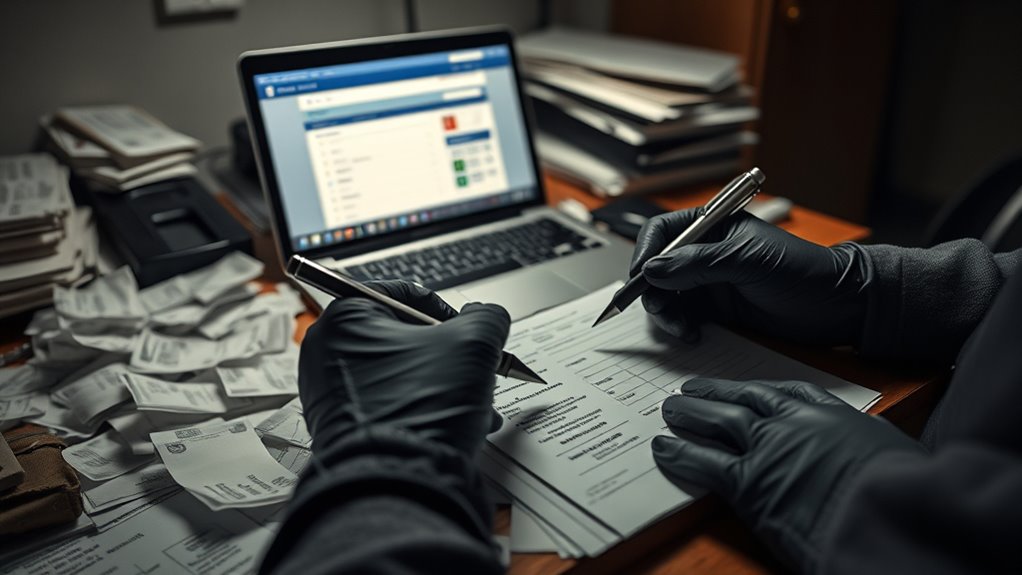
Government benefits fraud occurs when individuals or organizations intentionally deceive the system to receive benefits they’re not entitled to. This deception can take many forms, but two common tactics are identity theft and submitting false claims. When someone commits identity theft, they steal your personal information—like your Social Security number or bank details—and use it to access benefits in your name. This can happen through data breaches, phishing scams, or even stolen mail. Once they have your identity, they often file false claims, pretending to be you and claiming benefits you’re eligible for but aren’t actually entitled to. This type of fraud not only drains resources meant for genuine recipients but also creates a tangled web of legal and financial trouble for the victims.
When you become a victim of identity theft used in benefit fraud, you might not be aware until you receive notices from government agencies about benefits you didn’t apply for or payments made without your knowledge. Fraudsters use your stolen identity to submit false claims, which can lead to your benefits being delayed or revoked, and in some cases, you could face legal investigations. These criminals might impersonate you online or over the phone, providing false information to convince agencies that they are legitimate claimants. They often target programs like unemployment benefits, disability assistance, or social security, where verification processes can sometimes be less rigorous, making it easier for fraudsters to slip through.
For you, understanding how fraudsters manipulate the system is vital. They often use fabricated documentation, fake employment records, or doctored medical reports to support their false claims. Sometimes, they even create fake identities altogether, making it difficult for authorities to distinguish between genuine applicants and criminals. The impact of this deceit goes beyond individual cases; it strains the entire system, leading to increased scrutiny, tighter regulations, and longer processing times. As a result, honest people who truly need assistance might face delays or denials, even when they are eligible.
To protect yourself, it’s essential to safeguard your personal information at all times. Regularly review your credit reports and benefit statements for any suspicious activity. If you notice anything unusual, report it immediately to the relevant authorities. Be cautious when sharing your personal data online or over the phone, and never give out your Social Security number unless you are certain of the recipient’s legitimacy. Remember, fraudsters thrive on exploiting vulnerabilities, so staying vigilant can help prevent your identity from being used in false claims. Additionally, awareness of identity theft tactics used in benefit fraud can help you recognize signs of compromise early. Ultimately, understanding these tactics empowers you to better defend your identity and guarantee that government resources are directed to those who genuinely need them.

Guard Your ID Advanced 2.0 Roller 3-Pack for Identity Theft Protection, Confidential Security Stamp Mixed Color Kit (Turquoise, Green, White)
Robust Identity Theft Protection: Shields personal information; effectively masks sensitive data to prevent identity theft
As an affiliate, we earn on qualifying purchases.
As an affiliate, we earn on qualifying purchases.
Frequently Asked Questions
How Do Fraudsters Typically Access Personal Government Benefit Information?
You might wonder how fraudsters access your personal government benefit information. They often use identity theft, stealing your personal details to gain unauthorized access. Phishing scams are common, where they send fake emails or messages pretending to be trustworthy entities, tricking you into revealing sensitive info. Stay vigilant, don’t click suspicious links, and always verify sources to protect yourself from these tactics and keep your benefits safe.
What Are the Long-Term Consequences for Convicted Benefit Fraudsters?
When you’re convicted of benefit fraud, the long-term consequences can be severe. You might face long-term incarceration, which impacts your freedom and future opportunities. Additionally, your reputational damage can follow you for years, affecting your personal and professional relationships. These consequences serve as strong deterrents, emphasizing the importance of honest behavior. Remember, fraud not only harms the system but also risks your future stability and reputation.
Are There Specific Regions More Prone to Benefits Fraud Activities?
Think of regional hotspots as wildfires spreading unchecked, revealing geographic patterns of benefits fraud. Certain areas, often with lax oversight or economic struggles, become more prone to exploitation. You might notice these geographic patterns where thieves find fertile ground. Staying vigilant, you can help identify these vulnerable regions, preventing fraud from fueling further damage. Recognizing these hotspots empowers you to protect the integrity of assistance programs across the country.
How Can Individuals Verify if They’re Targeted by Fraud Schemes?
You can verify if you’re targeted by scam alerts and protect yourself from identity theft by staying alert to suspicious activity. Regularly check your bank and credit reports for unfamiliar accounts or transactions. Be cautious of unsolicited calls or emails asking for personal info. If you notice anything unusual, report it immediately to authorities. Staying informed and vigilant helps you spot potential scams early and prevents thieves from exploiting your identity.
What Technological Tools Are Used to Detect and Prevent Benefits Fraud?
Think of the fight against benefits fraud like a security guard using high-tech tools. Data analytics scans for suspicious patterns, acting like a detective catching clues. Biometric verification, such as fingerprint or facial recognition, acts like a lock on your account, ensuring only you access benefits. These technological tools work together to spot and prevent fraud, protecting honest recipients and maintaining the integrity of assistance programs.

Credit Monitoring Service Business Plan – MS Word/Excel
Easy to Use 3 Year MS Excel Financial Model
As an affiliate, we earn on qualifying purchases.
As an affiliate, we earn on qualifying purchases.
Conclusion
So, next time you think your benefits are safe, remember how thieves turn aid into their own treasure chest. While honest folks struggle to get by, fraudsters walk free, siphoning funds meant for those in need. It’s ironic, really—your hard-earned taxes fueling their schemes while genuine help remains just out of reach. In this game of deception, the real victims are the ones who trust, only to see their support stolen by those who exploit the system’s flaws.

McAfee Total Protection with Scam Detector | Avoid Phishing Emails, Texts, Video and QR Code Scams with Scam Protection Software App for iPhone & Android | 1-Year Subscription with Auto-Renewal
ALL-IN-ONE SCAM PROTECTION – Stop sophisticated phishing attacks before they reach you; our scam detection helps you avoid…
As an affiliate, we earn on qualifying purchases.
As an affiliate, we earn on qualifying purchases.

Guard Your ID Advanced Security Roller 2.0 for Identity Theft Prevention Stamping Black
INNOVATIVE IDENTITY PROTECTION: Guard Your ID (GYID) is the pioneering brand in identity protection rollers. Our patented pattern,…
As an affiliate, we earn on qualifying purchases.
As an affiliate, we earn on qualifying purchases.