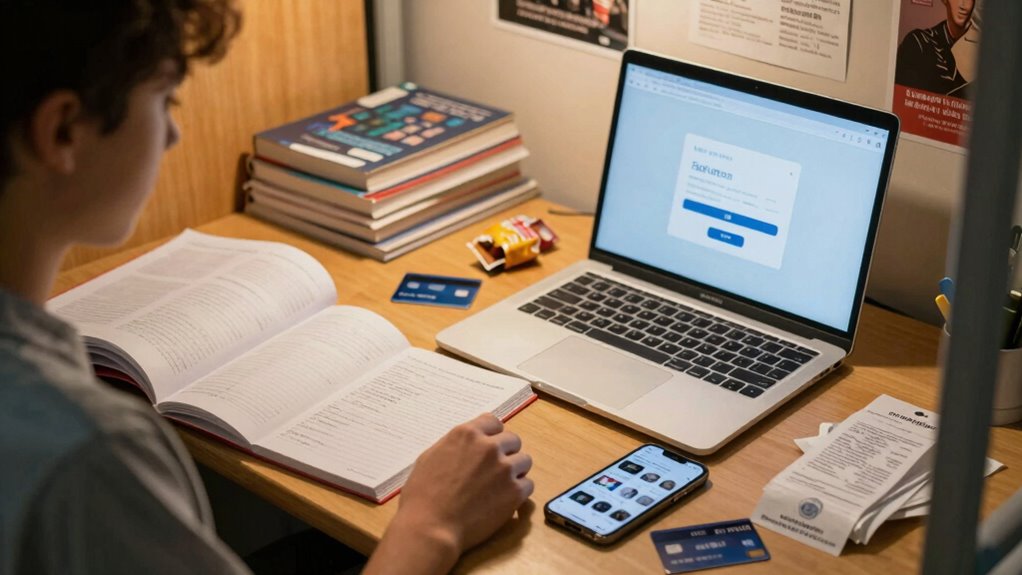
As a college student, you’re often busy juggling classes, work, and social life, which makes cybersecurity awareness easy to overlook. Sharing personal info online and avoiding privacy settings can leave you vulnerable to scammers. Many students also lack financial literacy, making it easier for fraudsters to exploit mistakes. Simple habits like updating passwords and understanding online threats can help protect you. Keep going to discover more ways to stay safe and secure your personal information.
Key Takeaways
- Many students lack cybersecurity awareness, making them vulnerable to scams like phishing and fake websites.
- Sharing excessive personal info on social media increases data exposure to scammers.
- Limited financial literacy leads to mistakes that fraudsters exploit, such as overspending or ignoring account monitoring.
- Juggling responsibilities causes neglect of digital hygiene, weakening online security practices.
- Unsecured Wi-Fi networks and unrecognized threats make students easier targets for cybercriminals.

Have you ever wondered why college students are increasingly targeted by identity fraud? The answer lies partly in their level of cybersecurity awareness and financial literacy. Many students are still learning how to protect their personal information and manage their finances responsibly. Because of this, scammers see them as prime targets—they often lack the habits and knowledge necessary to spot fraud or prevent it from happening.
College students are prime targets for identity fraud due to limited cybersecurity awareness and financial literacy.
In college, you’re often juggling multiple responsibilities: classes, part-time jobs, social activities, and more. Amid all this chaos, cybersecurity awareness can fall by the wayside. You might not realize how easy it is for cybercriminals to steal your personal details through phishing emails, fake websites, or unsecured Wi-Fi networks. Without proper knowledge, you could unwittingly share sensitive information, giving fraudsters an open door to your bank accounts, credit cards, or student loans. Cybersecurity awareness isn’t just about avoiding viruses; it’s about understanding how to safeguard your digital identity. Understanding cybersecurity fundamentals is essential for recognizing common threats and protecting yourself online. Developing strong digital hygiene practices can significantly reduce your vulnerability to cyber-attacks. Being aware of the digital environment around you helps you stay vigilant against evolving scams and tactics. Recognizing how personal data can be exploited is a key part of understanding the risks involved in your online activities. Additionally, many students underestimate the importance of regularly updating their passwords and enabling two-factor authentication, which are critical components of a comprehensive security strategy.
Financial literacy plays a crucial role as well. Many students are new to managing credit, budgeting, and understanding credit scores. Without a solid grasp of these concepts, you might make mistakes that leave you vulnerable. For example, you could overspend on credit cards, not monitor your account activity regularly, or fall for scams promising quick financial gains. Fraudsters capitalize on this lack of financial literacy by convincing you to give away login credentials or by offering fake loans and job opportunities. The more you understand about credit management and financial security, the better you can recognize and avoid these traps.
Another reason students are easy targets is the perception that they’re less cautious online. You might share too much personal information on social media, making it easy for scammers to gather data they can use to impersonate you or commit fraud. Additionally, many students don’t take the time to read privacy policies or security notices, leaving gaps in their defenses. Without the right mindset about cybersecurity and financial safety, you may not prioritize protecting your personal data. Building awareness about cybersecurity threats and improving your financial literacy are fundamental steps toward safeguarding your identity. Learning how to recognize phishing attempts, secure your Wi-Fi, and manage your finances responsibly can make a significant difference. Don’t wait until you’re a victim—start taking proactive steps now. The more you educate yourself about these issues, the less attractive you’ll be as a target, and the better you’ll be at shielding your future from identity fraud. Understanding the risks of online vulnerabilities can help you develop a more cautious approach to your digital habits.

Yubico – Security Key C NFC – Basic Compatibility – Multi-Factor authentication (MFA) Security Key and passkey, Connect via USB-C or NFC, FIDO Certified
POWERFUL SECURITY KEY: The Security Key C NFC is the essential physical passkey for protecting your digital life…
As an affiliate, we earn on qualifying purchases.
As an affiliate, we earn on qualifying purchases.
Frequently Asked Questions
How Can Students Detect if They’ve Been Targeted?
You can detect if you’ve been targeted by watching for signs like unexpected emails or messages, which could be phishing scams trying to steal your info. Check your credit reports regularly for unfamiliar activity. If you suspect fraud, consider placing a credit freeze to prevent further damage. Staying vigilant and monitoring your financial accounts helps you catch identity theft early and protect your personal information effectively.
What Are Common Signs of Identity Theft Among Students?
You might notice unfamiliar charges on your credit report or sudden declines in credit limits—signs of identity theft. Approximately 33% of students experience compromised personal info each year. To detect early, use credit monitoring services regularly and watch for unexpected bills or emails about account activity. Staying vigilant helps catch signs quickly, so you can protect your credit and personal info before more damage occurs.
Are There Legal Protections Specifically for Student Victims?
Yes, as a student, you have legal rights and protection policies that help shield you from identity theft. Federal laws like the Fair Credit Reporting Act give you access to free credit reports and dispute errors, while the Identity Theft Enforcement and Restitution Act strengthens your protections. Many colleges also have policies and resources in place, like credit monitoring and support services, to help you recover and prevent further fraud.
How Often Should Students Monitor Their Financial Accounts?
You should monitor your financial accounts at least once a week to catch any suspicious activity early. Developing financial literacy helps you understand what to look for, while maintaining good data security practices, like strong passwords and secure connections, minimizes risks. Regular monitoring empowers you to spot fraud quickly, protecting your credit and personal information. Stay proactive, stay informed, and always prioritize your financial security.
What Steps Should Students Take After Identity Theft Occurs?
Think of identity theft as a fire you must quickly extinguish. First, you should immediately contact credit bureaus to place a credit freeze, preventing further damage. Then, run thorough identity monitoring to identify suspicious activity. Report the theft to your financial institutions and the police. Keep detailed records of all communications, and consider filing a report with the Federal Trade Commission to help restore your identity and prevent future fraud.

Forvencer Password Book with Individual Alphabetical Tabs, 5.3"x7.6" Medium Size Password Notebook, Spiral Password Keeper Book for Senior, Cute Password Manager Logbook for Home Office, Purple
Individual A-Z Tabs for Quick Access: No need for annoying searches! With individual alphabetical tabs, this password keeper…
As an affiliate, we earn on qualifying purchases.
As an affiliate, we earn on qualifying purchases.
Conclusion
As you walk through the bustling college campus, surrounded by flashing screens and hurried footsteps, remember that your personal info is like a fragile lantern in the night. Hackers and scammers lurk in the shadows, ready to snatch that glow. Protect your identity as fiercely as you’d guard your most treasured belongings. Stay alert, stay safe, and keep your digital light shining bright amidst the chaos. Your future depends on it.

ASUS RT-AX1800S Dual Band WiFi 6 Extendable Router, Subscription-Free Network Security, Parental Control, Built-in VPN, AiMesh Compatible, Gaming & Streaming, Smart Home
New-Gen WiFi Standard – WiFi 6(802.11ax) standard supporting MU-MIMO and OFDMA technology for better efficiency and throughput.Antenna :…
As an affiliate, we earn on qualifying purchases.
As an affiliate, we earn on qualifying purchases.
![Norton 360 Premium 2026 Ready, Antivirus software for 10 Devices with Auto-Renewal – Includes Advanced AI Scam Protection, VPN, Dark Web Monitoring & PC Cloud Backup [Download]](https://m.media-amazon.com/images/I/51eODAreA9L._SL500_.jpg)
Norton 360 Premium 2026 Ready, Antivirus software for 10 Devices with Auto-Renewal – Includes Advanced AI Scam Protection, VPN, Dark Web Monitoring & PC Cloud Backup [Download]
ONGOING PROTECTION Download instantly & install protection for 10 PCs, Macs, iOS or Android devices in minutes!
As an affiliate, we earn on qualifying purchases.
As an affiliate, we earn on qualifying purchases.