TL;DR

Get smart everyday buys delivered free with Prime
- Fast, free delivery on millions of items
- Prime Video, Amazon Music and more included
- Member-only deals all year
A new mobile app leverages phone cameras and guided lighting to objectively score tooth shades, offering a measurable, personalized approach to home teeth whitening. This innovation aims to reduce guesswork and improve product effectiveness, potentially disrupting the consumer oral-care market.
A new mobile application is being developed to allow home teeth whitening users to objectively measure their tooth shade progress using their phone cameras and guided lighting. This innovation aims to address longstanding issues in the consumer whitening market, where users rely on subjective visual assessments, often leading to ineffective product cycling. The technology could significantly impact how consumers evaluate whitening results and select products, making the process more data-driven and personalized.
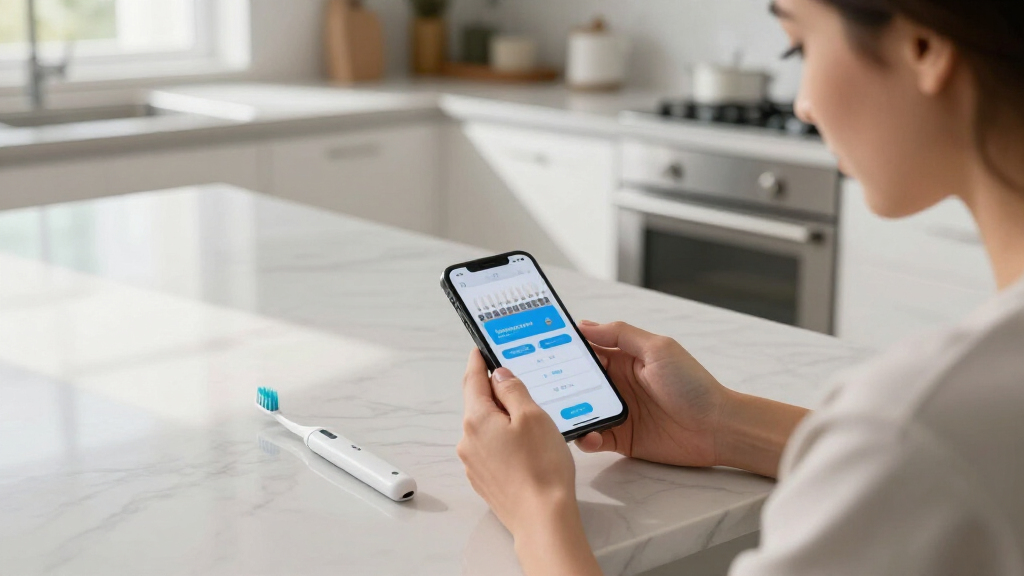
The app, currently in prototype testing, utilizes the phone’s camera combined with guided lighting to capture high-quality images of a user’s teeth. It then compares these images against the dental shade scale, providing a score that tracks whitening progress over time. The system is designed to plot these scores across weeks, identify which products produce measurable improvements, and recommend products based on data from users with similar starting shades. The initial validation involves benchmarking app scores against dentist-assessed VITA shade readings in a study involving fifty participants, with early results indicating a strong correlation that could support product recommendations and user engagement.
This technology targets the growing consumer market for at-home whitening, estimated to be worth hundreds of millions of dollars globally. By providing an objective measurement layer, it aims to reduce the trial-and-error cycle that often results in wasted money and dissatisfaction. The app will operate on a subscription model, with additional revenue streams from affiliate sales of whitening products proven to move shade scores. The developers believe that integrating measurement and personalized recommendations will enhance user loyalty and market competitiveness.
Potential Market Disruption in Home Whitening
This innovation could significantly alter the consumer teeth whitening landscape by shifting the process from subjective visual assessment to data-driven decision-making. Consumers often spend hundreds of dollars cycling through whitening products without knowing if they are effective, leading to frustration and waste. An objective, easy-to-use scoring system can improve user satisfaction, increase product efficacy, and foster trust in at-home whitening solutions. For companies, this technology offers a new layer of engagement and differentiation, potentially boosting sales and loyalty. Additionally, the measurement approach could pave the way for more personalized whitening plans and better market segmentation based on user-specific data.
Products Worth Considering

HP Sprocket Photo Booth Instant Color Printer Bundle

Canon SELPHY CP1500 Wireless Compact Photo Printer with RP-108 Ink and Paper Set

Apple iPad Air 11-inch (M2), 512GB, Wi-Fi, Space Gray
As an affiliate, we earn on qualifying purchases.
Growing Demand for Objective Teeth Whitening Measures
The global market for consumer teeth whitening products is expanding rapidly, driven by increasing aesthetic awareness and the popularity of at-home treatments. Currently, most users rely on visual cues in their bathroom mirrors, which are subjective and often unreliable. Dentists have long used calibrated shade guides like VITA, but these are impractical for everyday consumer use. Recent technological advances, including phone cameras and guided lighting, now make it feasible to bring professional-level measurement tools into the home. The concept of app-based shade scoring aligns with broader trends toward personalized beauty tech and digital health monitoring, making it a timely development.
Previous efforts to quantify whitening results have been limited to subjective ratings or basic photo comparisons. The new approach aims to provide an objective, repeatable measurement comparable to professional dental assessments. This development is supported by market research indicating strong consumer interest in measurable, personalized beauty solutions, and by the increasing availability of smartphone-based health and beauty apps.
“The use of guided lighting and phone cameras to approximate dental shade readings is a promising step toward making professional-grade measurement accessible at home.”
— an anonymous researcher
Validation and Adoption Challenges
While early testing shows promising correlation between app scores and dentist assessments, larger-scale validation is still needed to confirm accuracy across diverse users. It is unclear how well the app will perform in real-world conditions, with varying lighting environments and camera qualities. Additionally, regulatory considerations, user acceptance, and integration with existing whitening products remain to be addressed. The timeline for commercial deployment and widespread adoption has not been finalized, and the effectiveness of personalized recommendations based on app data is still under evaluation.
Upcoming Validation Studies and Market Launch Plans
The developers plan to conduct extensive validation studies involving at least fifty users comparing app scores with professional shade assessments. Pending successful validation, they aim to refine the app’s algorithms and user interface before launching a beta version for broader testing. Future steps include integrating the app with popular whitening products, establishing affiliate partnerships, and exploring subscription models. The goal is to bring the product to market within the next 12-18 months, pending regulatory considerations and user feedback.
Key Questions
How accurate is the phone-camera-based tooth shade measurement?
Initial validation shows a strong correlation with dentist assessments, but further testing is needed to confirm accuracy across diverse conditions and users.
Will this app replace professional dental shade assessments?
It is designed as a home-use tool to provide objective tracking, not a replacement for professional evaluations, but it could complement dental care routines.
How does the app determine which whitening products are most effective?
The app tracks shade scores over time, identifies products that produce measurable improvements, and recommends options based on data from users with similar starting shades.
When will the app be available to consumers?
A beta version is expected within the next 12-18 months, contingent on validation results and regulatory approvals.
What are the potential limitations of this technology?
Performance may vary depending on lighting conditions, camera quality, and user compliance. Further validation is necessary to ensure consistent accuracy.
Source: IdeaNavigator AI