
📊 Full opportunity report: The AI Sovereignty Market Is Now A Fact — Marked By A Major Sale on ThorstenMeyerAI.com — validation score, market gap, and execution plan.

Get smart everyday buys delivered free with Prime
- Fast, free delivery on millions of items
- Prime Video, Amazon Music and more included
- Member-only deals all year
TL;DR
Germany has completed a significant AI infrastructure sale, confirming the emergence of a tangible AI sovereignty market. Major investments and government support underline growing demand for independent AI capabilities in Europe.
Germany’s AI sovereignty market has taken a major step forward with a significant sale involving German infrastructure providers and international partners, confirming the sector’s emergence as a tangible market in 2026. This development underscores the increasing demand for independent AI capabilities in Europe amid growing geopolitical and technological concerns.
On February 4, 2026, the German Telekom and NVIDIA launched the Industrial AI Cloud in Munich, equipped with nearly 10,000 Blackwell-GPUs, representing approximately 0.5 exaFLOPS of computing power. According to Telekom, this infrastructure increased Germany’s AI processing capacity by about 50%, fully privately financed, with SAP as a platform partner for the ‘Germany-Stack.’ Major German corporations such as Siemens, Mercedes-Benz, and BMW are among the first customers.
Simultaneously, the Schwarz Group is expanding its StackIT ambitions as a European hyperscaler, with reported investments of around 11 billion euros and a target of 100,000 GPUs. The German government has also committed 805 million euros for a European AI gigafactory, with a consortium including SAP, Telekom, Siemens, IONOS, and Schwarz negotiating a joint EU application—seen as Europe’s answer to Stargate.
Market analysts like McKinsey estimate the AI services market to be worth over one trillion dollars annually, with nearly 600 billion dollars in sovereign AI services alone. European cloud spending is projected to reach 12.6 billion dollars in 2026, up 83% from the previous year, reflecting strong demand. Notably, the German Federal Office for the Protection of the Constitution selected French firm ChapsVision over Palantir in May, indicating a strategic shift in procurement.
Despite these advances, a notable development was Aleph Alpha’s announcement on April 24, 2026, of a merger with Canadian competitor Cohere, valued at around 20 billion dollars. This move has sparked debate: some see it as a strategic consolidation that strengthens European AI competitiveness, while others view it as a loss of sovereignty, with a significant portion of model development now rooted outside Germany.
Der Souveränitäts-Markt ist real geworden —
und hat im selben Quartal seinen Champion verkauft
Tagesaktuell verifizierter Marktpuls · Geld, GPUs und eine Ironie
Das Geld ist da — drei Belege
Telekom + NVIDIA in München: ~0,5 ExaFLOPS, +50 % deutsche KI-Rechenleistung, privat finanziert. Schwarz-Gruppe: 11 Mrd. €, perspektivisch 100.000 GPUs.
805 Mio. € Gigafactory-Förderung; Konsortium SAP, Telekom, Siemens, IONOS, Schwarz. SPRIND: 125 Mio. € für eigene KI-Labore.
BfV wählt ChapsVision statt Palantir; Bundeswehr schließt Palantir aus der Cloud aus. Gartner: EU-Sovereign-Cloud +83 % auf 12,6 Mrd. $.
DIE IRONIE · 24. APRIL 2026
Mitten im Souveränitäts-Frühling schließt sich Aleph Alpha mit Kanadas Cohere zusammen — die Schwarz-Gruppe finanziert als Lead-Investor mit 600 Mio. $.
Freundliche Lesart: Konsolidierung unter Gleichgesinnten; 20 Mrd. $ Verbund schlägt unterfinanziertes Startup. Unbequeme Lesart: Deutschlands Modellschicht wird künftig in Toronto mitentschieden — und deutsches Kapital finanziert lieber fremde Champions als eigene.
Souveränität ist eine Schichtenfrage
Das Signal: Die souveräne Betriebsschicht ist jetzt kaufbar und bezahlbar — die Modellschicht bleibt Import. Wer Souveränitätsstrategien baut, sollte sie auf die Schichten bauen, die Europa tatsächlich kontrolliert.
Implications of the Major Sale for European AI Sovereignty
The recent sale confirms that the AI sovereignty market in Europe is now a concrete reality, driven by infrastructure investments, government funding, and increasing procurement demand. This marks a shift from rhetoric to tangible market activity, with significant implications for Europe’s independence in AI development and deployment. However, the reliance on foreign silicon, particularly NVIDIA GPUs in Germany, highlights ongoing layered dependencies that complicate claims of full sovereignty.
For businesses and policymakers, the development signifies that operational infrastructure and regulatory frameworks are now in place, enabling more autonomous AI operations. Nonetheless, the core model layer remains largely imported, raising questions about true sovereignty in AI innovation and control.
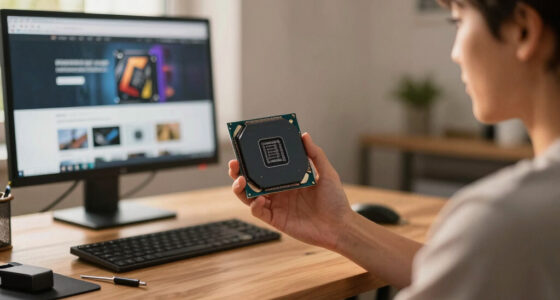
NVIDIA Blackwell-GPU for AI infrastructure
As an affiliate, we earn on qualifying purchases.
As an affiliate, we earn on qualifying purchases.
Germany’s AI Infrastructure and Policy Push in 2026
Since early 2026, Germany has made significant strides in establishing a sovereign AI ecosystem. The launch of the Munich-based Industrial AI Cloud with private funding and high-performance GPUs marked a critical milestone. Concurrently, the German government announced nearly 1 billion euros for a European gigafactory, with a consortium actively pursuing EU funding, reflecting a strategic push for independence in core AI infrastructure.
European policy measures, including the Cloud and AI Development Act, aim to reduce dependence on non-European cloud providers, emphasizing open-source principles. Meanwhile, procurement practices, such as the Bundesamt für Verfassungsschutz’s selection of French and Canadian AI firms over US-based vendors, illustrate a deliberate shift toward European and allied AI sources. Despite these advances, the global nature of silicon supply chains and model development remains a challenge to full sovereignty.
“The infrastructure investments and government funding signal that the European AI sovereignty market is no longer a concept but a tangible sector in 2026.”
— an anonymous researcher
As an affiliate, we earn on qualifying purchases.
Remaining Questions About True AI Sovereignty in Europe
It is still unclear whether Europe can achieve full sovereignty over AI, given the reliance on foreign silicon and model development outside the continent. The recent merger involving Aleph Alpha raises concerns about control over model layers, which remain largely rooted outside Germany and Europe. Additionally, the geopolitical implications of these investments and the actual operational independence of these infrastructures are still being tested.
As an affiliate, we earn on qualifying purchases.
Next Steps for Confirming Europe’s AI Sovereignty Progress
Key developments to watch include the progress of the European gigafactory’s deployment, the outcome of the EU-wide AI funding application, and the operational independence of the Munich-based AI cloud infrastructure. Further mergers or collaborations among European AI firms, as well as procurement policies by government agencies, will also indicate whether sovereignty is becoming a practical reality or remains a strategic goal.
As an affiliate, we earn on qualifying purchases.
Key Questions
What does the recent sale mean for Europe’s AI independence?
The sale confirms that tangible infrastructure and market activity are now present, but full independence is still challenged by reliance on foreign silicon and model development outside Europe.
Who are the main players involved in this development?
German Telekom, NVIDIA, SAP, Siemens, Mercedes-Benz, BMW, Schwarz Group, and the German government are key stakeholders, with international firms like Cohere also involved.
Will Europe become fully sovereign in AI by 2026?
Full sovereignty remains uncertain. While infrastructure and funding are in place, dependencies on foreign silicon and model layers persist, making complete independence unlikely in the near term.
What are the risks of relying on foreign AI components?
Dependence on foreign silicon and model development can lead to vulnerabilities in control, security, and compliance, potentially undermining claims of sovereignty.
Source: ThorstenMeyerAI.com
Fall Picks
fall essentials
As an affiliate, we earn on qualifying purchases.