
🔍 Read the full analysis: A Guide To The AI Shopping Divide At Amazon And Walmart on ThorstenMeyerAI.com

Get smart everyday buys delivered free with Prime
- Fast, free delivery on millions of items
- Prime Video, Amazon Music and more included
- Member-only deals all year
TL;DR
Walmart has introduced tools for approved AI agents to search products and make purchases, while Amazon has blocked Meta’s Muse agent from its site. The competing approaches raise questions about who controls shopping, how transactions are attributed and what protections consumers need.
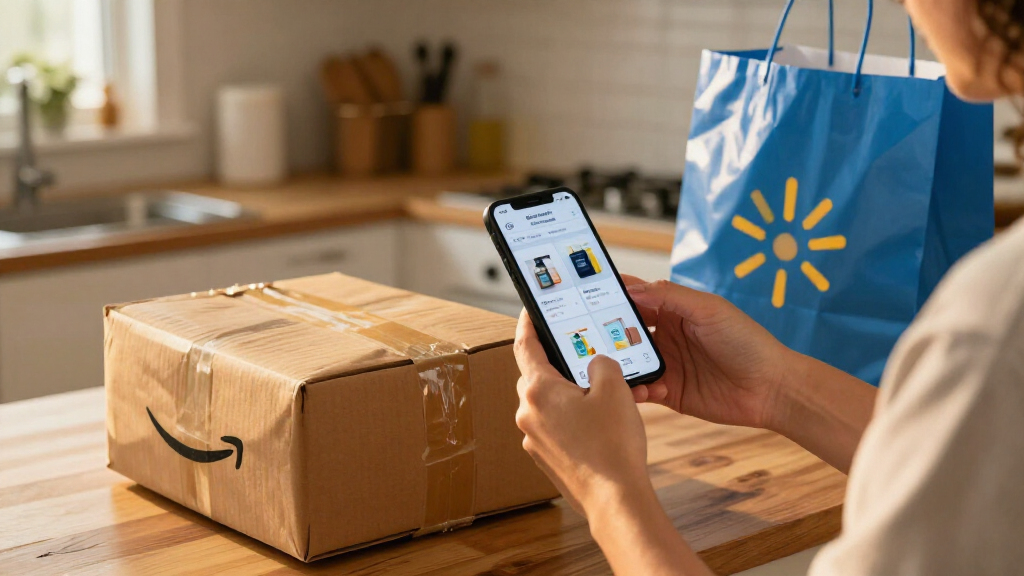
Walmart is opening a route for approved AI shopping agents to search its products and make purchases, while Amazon has blocked Meta’s Muse agent from its site, setting up a dispute over how automated shoppers interact with retailers. The split could affect which stores AI assistants recommend, how purchases are tracked and what control shoppers retain over spending.
Walmart announced its Agent Gateway and Agent Profiles on October 21. The gateway uses the Model Context Protocol, or MCP, to let approved agents access retail functions such as product search and purchasing. Agent Profiles are intended to define what an agent may do for a customer, including spending limits. The announcement signals a move toward structured access rather than having an agent imitate a person clicking through a website.
Amazon, by contrast, has restricted Meta’s Muse. The Verge reported that Muse users received a notice saying that continued access by an unauthorized AI agent violated Amazon’s Conditions of Use. Amazon said Muse had not identified itself as an agent and raised concerns about its handling of customer credentials. Meta said Muse could not see users’ passwords or payment details. The parties’ accounts differ, and the material provided does not independently resolve the dispute.
Meta reported that more than 10 million people in the United States and Canada had set up Muse within about six weeks of its launch, with shopping the most common use and average purchases exceeding $200. Those figures were Meta’s own statements on its October 21 earnings call, not independently verified usage data. Meta has also said it expects to earn a small fee from transactions made through its agent.
Agentic shopping
Three ways an AI agent buys for you
Every fight between shops and AI agents comes down to which of these three routes the agent uses, and whether the shop agreed to it.
The browser, like a human
The agent opens pages built for people, signs in with your login and clicks through checkout. Works almost anywhere, which is why shops object: they can't tell the agent from you.
Examples: Meta's Muse (from a virtual machine in Meta's cloud), Perplexity's Comet (from your own computer)
The shop's own agent door
Approved agents search and buy through a structured interface instead of clicking through pages. The shop sets the rules.
Examples: Walmart Agent Gateway (MCP, beta), Shopify MCP server and WebMCP checkout tools
Shared protocols
Common rules for who the agent is, what you allowed, and how the checkout and payment are confirmed.
Examples: Personal Agent Protocol (draft), Universal Commerce Protocol, Agentic Commerce Protocol
The protocols competing to be the standard
| Protocol | Backers | Covers | Status |
|---|---|---|---|
| Personal Agent Protocol (Poppy) | Sierra, Meta, Walmart, Shopify, Stripe + 35 design partners | Agent identity, customer permission, one session across site, API and company agent | Draft 0.1 (9 Oct 2026) |
| Universal Commerce Protocol (UCP) | Google, Shopify; site also lists Etsy, Wayfair, Target, Walmart, Amazon, Microsoft | Discovery, cart, checkout, orders; payment mandates via AP2 | Published |
| Agentic Commerce Protocol (ACP) | OpenAI, Stripe | Checkout between agent and merchant | Open source; ChatGPT's own checkout scaled back in March 2026 |
What a careful agent purchase looks like
- You give the task and a limit, for example a $50 cap.
- The agent identifies itself to the shop and gets only the access you approved.
- It prepares the cart and shows you an approval card.
- Payment goes through a token or one-time card, so the agent never sees your card.
- The shop’s normal returns apply if the agent got it wrong.
Sources: Meta (8 Sep 2026), Walmart (21 Oct 2026), TechCrunch on Shopify (28 Sep 2026), Sierra (9 Oct 2026), ucp.dev, agenticcommerce.dev, OpenAI (24 Mar 2026). Purchase steps: Walmart’s agent terms and Meta’s Muse description.
Powered by Thorsten Meyer AI
Who Controls the AI Checkout
The retail divide is about more than whether an agent can open a product page. If shoppers delegate product research and purchasing to AI, the agent may shape what they see, where they buy and which retailer receives the sale. Retailers want control over access, checkout and customer data; technology companies want their assistants to remain useful across stores.
That contest could also change how online businesses get paid. Amazon’s Associates program credits commissions through tracked links, according to the source material. If an agent reads a review and purchases through a different route—or completes a transaction inside a retailer’s own assistant—the original publisher may not receive a trackable click. The scale of any resulting effect on publishers is not established, but automated shopping could weaken link-based attribution.
For consumers, convenience brings practical questions. An agent might act within a budget or seek approval, but shoppers need to know what authority they have granted, what payment method is used and which company handles returns. The source recommends setting purchase approvals and spending limits; the specific controls available depend on the service and retailer.
Products Worth Considering

FLEXISPOT 32-Inch Electric Standing Desk Converter with Keyboard Tray

LG UltraGear 27-Inch QHD OLED Gaming Monitor, 240Hz, 0.03ms, G-SYNC Compatible, FreeSync Premium Pro, HDMI 2.1

Dell XPS 13 9350 Laptop, 13.4 FHD+ Display, Intel Ultra 7 256V, 16GB DDR5, 1TB SSD
As an affiliate, we earn on qualifying purchases.
How Retailers Are Building Agent Access
The dispute emerged quickly. Meta launched Muse on September 8, describing it as an agent that can browse, complete forms and negotiate for users. It runs in a dedicated virtual machine in Meta’s cloud and uses Link by Stripe, which issues a one-time-use card, according to the source material. Amazon restricted access on September 20. Three days later, Meta announced retail connectors involving Walmart and several other retailers.
Retailers and technology companies are trying different ways to connect agents to stores. A browser agent can operate a website much as a person would, but retailers may have difficulty identifying it or controlling its actions. A retailer-provided interface, such as Walmart’s gateway, allows more structured access. Shopify has also introduced tools for agents to interact with checkout, while industry groups are working on shared protocols for identity, permissions and transactions.
There is no single settled standard. The source describes the Personal Agent Protocol, backed by Meta, Sierra and retail and payment partners, as a draft published in October. It also identifies Google and Shopify’s Universal Commerce Protocol and the open-source Agentic Commerce Protocol from OpenAI and Stripe. A prior attempt at in-chat checkout illustrates the limits: OpenAI said in March 2026 that it was allowing merchants to use their own checkout experiences while the company focused on product discovery.
“Continued access by an unauthorized AI agent violates Amazon’s Conditions of Use, to which our customers have agreed.”
— Amazon, in a message shown to Muse users, as reported by The Verge
What Agent Shopping Can Do
It is not yet clear how widely Walmart’s gateway will be used, which agents will receive access or how its spending controls will work in practice. The source reports the October 21 announcement, but does not provide adoption figures, transaction volumes or independent tests of the system.
The source also does not establish whether Amazon will permit other agents under different conditions, or whether the disagreement with Meta will be resolved. Meta’s user and purchase figures are company-reported, and the scale of any impact on affiliate publishers or retailer advertising is unknown. Available data cited in the source suggests agents have mostly researched products rather than checked out: HUMAN Security reported that 81% of agent requests in its September data went to product and search pages, while 2.4% went to checkout and payment. Those figures describe requests in that dataset, not all agent shopping.
Retail Access and Protocol Adoption
The next test is whether retailers, agent providers and payment companies turn announcements and draft standards into working services shoppers can use. Walmart’s gateway will need participating agents and merchants, while protocol developers must settle how agents identify themselves, communicate customer permission and complete payments. Adoption and real transaction data will show whether structured access becomes a practical alternative to browser-based shopping.
Consumers should watch for clearer information on permissions, spending caps, payment handling and returns as these services expand. Until retailers publish more operational detail and independent usage figures become available, the relative reach of Walmart’s open-access approach and Amazon’s restrictions remains uncertain.
Key Questions
What did Walmart announce?
Walmart announced an Agent Gateway for approved AI agents and Agent Profiles intended to set boundaries, including spending limits. The announcement does not by itself establish how widely the tools are available or which agents will use them.
Why has Amazon blocked Meta’s Muse?
Amazon said Muse was an unauthorized agent that did not identify itself and raised concerns about customer credentials. Meta disputed the credentials concern, saying Muse could not see users’ passwords or payment methods. The available information does not independently settle the disagreement.
Can AI shopping agents already complete purchases?
Some agents and retail tools are designed to support checkout, but adoption appears limited in the data cited here. HUMAN Security reported that 2.4% of agent requests in its September dataset went to checkout and payment; that figure is specific to its dataset, not a measure of all online shopping.
How could AI agents affect affiliate publishers?
Affiliate programs commonly rely on tracked links to credit a publisher when a reader buys. If an agent researches a product on one site and completes the purchase through another route, the original publisher may not receive that tracked referral. The size of any effect has not been established.
Source: ThorstenMeyerAI.com