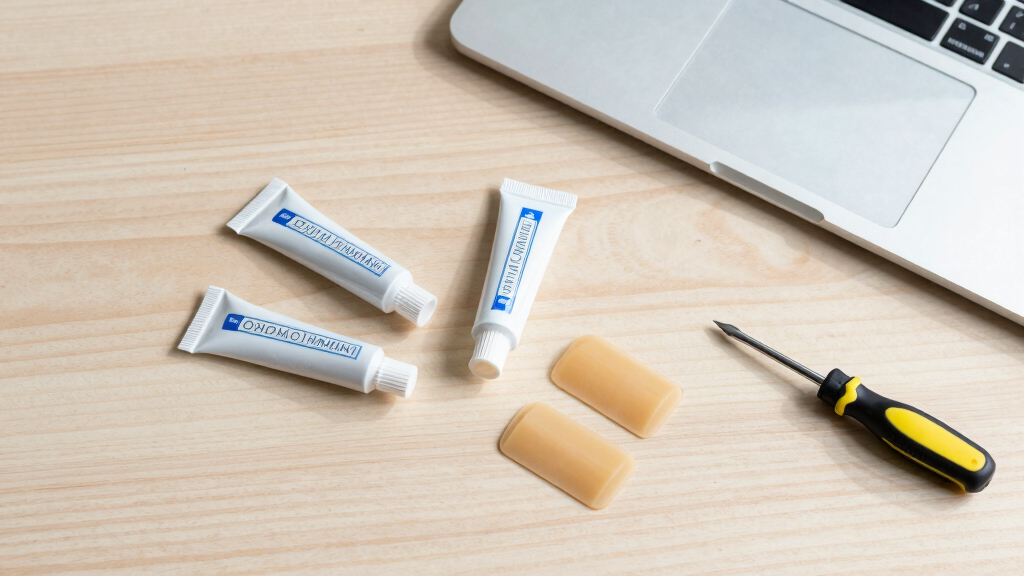

📊 Full opportunity report: Best Thermal Paste and Pads for High-TDP GPUs on ThorstenMeyerAI.com — validation score, market gap, and execution plan.

Get smart everyday buys delivered free with Prime
- Fast, free delivery on millions of items
- Prime Video, Amazon Music and more included
- Member-only deals all year
TL;DR
For high-TDP GPUs running 24/7, specialized thermal interface materials like Honeywell PTM7950 excel in long-term heat management. Traditional pastes such as Arctic MX-6 and Noctua NT-H2 also offer reliable performance, while graphene pads like Kryosheet provide reusability but require careful handling.
Recent evaluations of thermal interface materials for high-TDP GPUs operating continuously have identified Honeywell PTM7950 as the top choice for long-term stability, especially in AI inference workstations. This development highlights the importance of selecting materials that resist pump-out and maintain consistent thermal performance over years of use, crucial for systems running 24/7.
The focus on thermal interface materials (TIM) for high-power GPUs has shifted toward long-term durability rather than just initial cooling performance. Honeywell PTM7950, a phase-change material, is now recognized as the best option for sustained workloads because it resists pump-out—an issue where traditional pastes dry out and create thermal gaps over time. It is a thin sheet that softens at operating temperature, providing stable contact over years of continuous use, and is cost-effective at around $13. Arctic MX-6, a traditional carbon-based paste, remains a popular choice for ease of application and long-lasting performance, rated for 8–10 years. Noctua NT-H2 offers a premium traditional paste alternative, known for reliability and consistent performance. Additionally, graphene-based reusable pads like Thermal Grizzly Kryosheet have gained attention for their reusability and stable thermal conductivity, though they are electrically conductive and require careful handling.Best thermal paste
for a high-TDP GPU.
The standard “coldest on day one” advice is wrong for a 24/7 rig. Continuous heat slowly squeezes traditional paste out — a failure called pump-out — so the real question is what stays cold for years.
Why Long-Term Thermal Stability Matters for GPU Workstations
Choosing the right thermal interface material directly impacts GPU longevity and performance stability in continuous operation environments. For AI inference, scientific computing, or other high-TDP workloads running around the clock, materials that resist pump-out prevent gradual thermal degradation, reducing the risk of overheating, throttling, and potential hardware failure. This shift in focus from initial temperature drops to sustained thermal performance is critical for maintaining system reliability and efficiency over years.
As an affiliate, we earn on qualifying purchases.
Evolving Needs in GPU Cooling for Continuous Workloads
Traditional thermal pastes like Kryonaut have been popular for gaming GPUs due to their low initial thermal resistance. However, these materials can dry out or pump out under constant high heat, leading to increased GPU temperatures over time. Recent testing and user reports now emphasize long-term stability, especially for inference GPUs that operate continuously at high loads. Honeywell PTM7950's phase-change technology offers a solution tailored for such demanding environments, marking a significant development in GPU cooling strategies.
"For 24/7 high-power GPU workloads, long-term stability of the thermal interface material is paramount. Honeywell PTM7950’s resistance to pump-out makes it the best choice for sustained operation."
— Thorsten Meyer, cooling expert
long-lasting GPU thermal interface material
As an affiliate, we earn on qualifying purchases.
As an affiliate, we earn on qualifying purchases.
Uncertainties in Long-Term Performance of Thermal Materials
While Honeywell PTM7950 is highly recommended for long-term stability, there is limited long-term field data beyond laboratory testing. The performance of traditional pastes like Arctic MX-6 and Noctua NT-H2 over multiple years under continuous high load remains well-supported but not extensively documented in real-world high-TDP scenarios. The durability and reusability of graphene pads like Kryosheet are promising, yet their electrical conductivity poses handling risks that may limit widespread adoption.
As an affiliate, we earn on qualifying purchases.
Next Steps in GPU Cooling Material Development
Further long-term testing and real-world deployment will clarify the durability of these materials in diverse high-TDP GPU environments. Manufacturers may develop new phase-change or composite materials optimized for even higher stability and ease of application. Users operating high-power, 24/7 GPU systems should monitor ongoing research and consider adopting materials like PTM7950 for critical workloads.
phase-change thermal sheet for GPU
As an affiliate, we earn on qualifying purchases.
As an affiliate, we earn on qualifying purchases.
Key Questions
Is Honeywell PTM7950 suitable for all high-TDP GPUs?
It is best suited for GPUs that operate continuously under high load, such as inference or scientific computing cards. Compatibility should be checked with specific GPU models and application requirements.
Can I switch between traditional pastes and phase-change materials?
Yes, but application procedures differ. Phase-change sheets like PTM7950 require cutting and placement, while traditional pastes are squeezed directly onto the die. Consider your comfort level and system needs.
What are the risks of using graphene pads like Kryosheet?
The main risk is electrical conductivity, which can cause shorts if not handled with care. Precise cutting and proper insulation are essential for safe use.
How often should I reapply thermal interface material on a high-TDP GPU?
For traditional pastes, reapplication every 2–3 years is typical, but in high-stress, continuous operation, more frequent checks are advisable. Reusable pads like Kryosheet can last longer but require careful handling.
Source: ThorstenMeyerAI.com
Halloween Picks
halloween
As an affiliate, we earn on qualifying purchases.