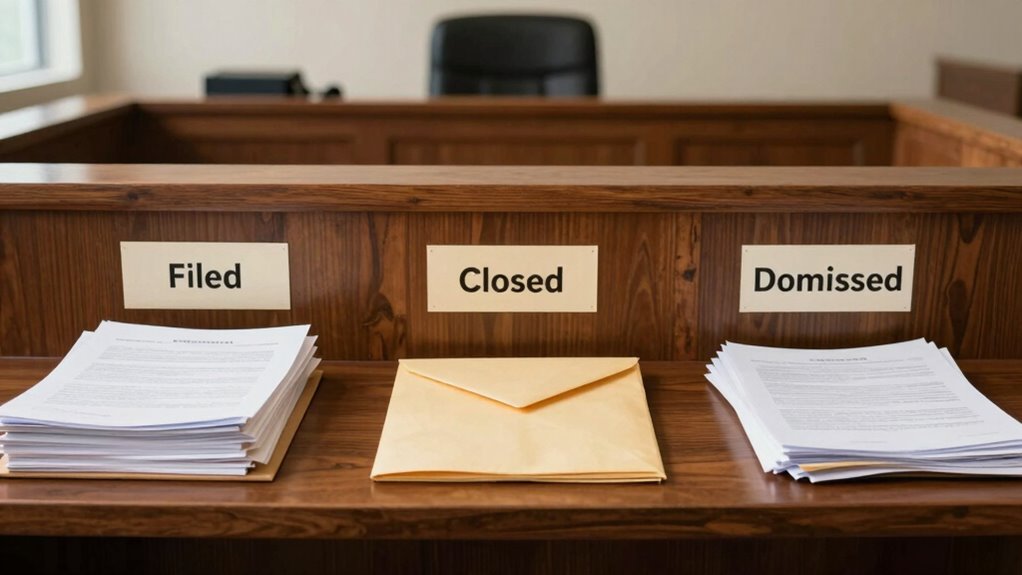

When you file a case, you’re starting the legal process, and it becomes active or “filed.” A case is “closed” once all procedures are complete, whether through settlement, verdict, or dismissal. A “dismissed” case ends early without a final decision, often due to procedural issues. Understanding these distinctions helps you follow the case’s progress, and if you keep exploring, you’ll learn more about how each status impacts legal outcomes.

Get smart everyday buys delivered free with Prime
- Fast, free delivery on millions of items
- Prime Video, Amazon Music and more included
- Member-only deals all year
Key Takeaways
- “Filed” indicates the case has been officially initiated and is actively ongoing in court proceedings.
- “Closed” means all legal procedures are complete, and the case has reached a final resolution or settlement.
- “Dismissed” refers to early termination of the case before a final judgment, often due to procedural issues or lack of evidence.
- Filing marks the start of legal action; closure signifies the case’s conclusion; dismissal indicates an early case termination.
- Dismissed cases can sometimes be refiled, whereas closed cases are considered fully resolved.
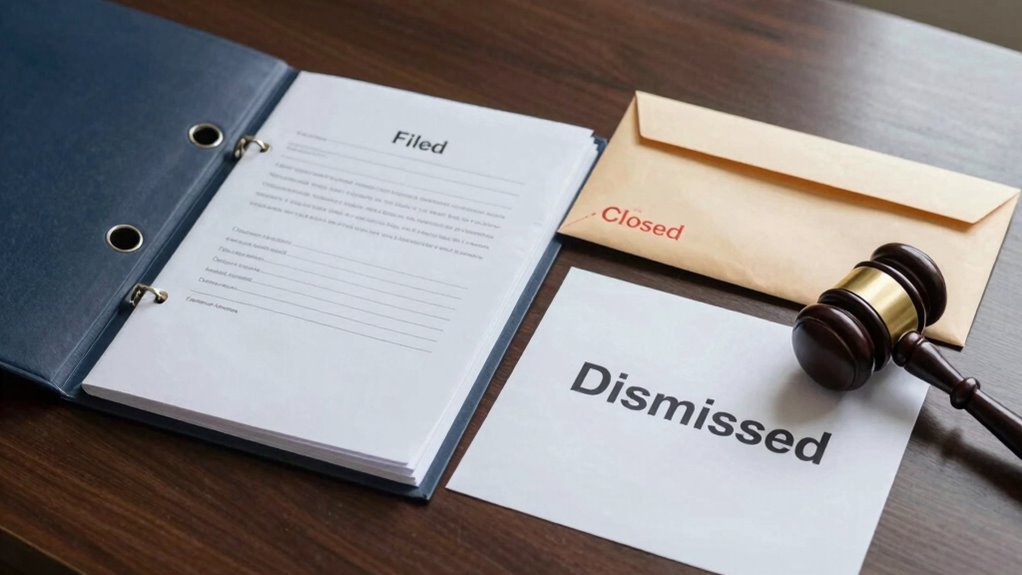
Understanding the status of a legal case can be confusing, especially when terms like “filed,” “closed,” and “dismissed” are used interchangeably. When you’re steering legal procedures, understanding these case statuses is essential. Each status reflects a different phase or outcome in the life of a case, and knowing what they mean can help you better understand where your case stands and what might happen next.
When a case is filed, it means that the legal process has officially started. You or your attorney submit necessary documents to the court, and the court assigns a case number. Filing is the first step in legal procedures, signifying that a complaint or petition has been lodged and the case is now active on the court’s docket. At this point, the case status is “open,” and the parties involved will begin the process of discovery, hearings, and motions. It’s important to recognize that a filed case isn’t necessarily a sign of success or failure; it simply marks the beginning of legal proceedings.
Once the case reaches a resolution, it may be closed. Closing a case indicates that the court has completed all necessary legal procedures, and no further action is pending. This can happen after a settlement, a verdict, or a court order dismissing the case. When a case is closed, it’s officially concluded, but the reasons behind the closure can vary. Sometimes, a case is closed because the parties settled out of court, or the court made a final ruling. In these cases, the case status shifts from active to closed, signaling that the legal process has come to an end. Additionally, the case status can be affected by the type of case, which influences how and when cases are resolved or dismissed.
On the other hand, a dismissed case is one that has been terminated before reaching a final judgment. Dismissal can occur for many reasons, such as lack of evidence, procedural errors, or a decision by the court to not proceed. Dismissal doesn’t necessarily mean the underlying issues are resolved; often, it’s a procedural or legal technicality that causes the case to end prematurely. A dismissed case can sometimes be refiled if the reasons for dismissal are addressed, but until then, the case is considered closed without a judgment on the substantive issues.
Products Worth Considering

Apple iPad Air (4th Generation, 10.9-inch, Wi-Fi, 256GB) – Space Gray

Canon imagePROGRAF PRO-1100 Professional 17-Inch Wireless Inkjet Photo Printer Bundle

Dell XPS 13 9350 AI Professional Laptop 13.4 120Hz FHD+ Display
As an affiliate, we earn on qualifying purchases.
Frequently Asked Questions
Can a Case Be Reopened After Being Dismissed?
Yes, your case can be reopened after being dismissed, but it depends on several factors. Procedural delays or new evidence might justify a reopening, and the court’s decision relies on judicial discretion. You’ll usually need to file a motion or request, showing valid reasons. Keep in mind, courts are cautious, and they won’t reopen cases without substantial grounds, especially if the dismissal was final.
What Does It Mean if a Case Is Marked as “Pending”?
A case marked as “pending” means it’s still in the legal process, like a story waiting to unfold. It indicates that the case is active and hasn’t reached a final outcome, such as being closed or dismissed. Case status meanings help you understand where the case stands in the legal process outcomes. If it’s pending, expect more steps ahead, whether it’s a trial, settlement, or other legal action.
How Long Does a Case Stay Open Before Closing?
In legal terminology, a case typically stays open until court procedures are completed or a party requests closure. The duration varies based on case complexity, court backlog, and jurisdiction. Some cases close within months, while others can stay open for years. Factors like discovery, hearings, or appeals influence timing. Ultimately, the court determines when a case is closed, often once all legal procedures are finalized and judgments are issued.
Are Dismissed Cases Permanently Removed From Records?
Dismissed cases aren’t permanently removed from records automatically. You may be able to pursue record sealing or case expungement to have them cleared or hidden from public view. These processes vary by jurisdiction but generally involve filing a petition and meeting specific requirements. If successful, sealed or expunged records can substantially reduce the impact of a dismissed case on your background check, helping you move forward more easily.
What Legal Steps Follow a Case Being Closed?
Closing a case is like sealing a chapter in a book. Once it’s closed, you may need to complete legal steps like paying fines, fulfilling court orders, or filing appeals. The case lifecycle continues even after closure, depending on circumstances. You might also request record sealing or explore enforcement actions. Staying informed about legal terminology helps you understand these processes, ensuring you’re prepared for the next steps in your legal journey.
Conclusion
Understanding the differences between filed, closed, and dismissed cases helps you navigate the legal system more confidently. Did you know that over 70% of criminal cases are resolved through dismissal or settlement before reaching trial? Knowing these terms can empower you to better interpret legal documents and your rights. Stay informed, and you’ll be better prepared to handle any legal situation that comes your way. Knowledge truly is your best defense.