

Tenant screening and employment background checks both assess individuals’ reliability, legal standing, and suitability, but they focus on different outcomes. Tenant screening mainly reviews financial history, rental records, and criminal background to guarantee responsible tenancy, while employment checks verify work history, skills, and legal compliance. Both involve various data sources, technologies, and legal considerations, with privacy and accuracy challenges. If you want to understand the key differences and best practices, keep exploring these processes further.
Listen free for 30 days with Audible
Thousands of audiobooks and originals — cancel anytime.
As an affiliate, we earn on qualifying purchases.
Key Takeaways
- Both processes assess reliability, financial stability, and legal compliance but target different contexts: housing versus employment.
- Tenant screening emphasizes rental history, credit reports, and criminal background for property protection.
- Employment background checks focus on verifying work experience, legal eligibility, and suitability for job responsibilities.
- Screening methods can be manual or automated, with legal requirements varying by jurisdiction for privacy and discrimination.
- Both require informed consent and adherence to privacy laws to ensure ethical and lawful evaluation.
tenant screening background check kit
As an affiliate, we earn on qualifying purchases.
As an affiliate, we earn on qualifying purchases.
Purpose and Objectives of Screening Processes

The primary purpose of screening processes is to assess the reliability and suitability of prospective tenants or employees to protect your property and interests. For tenants, screening helps you identify individuals who will pay rent on time, follow lease terms, and avoid problematic behaviors. It also reduces the risk of property damage, illegal activities, or eviction proceedings. For employees or contractors, screening ensures they are qualified, trustworthy, and capable of fulfilling their roles, safeguarding your assets and reputation. By evaluating financial stability, employment history, and legal background, you minimize potential risks. Additionally, incorporating behavioral assessments can provide deeper insights into an individual’s temperament and decision-making tendencies. Effective screening can also help detect potential criminal history that might pose safety concerns. Incorporating background checks that include credit reports and references further strengthens your assessment process. Conducting thorough screening supports the goal of selecting responsible individuals who contribute positively to your environment and operations. Ultimately, screening aims to select responsible, dependable individuals who align with your expectations and help maintain a safe, secure environment.
employment background check service
As an affiliate, we earn on qualifying purchases.
As an affiliate, we earn on qualifying purchases.
Key Data Sources and Information Utilized

Understanding the key data sources used in screening processes helps you evaluate prospective tenants or employees accurately. You rely on various information to assess stability, reliability, and risk. For tenant screening, the main sources include:
Knowing the key data sources ensures accurate evaluation of tenants and employees.
- Credit reports showing financial history and payment habits, which can reveal patterns of responsibility or financial distress.
- Rental history records verifying past addresses and landlord feedback, providing insights into tenant reliability.
- Criminal background checks for legal issues, ensuring safety and compliance.
- Employment verification details like pay stubs and employer contacts, which help confirm income stability.
- The accuracy of these sources can be enhanced by understanding essential oils and their proper use, which emphasizes the importance of reliable, well-maintained information. Recognizing how information accuracy influences screening results is essential for making fair and informed decisions. Additionally, leveraging data verification techniques can further improve the quality of the screening process.
For employment checks, essential data come from:
- Employer references confirming job status and tenure
- Pay stubs and tax documents validating income
- Background checks for criminal records
- Previous employment records to assess stability. Additionally, verifying employment history through multiple sources can reduce the risk of inaccurate reporting.
As an affiliate, we earn on qualifying purchases.
Focus Areas and Evaluation Criteria

Focus areas and evaluation criteria serve as the foundation for making informed decisions during tenant screening and employment background checks. You should prioritize key factors such as financial stability, rental or employment history, and legal compliance. These criteria help identify trustworthy tenants or reliable employees, reducing risk. Incorporating financial affidavits or detailed financial statements can further enhance the assessment process. Understanding the horsepower and performance capabilities of potential candidates or tenants can also provide insight into their ability to meet commitments effectively. Additionally, considering well-being tips related to stress management and emotional health can support a more holistic evaluation process. Staying informed about emerging trends in catering and delivery services can also offer innovative approaches to evaluating client reliability and service expectations. Regularly reviewing essential oil safety guidelines can help ensure that all assessments are conducted with health and safety considerations in mind.
criminal background check for employment
As an affiliate, we earn on qualifying purchases.
As an affiliate, we earn on qualifying purchases.
Contexts and Applications of Checks

Checks are applied in various contexts to guarantee safety, compliance, and reliability. When you’re screening tenants, you want to ensure they pay rent on time, avoid legal trouble, and respect property rules. Similarly, employment background checks help verify if candidates are honest about their experience and can handle job responsibilities. These checks are used in:
Checks ensure safety and compliance in tenant screening and employment verification.
- Landlord screening to select trustworthy tenants and prevent damage or unpaid rent.
- Employer hiring processes to confirm candidates’ employment history and income stability.
- Property management to maintain a safe community environment.
- Corporate onboarding to ensure new hires meet legal and security standards.
- Incorporating diverse designs and materials in planning can enhance the effectiveness of screening processes by aligning with the specific needs of each context. Additionally, understanding the types of background checks available can help tailor the screening to different situations more effectively.
- Implementing comprehensive personality assessments can also provide deeper insights into candidate compatibility and behavioral traits, further reducing risks in employment decisions. Recognizing the importance of the father-daughter bond can serve as a reminder of the value of trust and personal connection in all relationships, including professional ones.
- A thorough understanding of content quality and topical authority can significantly improve the reliability and credibility of screening assessments, leading to better decision-making.
Techniques and Technologies in Screening

You can choose between manual and automated screening methods to evaluate applicants efficiently. Digital verification tools streamline processes like background checks and document validation, saving time and reducing errors. Incorporating Hyundai Tuning techniques can also serve as a metaphor for customizing your screening process to better suit your specific needs. Additionally, understanding the characteristics of a healthy applicant can help refine your criteria for a successful hire. Implementing proper food safety protocols, especially when handling sensitive documents or conducting physical assessments, is essential for maintaining integrity in the screening process. Recognizing the importance of skin health benefits can also inform how you assess candidates’ physical well-being during the screening process.
Digital Verification Tools
Digital verification tools have revolutionized the tenant screening process by enabling faster, more accurate assessments through advanced technologies. You can now verify documents and data instantly, reducing manual effort and human error. These tools utilize artificial intelligence, machine learning, and secure online databases to streamline checks. For example:
- Automate SSN and identity verification with real-time database access
- Cross-reference rental and criminal records across multiple sources quickly
- Use biometric verification for secure identity confirmation
- Integrate with property management software for seamless data handling
This technology not only speeds up decision-making but also enhances reliability. You gain immediate insights into applicants’ backgrounds, helping you make informed, compliant leasing choices without delays. Digital tools are transforming tenant screening into a more efficient, precise process.
Manual vs. Automated Screening
Manual and automated screening methods each offer distinct advantages and challenges. Manual screening involves reviewing documents, contacting references, and verifying information yourself or through staff. It allows for personalized judgment and flexibility but can be time-consuming, prone to human error, and less scalable. Automated screening leverages technology to streamline processes, using software to pull credit reports, criminal records, and employment data instantly. This approach saves time, reduces errors, and enables handling large volumes efficiently. However, it may lack the nuanced judgment of manual review and relies heavily on the accuracy of digital data. Combining both methods often provides the best results—using automation for speed and manual review for context and validation. Your choice depends on your screening priorities and resource availability.
Comparing Legal Frameworks and Regulations
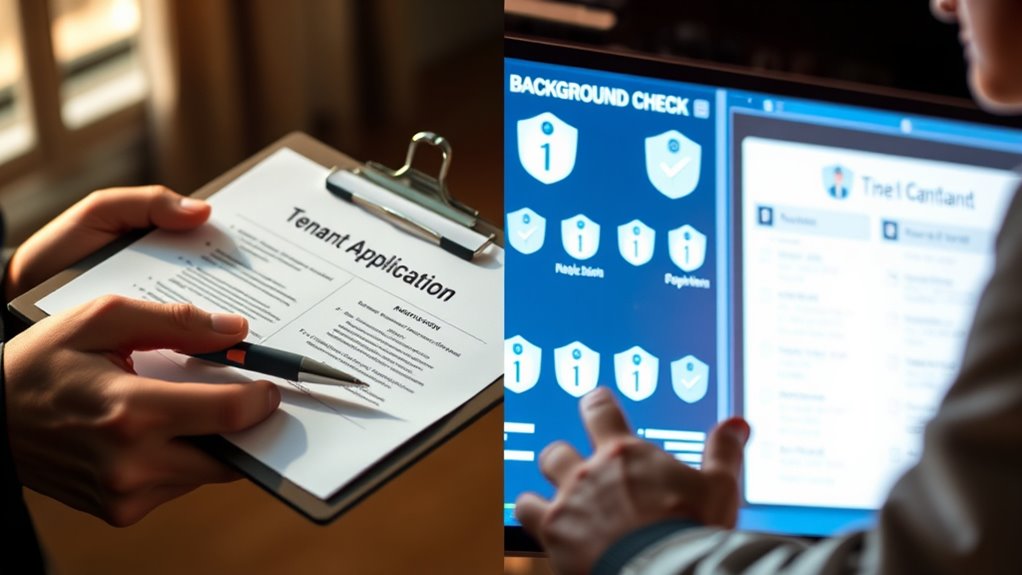
Legal frameworks and regulations governing tenant screening and employment background checks are complex and vary markedly across jurisdictions. You must understand the specific laws that apply to each process to stay compliant. For tenant screening, you need to follow fair housing laws, privacy regulations, and rules about data accuracy. For employment checks, you must adhere to the Fair Credit Reporting Act (FCRA), anti-discrimination laws, and equal opportunity regulations.
- Tenant screening laws often restrict the types of information you can collect and how you use it.
- Employment background checks require explicit consent from candidates.
- Both processes demand accurate, non-discriminatory reporting.
- Violating these rules can lead to legal penalties or lawsuits.
Knowing these legal nuances helps you avoid risks and ensures fair, ethical screening practices.
Challenges and Limitations in Data Accuracy
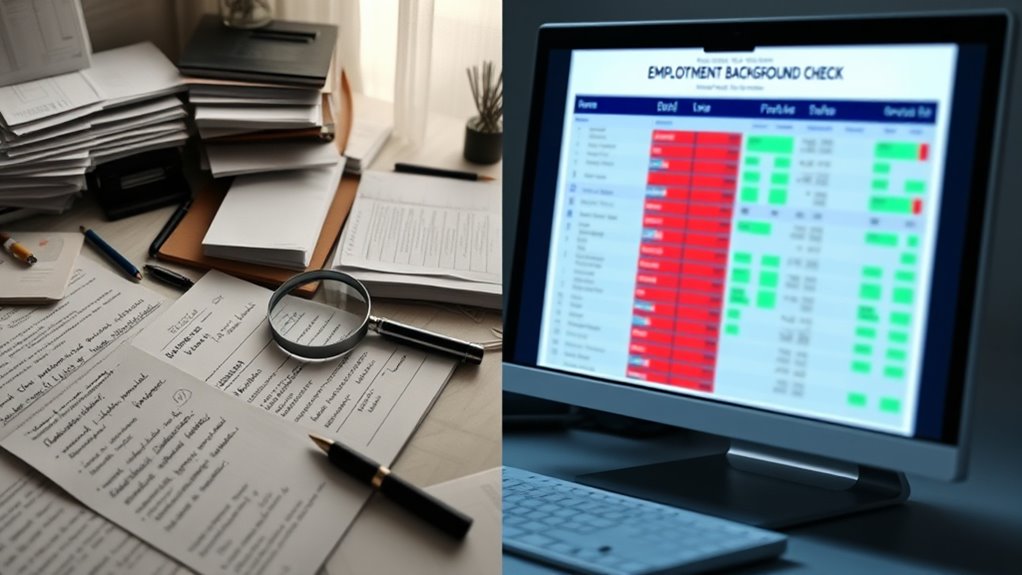
You might encounter inaccuracies in tenant screening data, such as false or ambiguous eviction records that can impact your decisions. Proprietary scoring models often lack transparency, making it hard to assess their reliability. Additionally, incomplete background records can leave gaps in information, increasing the risk of oversight.
Data Discrepancies and Errors
Data discrepancies and errors pose significant challenges in tenant screening and employment background checks because the information relied upon isn’t always accurate or complete. You might find eviction records that are outdated or contain mistakes, or criminal databases with false positives. These inaccuracies can lead to unfair denials or overlooked risks. Common issues include:
- Outdated or incomplete records that don’t reflect current status
- Duplicate entries causing confusion
- Errors in personal details like names or Social Security numbers
- Propagated inaccuracies from third-party sources
Such errors can skew your judgment, making it harder to assess risk properly. Relying on flawed data increases the chance of making incorrect decisions, which can affect your property or hiring outcomes. Ensuring data accuracy is critical but often difficult due to inconsistent record-keeping practices.
Proprietary Scoring Limitations
Proprietary scoring models are widely used in tenant screening to assess risk, but they come with notable limitations. These models rely on algorithms developed by private companies, often without transparent validation or standardized benchmarks. You can’t always verify how accurately they predict future tenant behavior, making their assessments less reliable. Additionally, these scores may be biased or outdated if the underlying data isn’t current or complete. Since the models are proprietary, landlords and property managers lack insight into how scores are calculated, which hampers your ability to challenge or interpret results effectively. This opacity can lead to unfair rejections or overlooked risks, ultimately affecting your decision-making process. Relying solely on these scores may give you an incomplete picture of a prospective tenant’s true risk profile.
Incomplete Background Records
Incomplete background records pose significant challenges because they can lead to inaccurate or misleading screening results. When data is missing or outdated, you might wrongly assess a tenant’s reliability or overlook potential risks. These gaps can come from various sources, such as outdated eviction databases, incomplete criminal records, or unverified employment histories. This unpredictability makes it harder to make confident decisions. You might encounter:
- Records that are outdated or incomplete, hiding recent issues
- False positives or negatives due to data inaccuracies
- Missing criminal or eviction details affecting risk assessment
- Inconsistent data formats across different sources
Such limitations can result in unfairly rejecting good tenants or accepting risky ones. Relying on incomplete data compromises the screening process’s integrity, making it essential to verify and supplement records whenever possible.
Privacy and Ethical Considerations

Privacy and ethical considerations are central to tenant screening and employment background checks because handling sensitive information requires careful responsibility. You must ensure data is collected, stored, and shared in compliance with privacy laws like the Fair Credit Reporting Act and GDPR. Respect applicants’ rights by obtaining clear, written consent before conducting checks. Avoid using information that could lead to discrimination based on race, gender, religion, or other protected traits. Be transparent about your screening criteria and how data will be used. Protect candidates’ and tenants’ personal details from unauthorized access or breaches. Ethical screening means balancing thoroughness with fairness, ensuring you don’t infringe on privacy rights while making informed decisions. Responsible practices build trust and uphold your reputation.
Frequently Asked Questions
How Do Screening Costs Differ Between Tenant and Employment Checks?
You’ll find that tenant screening costs typically range from $30 to $50 per applicant, depending on the depth of reports and screening providers used. Employment background checks usually cost between $20 and $100, influenced by the level of detail and the number of verifications required. While tenant screenings often have a set fee per applicant, employment checks can vary based on the employer’s or agency’s policies and the scope of verification needed.
What Are Common Reasons for Screening Rejection in Each Process?
Remember, the proof of the pudding is in the eating. You might reject a tenant if their credit score is too low, they have a history of late rent payments, or criminal records raise red flags. For employment checks, common reasons include inconsistent job histories, false income details, or unresolved criminal issues. Both processes aim to protect your interests, so transparency and accuracy are key to fair decision-making.
How Long Does Each Type of Background Check Typically Take?
You’ll find that tenant background checks usually take anywhere from a few hours to two days, depending on the depth of the screening and the data sources involved. Employment background checks typically require 1 to 3 hours for verification, but can extend up to a few days if there are delays contacting employers or verifying documents. Timing varies based on the complexity and the efficiency of the verification processes used.
Which Industries or Sectors Rely Most Heavily on Employment Background Checks?
You’ll find industries like finance, healthcare, government, and education rely most heavily on employment background checks. These sectors prioritize verifying employment history, criminal records, and credentials to make certain of safety, trustworthiness, and compliance. Employers in these fields want to reduce risks, protect sensitive information, and meet strict regulations. By thoroughly vetting candidates, they aim to maintain high standards and safeguard their organizations, clients, and the public.
Are There Specific Legal Restrictions on Sharing Screening Data?
A stitch in time saves nine—so, yes, there are legal restrictions on sharing screening data. You must comply with laws like the Fair Credit Reporting Act (FCRA) and privacy regulations, which limit how you can collect, share, and use this information. Always get written consent before sharing and guarantee data accuracy. Violating these rules can lead to hefty fines and legal trouble, so stay informed and act responsibly.
Conclusion
You might think screening is just about catching red flags, but it’s really about making informed decisions. By understanding the similarities and differences between tenant screening and employment background checks, you see how both rely on accurate data and legal guidelines. It’s almost like a puzzle — piece by piece, you verify trustworthiness. So, trust that with the right approach, you’re better equipped to choose reliable tenants or employees, debunking the myth that screening is just bureaucracy.
Fall Picks
fall essentials
As an affiliate, we earn on qualifying purchases.