
Sealed cases limit the information available in private screening reports, making it harder for you to access complete background details. Because these records are confidential, you might receive reports with incomplete or restricted data, which can lead to inaccurate assessments or overlooked issues. This lack of transparency poses legal and ethical challenges and may affect your decision-making process. Stay tuned to learn how to navigate these restrictions effectively and guarantee your screenings remain reliable.
Key Takeaways
- Sealed cases limit access to detailed background information, resulting in incomplete screening reports.
- Confidentiality restrictions can prevent thorough background checks, risking inaccurate or biased decisions.
- Use of sealed records may violate legal restrictions, leading to potential lawsuits or penalties.
- Restricted access reduces transparency, making it harder to evaluate an individual’s full history.
- Ethical screening requires balancing privacy laws with the need for comprehensive, accurate information.
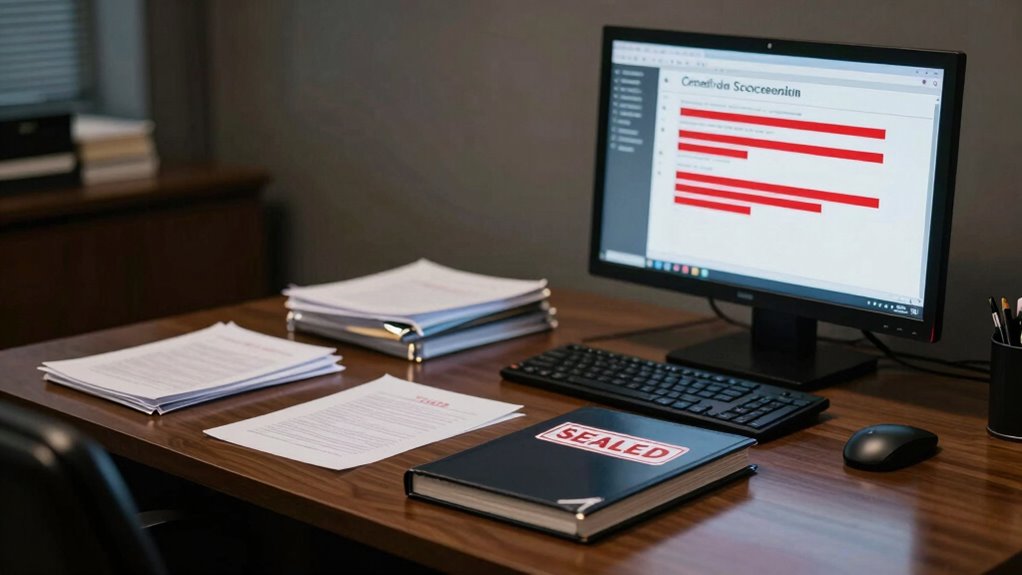
When courts seal cases or restrict access to screening reports, it often raises questions about transparency and privacy. As someone involved in the hiring process or background checks, you need to understand how these sealed cases can influence the information you receive and the legal landscape surrounding it. Sealed cases are often kept confidential to protect privacy, but this confidentiality can complicate the collection of screening reports and impact your ability to make informed decisions. You might find yourself unable to access certain details or reports that could be vital for evaluating an individual’s background. This creates a delicate balance between respecting privacy and ensuring transparency, which can lead to legal implications if not navigated carefully. Additionally, the use of sealed records can sometimes obscure the public access to relevant information, further complicating transparency efforts. In terms of legal implications, sealing cases often limits your legal right to review detailed background information. Courts may seal records to prevent public dissemination of sensitive details, but this can also mean that you’re screening someone with incomplete or limited data. If you rely on reports that omit critical information due to sealing, you risk making decisions based on incomplete or potentially misleading data, which can have legal consequences if those decisions result in harm or discrimination. Furthermore, the impact of confidentiality on the availability of records can hinder comprehensive background checks, making it more challenging to gather a full picture. The restrictions on access can also influence the timeliness of obtaining necessary information, potentially delaying the screening process. Sometimes, sealed records are also used to protect individuals’ privacy while balancing the need for transparency in the legal process. In some cases, the use of sealed records may also lead to legal challenges, especially if there is an argument that the sealing unjustly impairs your ability to conduct thorough background checks. Additionally, there are legal restrictions on how you can use information obtained from sealed cases, especially if it involves protected privacy interests. Violating these restrictions could lead to lawsuits or legal penalties, emphasizing the importance of understanding the boundaries set by sealed records. Privacy concerns are at the heart of the debate around sealed cases and screening reports. When records are sealed, it’s usually because they contain sensitive personal information that the courts deem should not be publicly accessible. As someone conducting background checks, you must respect these privacy boundaries while also trying to gather enough information to make a fair evaluation. The challenge lies in balancing these interests—upholding privacy rights while ensuring that your screening process remains thorough and compliant with laws like the Fair Credit Reporting Act (FCRA). Failing to navigate this balance carefully can not only infringe on an individual’s privacy but also expose you to legal risks. Ultimately, sealed cases complicate the process of private screening reports, making it harder to access complete information. You need to stay aware of the legal implications and privacy concerns involved, ensuring your screening practices stay compliant and respectful of individuals’ rights. This often means working with limited data and understanding the legal boundaries around sealed records. Recognizing these factors helps you avoid potential pitfalls and maintain ethical and lawful screening procedures, even when access to full records is restricted.
background check report review software
As an affiliate, we earn on qualifying purchases.
As an affiliate, we earn on qualifying purchases.
Frequently Asked Questions
Can Sealed Cases Be Unsealed Later?
Yes, sealed cases can be unsealed later, but it involves specific procedures. You need to follow sealed case procedures and obtain a court order to unseal the records. This process respects legal confidentiality but requires valid reasons, such as legal necessity or public interest. The court carefully reviews such requests to guarantee confidentiality is maintained unless there’s a compelling reason to access the sealed information.
Who Has Access to Sealed Case Information?
You typically can’t access sealed case information unless you’re directly involved or have legal authorization. Confidentiality concerns and sealed case procedures strictly limit who can view these records to protect privacy. Usually, only court officials, attorneys, and parties involved in the case can see the sealed documents. If you need access, you’ll need special permission or a court order, as these procedures prioritize confidentiality and privacy protections.
Do Sealed Cases Impact Credit Reports?
Sealed cases generally don’t impact your credit report because they are protected by Sealed case privacy laws. These cases aren’t reported to credit bureaus, ensuring your credit report remains accurate and unaffected. You can confidently trust that sealed case information won’t distort your credit report details. However, always verify with your credit provider if you have concerns, as some legal proceedings may indirectly influence your credit standing.
Are Sealed Cases Visible to Employers?
Sealed cases aren’t visible to employers because of sealed case procedures, which keep legal matters confidential. These procedures guarantee that sensitive information remains private, preventing employers from accessing details of sealed legal processes. As a result, unless you voluntarily disclose the case, employers generally cannot see sealed cases on background checks. This confidentiality protects your privacy, maintaining the integrity of the legal process and your personal information.
How Long Does a Case Remain Sealed?
Sealed records typically stay private indefinitely, with no set expiration date, preserving privacy implications for you. Notably, over 75% of sealed cases remain confidential for life, protecting individuals from ongoing public exposure. This status means the case won’t be accessible through public records, but it can sometimes still be accessed in specific legal circumstances. The duration depends on jurisdiction, but generally, sealed cases stay confidential unless explicitly unsealed.
background screening report analysis tools
As an affiliate, we earn on qualifying purchases.
As an affiliate, we earn on qualifying purchases.
Conclusion
Sealed cases cast a shadow over private screening reports, making them feel like hidden treasures buried beneath layers of secrecy. You might find yourself lost in a maze, unsure of what’s concealed behind closed doors. While confidentiality is essential, transparency helps you navigate with confidence. Remember, revealing these secrets can be the key to clarity, guiding you through the fog and illuminating the path forward. Don’t let sealed cases keep you in the dark—shine a light on the truth.
As an affiliate, we earn on qualifying purchases.
background check report accuracy tools
As an affiliate, we earn on qualifying purchases.
As an affiliate, we earn on qualifying purchases.