

Michigan’s Clean‑Slate Law makes it easier for you to consider applicants with criminal records by expanding eligibility for expungements and simplifying the process. It also requires background checks to exclude sealed or expunged records, helping you promote fair, inclusive hiring. This law aims to boost employment opportunities, reduce recidivism, and support community reintegration. To ensure your hiring practices stay compliant and fair, understanding these changes is essential as you continue exploring how this law impacts employment.

Get smart everyday buys delivered free — and shop member deals
- Fast, free delivery on millions of items
- Access to Prime Big Deal Days deals on October 6–7
- Prime Video, Amazon Music and more included
Key Takeaways
- Michigan’s Clean‑Slate Law expands eligible offenses and automates some expungements, reducing barriers for job applicants with criminal records.
- It makes expunged records invisible to most background checks, aiding fair hiring and reducing employment discrimination.
- Employers must update policies to exclude sealed or expunged records from background reports and train HR staff accordingly.
- The law promotes workforce diversity by allowing more individuals with criminal histories to access employment opportunities.
- Challenges include verifying sealed records and staying compliant with varying state and sector-specific regulations.
background check exclusion software
As an affiliate, we earn on qualifying purchases.
As an affiliate, we earn on qualifying purchases.
Overview of Michigan’s Clean‑Slate Law

Michigan’s Clean‑Slate Law, which took effect in October 2020, substantially broadens access to criminal record expungements. It allows more individuals to clear eligible offenses from their records, including automatic expungements for certain crimes. It also promotes fairness in employment by reducing barriers for qualified applicants. The law expands the types of offenses that qualify and simplifies the process, making it easier for people to have their records sealed or set aside. Before this law, only a small percentage of eligible individuals sought expungement due to procedural barriers. Now, the law targets those who have completed their sentences and maintained good conduct, helping them access jobs and housing. When records are expunged under Clean Slate, they become invisible to most background checks, reducing barriers for reentry into society. Additionally, the law emphasizes the importance of rehabilitation and provides new pathways for individuals to rebuild their lives after criminal justice involvement. Simplifying expungement procedures encourages more people to seek record clearance and supports their successful reintegration. This legislation also aims to reduce recidivism by encouraging reintegration and reducing stigma associated with prior convictions.
criminal record expungement guide book
As an affiliate, we earn on qualifying purchases.
As an affiliate, we earn on qualifying purchases.
Expungement Eligibility and Process Changes

Michigan’s Clean‑Slate Law has expanded eligibility criteria, making more individuals eligible for record expungement. The application process has also been simplified to encourage participation and reduce barriers. As a result, you’ll need to stay updated on these changes to guarantee compliance and fair hiring practices. Educational toys can serve as a helpful analogy, demonstrating how accessible resources and simplified procedures promote growth and development. Understanding the expungement process can help applicants navigate the legal procedures more effectively and increase their chances of a successful record clearance. Staying informed about store hours can assist applicants in planning their visits to legal offices or government agencies efficiently. Additionally, familiarizing yourself with IRA investment strategies can provide valuable insights into managing financial resources during the expungement process, ensuring a stable financial future.
Expanded Eligibility Criteria
The Clean-Slate Law considerably broadens the range of offenses eligible for expungement, making it easier for you to clear your criminal record. It lowers barriers by expanding what qualifies and increasing the number of convictions you can have expunged. Certain misdemeanors and some felonies now qualify if specific conditions are met, such as time elapsed and sentence completion. The law also allows multiple convictions to be expunged, provided they meet eligibility criteria. Additionally, it promotes rehabilitation efforts by offering more opportunities for individuals to rebuild their lives. This legislation recognizes the importance of second chances in supporting community reintegration and reducing recidivism. The expanded criteria align with the goal of reducing barriers to employment, helping individuals reintegrate successfully into society. Furthermore, the law emphasizes fairness and equity in the expungement process to ensure broader access for those seeking a fresh start. It also encourages community trust by making the process more transparent and accessible for all eligible applicants.
Streamlined Application Process
Thanks to recent changes, applying for expungement has become much easier and faster. Michigan’s Clean-Slate Law simplifies the process by expanding eligibility and reducing procedural barriers. You no longer need to navigate complex court procedures or pay high fees for many eligible offenses. Instead, the law allows for automatic expungements in certain cases and provides a clear, streamlined application process for others. You can now submit a single petition online or in person, with clearer instructions and quicker review times. The law also sets specific timeframes for eligibility, making it easier to plan your case. Additionally, the law promotes efficiency in processing by utilizing modern technology and clearer guidelines. This can include online portals and electronic documentation, which improve application review times. Overall, these reforms help you access expungement faster, encouraging more individuals to clear their records and improve their chances for employment and housing.
HR training for fair hiring practices
As an affiliate, we earn on qualifying purchases.
As an affiliate, we earn on qualifying purchases.
How Clean‑Slate Affects Background Checks

How does the Clean‑Slate law change the way background checks are conducted in Michigan? It requires screening providers to exclude records that have been expunged or sealed, ensuring employers see only relevant, non-confidential info. As a result, many convictions once visible now won’t appear in reports, impacting hiring decisions. To understand this shift, consider this table:
| Record Status | Visible in Background Checks | Impact on Hiring |
|---|---|---|
| Expunged | No | Limits access to sealed records |
| Sealed | No | Records are private; employers can’t see them |
| Public Record | Yes | Fully accessible |
| Pending | Yes | Still visible until resolved |
This change emphasizes compliance, fairness, and privacy, transforming how you interpret candidate backgrounds. Additionally, understanding the importance of self-awareness can help employers better assess candidate suitability beyond background checks. Recognizing how decoding slang and informal language influence communication can also improve employer-employee relations and reduce misunderstandings. Moreover, being aware of record status helps employers interpret which information is legally accessible and relevant to hiring decisions. Being knowledgeable about background check procedures ensures a fair and compliant hiring process.
employment background check scanner
As an affiliate, we earn on qualifying purchases.
As an affiliate, we earn on qualifying purchases.
Legal Responsibilities for Employers
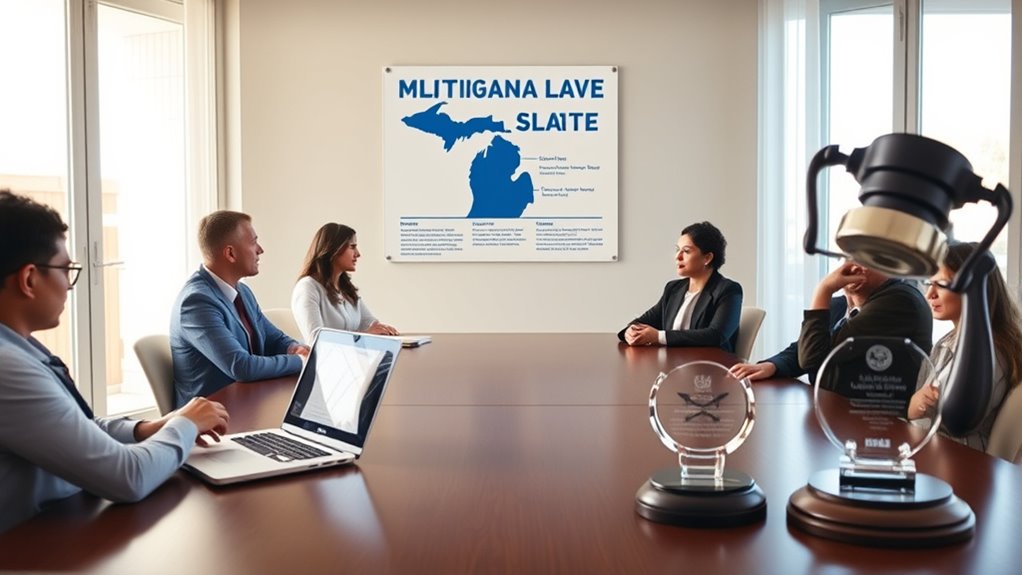
Employers must proactively update their hiring policies and compliance procedures to reflect the changes brought by Michigan’s Clean‑Slate Law. You need to verify your application questions and interview processes do not inquire about sealed or expunged records, as it’s now illegal to consider them in hiring decisions. Train HR staff and hiring managers on the law’s provisions, emphasizing that certain criminal records are no longer reportable or relevant. Regularly review and audit background screening processes to confirm records are correctly excluded and stay compliant with evolving regulations. Failing to adapt your procedures could lead to legal risks, including discrimination claims or privacy violations. Ensuring efficient general ledger coding can help organizations track compliance-related expenses and audits more effectively. Additionally, staying informed about background check regulations ensures ongoing compliance and mitigates potential liabilities while supporting fair, equitable hiring practices.
Updating Hiring Policies and Practices

You need to revise your background check procedures to guarantee they exclude records that have been expunged or sealed under Michigan’s Clean-Slate Law. Training your hiring teams on these legal updates helps prevent unintentional discrimination and keeps your practices compliant. Regularly updating policies and educating staff will support fair hiring and protect your organization from legal risks.
Revise Background Checks
To guarantee compliance with Michigan’s Clean-Slate Law, updating hiring policies and background check procedures is essential. You need to ascertain that your screening providers exclude records that have been expunged or sealed under the law. Verify that background reports no longer display these records, and update your internal policies to reflect this change. Avoid asking candidates about expunged or sealed convictions, as it’s prohibited by law. Train your HR team to understand the law’s requirements, emphasizing that previously criminal records may now be invisible. Regularly audit your background check processes to stay compliant, preventing potential legal risks. By revising your procedures, you promote fair hiring practices and ensure your organization aligns with state regulations.
Train Hiring Teams
Updating hiring policies and practices is essential to guarantee compliance with Michigan’s Clean‑Slate Law. To do this effectively, you need to train your hiring teams on the law’s provisions. They must understand that expunged or sealed records are no longer reportable and cannot influence hiring decisions. This awareness prevents discrimination and legal risks. You should also review interview questions and application forms, removing inquiries about sealed records. Regular training sessions ensure your team stays updated on legal changes. Consider using the following table to organize training topics:
| Training Focus | Key Actions |
|---|---|
| Legal Requirements | Understand expungement laws and restrictions |
| Screening Procedures | Exclude sealed records from reports |
| Interview Practices | Avoid questions on expunged records |
| Record Updates | Keep track of recent expungements |
| Compliance Monitoring | Conduct regular policy reviews |
Challenges in Verifying Expunged Records

Verifying expunged records has become increasingly challenging due to Michigan’s Clean-Slate Law, which removes certain criminal records from public view. As a result, background checks may not reveal past offenses that are now sealed or expunged, making it difficult to confirm an applicant’s full history. You might rely on third-party screening providers, but they must stay updated on legal changes to avoid reporting errors. Sometimes, records are only accessible through specific state databases or court systems, requiring additional steps and expertise. This process can cause delays and complicate accurate assessments. Moreover, employers need to ensure their screening procedures comply with legal restrictions, avoiding questions about sealed records altogether. Staying informed about ongoing changes is essential for effective, lawful verification practices.
Promoting Workforce Diversity Through Expungement

Expungement laws like Michigan’s Clean Slate remove barriers that have traditionally limited access to employment for individuals with criminal records. By clearing records, these laws expand the pool of qualified candidates, fostering workforce diversity. You might encounter candidates who, on paper, seem ideal but previously faced record-related obstacles. This law helps break down biases rooted in past convictions, giving opportunities to overlooked talent. Imagine a table showing diverse backgrounds:
| Candidate A | Candidate B | Candidate C |
|---|---|---|
| Past conviction | No record | Expunged record |
| Skilled worker | Entry-level | Experienced |
| Enthusiastic | Reliable | Ambitious |
| Available | Available | Available |
As a result, your hiring decisions can focus more on skills and potential, promoting a more inclusive workplace.
Empirical Evidence Linking Expungement to Employment Gains

Data from Michigan show that people who get their records expunged experience notable employment improvements. Studies indicate they often see a 23% wage increase within a year after expungement. This evidence confirms that clearing records can directly boost job opportunities and earnings.
Wage Increases Post-Expungement
Research shows that when individuals have their criminal records expunged under Michigan’s Clean-Slate Law, they often experience notable wage increases and improved employment prospects. Expungement reduces employment barriers, allowing you to access higher-paying jobs and negotiate better wages. Studies indicate that workers who have records expunged see an average wage increase of 23% within a year. The table below highlights key factors influencing wage gains:
| Factor | Impact on Wages |
|---|---|
| Type of Offense | More significant increases for non-violent crimes |
| Industry | Higher gains in healthcare and finance |
| Time Since Expungement | Wages tend to grow as records stay sealed |
| Education Level | Higher education correlates with larger gains |
| Employment History | Consistent employment boosts wage growth |
These evidence-based trends demonstrate that expungement under Michigan’s law can substantially boost your earning potential.
Employment Rate Improvements
Studies consistently show that individuals who have their criminal records expunged experience notable improvements in employment rates. When records are cleared, employers are less likely to overlook qualified candidates due to past convictions. A University of Michigan study found that those with expunged records saw a significant rise in employment opportunities, with employment rates increasing by around 15-20% within a year of expungement. These improvements occur because employers can now view applicants without the bias of sealed convictions. additionally, job seekers with expunged records often find it easier to access positions requiring background checks. Overall, expungement laws like Michigan’s Clean‑Slate directly contribute to greater workforce participation for individuals with prior criminal histories, helping them regain economic stability and rebuild their lives.
Broader Trends and Future Implications

As more states adopt Clean Slate and similar expungement laws, the landscape of employment screening is poised for significant change. You’ll need to stay current on evolving regulations, as automatic expungements and record sealing become more common nationwide. Multi-state employers face increased complexity in compliance, requiring consistent screening protocols that respect each jurisdiction’s rules. Industry-specific standards may also influence how background checks are conducted, especially in regulated fields like healthcare or finance. Additionally, the growing public and legislative support for criminal justice reform emphasizes the importance of equitable hiring practices. You’ll want to balance safety and legal requirements with inclusion efforts, ensuring your policies reflect the shift toward viewing criminal records as less relevant for employment decisions. Staying informed will be key to adapting effectively.

Navigating multi-state compliance becomes increasingly complex as more jurisdictions adopt varying expungement and sealing laws, requiring you to stay current on each state’s regulations. You must understand that laws differ widely, with some states implementing automatic expungements, while others require specific petitions or eligibility criteria. This variability impacts how you conduct background checks, ensuring you exclude sealed or expunged records to avoid legal violations. Industry-specific regulations also influence your screening processes, especially in finance or healthcare, where comprehensive background reviews are necessary. Staying informed through regular updates from legal sources and industry associations helps you adapt policies accordingly. Failing to keep pace risks non-compliance, potential legal action, or inadvertently discriminating against qualified candidates. Consistent review and training are essential to navigate this evolving legal landscape effectively.
Frequently Asked Questions
How Will Employers Verify if a Record Has Been Expunged Under Michigan Law?
You should work with a reputable background screening provider familiar with Michigan’s law. They’ll guarantee that expunged records are excluded from reports, so you won’t see sealed or expunged convictions. Regularly update your screening processes and stay informed about changes in law. Avoid asking about sealed records during interviews, and train your HR team on compliance. This way, you can verify records accurately while respecting legal restrictions.
Are There Specific Industries With Stricter Background Check Requirements Post-Clean Slate?
Yes, certain industries like healthcare, finance, and childcare have stricter background check requirements even after Clean Slate. You need to follow industry-specific regulations that often demand more thorough screenings, including fingerprinting or multiple background checks. Be aware that these sectors prioritize safety and compliance, so you should stay updated on their policies. Always make sure your screening processes align with legal requirements and industry standards to avoid potential violations.
Can Employers Still Ask About Sealed or Expunged Records During Interviews?
No, you can’t ask about sealed or expunged records during interviews, even if it feels tempting to dig deeper. The law explicitly prohibits questions about or consideration of these records, so don’t risk legal trouble by trying to get around it. Instead, focus on the candidate’s qualifications and experience. After all, the law’s goal is to give people a fair shot, not to make hiring more complicated.
What Are the Consequences for Employers Who Fail to Comply With Expungement Disclosure Rules?
If you fail to comply with expungement disclosure rules, you risk legal consequences like lawsuits, fines, or penalties for discrimination or privacy violations. Non-compliance can also damage your company’s reputation and trust with employees and applicants. You might face audits or investigations, which could lead to costly legal actions or mandated policy changes. Staying updated and adhering to laws helps protect your organization from these risks and promotes fair hiring practices.
How Often Should Employers Review Background Screening Procedures for Legal Updates?
Like tuning a vintage radio, you should review your background screening procedures at least annually to stay current with legal updates. Laws evolve, and keeping your policies aligned ensures compliance and fairness. Regular reviews help you catch changes in reporting requirements, industry standards, or new regulations. This proactive approach minimizes legal risks, fosters fair hiring practices, and demonstrates your commitment to an inclusive, compliant workforce.
Conclusion
By embracing Michigan’s Clean‑Slate Law, you can open doors for qualified candidates who’ve cleared past hurdles. Some may worry about safety, but think of it like a fresh start—statistics show employment rates improve with expungement. By updating your policies, you not only comply with the law but also foster a diverse, inclusive workforce. It’s a win-win: better talent and stronger community ties. So, see this law as an opportunity, not a risk.
Fall Picks
fall essentials
As an affiliate, we earn on qualifying purchases.