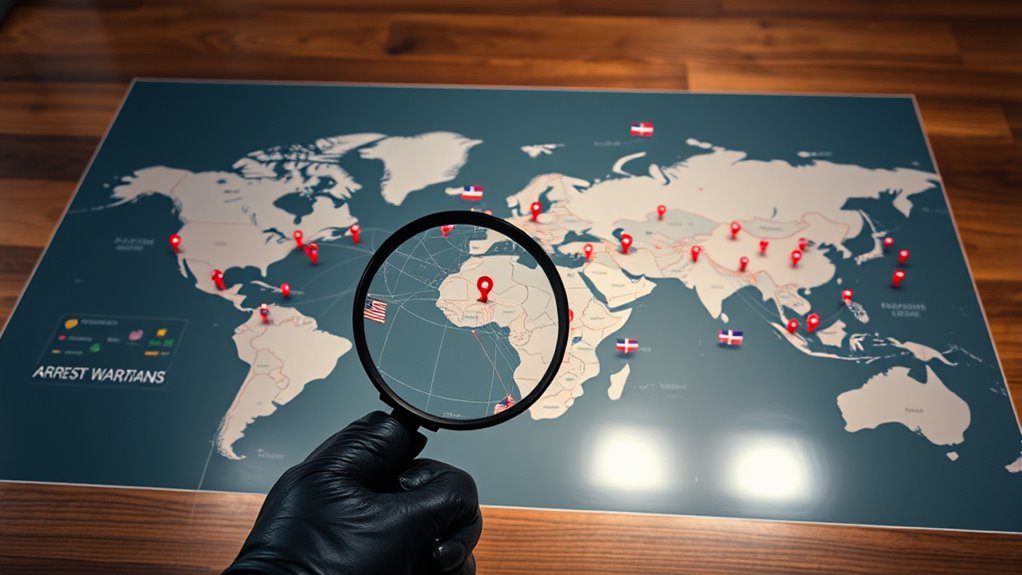

International arrest warrants and extradition treaties are vital tools for cross-border cooperation in catching and transferring suspects for serious crimes like murder or terrorism. Agencies use tools like Interpol Red Notices and ICC warrants to notify countries about wanted individuals, while systems like the European Arrest Warrant streamline extradition within the EU. However, enforcement can face challenges such as legal differences, political issues, or sovereignty concerns. If you want to understand how these mechanisms work together, keep exploring further.

Get smart everyday buys delivered free with Prime
- Fast, free delivery on millions of items
- Prime Video, Amazon Music and more included
- Member-only deals all year
Key Takeaways
- International arrest warrants, like Interpol Red Notices and ICC warrants, facilitate cross-border law enforcement cooperation.
- Extradition treaties establish legal frameworks for transferring suspects between countries, often streamlined by systems like the European Arrest Warrant.
- Both mechanisms rely on mutual legal assistance and respect for sovereignty, with procedures requiring formal documentation and legal standards.
- Challenges include political, legal, or diplomatic refusals, delays, and differences in legal definitions of offenses.
- Effective enforcement depends on international cooperation, legal compliance, and clear communication between participating states.
Interpol Red Notice identification kit
As an affiliate, we earn on qualifying purchases.
As an affiliate, we earn on qualifying purchases.
Understanding International Arrest Warrants: Definitions and Purposes

International arrest warrants are formal requests issued by one country’s judicial authorities to apprehend individuals suspected or accused of serious crimes beyond their borders. These warrants enable law enforcement in different nations to cooperate in capturing suspects wanted for offenses like drug trafficking, murder, war crimes, or crimes against humanity. They don’t function as police powers but rely on mutual legal assistance. Usually, a warrant is based on a court or judicial authority’s decision, which is then shared internationally. The purpose is to facilitate cross-border cooperation, guarantee accountability, and prevent suspects from evading justice by crossing borders. Enforcement depends on the cooperation and legal frameworks of the country where the suspect is found, making international arrest warrants an indispensable tool in global law enforcement efforts. Understanding international cooperation is vital for ensuring the effective execution of these warrants across different jurisdictions.
international arrest warrant document holder
As an affiliate, we earn on qualifying purchases.
As an affiliate, we earn on qualifying purchases.
The Role of Interpol Red Notices in Global Law Enforcement

Interpol Red Notices play a essential role in global law enforcement by alerting member countries about individuals wanted for serious crimes. They serve as international alerts, helping authorities locate and identify suspects across borders. When a country issues a Red Notice, it provides detailed information, including personal data, photographs, and the charges involved. While Red Notices don’t compel arrest, they facilitate cooperation by informing law enforcement agencies worldwide, enabling prompt action if the suspect is found. Countries retain discretion on enforcement, but the notice increases the likelihood of apprehension and extradition. Red Notices also support investigations, prevent suspects from escaping justice, and highlight the international community’s collective effort to combat crime. They are a fundamental tool in bridging national legal systems for cross-border crime control.
extradition treaty legal guidebook
As an affiliate, we earn on qualifying purchases.
As an affiliate, we earn on qualifying purchases.
The Function and Significance of ICC Arrest Warrants

ICC arrest warrants establish clear jurisdictional authority over serious crimes like genocide and crimes against humanity, extending beyond national borders. These warrants carry significant weight because they obligate ratifying states to arrest and transfer suspects, reinforcing international accountability. Their global impact influences enforcement efforts and highlights the importance of state cooperation in prosecuting serious crimes. Moreover, ongoing AI security developments necessitate vigilant monitoring to prevent misuse of enforcement tools and ensure the integrity of international legal processes. Implementing international legal frameworks is crucial for maintaining the legitimacy and effectiveness of these mechanisms.
Jurisdictional Authority
Have you ever wondered how the authority of a court extends beyond its own borders? It’s through jurisdictional authority that international courts like the ICC operate. The ICC’s jurisdiction is limited to crimes committed after July 1, 2002, and applies only in countries that ratify the Rome Statute. When the ICC issues an arrest warrant, it’s a formal assertion that the court’s authority covers the suspect’s location, regardless of national borders. However, enforcement depends on the cooperation of states where the suspect is found. Countries retain the power to refuse or delay enforcement based on their laws, political considerations, or jurisdictional limits. This jurisdictional scope underscores the importance of international cooperation and legal frameworks to uphold the ICC’s authority. Enhanced legal mechanisms are essential to ensure effective enforcement of arrest warrants across borders, especially considering the complexities of international extradition treaties and national sovereignty. Strengthening international legal cooperation can help bridge gaps and facilitate more consistent enforcement of warrants globally, highlighting the crucial role of jurisdictional authority in international criminal justice.
Global Enforcement Impact
International Criminal Court (ICC) arrest warrants play a crucial role in advancing global justice by formally identifying and stigmatizing suspects of serious crimes, regardless of where they are. These warrants extend the court’s reach beyond national borders, compelling states to act against individuals accused of genocide, war crimes, or crimes against humanity. Even without a police force, ICC warrants influence international cooperation, prompting countries to arrest and surrender suspects. They serve as powerful symbols, restricting suspects’ mobility and highlighting their alleged crimes worldwide. This global enforcement impact pressures governments to fulfill their legal obligations, reinforces the authority of international justice, and helps prevent fugitives from escaping accountability. Additionally, the enforceability of warrants depends heavily on international cooperation and the willingness of states to uphold these legal instruments. A strong international legal framework is essential for effective enforcement and ensuring that warrants lead to tangible outcomes. The enforcement mechanisms employed by the ICC demonstrate the importance of collaborative efforts among nations to uphold justice. Furthermore, cybersecurity measures are increasingly vital in protecting sensitive information related to these warrants from cyber threats. Building on this, the success of enforcement also hinges on the respect for sovereignty of member states, which can either facilitate or hinder international legal actions. Ultimately, ICC arrest warrants strengthen international efforts to combat impunity and uphold justice universally.
cross-border law enforcement communication tools
As an affiliate, we earn on qualifying purchases.
As an affiliate, we earn on qualifying purchases.
EUropean Arrest Warrant System: Streamlining Extradition Within the EU

The European Arrest Warrant (EAW) system was established to simplify and accelerate the process of extradition among EU member states. It allows you to arrest and transfer suspects or sentenced individuals without lengthy diplomatic procedures. You don’t need additional extradition treaties, making enforcement faster and more efficient. The system applies regardless of whether the offense is recognized in the executing country. It ensures legal rights, including access to legal counsel and interpreters. Key features include:
- Rapid surrender decisions, typically within 10 days of consent.
- No political, military, or nationality exceptions.
- Simplified cross-border cooperation between member states.
- Immediate arrest upon issuance of the warrant.
- Focus on serious crimes to streamline judicial processes.
This system helps you get suspects to justice quickly within the EU, reducing delays common with traditional treaties.
The Process and Challenges of Extradition Treaties Across Borders

Extradition treaties serve as formal agreements that facilitate the transfer of suspects or convicted individuals between countries for trial or punishment. Your first challenge is securing cooperation from the requested country, which may refuse due to political, legal, or diplomatic reasons. The process involves submitting a formal extradition request backed by certified documents, including arrest warrants and relevant evidence. Timing is critical; delays or omissions can lead to release or diplomatic friction. Different countries interpret treaty provisions variably, especially concerning political offenses or national security concerns. Administrative hurdles like translation, costs, and legal compliance add complexity. Ultimately, success depends on clear communication, mutual legal understanding, and the willingness of authorities to work within the treaty framework, often facing obstacles rooted in sovereignty and legal sovereignty. Additionally, understanding the hours of retail stores in the requesting country can influence the logistics and timing of extradition proceedings. Moreover, the international cooperation mechanisms are essential to address disagreements or delays that may arise during the extradition process. Building mutual trust between nations can also significantly impact the efficiency and success of extradition efforts. Establishing shared legal standards can help streamline negotiations and reduce misunderstandings during extradition cases.
Provisional Arrests: Urgency and Legal Requirements

When urgency demands immediate action, provisional arrests become essential to prevent the suspect’s escape or endangerment. You must guarantee that legal documentation, such as warrants and supporting certificates, meet strict standards to justify the arrest. Failing to comply with these requirements can lead to the suspect’s release and complicate diplomatic relations. Ensuring proper adherence to legal protocols and fatherhood principles is crucial in these situations. Additionally, understanding bank swiftifs codes can be vital in international financial transactions related to legal proceedings. Recognizing the importance of emotional support can also help mitigate tensions during such sensitive procedures. Moreover, awareness of toilet maintenance and repair procedures can be beneficial in managing unexpected logistical issues during international operations.
Urgency and Justification
Provisional arrests are justified primarily by the need to prevent imminent danger or to secure the timely apprehension of suspects when waiting for formal extradition procedures would cause significant delays. You must act swiftly, relying on legal grounds to justify the arrest. Key considerations include:
- The urgency of preventing escape or harm
- The risk of evidence destruction
- The suspect’s flight risk
- Time-sensitive criminal activities
- The necessity to ensure cooperation with international authorities
- Risk assessment to evaluate the potential threats and justifications for detention.
These factors underscore the importance of acting promptly while respecting legal requirements. Remember, provisional arrests are temporary measures designed to bridge the gap until formal extradition requests are processed. Failing to justify urgency properly may jeopardize the case or lead to release.
Legal Documentation Standards
Have you ever wondered what legal documents are necessary to justify a provisional arrest? To proceed, you need a formal request supported by specific documents. These include an arrest warrant issued by the judicial authority of the requesting country and, often, a formal extradition request. The documents must be certified, translated if necessary, and contain detailed identification and charges against the suspect. Ensuring compliance with legal standards prevents delays or wrongful releases.
| Document Type | Essential Details |
|---|---|
| Arrest Warrant | Judicially issued, with suspect info and charges |
| Extradition Request | Formal, certified, with supporting documents |
| Supporting Evidence | Crime details, identification, and legal basis |
Navigating Jurisdictional and Political Obstacles in Enforcement
Enforcing international arrest warrants often encounters significant jurisdictional and political obstacles that can hinder cooperation between states. You might face refusals due to legal differences, political considerations, or sovereignty concerns. To navigate these challenges, keep in mind:
- Jurisdictional limits, such as territorial and temporal scope
- Political offenses that may be protected from extradition
- National laws that interpret warrants differently
- Diplomatic tensions impacting enforcement decisions
- Administrative hurdles like translation and costs
Understanding these factors helps you anticipate delays or refusals. You’ll need to work closely with legal and diplomatic channels to address jurisdictional conflicts or political sensitivities. Recognizing the limits of cooperation allows you to develop strategies for effective enforcement despite obstacles.
Legal Frameworks and Compliance: Ensuring Effective International Cooperation

Legal frameworks and compliance mechanisms are fundamental to guaranteeing effective international cooperation in executing arrest warrants. You must understand that each country’s laws influence how warrants are recognized and enforced. International treaties like the EU’s European Arrest Warrant or ICC statutes set clear obligations for compliance, but enforcement depends on national authorities’ willingness. You need to verify proper legal procedures are followed, including timely submission of certified documents and respecting procedural rights. Language barriers, administrative costs, and jurisdictional limits can hinder enforcement efforts. Political considerations may also delay or prevent cooperation. To succeed, you must navigate these legal requirements carefully, fostering mutual trust and clarity between jurisdictions. Strong legal frameworks and strict adherence to protocols are essential for effective international cooperation in apprehending suspects.
Frequently Asked Questions
How Do Countries Decide Whether to Honor an International Arrest Warrant?
You decide whether to honor an international arrest warrant based on your country’s legal framework, treaties, and political considerations. You review the warrant’s legitimacy, verify it complies with your laws, and consider if the offense is extraditable. You also assess diplomatic relations and whether the suspect is your national. Ultimately, you weigh legal obligations against political factors before making the decision to execute the warrant.
What Are the Consequences of Refusing Extradition Under International Treaties?
Refusing extradition can lead to diplomatic tension, damage relations, and create international complications. You might face increased scrutiny or sanctions, and the suspect’s safety could be compromised if they remain in the refusing country. Authorities may also lose trust, making future cooperation difficult. The refusal often sparks legal disputes, prolonging justice and possibly hindering global efforts to hold serious offenders accountable.
Can International Arrest Warrants Be Enforced for Political or Military Crimes?
You might find it difficult to enforce international arrest warrants for political or military crimes because many countries consider such offenses political in nature, often exempt from extradition. If the crime is deemed political, some jurisdictions refuse cooperation, citing legal or diplomatic reasons. Additionally, laws protecting national sovereignty and political sensitivities can hinder enforcement, making it less likely that authorities will act on warrants related to political or military issues.
How Do Costs Affect the Execution of International Arrest Warrants and Extraditions?
You might be surprised, but costs can substantially influence how international arrest warrants and extraditions get executed. When expenses for transportation, legal procedures, or translation pile up, authorities may hesitate or delay action. Limited budgets or political considerations mean some warrants stay unfulfilled. If the financial burden becomes too high, cooperation may falter, and the process stalls, leaving justice waiting and legal efforts compromised across borders.
What Safeguards Exist to Prevent Misuse of International Arrest Warrants?
You can trust safeguards like strict judicial oversight, requiring warrants to be based on solid evidence and legal procedures. Countries often have rules to prevent political or false charges, and extradition treaties include clauses to protect rights. International organizations, such as Interpol, also review warrants for legitimacy. These measures help guarantee warrants are used appropriately, preventing abuse and safeguarding individual rights during international law enforcement actions.
Conclusion
So, now you see how international arrest warrants and extradition treaties are the global “trust falls” of law enforcement—full of protocol, political gymnastics, and the occasional missed catch. While they promise cooperation, you’ll quickly learn that borders and egos often turn these legal tools into elaborate games of hide-and-seek. But hey, as long as justice keeps trying to cross borders, the world’s most complicated game of legal tag continues—may the odds be ever in your favor.
Halloween Picks
halloween
As an affiliate, we earn on qualifying purchases.