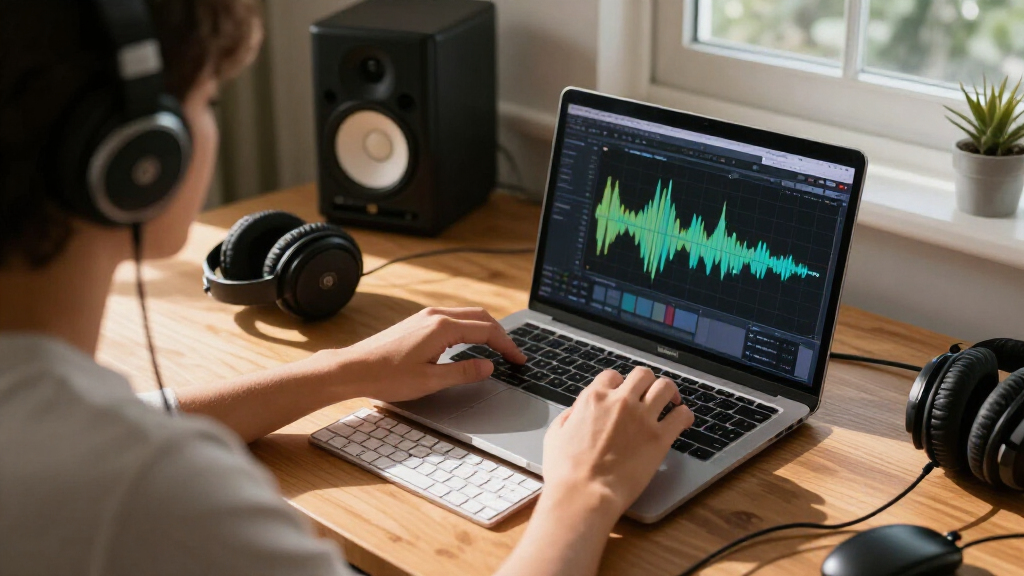
🔍 Read the full analysis: What Makes A Song Fully AI-Made, And Can You Tell? on ThorstenMeyerAI.com

Get smart everyday buys delivered free with Prime
- Fast, free delivery on millions of items
- Prime Video, Amazon Music and more included
- Member-only deals all year
TL;DR
Tidal plans to reject new deliveries of fully AI-generated tracks and remove existing ones from Dec. 9, following a policy announced Nov. 24. Its automated detector is intended to distinguish wholly AI-made music from songs where AI was used as a tool, but the company has not published independently verified error rates.
Tidal will reject new deliveries of fully AI-generated music and remove such tracks from its catalog starting Dec. 9, the streaming service said in an announcement reported by Music Business Worldwide. The policy makes Tidal’s automated detection system the gatekeeper for a distinction listeners often struggle to make: music created entirely by AI versus music made with AI assistance.
Tidal’s decision follows an earlier step in June, when the company said it would identify fully AI-made music and stop paying royalties on it. The service now says 43% of tracks delivered to it over the previous 90 days were detected as wholly AI-generated. It also says about 27 million tracks in its catalog carry an AI tag, representing 6.3% of its music catalog. Those figures describe Tidal’s own classifications; the company has not published an independent audit of the detector’s accuracy.
Under the new rule, distributors—companies that deliver music to streaming services—will no longer be able to submit tracks identified as made solely with AI tools. Tidal says it will also remove existing tracks that meet that definition. Music made with AI as an aid is meant to remain eligible, though the boundary may be difficult to apply when human and machine contributions are mixed.
The service’s policy arrives amid a sharp increase in AI-generated submissions. Deezer said it received nearly 90,000 fully AI-made tracks a day in June 2026, exceeding 50% of its daily deliveries on peak days. Tidal says 96% of the AI-tagged tracks it tracked received no streams in the preceding three months. Low listening figures do not rule out fraud: Deezer reported that as much as 85% of streams on fully AI-made tracks were fraudulent in 2025.
How AI Detection Could Affect Artists
For listeners, Tidal expects the policy to reduce fully AI-generated tracks in search results and recommendations. But the decision also affects artists and rights holders because streaming royalties are generally allocated according to each artist’s share of total plays, rather than through a fixed payment for every stream. Fraudulent plays can shift a share of the royalty pool away from legitimate listening and toward accounts or catalogs gaming the system.
A federal case illustrates the financial stakes, though it does not establish that AI music itself is fraudulent. Prosecutors said a North Carolina man used hundreds of thousands of AI-generated songs and fake accounts to generate billions of streams between 2017 and 2024. They said the scheme produced more than $8 million in royalties. He pleaded guilty in March 2026, and a federal judge sentenced him to 18 months in prison on Oct. 6, according to Music Business Worldwide.
There is also a risk of mistaken enforcement. A human-made recording could be flagged if a detector misreads its audio, while a fully AI-generated track might pass after edits or because it was made with a newer tool. Artists whose work is wrongly classified may face removal or rejection and need to challenge the decision. Tidal’s policy therefore affects not only how much AI music appears on its service, but how creators prove what went into a recording.
Products Worth Considering

Logitech MX Brio Ultra HD 4K Webcam for Streaming and Collaboration

HP Smart Tank 7603 All-in-One Ink Tank Printer

Apple iPad 11-inch with A16 Chip, 128GB, Wi-Fi 6, and Liquid Retina Display, Silver
As an affiliate, we earn on qualifying purchases.
Why Human Listening Falls Short
It can be difficult to identify AI-generated music by listening alone. In an online survey commissioned by Deezer and conducted by Ipsos, 9,000 adults across eight markets heard three tracks—two AI-made and one human-made. Deezer said 97% of participants misidentified at least one track. The survey suggests that listeners may not reliably distinguish the two, but it was commissioned by a company that operates an AI detector and promotes its use; it should not be treated as an independent test of Tidal’s system.
Detection companies look for small patterns in audio that may be left by generative tools. The source article describes these traces as useful in laboratory testing, but also says that edits and new generation systems can evade them. Mixed human-and-AI recordings are particularly difficult to classify, because a song may include human performance or production alongside AI-generated elements.
AI music is inexpensive to produce at scale. A 2024 research paper by Afchar and colleagues described the ability to create “credible minute-long music deepfakes in a few seconds.” Here, “deepfake” refers to fabricated music designed to sound plausible, not necessarily to a fake recording of a specific person. The low cost helps explain the volume of submissions, while the financial incentive can come from fraudulent listening rather than genuine audience demand.
“Any wholly AI-generated track that’s submitted to Tidal”
— Tidal, as reported by Music Business Worldwide
Where Detector Accuracy Remains Unknown
No independent test of the relevant detector error rates is cited in the source material. The available performance claims come from music services that operate or promote detection systems, and Tidal has not supplied an independently verified account of how often its detector wrongly flags human-made music or misses fully AI-generated tracks.
It is also not clear exactly how Tidal will judge borderline cases, such as a track with AI-generated vocals but human-written lyrics, or a human performance substantially altered by an AI tool. The policy’s stated focus is music made solely with AI, but the operational line between assistance and full generation may be contested. The source article says Tidal has indicated its line may change; it gives no detailed appeals process or timetable for resolving disputes.
What Artists and Distributors Should Watch
Tidal’s policy is scheduled to take effect Dec. 9, 2026. Distributors and artists will need to follow the service’s delivery rules and any metadata requirements it sets for identifying music made entirely with AI. Tidal has not, in the source material, provided a detailed public account of how creators can appeal a rejected delivery or a catalog removal.
Artists using AI as a production aid should check how their distributor and each streaming platform define and label AI involvement. Tidal’s rule is not a universal industry standard: Deezer, for example, says it will let users filter fully AI-made music from searches. For creators, the key developments to watch are Tidal’s enforcement guidance, the handling of disputed classifications and whether independent evaluations of detection accuracy become available.
Key Questions
When will Tidal begin removing fully AI-made music?
Dec. 9, 2026. Tidal says it will reject new deliveries of wholly AI-generated tracks and remove existing tracks that meet that definition.
Will Tidal remove songs that use AI as a tool?
The policy is directed at tracks made entirely with AI. Tidal says songs where AI was used as an aid will remain eligible, although rules for mixed human-and-AI work may be difficult to apply.
Can listeners reliably tell whether a song was made by AI?
Not always. In a survey commissioned by Deezer, Ipsos found that 97% of 9,000 participants misidentified at least one of three tracks. That survey was commissioned by a company with an interest in AI detection, and it does not independently measure Tidal’s detector.
How does a detector identify AI-generated music?
Detection systems look for audio patterns that may be left by generative tools. Such traces can be difficult to identify after edits or when newer tools are used, and mixed human-and-AI recordings pose a particular challenge.
What happens if a human-made song is flagged by mistake?
The source material does not describe Tidal’s appeals process or report independently verified error rates. Artists may need to challenge a classification, but how disputes will be handled remains unclear.
Source: ThorstenMeyerAI.com