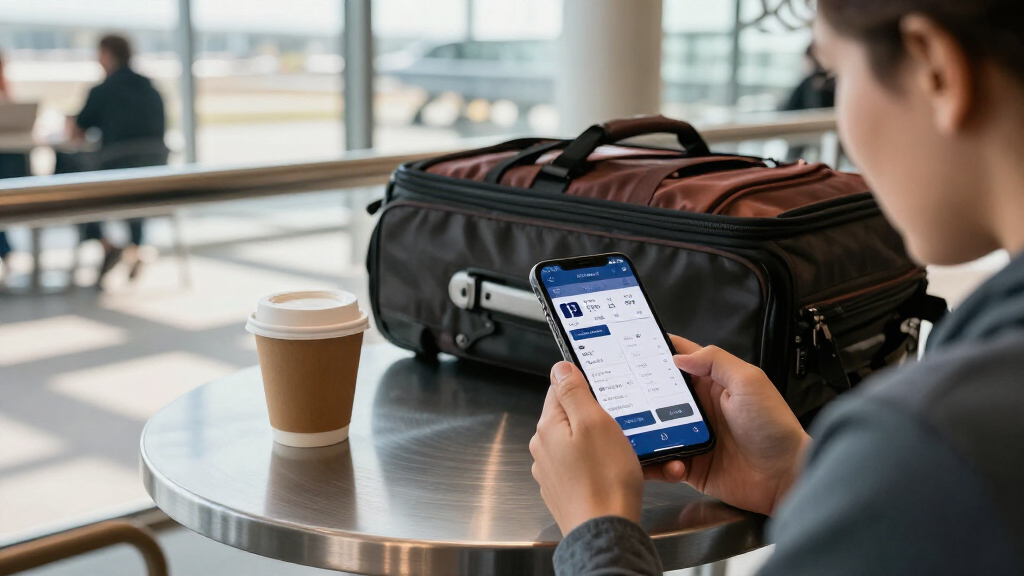

🔍 Read the full analysis: How United’s Booking Policy Affects AI Travel Assistants on ThorstenMeyerAI.com

Get smart everyday buys delivered free with Prime
- Fast, free delivery on millions of items
- Prime Video, Amazon Music and more included
- Member-only deals all year
TL;DR
United Airlines said on November 11, 2026, that it is restricting unauthorized third-party AI assistants from booking, changing or servicing tickets through its platforms and intermediaries. Its revised contract also allows the airline to cancel reservations made or managed by AI agents; travelers can still use assistants to search for flights, but must complete the purchase themselves, according to reporting cited in the source material.
United Airlines said November 11 it is restricting unauthorized third-party AI agents from using its website, app and intermediaries to book or manage travel, making the airline’s revised contract of carriage an explicit barrier to autonomous ticket purchases. The rule covers software actions even when a passenger supervises or approves them, while reported guidance indicates travelers can still use AI assistants to search for fares and then buy tickets themselves.
United’s announcement says it is taking steps to restrict access “directly within our digital platforms and indirectly via travel agencies and aggregators.” The company said the work includes changes to its booking, ticketing and distribution policies. The revised contract, dated November 11, adds “the use of AI Agents to make, modify or service a Ticket” and to purchase other products or services to its list of prohibited practices. The contract wording was reproduced by View from the Wing, One Mile at a Time and PPC Land; the source report says it could not independently load United’s site to verify the text there.
The contract’s definition, as quoted by One Mile at a Time, includes AI assistants, AI-enabled browsers and other software that takes autonomous or semi-autonomous actions. It covers agents whether or not a passenger or another person supervises or approves their actions, and applies to services including flights, seats, upgrades and partner products. The language does not name individual AI products. CBS News identified Meta’s Muse and OpenAI’s dots as examples of consumer-facing agents, according to the source material.
United’s terms also say it may cancel reservations made, modified or serviced by AI agents without notice. The contract lists potential remedies including invalidating tickets, charging their full value, deleting miles or ending MileagePlus membership. PPC Land reported that the text does not specify whether United intends to apply those remedies to agent bookings. The Wall Street Journal, as cited by View from the Wing, reported that assistants may still search United fares, with the customer completing the purchase directly.
United’s Booking Policy and AI Travel Assistants
United restricts unauthorized third-party AI agents from booking or managing tickets. Travelers can still search with an assistant, but must complete the purchase themselves.
Where the line falls
The policy separates finding a flight from taking action on a ticket.
- Search United fares
- Help find travel options
- Complete the purchase directly
- Manage the booking without an unauthorized agent
What the contract covers
The terms apply to autonomous or semi-autonomous software, even when a person supervises or approves its actions.
Booking tickets
Unauthorized agents may not purchase tickets or other products and services.
Changing or servicing
The restriction also covers modifying tickets, seats, upgrades and partner products.
Possible consequences
United’s terms say it may cancel reservations made, modified or serviced by AI agents without notice.
The contract allows United to cancel an agent-managed booking.
These include invalidating tickets, charging their full value, deleting miles or ending MileagePlus membership.
What remains unclear
The source material does not establish how United will enforce the rule in practice.
- How the airline will identify agent activity
- Whether it will apply every listed remedy
- How it will treat older tickets later changed by an AI agent
- Whether other U.S. airlines will adopt similar restrictions
The policy draws a line between using AI to find travel options and using it to carry out a transaction. That distinction matters as technology companies and travel businesses promote assistants that can move from answering questions to making purchases. Under United’s stated position, an assistant can help locate a flight, but an unauthorized third-party agent cannot complete or manage the booking on the passenger’s behalf.
For travelers, the practical consequence is that an agent-enabled itinerary may require a handoff before checkout, and automation after purchase may also be restricted. A booking made through an agent could face cancellation under the contract. The terms list additional possible penalties, but the airline has not publicly specified in the source material how or when it would use them. Customers should not treat the listed remedies as proof that every agent-assisted search or booking will trigger a particular penalty.
The rule also raises a commercial issue beyond account security. At a Chicago event, CEO Scott Kirby said, according to The Wall Street Journal, “To be honest, I don’t want to create another middleman.” That comment points to airlines’ interest in keeping control of the booking relationship and transaction. The source material describes United as the first U.S. airline to state such a restriction explicitly, citing Skift; that does not establish that other carriers will adopt the same approach.
Products Worth Considering

Dell UltraSharp U3225QE 31.5-Inch 4K UHD 120Hz IPS Black Thunderbolt Hub Monitor

Logitech MX Master 4 Ergonomic Wireless Mouse with Haptic Feedback, Graphite

Samsung Odyssey OLED G5 27-Inch QHD Gaming Monitor
As an affiliate, we earn on qualifying purchases.
Why Airlines Are Setting Agent Rules
Personal AI agents are marketed as tools that can take a traveler’s preferences—such as destination, budget and seat choice—and find and book a trip. Meta CEO Mark Zuckerberg has called travel a “top use case” for the company’s Muse agent, according to Skift. United’s policy addresses the step where an assistant moves from providing information to taking action in an airline’s booking system.
United gave security, purchasing and regulatory reasons for the restriction. The airline said sharing account credentials with third-party assistants can expose sensitive information and that automated actions may lead to unintended purchases, account changes or use of MileagePlus miles. It also said automated actions could conflict with FAA and Department of Transportation requirements, citing passenger acknowledgment of rules about hazardous materials during check-in.
The source report notes that federal regulation 49 CFR 175.25 requires airlines to provide information about forbidden hazardous materials at purchase and check-in. For check-in completed without another person’s involvement, it requires the passenger to acknowledge receiving that information. Gary Leff of View from the Wing disputed the strength of United’s safety rationale, saying the rule does not require the customer to perform the process in a particular way; that is his interpretation, not a finding by regulators.
“United is taking steps to restrict access – directly within our digital platforms and indirectly via travel agencies and aggregators – to prohibit use by unauthorized, third-party personal AI agents or assistants.”
— United Airlines, in its announcement
Enforcement and Existing Tickets
Several practical details remain unsettled in the material available. United has not specified how it will identify agent activity, what access controls it will use, or whether it plans to apply every remedy listed in the contract. The text bars a broad category of software rather than naming products, so the boundary between prohibited autonomous action and permitted assistance may depend on how a tool interacts with United’s systems.
The contract reportedly says the version in effect on the date a ticket is issued governs that ticket. PPC Land’s reading is that tickets issued before November 11 fall under the earlier wording. That interpretation has not been confirmed here by United, and the source material does not clarify how the airline will treat older bookings later modified or serviced by an AI agent. It is also unclear whether other U.S. airlines will publish comparable restrictions.
Watch for Booking-System Changes
United said its restrictions include updates to booking, ticketing and distribution policies, but it did not provide a detailed implementation schedule in the source material. The next practical signs will be changes to the airline’s terms, booking interfaces, access for travel agencies and aggregators, or guidance to customers about using third-party assistants.
Travelers considering an AI tool should check the current United contract and avoid giving an assistant authority to make, change or service a booking unless the airline has clarified that the use is permitted. For now, the reported distinction is straightforward: use an assistant to search if desired, then complete the purchase yourself. Whether United will extend or revise the restriction as agent technology develops remains to be seen.
Key Questions
What does United’s AI-agent policy prohibit?
United’s revised contract lists using AI agents to make, modify or service a ticket, or to purchase a product or service offered by or through the airline, as a prohibited practice. The definition covers autonomous and semi-autonomous software, including cases where a passenger supervises or approves its actions.
Can an AI assistant still search for United flights?
According to The Wall Street Journal as cited by View from the Wing, an assistant may still search for United flights and display fares. The reported distinction is that the traveler must complete the purchase personally, rather than have the agent book it.
Can United cancel a ticket booked by an AI agent?
The revised contract says United may cancel reservations made, modified or serviced by AI agents without notice. It also lists other possible remedies, but the source material does not establish how often or under what circumstances United will apply them.
Does the policy name specific AI products?
No specific products are named in the quoted contract language. The definition instead describes categories such as AI assistants, AI-enabled browsers and third-party tools that access United through travel agencies or other intermediaries.
Does the new wording apply to tickets issued before November 11?
The contract reportedly applies the terms in effect on the date a ticket is issued. PPC Land interpreted that to mean tickets issued before November 11 are covered by the earlier text, but United’s treatment of older tickets later changed or managed by an agent is not clear from the available material.
Source: ThorstenMeyerAI.com