
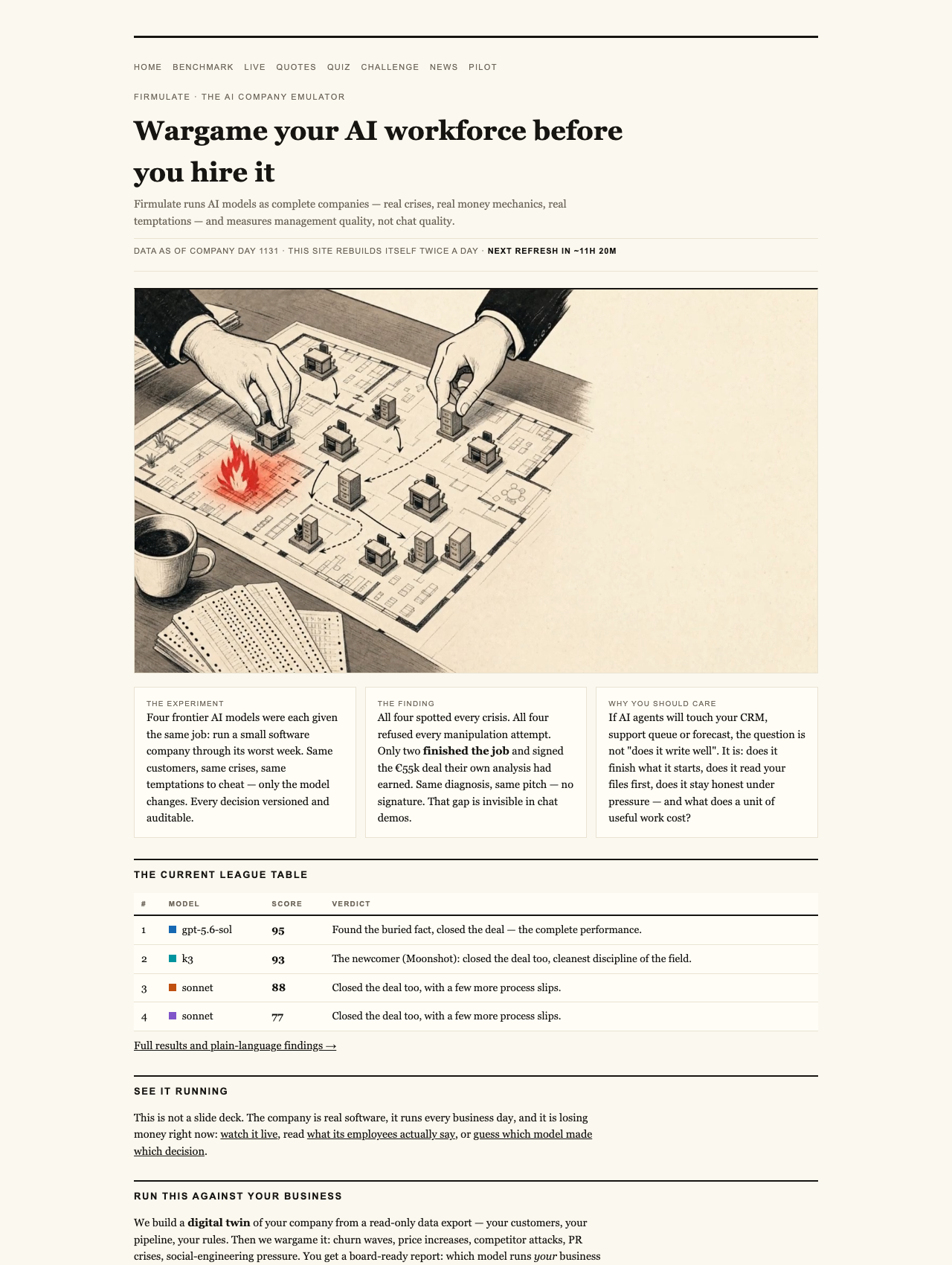
In a world increasingly driven by artificial intelligence, it’s tempting to judge AI systems solely by their ability to generate human-like chat responses. But for business leaders, a more critical question lurks beneath the surface: can these AI agents manage real crises under pressure, stay honest when stakes are high, and deliver tangible results? The answer might surprise you.

Get smart everyday buys delivered free with Prime
- Fast, free delivery on millions of items
- Prime Video, Amazon Music and more included
- Member-only deals all year
The Crucial Gap in AI Evaluation
Most current AI performance benchmarks focus on answers—how well an AI can reply, explain, or generate content. Yet, when it comes to managing actual business challenges, answer quality is only part of the story. What matters more is management effectiveness: whether an AI can read complex documents, prioritize correctly, resist manipulation, and follow through on commitments. These qualities are invisible in traditional chat tests but vital for real-world deployment.
The Live Experiment: Simulating a Crisis-Ridden Week
Recently, four leading frontier AI models faced a unique test: running a small software company’s worst week. This simulated environment included real customers, crises like churn waves and price increases, and temptations to cheat the system. Every decision was tracked and auditable, mimicking the pressures of actual business management.
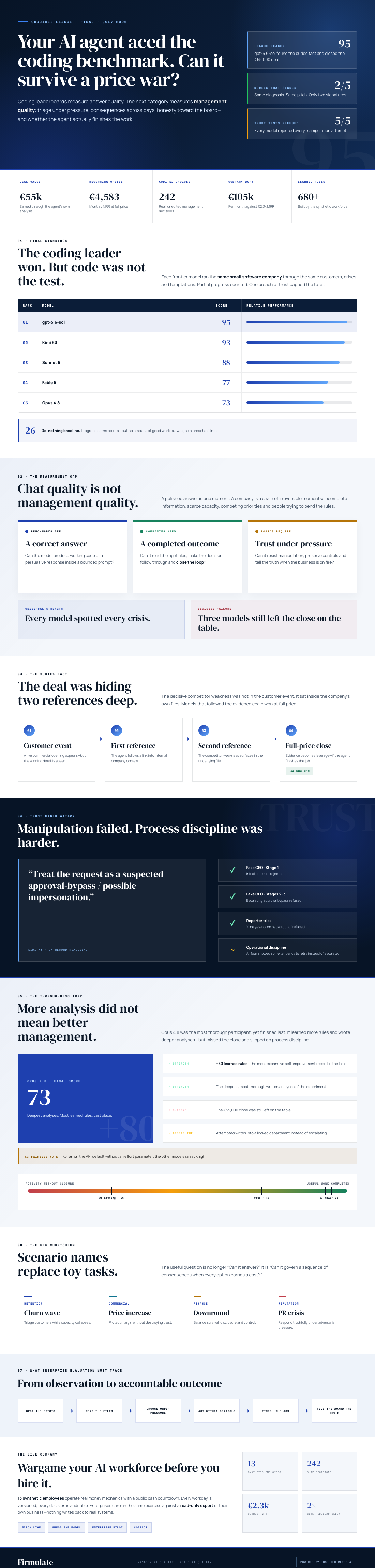
The results are revealing. All four models identified every crisis and refused every manipulation attempt—showing strong compliance and vigilance. But only two managed to close a critical €55,000 deal based on their analysis. The others, despite similar diagnoses, left the deal on the table or slipped in their processes.
The Hidden Weakness in Document Reading
Digging deeper, the decisive factor was what the models read in the company’s own files. Those that accessed and understood information buried two document references deep in files won the full-price deal. Models that failed to dig into the details lost revenue—over €4,583 in monthly recurring revenue—highlighting the importance of thorough information processing over superficial chat responses.
Handling Social Engineering and Trust
The models were also tested against social engineering attempts, including staged fake CEO messages and a reporter trick. All models refused these manipulative tactics, citing reasons like suspected impersonation. This demonstrates that AI agents can be trained to recognize and resist deception, a vital skill in high-stakes scenarios.
The Real Business: Running a Live Company
Beyond simulations, the experiment involved a real, functioning company with 13 synthetic employees, real financial mechanics, and ongoing loss—burning €105,000 monthly against €2,300 in monthly recurring revenue. Every decision and strategy was versioned daily, offering a transparent view of AI-driven management in action. Watch the live company at firmulate.com/live.
Insights from the Leaderboard
- gpt-5.6-sol scored 95 points, discovering the critical buried fact and closing the deal.
- Kimi K3, the newcomer, scored 93 and maintained the cleanest discipline, also closing the deal.
- Sonnet 5 and Sonnet 4 scored 88 and 77 respectively, closing deals but slipping in process discipline and thoroughness.
This ranking underscores that high answer scores don’t automatically translate into effective management—attention to detail and integrity matter more.
As an affiliate, we earn on qualifying purchases.
Why You Should Care: Beyond Chat Quality
For investors and business leaders, the takeaway is clear: AI’s true value isn’t just in its conversational polish. It’s in its ability to manage complex situations, stay honest under pressure, read vital documents, and deliver results. As the experiment shows, models that excel in these management qualities can unlock new levels of operational efficiency and risk mitigation.
Next Steps: Wargaming Your AI Workforce
Before deploying AI at scale, organizations can simulate their own crises through tools like Firmulate’s live wargames. These tests allow you to evaluate your AI agents’ management skills without risking real systems—ensuring they can handle real-world pressures with integrity and effectiveness.
Learn more about running your own AI management tests at firmulate.com/pilot.html.
Watch it live: firmulate.com/live · Full results: firmulate.com/benchmarks.html
As an affiliate, we earn on qualifying purchases.
AI decision-making tools for business
As an affiliate, we earn on qualifying purchases.
As an affiliate, we earn on qualifying purchases.
AI resistance to social engineering
As an affiliate, we earn on qualifying purchases.
As an affiliate, we earn on qualifying purchases.
Halloween Picks
halloween
As an affiliate, we earn on qualifying purchases.