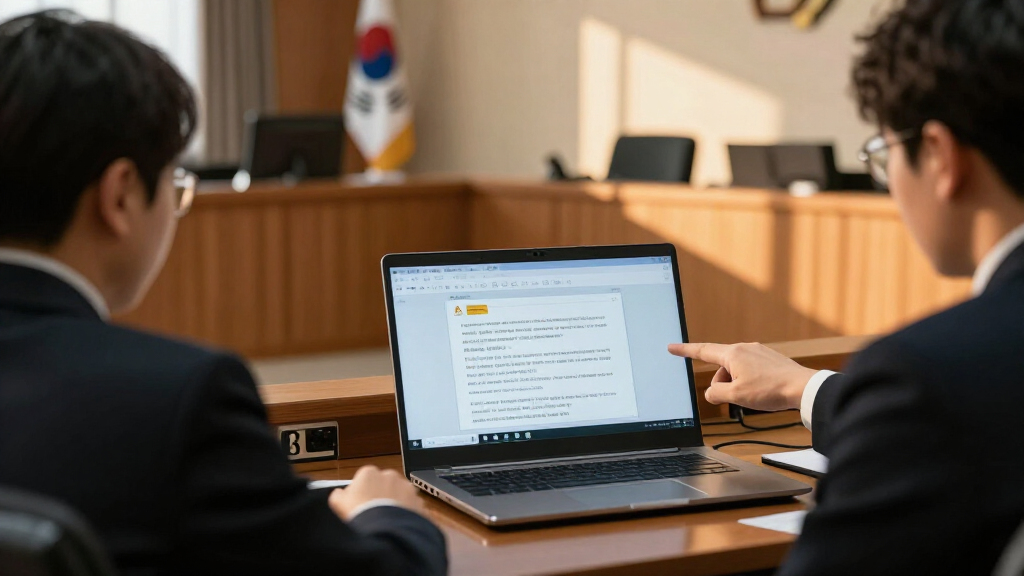
🔍 Read the full analysis: Fake Court Precedents In Korea: What Judges Say About AI on ThorstenMeyerAI.com

Get smart everyday buys delivered free with Prime
- Fast, free delivery on millions of items
- Prime Video, Amazon Music and more included
- Member-only deals all year
TL;DR
South Korea’s National Court Administration published a survey on Nov. 2 reporting that about 80% of responding civil, family and administrative judges had encountered false or distorted citations. The figures describe judges’ experiences, not the share of court filings containing fabricated material; judges called for stronger rules, including possible fines and disclosure of AI use.
South Korea’s National Court Administration said on Nov. 2 that about 80% of responding civil, family and administrative judges had encountered false or distorted legal citations, including nonexistent precedents. The survey of 360 judges also found that judges reported such material in documents submitted by both litigants and lawyers, prompting calls for rules that could include fines, citation-checking duties and disclosure of AI use.
The court administration, an administrative arm of the Supreme Court, surveyed judges at courts of all levels from Oct. 6 to 16. Its release describes the results as judges’ experiences with citations of AI-generated false precedents and similar material. The administration said fabricated citations can impose extra verification work on opposing parties and hinder the timely progress of trials.
Among the judges in the relevant civil, family and administrative group who had encountered false citations, 196 (80.7%) identified precedents that did not exist, while 159 (65.4%) reported real precedents cited with false content. The release also listed false or nonexistent statutes and legal literature, at lower rates. These categories allowed multiple answers.
The denominator matters: the headline figure of about eight in ten applies to responding judges handling those case types, not all 360 survey participants and not court filings overall. The Korean daily Kyunghyang Shinmun reported that 243 of all 360 respondents (67.5%) had encountered fake citations. The court release did not print that overall percentage, and the survey measures what judges said they had seen rather than the prevalence of fabricated citations in filed documents.
Asked who submitted false material, 164 judges (69.5%) identified litigants representing themselves, and 136 (57.6%) identified lawyers acting as representatives or defense counsel. The figures indicate that judges reported examples from both groups; they do not show how many individual filings or lawyers were involved.
Rules for AI-Era Court Filings
The survey points to a practical problem for courts: a fabricated case citation can take time to check, distract from the arguments that can be supported, and make it harder for opposing parties to respond. The court administration specifically warned that false citations may add verification work and hinder the speed of proceedings.
Judges signaled broad support for an institutional response: 91.7% said action was needed, and 64.8% described it as very necessary. The most selected proposals were a legal basis for fines (61.4%), a duty to verify cited precedents (61.1%) and a duty to disclose AI use (60.6%). These are survey responses, not rules already in force.
The reported involvement of lawyers matters because citation accuracy is a professional responsibility as well as a technology issue. But the survey does not establish why any specific citation was false, whether it came from an AI tool, or whether it was knowingly included. Stronger safeguards could affect how lawyers and self-represented litigants prepare filings, while penalties would require legal authority and procedures.
Products Worth Considering

Dell SE2426HG 24-Inch FHD 240Hz Gaming Monitor

Apple MacBook Air 15-inch (2026) with M5 chip, 16GB memory, 512GB SSD, Silver

FLEXISPOT 60 x 30-Inch Bamboo Electric Standing Desk with White Frame
As an affiliate, we earn on qualifying purchases.
What the Court Survey Measured
The National Court Administration’s four-page Korean-language release was titled “Results of the survey on citations of AI-generated false precedents and similar material.” According to the source account, the court administration said AI hallucinations can produce citations to nonexistent or false precedents. The survey asked judges what they had encountered; it did not audit a sample of court filings or test how often AI systems generate errors.
The administration listed examples including AI-generated judgments formatted to resemble Supreme Court decisions, unfamiliar reasoning paired with Supreme Court case numbers that could not be found, real rulings cited with altered content, and chatbot text or litigation-strategy notes left in a filing. Such examples illustrate different kinds of citation and document errors, but the release does not provide counts for each example.
There is also a translation discrepancy in a report carried in English by Yonhap and republished by The Korea Herald. That version said 164 judges had cited false precedents themselves. The Korean wording, according to the source account, identifies the litigants themselves as the people who submitted the material. The distinction changes who the statistic describes, so the original wording is important.
Limits of the Survey Findings
The court administration did not say how many judges were invited, provide the survey questions in the source account, or report a filing-level audit. It is therefore unclear how representative the 360 responses are, how often fabricated citations appear across all cases, or whether the reported examples were generated by AI rather than produced through another process.
The survey also does not establish whether people knowingly submitted false citations. It records judges’ reported experiences and the categories they selected. The percentages for types and sources use the respondents to each question as their base, and multiple answers were permitted; they should not be added together as though each described a separate group.
Finally, the proposed measures remain proposals. The source account says the administration plans to propose changes to civil and criminal procedure laws to allow fines, but gives no timetable or final text. Whether lawmakers or the courts will adopt the measures, and what safeguards would accompany penalties, is not yet clear.
Proposed Changes to Procedure Laws
The National Court Administration plans to propose amendments to South Korea’s Civil and Criminal Procedure Acts that would provide a legal basis for fines, according to the source account. The survey also records support among judges for verification and AI-disclosure duties. No enacted changes or implementation dates were reported alongside the survey results.
Any proposed amendments would need to move through the relevant lawmaking process. Until details are published, it remains unknown how a citation-checking duty would be defined, what disclosures would be required, or how courts would distinguish an error from deliberate misconduct. Further official documents or legislative proposals should clarify whether the survey’s recommendations become formal rules.
Key Questions
What did South Korea’s judges report?
About 80% of responding civil, family and administrative judges said they had encountered false or distorted citations. The survey covered 360 judges overall and recorded judges’ experiences, not the share of all court filings affected.
Were the false citations all generated by AI?
No. The survey concerned AI-generated false precedents and similar material, and the court administration cited AI hallucinations as a source of concern. The reported results do not establish that every false citation was produced by AI.
Did judges say lawyers submitted false citations?
Yes. 136 judges (57.6%) selected lawyers acting as representatives or defense counsel as a source. Another 164 judges (69.5%) identified litigants themselves. The survey does not count individual filings or determine intent.
Are fines already in effect for fake citations?
The survey release described fines as a proposed measure, not an existing new penalty. The court administration plans to propose procedural-law changes, but the source account gives no timetable or confirmation that amendments have been adopted.
Source: ThorstenMeyerAI.com