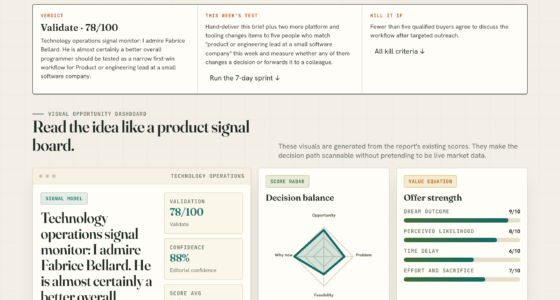

📊 Full opportunity report: One-click Employee Offboarding For Startups Without IT on IdeaNavigator AI — validation score, market gap, and execution plan.
TL;DR
A startup is testing a one-click offboarding solution designed for small companies without dedicated IT staff. The tool automates revoking access and producing audit reports, addressing SaaS sprawl and security compliance. Its success could reshape offboarding processes for SMBs.
A startup is testing a new one-click employee offboarding tool designed specifically for small companies without dedicated IT teams. The solution aims to automate the process of revoking access to SaaS tools, shared drives, and API keys when employees leave, addressing a common security oversight. This development matters because it offers a scalable, simple way for startups to improve security and compliance without adding IT overhead.
The proposed offboarding tool connects directly to Google Workspace and other SaaS platforms via OAuth, enabling a single click on departure day to execute a comprehensive checklist. This checklist revokes sessions, transfers ownership of files, reassigns licenses, rotates shared secrets, and generates an audit-ready report. The MVP is targeted at startups with 10 to 100 employees, where founders or operations leads often handle offboarding manually, risking lingering access for former employees.
According to the developers, the initial testing phase involves running audits at twenty startups to identify existing gaps—such as ex-employees retaining access to CRM systems or cloud storage. The goal is to demonstrate that the tool can reliably eliminate these risks with minimal effort, turning manual, error-prone processes into a streamlined, automated workflow. Revenue is expected to come from per-employee-per-month pricing, with a starter tier for smaller teams or initial offboarding events.
Impact on Small Business Security and Compliance
This development could significantly improve security posture for small startups, which often lack formalized offboarding procedures. Automating access revocation reduces the risk of data breaches caused by lingering access, a common vulnerability in SMBs. Additionally, the ability to produce audit reports aligns with increasing compliance demands from security questionnaires and SOC 2 audits, helping startups meet regulatory standards without complex processes.
By simplifying offboarding, the tool also addresses a major pain point for founders and operations leads, who currently manage these tasks manually—often weeks after an employee has left—leading to potential security gaps and compliance issues. If successful, this solution could set a new standard for SMB security operations, reducing reliance on ad hoc procedures and manual memory.
employee offboarding automation tool
As an affiliate, we earn on qualifying purchases.
As an affiliate, we earn on qualifying purchases.
Growing SaaS Sprawl and Regulatory Pressures Drive Need
Over recent years, SaaS usage per employee has continued to grow, making manual offboarding increasingly impractical. Small companies, typically without dedicated IT teams, struggle to keep track of all SaaS accounts, shared drives, and API keys when employees depart. This often results in lingering access, exposing sensitive data and risking breaches.
Simultaneously, security frameworks such as SOC 2 and security questionnaires from clients now demand documented offboarding processes. This regulatory pressure compels startups to formalize their procedures, even if they lack the resources or expertise to do so efficiently. The proposed tool aims to address both issues by providing an automated, easy-to-use solution tailored for SMBs.
As an affiliate, we earn on qualifying purchases.
Uncertainties Around Adoption and Effectiveness
It is not yet clear how well the tool will perform across diverse SaaS platforms or in complex organizational setups. The effectiveness of the automation in real-world scenarios remains to be validated through the planned audits at twenty startups. Additionally, questions remain about integration challenges, user adoption, and whether the solution can scale beyond small teams.
As an affiliate, we earn on qualifying purchases.
Next Steps in Testing and Market Validation
The startup plans to conduct initial audits at twenty small startups to identify lingering access issues. Based on these results, they will refine the tool and prepare for broader deployment. Success in these pilots could lead to commercial launch, with a focus on marketing to SMBs and operational teams. Further development may include expanding platform integrations and adding features like policy enforcement and user notifications.
audit report generator for startups
As an affiliate, we earn on qualifying purchases.
As an affiliate, we earn on qualifying purchases.
Key Questions
How does the offboarding tool work?
The tool connects to SaaS platforms via OAuth, allowing a single click to revoke sessions, transfer file ownership, reassign licenses, rotate secrets, and generate audit reports.
Who is the target user for this tool?
It is designed for founders and operations leads at startups with 10 to 100 employees that lack dedicated IT teams.
Will this tool work with all SaaS platforms?
The initial MVP focuses on Google Workspace and a select set of SaaS tools, but future versions aim to support additional platforms through API integrations.
What are the pricing plans?
The model is per-employee-per-month, with a starter tier for small teams or initial offboarding events. Exact pricing details are still under development.
When will the product be generally available?
Following successful pilot testing, a broader rollout is expected within the next 6 to 12 months, depending on feedback and development progress.
Source: IdeaNavigator AI