
TL;DR
Siemens is prioritizing AI for physical factory environments over chat-based AI, building a dedicated Industrial Foundation Model and partnering with NVIDIA to embed AI across the manufacturing lifecycle. This shift aims to capitalize on proprietary industrial data and domain expertise, but relies heavily on NVIDIA’s infrastructure. The initiative could reshape factory automation, though full results remain pending.
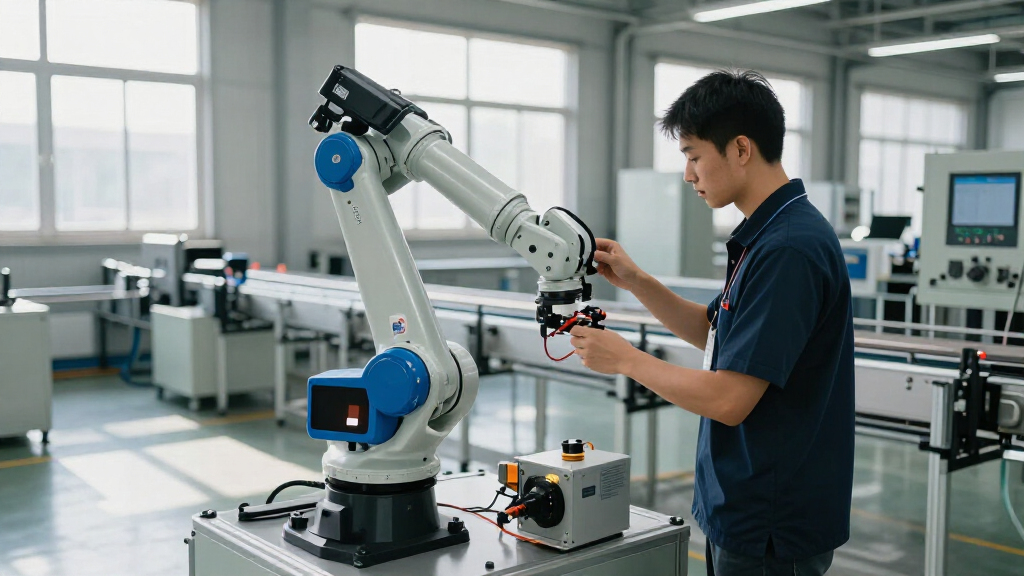
Siemens has announced a major strategic shift toward AI for factory automation, focusing on physical-world AI rather than chatbots or language models. The company revealed plans to develop an Industrial Foundation Model (IFM) and expand its partnership with NVIDIA to build an Industrial AI Operating System, aiming to embed AI across the entire manufacturing lifecycle.
At CES 2026, Siemens CEO Roland Busch emphasized that Industrial AI is no longer a feature but a transformative force for manufacturing. The company’s Industrial Foundation Model (IFM), first announced at Hannover Messe 2025, is designed to process and contextualize 3D models, 2D drawings, and operational data to optimize engineering and automation processes.
The partnership with NVIDIA aims to create a comprehensive platform integrating GPU-accelerated simulation, generative digital twins, and real-time optimization tools. Siemens plans to launch its first fully AI-driven, adaptive factory in Erlangen, Germany, in 2026, with additional tools like Digital Twin Composer and industrial copilots to follow. Siemens claims that its proprietary data, accumulated over decades, and its domain expertise give it a competitive advantage in physical AI applications.
Implications for Manufacturing Innovation
This development signals a major shift in industrial AI, focusing on the physical environment rather than language-based applications. Siemens’ approach could lead to more efficient, flexible, and autonomous factories, potentially transforming global manufacturing practices. The integration of proprietary data and domain expertise positions Siemens uniquely, but reliance on NVIDIA’s infrastructure raises questions about sovereignty and vendor lock-in.
As an affiliate, we earn on qualifying purchases.
Industrial AI’s Evolving Landscape
While AI has traditionally centered on language models and chatbots, industry leaders recognize that the real value lies in physical-world applications. Siemens’ move builds on its long-standing presence in automation and manufacturing, now aiming to leverage AI to enhance factory operations. The company’s announcement at Hannover Messe 2025 introduced the IFM concept, aligning with broader industry trends toward digital twins, simulation, and autonomous systems. Competitors like Palantir and Qualcomm are also entering adjacent AI markets, intensifying the category’s competitiveness.
“Industrial AI is no longer a feature; it’s a force that will reshape the next century.”
— Roland Busch, Siemens CEO
digital twin software for manufacturing
As an affiliate, we earn on qualifying purchases.
As an affiliate, we earn on qualifying purchases.
Unconfirmed Performance Metrics and Deployment Timelines
While Siemens announced ambitious plans, specific hardware configurations, performance benchmarks, and deployment timelines for the Industrial AI Operating System remain unconfirmed. The Erlangen lighthouse factory is targeted for 2026, but detailed validation results and scalability assessments are still pending, making the full impact of these initiatives uncertain.
As an affiliate, we earn on qualifying purchases.
Next Steps for Siemens’ Industrial AI Strategy
Siemens is expected to roll out its first fully AI-driven factory in Erlangen in 2026, with subsequent launches of Digital Twin Composer and industrial copilots. The company will likely publish performance metrics and case studies to demonstrate real-world benefits. Industry observers will monitor how quickly Siemens can integrate these tools into existing manufacturing processes and whether competitors can match or surpass its domain-specific AI approach.
As an affiliate, we earn on qualifying purchases.
Key Questions
How does Siemens’ approach to industrial AI differ from general-purpose AI models?
Siemens focuses on building models trained on proprietary industrial data, such as 3D models, drawings, and sensor telemetry, tailored specifically for manufacturing environments, unlike general-purpose language models designed for text-based tasks.
What role does NVIDIA play in Siemens’ industrial AI plans?
NVIDIA supplies the hardware, simulation libraries, and foundational AI frameworks for Siemens’ platform, enabling GPU-accelerated simulations and digital twin generation. Siemens provides domain expertise and data.
Will Siemens’ industrial AI solutions be available globally?
While Siemens plans to deploy its first AI-driven factory in Germany, it intends to replicate the model globally. However, the timeline and regulatory considerations may influence the pace of international expansion.
What are potential risks associated with Siemens’ heavy reliance on NVIDIA?
The partnership creates dependency on NVIDIA’s infrastructure and roadmap, raising concerns about vendor lock-in and sovereignty, especially for European customers wary of American silicon dominance.
When can industry observers expect to see validated results from Siemens’ AI initiatives?
Performance validation is expected after the 2026 launch of the Erlangen factory and subsequent pilot projects, but specific metrics and case studies have not yet been publicly disclosed.
Source: ThorstenMeyerAI.com