📊 Full opportunity report: Vertigo relief app on IdeaNavigator AI — validation score, market gap, and execution plan.
TL;DR
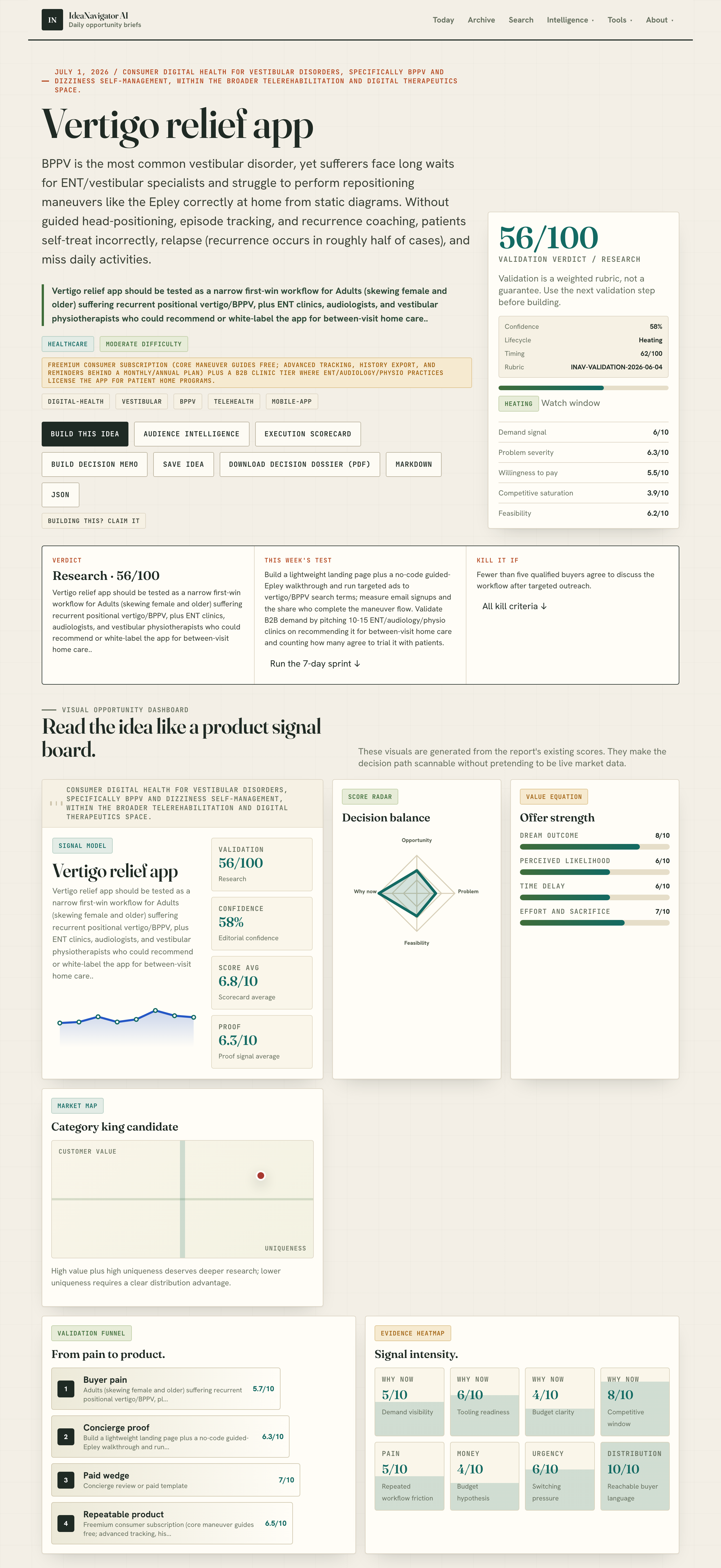
A proposed vertigo relief app is being developed to guide adults with BPPV through repositioning maneuvers like Epley, supported by sensor-guided feedback. It targets both consumers and clinics, with validation underway. The app aims to improve self-treatment and reduce relapse rates.
The development of a vertigo relief app designed to guide adults through repositioning maneuvers is underway, aiming to improve self-treatment for BPPV and support clinical workflows. The app integrates motion sensors and step-by-step guidance, with validation efforts in progress. For more on how these apps are validated, see the unbundling of the budget app. This initiative responds to increased demand for home-based vestibular care and telehealth solutions, especially post-COVID.
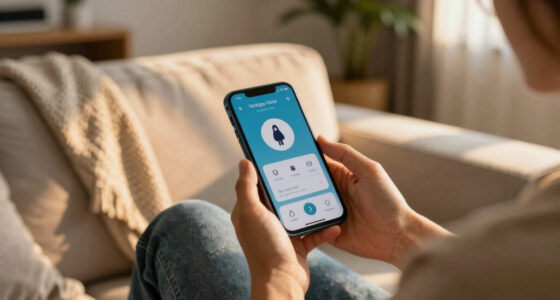
The proposed vertigo relief app targets adults, primarily women and older individuals, suffering from recurrent BPPV, the most common vestibular disorder. It is designed to assist users in performing maneuvers such as the Epley and Brandt-Daroff correctly at home, using animated instructions, audio cues, and gyroscope-based head-angle feedback. The app also logs episodes, triggers, and symptoms over time, providing data for self-management and clinician review.
Developers plan to offer a freemium model, with basic maneuver guidance free and advanced features—like detailed tracking, history export, and reminders—available through subscription. Clinics and providers might also consider using the guest app with day-of seating lookup and schedule for patient management. Additionally, ENT clinics, audiologists, and vestibular physiotherapists could license the app for patient use outside visits, integrating it into existing care pathways. Validation efforts include testing a no-code landing page and guided maneuver walkthroughs, measuring user engagement and clinical interest.
Potential Impact on Self-Management and Clinical Care
This app could significantly improve self-treatment for BPPV by providing guided, sensor-supported repositioning, reducing incorrect self-treatment and recurrence. For clinics, it offers a scalable way to support patients between visits, potentially decreasing wait times for specialist care and enhancing patient outcomes. The market for digital vestibular therapeutics is expanding, with an estimated value near USD 498 million in 2024 and growing at approximately 13.5% annually, indicating strong acceptance among providers and payers.
vestibular rehabilitation sensor app
As an affiliate, we earn on qualifying purchases.
As an affiliate, we earn on qualifying purchases.
Growing Demand for Digital Vestibular Solutions
The COVID-19 pandemic accelerated the shift toward telehealth and home-based rehabilitation, creating opportunities for digital therapeutics in vestibular care. BPPV affects a large portion of the adult population, yet many patients face long waits for specialist diagnosis and treatment. Current self-treatment methods rely on static diagrams, which can lead to improper execution and high relapse rates—roughly 50% in some cases. The development of sensor-enabled apps aims to address these gaps by providing real-time feedback and tracking.
“Integrating motion sensors into a guided app could improve the accuracy of self-administered repositioning maneuvers, potentially reducing relapse rates.”
— an anonymous researcher

DizzyFIX Vertigo Relief Trainer for Benign Paroxysmal Positional Vertigo or BPPV, Inner Ear Balance Device for Particle Repositioning Maneuver, Non-Drug Solution & Relieves Dizziness
- Regains Inner Ear Balance: Helps reduce vertigo and dizziness
- Non-Invasive & Drug-Free: Safe, cost-effective BPPV treatment
- Portable & Lightweight: Easy to use at home or on the go
As an affiliate, we earn on qualifying purchases.
As an affiliate, we earn on qualifying purchases.
Uncertainties About Validation and Adoption
It remains unclear how effectively the app will perform in real-world settings, including user adherence, accuracy of sensor feedback, and integration into clinical workflows. Validation studies are ongoing, and the level of interest from clinics and patients has yet to be fully established. Additionally, regulatory approval and reimbursement pathways are still evolving for digital therapeutics in this space.

Migraine & Ear Pressure Relief Device | Tension Headache, Ear Ache & Airplane Pressure Relief | Drug-Free Migraine Relief Products Gift for Sufferers(Blue)
- Rapid Migraine Relief: Uses gentle pneumatic neurostimulation
- Dual-Action Headache & Ear Relief: Relieves migraines and airplane ear pressure
- Drug-Free Ear Pressure Solution: Alleviates ear pressure and vertigo naturally
As an affiliate, we earn on qualifying purchases.
As an affiliate, we earn on qualifying purchases.
Next Steps for Development and Market Entry
Developers will continue validation efforts, including user testing and clinical feedback collection. They plan to launch pilot programs with select ENT and physiotherapy clinics to assess clinical integration and user engagement. Based on these results, a phased rollout to consumers and healthcare providers is expected within the next 12-18 months, alongside efforts to secure regulatory clearance and reimbursement agreements.
As an affiliate, we earn on qualifying purchases.
Key Questions
How does the app guide users through maneuvers?
The app provides animated step-by-step instructions, audio cues, and real-time gyroscope-based head-angle feedback to ensure correct execution of maneuvers like Epley.
Is this app a substitute for medical consultation?
No, the app includes a disclaimer emphasizing it is not a substitute for professional medical advice. Users are advised to consult a healthcare provider if symptoms worsen or red-flag signs appear.
Will clinics be able to recommend or license the app?
Yes, ENT clinics, audiologists, and physiotherapists may license the app for patient use, integrating it into between-visit care routines once validated and approved.
When will the app be available to the public?
Development and validation are ongoing, with a targeted phased launch anticipated within the next 12-18 months, depending on validation outcomes and regulatory processes.
What features will the app include in its premium version?
Advanced features will include detailed episode tracking, history export, reminders, and personalized coaching, available through a subscription model.
Source: IdeaNavigator AI