
TL;DR

Get smart everyday buys delivered free — and shop member deals
- Fast, free delivery on millions of items
- Access to Prime Big Deal Days deals on October 6–7
- Prime Video, Amazon Music and more included
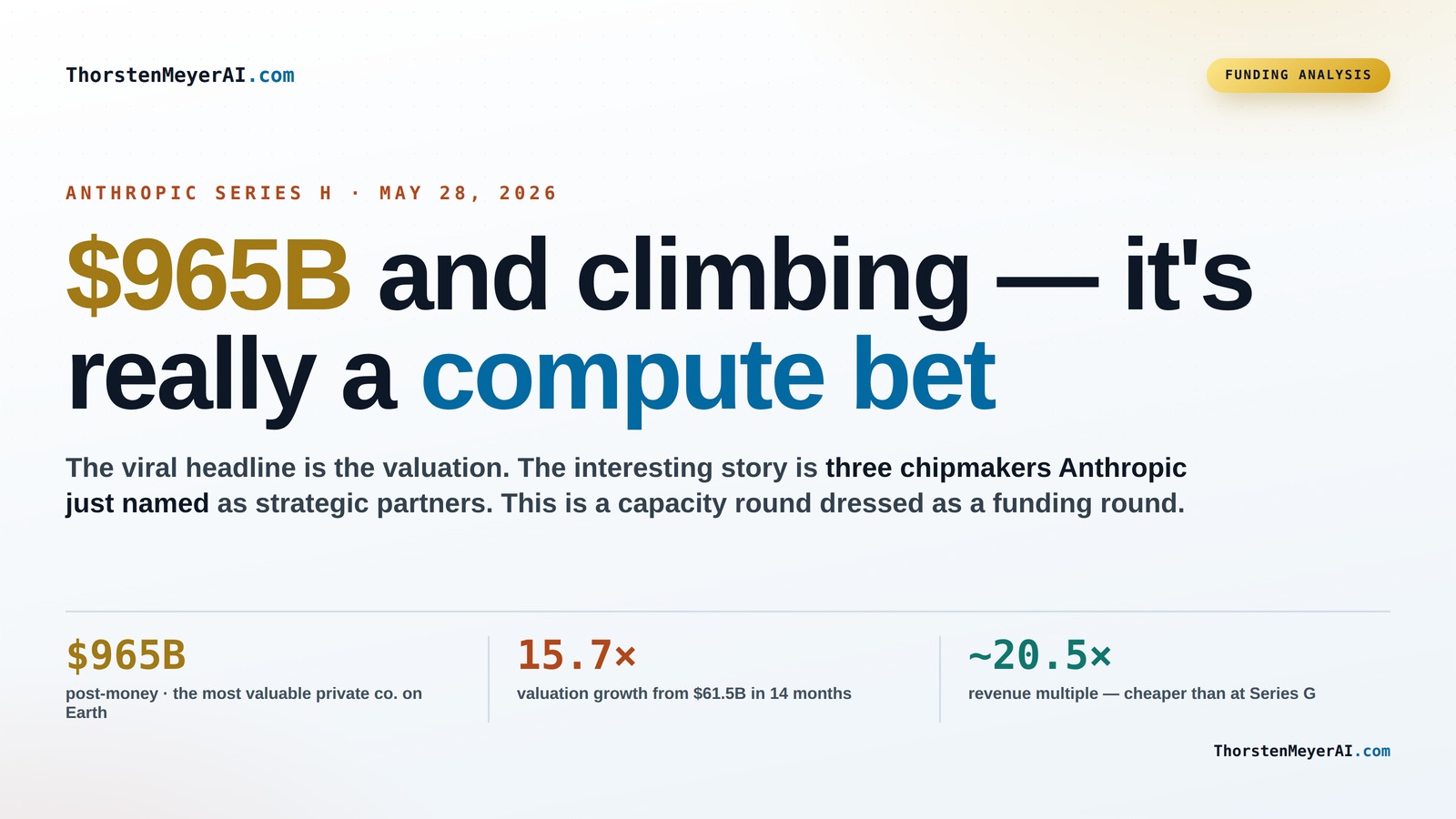
Anthropic’s $65 billion Series H at a $965 billion valuation signals more than investor enthusiasm. It underscores a massive focus on compute, chips, and infrastructure to power AI’s next leap. Revenue growth is accelerating fast, but access to the underlying hardware is the real game changer.
When you see a company valued at nearly a trillion dollars, the headlines usually focus on how rich the founders are or how hot the market is. But for Anthropic, the real story isn’t just about money. It’s about what that money buys — a massive, unprecedented leap in AI infrastructure.
This isn’t a typical funding round. It’s a strategic move to lock in access to chips, cloud capacity, and hardware — the backbone of frontier AI. Behind the headlines of record valuation, the core question is: how much compute can they secure, and at what cost?
Exploring this reveals a different kind of race — one that’s less about valuation and more about hardware, chips, and supply chains powering the next wave of AI breakthroughs.$965B and climbing — it’s really a compute bet
The viral headline is the valuation. The interesting story is in the press release’s middle paragraphs — and in three chipmakers Anthropic just named as strategic partners. This is a capacity round dressed as a funding round.
The numbers nobody can quite parse in sequence
Read together they describe a trajectory with no precedent in enterprise software. Read individually, each looks like a typo.
From $61.5B to $965B in fourteen months
Salesforce took roughly two decades to reach revenue numbers Anthropic just blew past. The sequence below is the part most coverage skips — it’s not the size, it’s the shape.
Anthropic’s valuation ladder · Mar 2025 → May 2026
Five rounds, fourteen months. Bar height is the valuation; the climb itself is the story. Tap any milestone for context.
The multiple actually got cheaper
Bubbles look like multiples expanding while revenue lags. Anthropic’s pattern is the inverse — the valuation tripled, but revenue grew faster, and the multiple compressed.
Revenue-to-valuation multiple · Series G → Series H
Same company, three months apart. The denominator (revenue) is outrunning the numerator (valuation) — exactly the opposite of what a bubble narrative predicts.
10+ gigawatts and three chipmakers
When you name Micron, Samsung & SK hynix alongside your equity backers, you’re saying the binding constraint isn’t demand or model quality — it’s the physical supply of memory chips. The Series H is a capacity round.
Compute commitments backing Anthropic’s capacity bet
$200B+ in announced compute spend across multi-year contracts. The $65B Series H raise has to be read against that bill, not against operating losses.
A genuinely durable bet — or a structural exposure?
Both readings can be true at once. The answer arrives over the next 18–24 months as the gigawatts come online and either fill with paying demand or don’t.
Revenue growth has no precedent in B2B software ($1B → $47B in 17 months). The multiple is compressing, not expanding. Claude is the only frontier model on all 3 major clouds. Enterprise AI spend share went from ~10% to >65% in a year. Compute commitments are tied to specific contracts with capacity dates.
20× revenue is not cheap by any historical software-investing standard. Revenue is reported gross of cloud-reseller pass-throughs, which inflates the top line. Profitability is 2 years out. Amodei’s own warning: a 12-month delay in AI progress “would make him bankrupt” — the compute commitments are a structural exposure to demand persistence.
The valuation race — and the IPO context
Anthropic shipped Opus 4.8 the same morning as Series H — not a coincidence. One week after OpenAI filed confidentially for IPO. The late-2026 frame is set: two frontier AI companies racing to public markets, each pitching durability.
Key Takeaways
- Anthropic’s $965 billion valuation is driven mainly by a strategic focus on securing AI hardware and infrastructure, not just market hype.
- The round is a capacity deal, with commitments to chips, memory, cloud capacity, and power that are critical for scaling frontier AI.
- Despite the huge valuation, Anthropic’s revenue growth is outpacing its valuation multiple, signaling a more grounded market view.
- Partnerships with major chipmakers and cloud providers are central to Anthropic’s strategy to build an AI hardware moat.
- Watching supply chain developments and chip innovations will tell us where AI’s next leap is headed.
As an affiliate, we earn on qualifying purchases.
Why a $965 Billion Valuation Is Less About Valuing AI and More About Infrastructure
Anthropic’s $965 billion valuation sounds staggering, but it’s primarily a reflection of strategic compute capacity. This round isn’t just about funding operations; it’s about locking in a supply chain for chips and cloud resources that will define AI’s future.
Think of it like buying a fleet of supercars. The value isn’t just in the cars themselves, but in the exclusive access to the roads, the fueling stations, and the maintenance teams. In AI, those roads are chips, memory, and cloud infrastructure.
For example, Anthropic’s partnership with Micron, Samsung, and SK hynix confirms this focus. They’re not just suppliers—they’re part of a supply chain that can scale AI models faster and cheaper than anyone else.This approach transforms the valuation from a simple number to a strategic position in the hardware arms race. It signals a recognition that hardware access — the ability to rapidly scale compute — is now a key determinant of competitive advantage in AI. Companies that secure this infrastructure early will have a significant edge in training larger, more capable models, and in deploying them at scale. The tradeoff, however, is that such reliance on specific hardware supply chains could introduce risks — geopolitical, supply disruptions, or technological bottlenecks — making the race for infrastructure not just a strategic move, but a potentially vulnerable one.

As an affiliate, we earn on qualifying purchases.
The Real Power Play: A Capacity Round Focused on Chips, Cloud, and Power
Unlike typical funding rounds aimed at growth or product development, Anthropic’s Series H is a capacity round. That means it’s designed to secure the physical resources needed for AI training and inference at scale.
Imagine trying to build the world’s fastest supercomputer, but facing a global shortage of GPUs and memory chips. That’s the bottleneck. Anthropic’s $10 billion commitment to chipmakers and cloud providers aims to cut through that bottleneck, ensuring they have enough raw capacity to train and run increasingly complex models.
Securing over 10 gigawatts of compute capacity is not just a technical milestone — it’s a strategic move that shapes the entire AI ecosystem. It allows Anthropic to plan for large-scale model training without being hamstrung by hardware shortages, which could otherwise slow innovation and deployment. This capacity focus indicates a shift in the AI arms race: instead of just developing better algorithms, companies are investing heavily in the physical infrastructure to support those algorithms at scale. The tradeoff here is that such large commitments can lead to significant sunk costs and market dependencies on hardware suppliers, potentially creating bottlenecks if supply chains face disruptions or geopolitical tensions escalate.
As an affiliate, we earn on qualifying purchases.
Revenue Growth vs. Valuation: What the Numbers Say About AI Scaling
Anthropic’s revenue jumped from about $9 billion at the end of 2025 to over $47 billion in early May 2026. That’s a 5.4× increase in just four months. For AI companies, that kind of acceleration is rare and hints at explosive demand.
But here’s the kicker: despite the valuation tripling, the revenue multiple actually compressed. At Series G, Anthropic was valued at 27× revenue; now it’s around 20.5×. This shift indicates that the market is beginning to price in not just hype but also sustainable growth, which could lead to more stable valuations over time.
This trend suggests that while investors are excited about AI’s potential, they are also becoming more cautious, demanding more tangible proof of growth and profitability. The rising revenue and expanding scale imply that Anthropic’s investments in infrastructure are paying off, enabling faster deployment and broader adoption. The tradeoff, however, is that such rapid scaling requires immense capital and can strain supply chains, potentially creating bottlenecks that could slow down future growth if not managed carefully.

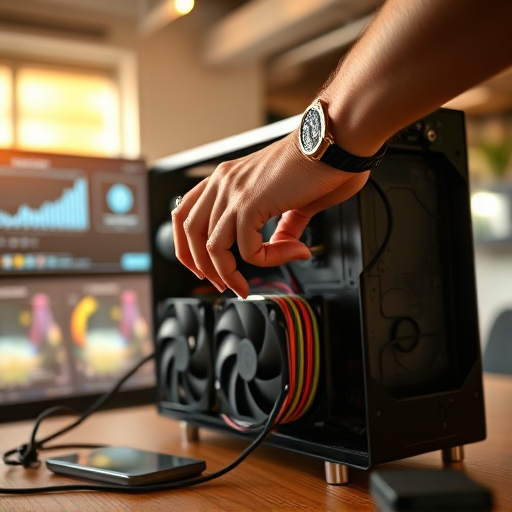
high performance computing hardware
As an affiliate, we earn on qualifying purchases.
As an affiliate, we earn on qualifying purchases.
How the Supply Chain and Chips Power AI’s Future — Real Examples
Anthropic’s strategic partnerships with Micron, Samsung, and SK hynix aren’t just names on a press release. They’re part of a real push to secure memory chips, storage, and power supplies for AI training clusters.
For example, Samsung’s latest DDR6 memory modules are critical for training large models because they handle vast data streams quickly. Micron’s high-bandwidth GDDR6X chips power the GPUs used in AI supercomputers. Without these, training models like Claude or GPT-5 would face severe bottlenecks.
Imagine trying to run a marathon without enough water stations — the race slows down. Anthropic’s investments aim to build a network of “water stations” that keep AI models running at full throttle, 24/7. This hardware access isn’t just about capacity — it’s about reliability, latency, and cost. This hardware access isn’t just about capacity — it’s about reliability, latency, and cost. The better the supply chain, the more efficiently AI can scale, and the more that scale translates into competitive advantage. Conversely, supply chain disruptions can mean delays, increased costs, or compromised model performance, emphasizing why securing hardware access is a strategic priority at this stage of AI development.
What This Means for the AI Race: Bigger, Faster, and More Capable
Anthropic’s massive funding and infrastructure focus signal a shift in the AI race. It’s no longer just about developing smarter models; it’s about building the hardware ecosystem that can sustain them.
Where once the bottleneck was algorithmic innovation, now it’s hardware — chips, memory, power, and cloud capacity. This changes the game for everyone. Companies like Google, Microsoft, and OpenAI will need to match this scale or risk falling behind.
For instance, Anthropic’s ability to secure gigawatts of compute means they can train larger models faster, with more safety and interpretability. This not only accelerates AI progress but also sets new benchmarks for hardware requirements, prompting a race for infrastructure that could reshape competitive dynamics. The companies that can build or access this infrastructure at scale will have a significant advantage, potentially leading to a concentration of power among a few players capable of massive hardware investments. This shift raises questions about market dominance and the future landscape of AI development, where hardware capacity becomes as critical as algorithmic sophistication.

What You Should Watch for Next in AI Infrastructure
Keep an eye on chipmakers and cloud providers. The real story behind AI’s rapid growth is in the supply chain. Who controls the chips, memory, and power determines who leads the next chapter.
Look out for announcements from Micron, Samsung, and SK hynix about new memory chips optimized for AI. Watch cloud giants like AWS, Azure, and Google Cloud for capacity expansions. Each piece of the puzzle influences what’s possible at the frontier.
And don’t forget: the race isn’t just for better models, but for the hardware that makes those models feasible at scale. As these hardware companies innovate and expand capacity, they will shape the pace of AI progress, determining how quickly and efficiently models can be trained, fine-tuned, and deployed.
Frequently Asked Questions
Why is this round being called a ‘capacity round’ rather than just a funding round?
Because most of the money is dedicated to securing hardware, chips, and cloud capacity that will be essential for training and running massive AI models. It’s about building the foundation for future AI growth, not just funding day-to-day operations.How can Anthropic justify a $965 billion valuation with just revenue growth?
The valuation reflects expectations of future infrastructure-driven growth. It’s a bet that access to chips and compute will unlock the next leap in AI capability, making the current revenue just the beginning.What does the $47 billion run-rate revenue actually mean?
It indicates how much money Anthropic is generating per year based on current contracts and usage. It’s a sign of explosive demand, but also shows they’re investing heavily in hardware to sustain that growth.Why are companies like Amazon, Microsoft, and Samsung involved?
They’re providing the hardware, cloud capacity, and memory needed for Anthropic’s models. Their involvement guarantees supply and scale, which is crucial for staying ahead in the AI arms race.Will this lead to an IPO, or is it just about infrastructure?
Right now, it’s mainly about infrastructure and scaling. But as the company grows and demonstrates sustainable profitability, a public offering could be in the cards — especially to further fund hardware expansion.Conclusion
Anthropic’s latest funding isn’t just a valuation milestone — it’s a clear signal that hardware and infrastructure are now the heart of AI’s future. If you want to understand where AI is headed, look past the dollar signs and focus on the chips, memory, and power behind the scenes.
As the supply chain tightens and giants compete for hardware dominance, the companies that secure the best infrastructure will lead AI’s next chapter. The real race isn’t just about models anymore — it’s about the hardware that makes those models possible.

Fall Picks
fall essentials
As an affiliate, we earn on qualifying purchases.