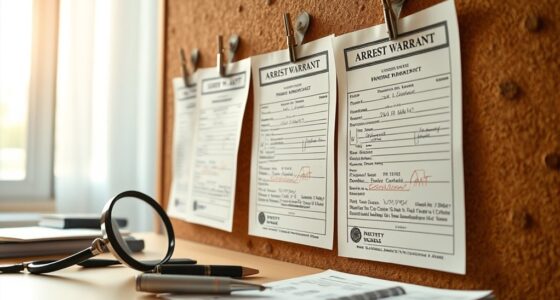
Yes, clerical errors on warrants can lead to significant confusion and legal issues. Mistakes like misspelled names, incorrect dates, or wrong case numbers may cause wrongful arrests, delays, or even warrant invalidation. These errors are often unintentional but can impact the validity of the warrant if not corrected promptly. Understanding how courts handle such mistakes and the correction procedures can help you avoid unexpected complications—if you’re interested, you’ll find useful insights as you explore further.
Key Takeaways
- Clerical errors on warrants, like incorrect names or dates, can cause confusion and legal challenges.
- Courts recognize and correct clerical mistakes that do not alter the warrant’s core purpose.
- Uncorrected errors may invalidate the warrant, leading to legal disputes and delays.
- Proper procedures for correcting clerical mistakes help prevent warrant confusion.
- Vigilance in identifying and fixing errors maintains warrant validity and legal clarity.
Have you ever wondered how a simple clerical mistake can lead to serious legal confusion? Sometimes, a typo or clerical error on a warrant or legal document can cause significant issues, especially when it comes to law enforcement and the justice system. Such mistakes can result in wrongful arrests, delays, or even the invalidation of an entire case if not addressed properly. The question then becomes: can a clerical error lead to warrant confusion? The answer depends on how the mistake is handled and the context in which it occurs.
In legal proceedings, case law offers guidance on how courts interpret and rectify clerical errors. Courts recognize that clerical mistakes are generally unintentional and can be corrected through error correction procedures. When a warrant contains a clerical mistake—like an incorrect name, date, or case number—it may still be valid if the error does not fundamentally alter the nature of the warrant or mislead law enforcement. However, if the mistake substantially affects the legality or scope of the warrant, it can lead to confusion, challenge, or even dismissal of the case. Courts look at whether the mistake was clerical or substantive; clerical errors are typically easier to correct without jeopardizing the warrant.
Courts can correct clerical errors if they don’t alter the warrant’s core purpose or legality.
Error correction becomes vital in these situations. If you’re involved in a case where a clerical error has caused warrant confusion, it’s essential to act quickly. Courts often have procedures to amend or correct clerical mistakes, but these corrections must be timely and properly documented to maintain the integrity of the legal process. Failing to correct a clerical error can result in a warrant being deemed invalid, which can lead to legal challenges and delays. Additionally, understanding the importance of error correction procedures can help prevent these issues from escalating. Proper understanding of clerical vs. substantive errors can help determine the appropriate remedy and ensure that legal processes are upheld. Recognizing that many clerical errors are correctable underscores the importance of vigilance and prompt action in legal proceedings to guarantee that minor mistakes don’t lead to major legal consequences. Moreover, awareness of the impact of clerical errors on legal validity can help individuals and attorneys navigate these complexities more effectively.

Parish Law: Or, a Guide to Justices of the Peace, Ministers, Churchwardens, and all Others Concern'd in Parish Business: Together With Correct Forms of Warrants, Commitments The Tenth Edition
As an affiliate, we earn on qualifying purchases.
As an affiliate, we earn on qualifying purchases.
Frequently Asked Questions
How Often Do Clerical Errors Cause Warrant Confusions?
Clerical errors frequently cause warrant confusions, especially during arrest procedures. When mistakes happen in a criminal record or documentation, law enforcement might target the wrong person or delay the process. These errors can lead to wrongful arrests or missed warrants, creating significant legal issues. You should regularly check your criminal record for accuracy to avoid such problems, and promptly address any errors to prevent warrant complications during arrest procedures.
Can a Warrant Be Canceled Due to Clerical Mistakes?
Yes, a warrant can be canceled due to clerical mistakes if the clerical correction proves the error impacted warrant validity. When a clerical error is identified, the court or relevant authority may dismiss or modify the warrant to correct the mistake. This process guarantees the warrant remains legally valid and accurate. It’s essential to address clerical errors promptly to prevent wrongful arrests or legal complications stemming from inaccurate information.
What Steps Should Be Taken if a Warrant Is Based on a Clerical Error?
When you discover a warrant based on a clerical error, act swiftly—like a detective uncovering clues. You should contact an attorney to navigate the process, requesting judicial oversight to rectify the mistake. Follow error correction procedures meticulously, presenting evidence of the clerical mistake. This proactive approach ensures the warrant is properly amended, preventing wrongful detention or legal complications. Always prioritize timely action to safeguard your rights and uphold justice.
Are Clerical Errors in Warrants Considered Legal Grounds for Dismissal?
Clerical errors in warrants can be considered legal grounds for dismissal if they substantially impact the warrant’s validity. You should understand that clerical oversight might undermine the legal implications of the warrant, especially if it affects probable cause or essential details. If you suspect such errors, consult your attorney promptly to explore whether they could invalidate the warrant or influence your case’s outcome.
How Can Individuals Verify the Accuracy of Their Warrant Information?
Did you know that about 75% of identity theft cases involve errors in personal data? To verify your warrant information, you should regularly check with local law enforcement agencies or court websites for official records. This helps you spot any inaccuracies early, reducing legal implications. Always request official documentation and compare details carefully. Data verification is key to avoiding confusion or wrongful actions stemming from clerical errors.
legal document error correction kit
As an affiliate, we earn on qualifying purchases.
As an affiliate, we earn on qualifying purchases.
Conclusion
A clerical error can turn your world upside down like a house of cards, leading to warrant confusion that’s hard to untangle. It’s a stark reminder that even the smallest mistake in paperwork can have serious consequences. So, always double-check your records and stay vigilant. Remember, a simple typo isn’t just a slip-up—it can be the spark that ignites a whirlwind of legal trouble. Stay alert, and don’t let clerical errors be the fox in your henhouse.
clerk of court error correction guide
As an affiliate, we earn on qualifying purchases.
As an affiliate, we earn on qualifying purchases.
warrant validation tools
As an affiliate, we earn on qualifying purchases.
As an affiliate, we earn on qualifying purchases.