📊 Full opportunity report: How A Practice App Supports Business Owners' Camera Skills on IdeaNavigator AI — validation score, market gap, and execution plan.

Get smart everyday buys delivered free with Prime
- Fast, free delivery on millions of items
- Prime Video, Amazon Music and more included
- Member-only deals all year
TL;DR
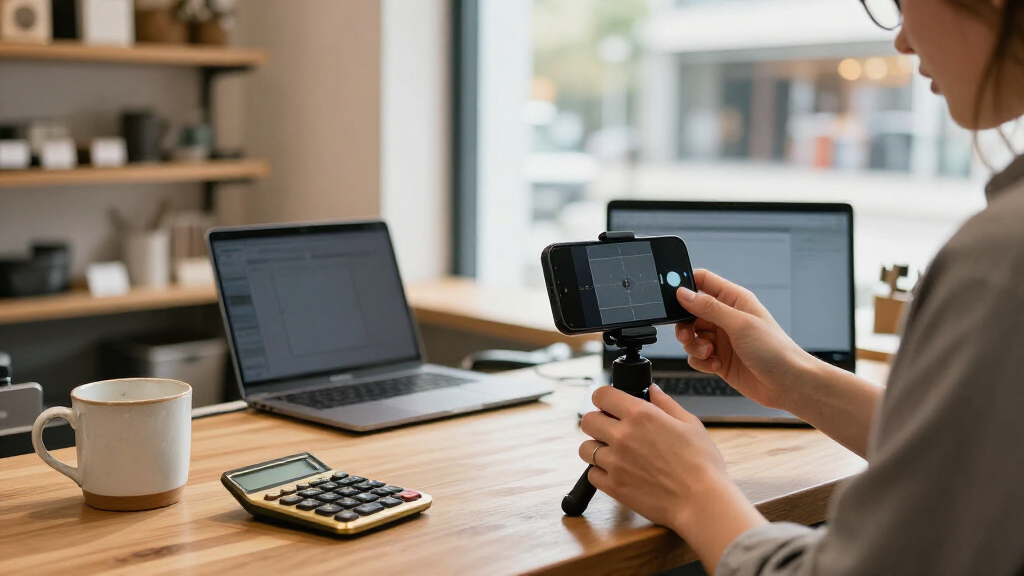
IdeaNavigator AI has outlined a product concept for a practice app aimed at business owners who struggle to record themselves. The proposal includes two-minute exercises and automated delivery feedback, but it is an idea to validate, not a reported launched product or proven result.
IdeaNavigator AI’s product concept proposes a practice app for business owners who know video could support their marketing but freeze when recording. The concept pairs short camera exercises with automated feedback on delivery. The proposal does not report that the app has been built or tested, or that it increases video publishing.
In its concept, IdeaNavigator AI identifies the initial audience as business owners who avoid recording despite seeing a role for video in their work. The proposal describes stumbling, harsh self-criticism and repeated retakes as barriers that can keep owners from publishing. It argues that general public-speaking training may not address the experience of speaking alone to a camera.
IdeaNavigator AI proposes a minimum viable product with daily two-minute prompts, progressing from reading to unscripted speaking. The concept says the app would analyze pace, filler words, eye line and energy, then show progress over time. It also proposes confidence streaks and a step toward recording real business content, but does not explain how the app would assess those measures or protect recordings.
For a business model, the proposal suggests a consumer subscription and a team tier for agencies that coach clients. IdeaNavigator AI’s proposed test is a 30-day cohort of 100 business owners, compared with a waitlist control group. The stated outcome is whether participants publish their first real video by day 45. The concept reports no cohort results or participant recruitment details.
PRODUCT CONCEPT · EVIDENCE CHECK
How a Practice App Supports Business Owners’ Camera Skills
IdeaNavigator AI proposes short camera exercises and automated delivery feedback for business owners who freeze when recording. It remains an idea to validate: no launch, test results, or publishing gains are reported.
01 / THE NEED
From camera freeze to first take
The proposal focuses on the gap between seeing a role for video and feeling ready to record it.
Stumbling & retakes
Owners may repeat takes when a recording feels awkward, making a simple message harder to finish.
Harsh self-criticism
Watching or hearing themselves can turn practice into self-judgment instead of a chance to improve.
A different kind of speaking
Speaking alone to a camera can feel unlike public speaking, so general presentation training may not fit.
Private rehearsal is not publishing. A person might complete prompts and still decide not to post customer-facing video.
02 / PROPOSED WORKFLOW
Small steps toward unscripted speaking
The suggested product moves from guided practice to a real business recording.
Read a prompt
Begin with a short, structured two-minute exercise.
Speak more freely
Progress from reading toward unscripted responses.
Get delivery feedback
Proposed signals include pace, filler words, eye line, and energy.
Try real content
Use practice as a step toward recording business video.
03 / WHAT NEEDS VALIDATION
Feedback is a feature hypothesis
The proposal does not define scoring, safeguards, or evidence that these measures reflect communication quality.
SUGGESTED FEEDBACK SIGNALS
Observable, but context-dependent
OPEN QUESTIONS
Measurement & privacy
Device, lighting, speech patterns, disability, and cultural style may affect automated judgments. The concept gives no scoring method or validation plan.
It also does not say whether recordings would be stored, reviewed by people, or deleted, or how user privacy would be protected.
Safeguards not described04 / PROPOSED VALIDATION
A cohort would test one early action
The concept outlines a comparison, but reports no start date, recruitment details, or results.
Practice cohort vs. waitlist
IdeaNavigator AI proposes a 30-day cohort of 100 business owners, with a waitlist control group for comparison. Assignment and group comparability are not explained.
First video by day 45
The proposed check is whether participants publish their first real video. “Published” is not defined, and the concept gives no verification method.
A first post would be an early signal only. Continued publishing, customer response, and business impact sit beyond the proposed initial measure.
05 / BUSINESS HYPOTHESIS
Possible customers & revenue paths
The outline suggests audiences and pricing models without evidence of market demand.
Business owners
People who see a potential role for video in their work but struggle to record themselves.
Consumer subscription
A direct subscription is proposed; no price or willingness-to-pay evidence is provided.
Agency team tier
A team option could serve agencies coaching clients. No agency partners are identified.
TRACEABILITY / CLAIM TO EVIDENCE
Keep the concept in perspective
What is proposed, what would be measured, and what remains unknown.
Practice app
Product concept attributed to IdeaNavigator AI.
Daily prompts
Two-minute exercises with automated delivery feedback proposed.
First publication
Day-45 first-video publication suggested as an early outcome.
No results reported
No launch, cohort findings, or proven benefit described.
KEY QUESTIONS
What the proposal tells us
Has the app launched?
No launch is reported. The material describes a product concept and proposed test, without a finished app or release date.
Who is it for?
Business owners who want to use video but struggle with anxiety, retakes, or self-criticism when recording.
What would practice involve?
Daily two-minute prompts moving from reading to freer speaking, with proposed feedback on pace, filler words, eye line, and energy.
Has it helped owners publish?
No results are reported. A cohort and waitlist comparison are proposed, with first publication by day 45 as the measure.
IdeaNavigator AI’s material describes an untested proposal. Further reporting would need to establish whether an app exists, how feedback works, how recordings are handled, and what the cohort finds.
From Practice to Published Video
The idea addresses a gap between knowing video may be useful and feeling able to make it. As described in IdeaNavigator AI’s proposal, a practice tool could lower the personal barrier to recording without requiring a public post during the learning process. That distinction matters because private rehearsal is not the same as publishing: users may improve on exercises without choosing to make customer-facing videos.
The concept also reflects how automated analysis might be applied to communication coaching. Feedback on pace or filler words could give users repeatable observations, but judgments about eye contact and energy can depend on camera setup, speaking style and individual goals. The measures IdeaNavigator AI proposes should be treated as features to test, not validated indicators of communication quality or business performance.
If developed, the app’s value would depend on whether its practice leads to meaningful behavior change, not simply whether people complete prompts or earn streaks. IdeaNavigator AI proposes first-video publication as an early outcome, while leaving larger questions—such as whether owners keep publishing or attract customers—outside the initial test.
Products Worth Considering

HP OfficeJet 250 Wireless Mobile All-in-One Inkjet Printer

Canon PIXMA TR160 Wireless Portable Color Inkjet Printer

Logitech MX Mechanical Wireless Illuminated Keyboard, Tactile Quiet, Graphite
As an affiliate, we earn on qualifying purchases.
The Proposed Test and Audience
IdeaNavigator AI frames the opportunity around video-first marketing pressure reaching businesses of different sizes. That is the concept’s rationale, not a reported market study: the material provides no market-size figures, survey results or evidence about how many owners experience camera anxiety.
The proposed cohort is intended to test whether structured practice changes a specific action. IdeaNavigator AI suggests comparing participants with people on a waitlist, which could help distinguish the effect of the exercises from what participants might do without immediate access. However, the outline does not describe recruitment, assignment or whether the groups would be comparable. It also does not report that a test has begun.
IdeaNavigator AI positions the product within communication skills training, with a possible agency tier alongside direct subscriptions. The concept identifies no pricing, app developer, release schedule or agency partners. The available details therefore describe a product hypothesis and validation plan, not an announcement of a finished service.
Evidence, Privacy and Measurement
IdeaNavigator AI reports no product launch or test results. Its concept does not establish whether a working app exists, whether the proposed 100-person cohort will run, or what technology would perform the delivery analysis. It provides no evidence that automated feedback reduces anxiety or leads to more public video publishing.
The proposal does not define scoring methods, thresholds or validation for pace, filler words, eye line or energy. It is also unclear how the app would account for differences in devices, lighting, speech patterns, disabilities or cultural communication styles. IdeaNavigator AI does not explain whether recordings would be stored, reviewed by people or deleted, or how user privacy would be protected.
The proposed day-45 outcome is limited to publishing a first real video. The concept does not define what counts as published, whether a video must be publicly available, or how the result would be verified. It also gives no longer-term measure of continued publishing or business impact.
A Cohort Would Test the Idea
IdeaNavigator AI’s stated next step is a 30-day cohort of 100 business owners, with a waitlist group used for comparison. As proposed, the assessment would track whether participants publish a first real video by day 45. That could provide an initial signal about whether the practice workflow supports a concrete action, although the concept reports no start date or recruitment process.
Further reporting would be needed to establish whether the app has been built, how its feedback is generated and what safeguards apply to video data. Results would also need to clarify group sizes, participation and the definition of a published video before readers could judge the comparison. Until those details or findings are available, the concept remains an untested proposal.
Source: IdeaNavigator AI product concept
Key Questions
Has the camera-practice app launched?
No launch is reported in IdeaNavigator AI’s material. It describes a product concept and a proposed validation test, without identifying a finished app or release date.
Who is the proposed app for?
IdeaNavigator AI identifies the initial audience as business owners who want to use video but struggle to record themselves because of anxiety, retakes or self-criticism.
What would the exercises involve?
According to the proposal, the app would give users daily two-minute prompts, moving from reading to speaking more freely, and offer feedback on pace, filler words, eye line and energy.
Has the app been shown to help owners publish videos?
No results are reported in IdeaNavigator AI’s concept. It proposes a 30-day cohort of 100 owners and a waitlist comparison, with first video publication by day 45 as the stated measure.
Source: IdeaNavigator AI