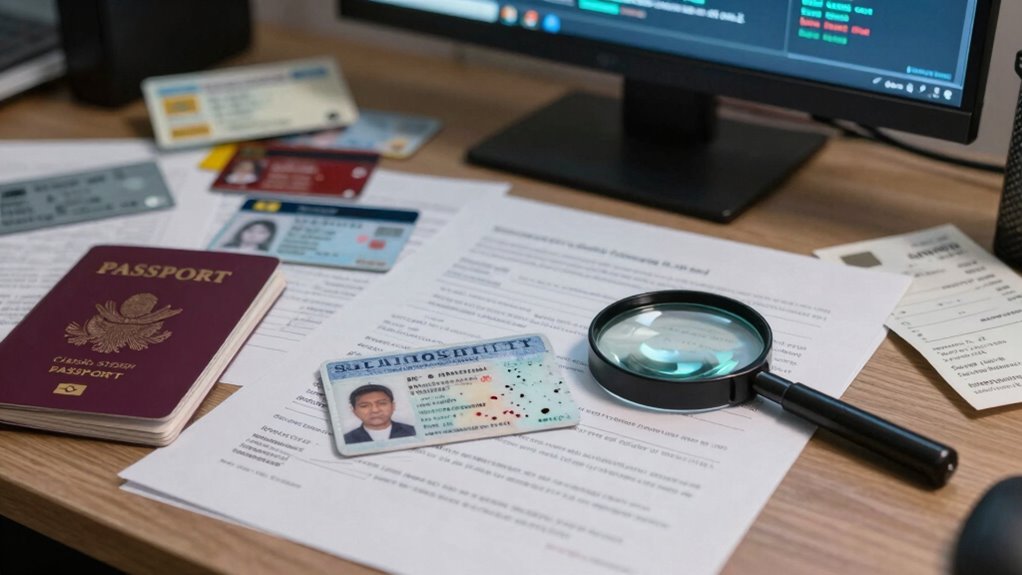
Synthetic identity fraud shows warning signs like mismatched or fabricated customer data, unusual spikes in account creation, and accounts that vanish quickly after brief activity. You may notice inconsistent behaviors during verification, suspicious transactions, or patterns that don’t match typical profiles. Evasive responses, fake details, and sudden account abandonment heighten suspicion. Spotting these clues early can help protect your business, and understanding more about these signals can further strengthen your defenses.
Key Takeaways
- Mismatched or inconsistent customer data, such as varying names or addresses, indicates potential synthetic identity fraud.
- Sudden spikes in account creation from the same IP or device suggest fraudulent activity.
- Unusual transaction patterns or evasive responses during verification signal suspicious behavior.
- Fabricated or anomalous data, lacking real-world consistency, often reveals synthetic identities.
- Accounts with brief activity windows or abrupt inactivity are common signs of fraudulent accounts.
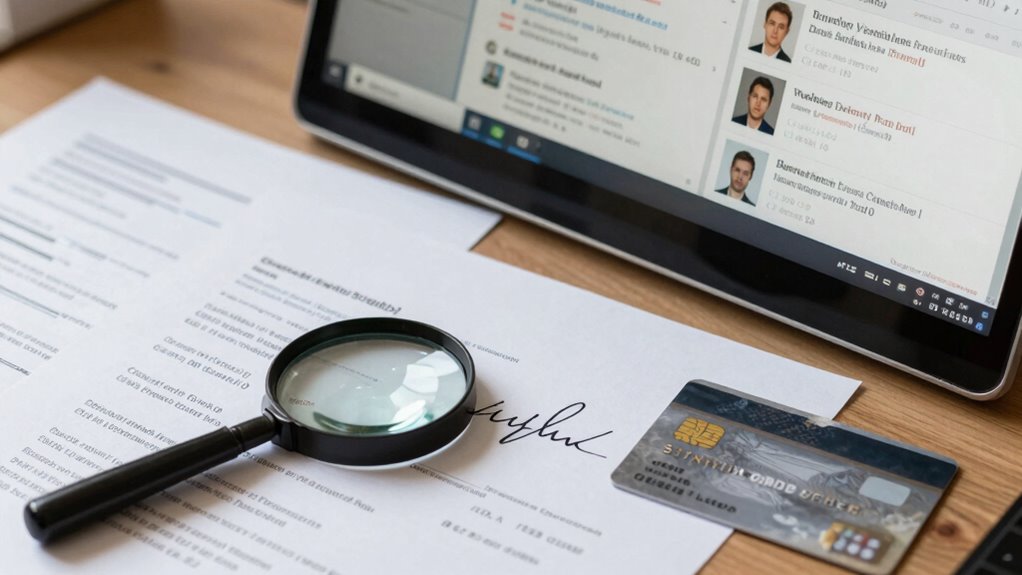
Synthetic identity fraud is a growing threat that can be difficult to detect until significant damage has occurred. When someone uses a mix of real and fake information to create a new identity, it becomes a challenge to spot the signs early. You might not notice the fraud until you see unusual activity or experience financial loss. That’s why understanding the warning signs is essential, especially when it comes to implementing effective cybersecurity measures and customer verification processes.
One of the clearest signs is irregularities in customer information. If you notice that a new account or application has inconsistent details—such as mismatched addresses, name variations, or incorrect Social Security numbers—it could indicate synthetic identity activity. Fraudsters often use partial or fabricated data, which can slip past initial screening but may raise red flags upon closer inspection. Regularly reviewing these details helps you catch anomalies before they cause harm.
Irregular customer details, like mismatched addresses or false Social Security numbers, signal potential synthetic identity fraud.
Another warning sign is a sudden spike in applications or account openings from the same IP address or geographic location. Synthetic identities are often created in bulk, so multiple accounts linked to similar patterns can suggest fraudulent intent. Implementing strict cybersecurity measures—like IP tracking and device fingerprinting—can help you identify suspicious behavior early. These tools enable you to flag potential fraudsters before they access sensitive systems or commit financial crimes. Recognizing common fraud tactics can further enhance your detection strategies and prevent large-scale breaches.
Monitoring customer activity for inconsistent behavior is also essential. For example, if a new account shows transactions that don’t match the profile’s typical patterns or if the customer’s responses during verification seem evasive or inconsistent, these are signs of potential fraud. Effective customer verification methods, such as multi-factor authentication and document verification, are key in confirming identities and preventing synthetic identities from gaining access. Additionally, understanding the signs of synthetic identity fraud can help you develop proactive detection methods.
Furthermore, synthetic identities often involve style elements like inconsistent formatting or fabricated details that may not match typical real-world data, making pattern recognition crucial in early detection. Lastly, keep an eye on the lifecycle of accounts. Synthetic identities often have a brief window of activity—they might be used for a quick transaction and then abandoned. If you notice accounts that become inactive suddenly or are used only for a limited time, it’s worth investigating further. Regular audits and ongoing monitoring can help you identify these fleeting accounts, which are common in synthetic fraud schemes.

TensaOne Hidden Camera Detectors – Mini Security Device for Audio Video Wireless Threats, Hotel Safety, Home Privacy and GPS Tracker Detection, Pen RF Spy Cam Voice Recorder Bug Finder for Travelers
MULTI-MODE SWEEPER FOR FULL COVERAGE: 4-in-1 tool scans for Bluetooth, wireless, and radio frequency threats. Use RF mode,…
As an affiliate, we earn on qualifying purchases.
As an affiliate, we earn on qualifying purchases.
Frequently Asked Questions
How Prevalent Is Synthetic Identity Fraud Nationwide?
Synthetic identity fraud is increasingly prevalent nationwide, making it essential for you to prioritize robust identity verification and fraud detection measures. Criminals blend real and fake details, slipping past traditional checks. By leveraging advanced fraud detection tools, you can better identify suspicious patterns early, protecting your business and customers. Staying vigilant and updating your verification processes regularly helps you stay ahead of this growing threat, ensuring your systems remain secure and trustworthy.
What Industries Are Most Targeted by Synthetic Identity Fraud?
You’re most vulnerable to synthetic identity fraud in industries like banking, credit, and healthcare, where financial regulations emphasize strict identity verification. Fraudsters target these sectors because they often have less rigorous checks and high-value transactions. By understanding these risks, you can strengthen your identity verification processes, stay alert to suspicious activity, and better protect your organization from becoming a target of synthetic identity fraud.
Can Synthetic Identity Fraud Be Completely Prevented?
Like trying to catch shadows in the night, completely preventing synthetic identity fraud is tough. While you can bolster your defenses with robust identity verification and fraud prevention measures, savvy criminals continually adapt, making it nearly impossible to eliminate all risks. You should remain vigilant, update your security protocols regularly, and use advanced tools to detect suspicious activity. Prevention is about minimizing damage, not achieving perfect security.
How Does Synthetic Identity Fraud Impact Consumers Financially?
Synthetic identity fraud can seriously impact your finances by increasing your financial vulnerability and causing credit disruptions. When fraudsters use fake identities, they may rack up debt or make false claims in your name, damaging your credit score. This can make it harder for you to secure loans or favorable interest rates. You might also face the hassle of correcting these issues, which takes time and effort to restore your financial stability.
What Tools Do Organizations Use to Detect Synthetic Identities?
Organizations use tools like automated verification and behavioral analytics to detect synthetic identities. Automated verification quickly cross-checks data against trusted databases to spot inconsistencies or fake information. Behavioral analytics monitors user actions and patterns for suspicious activity indicative of fraud. By combining these tools, you can identify anomalies early, reducing the risk of synthetic identity fraud and protecting your organization from financial losses and reputational damage.

Yubico – YubiKey 5C NFC – Multi-Factor authentication (MFA) Security Key and passkey, Connect via USB-C or NFC, FIDO Certified – Protect Your Online Accounts
POWERFUL SECURITY KEY: The YubiKey 5C NFC is the most versatile physical passkey, protecting your digital life from…
As an affiliate, we earn on qualifying purchases.
As an affiliate, we earn on qualifying purchases.
Conclusion
Staying vigilant and recognizing the warning signs of synthetic identity fraud can save you from a world of trouble. If something feels off or doesn’t add up, trust your instincts and dig deeper. Remember, an ounce of prevention is worth a pound of cure—catching these issues early can prevent bigger headaches down the line. Keep your eyes open, stay cautious, and don’t let your guard down; the early bird catches the worm.
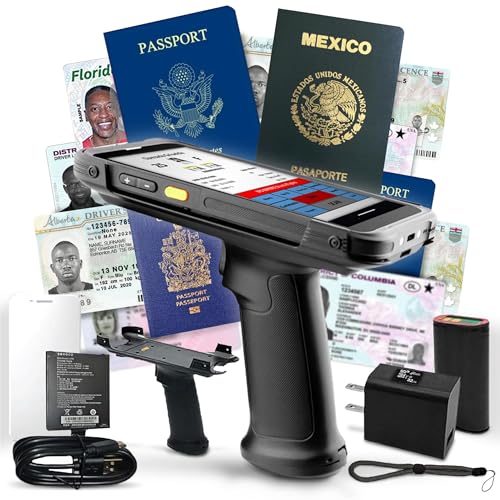
ID Scanner – Drivers License and Passport Scanner and Reader – Age Verification and Customer Management – Quantum Edge V3 Includes Handheld Scanner, Outer Carry Case, & Accessories
Speed and Accuracy – The Quantum Edge ID Scanner V3 ensures rapid and precise authentication of driver’s licenses…
As an affiliate, we earn on qualifying purchases.
As an affiliate, we earn on qualifying purchases.

Spy Labs Inc: Fingerprinting Kit by Thames & Kosmos | Identify, Collect, Analyze Fingerprint Evidence | Essential Tools and Tricks of The Trade from The Detective Gear Experts for Young Investigators
Spy Labs Incorporated's activity kits and equipment provide an engaging and interactive way for kids to learn about…
As an affiliate, we earn on qualifying purchases.
As an affiliate, we earn on qualifying purchases.