
Kids’ Social Security numbers are valuable targets because they often go unused and unmonitored for years, making it easy for thieves to commit fraud without suspicion. Cybercriminals can open accounts or steal money, often without detection. Your child’s personal info from online activities or careless sharing can give thieves what they need. Staying ahead involves understanding these risks and learning effective ways to protect your child’s identity—continue to discover how you can keep them safe.
Key Takeaways
- Kids’ SSNs are unused and pristine, making them attractive to thieves for fraudulent activities.
- Cybercriminals exploit digital footprints and online vulnerabilities to obtain children’s personal information.
- Child identity theft often remains undetected for years, increasing the potential for financial damage.
- Thieves create fake profiles or pose as children to gather SSNs and other sensitive data.
- Parents’ lack of vigilance can allow scammers to access and misuse children’s SSNs unnoticed.
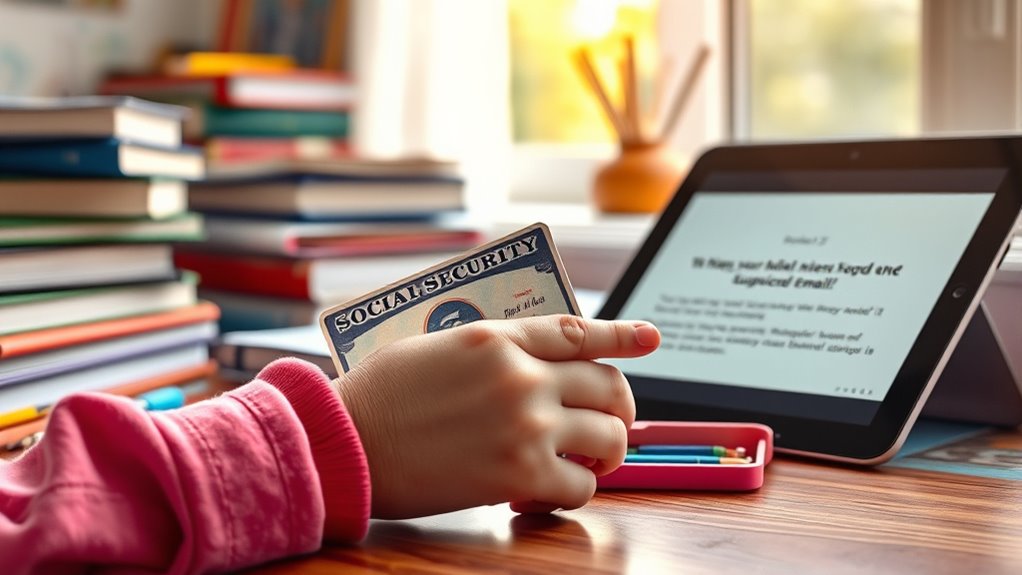
Have you ever considered that your child’s identity could be stolen? It might seem unlikely, but child identity theft is a real threat, and scammers often target kids because their Social Security numbers (SSNs) are unused and pristine. Thieves know that a child’s personal information can sit dormant for years, making it easier to open fraudulent accounts or commit financial crimes without immediate detection. That’s why understanding how digital footprints and parental vigilance play vital roles in protecting your child’s identity is so important. Digital footprints—those traces left behind when your child uses the internet—can inadvertently expose sensitive information if not managed carefully. Personal details, even seemingly harmless ones, can be pieced together by cybercriminals to answer security questions or access accounts later in life. As a parent, staying vigilant about your child’s online activities is essential. Monitor what they share on social media, ensure they understand not to give out personal details, and use privacy settings effectively. The more aware you are of their digital footprint, the better you can prevent potential breaches. Child identity theft often begins with a small slip-up, like a careless post or sharing too much information during online chats. Cybercriminals are skilled at exploiting these vulnerabilities, especially when parents aren’t paying close attention. They might pose as your child or create fake profiles to gather additional information or to open accounts in their name. This is why parental vigilance isn’t just about watching over your child’s online activities but also about understanding the broader landscape of digital risks. You should regularly check your child’s credit reports and SSN activity, especially if you notice any signs of suspicious behavior. Many parents overlook this step because they assume their child’s information isn’t at risk, but the truth is, safeguarding their digital identity requires proactive measures. Educate your children about online safety from an early age, so they understand the importance of protecting their personal information. Additionally, keep a close eye on any official correspondence or unfamiliar bills that could indicate someone is using your child’s identity. The key is to establish a routine of vigilance—review privacy settings, limit sharing of personal details, and stay informed about new scams targeting children. Furthermore, advancements in Automation’s Role in Business Intelligence can help parents analyze and monitor their child’s online activity more effectively through automated alerts and reports. The key is to establish a routine of vigilance—review privacy settings, limit sharing of personal details, and stay informed about new scams targeting children. Remember, the fight against child identity theft isn’t just about reacting to threats; it’s about preventing them through consistent awareness and proactive steps. Your attentiveness now can save your child from years of financial and emotional distress later. Protecting your child’s digital footprints and remaining vigilant is your best defense against these silent threats, ensuring their identity stays safe long into the future.

Guard Your ID Advanced 2.0 Roller 3-Pack for Identity Theft Protection, Confidential Security Stamp Mixed Color Kit (Turquoise, Green, White)
Robust Identity Theft Protection: Shields personal information; effectively masks sensitive data to prevent identity theft
As an affiliate, we earn on qualifying purchases.
As an affiliate, we earn on qualifying purchases.
Frequently Asked Questions
How Can I Detect if My Child’S Identity Has Been Stolen?
You can detect if your child’s identity has been stolen by regularly monitoring their credit reports for any unfamiliar accounts or activity. Recognize suspicious activity such as unexpected bills, new accounts, or alerts from credit bureaus. Stay vigilant and review reports periodically, especially if you notice anything unusual. Early detection helps protect your child’s financial future and prevents further damage from identity theft.
What Are the Long-Term Effects of Child Identity Theft?
Did you know that 1 in 40 children experience identity theft? Long-term consequences can be severe, affecting your child’s credit and financial future for years. The future implications include difficulty obtaining loans, higher interest rates, and even wrongful criminal records. These impacts may remain hidden for years, making it essential to monitor your child’s financial history and act quickly if you suspect theft. Protecting their identity now prevents lasting damage later.
How Quickly Should I Respond to Suspected Child Identity Theft?
When you suspect child identity theft, a timely response is critical. Act immediately to protect your child’s information and prevent further damage. Contact law enforcement and follow legal procedures to report the theft. Prompt action helps limit the harm and guarantees you meet deadlines for reporting, which are essential for resolving the issue. The sooner you respond, the better your chances of safeguarding your child’s future financial security.
Are There Specific Signs Indicating My Child’s SSN Has Been Misused?
Did you know that over 1 million children are victims of identity theft annually? You should watch for signs like unexplained credit inquiries, sudden bills, or collections notices. If you suspect misuse, prioritize child privacy and social security monitoring. Regularly review your child’s credit reports and look for unfamiliar accounts or activities. Being vigilant helps protect your child’s future and guarantees you catch any misuse early.
Can I Prevent Future Identity Theft for My Child?
To prevent future identity theft for your child, you should take preventative measures like regularly checking their credit reports and monitoring their social security activities. Parental vigilance is key—you can also limit access to their personal information and securely store documents. Educate yourself about common scams and stay informed about new threats. These proactive steps help safeguard your child’s identity and catch any suspicious activity early on.

All Quality Fancy Property Under 24Hr Video Surveillance Sign | Property Security Sign with Easy Installation | 24/7 Security Monitoring (Black/Gold) – Small 1 Pack
Durable plastic construction for everyday use
As an affiliate, we earn on qualifying purchases.
As an affiliate, we earn on qualifying purchases.
Conclusion
So, next time you hand over that shiny Social Security card, remember: you’re practically handing your kid’s future on a silver platter. Thieves love lurking in the shadows, waiting for a blank canvas of innocence to paint their scams. Protecting your child’s identity isn’t just smart—it’s a full-time job. After all, who knew that a tiny number could hold the power to turn a sweet kid into a credit card villain’s best friend? Stay vigilant!

NO! I'M TELLING! – Body Safety, Consent & Boundaries Fun Activities for Kids: Personal Space, Secrets, Unsafe Touch, Social-Emotional Learning & Child Protection (NO! I'M TELLING! Series®)
As an affiliate, we earn on qualifying purchases.
As an affiliate, we earn on qualifying purchases.

Guard Your ID Advanced Security Roller 2.0 for Identity Theft Prevention Stamping White
INNOVATIVE IDENTITY PROTECTION: Guard Your ID (GYID) is the pioneering brand in identity protection rollers. Our patented pattern,…
As an affiliate, we earn on qualifying purchases.
As an affiliate, we earn on qualifying purchases.