
To search court records with only part of a name, start by identifying the jurisdiction where the case was filed. Use online databases that allow partial name searches, utilizing wildcards, initials, or variations to expand results. Filter your searches by date or case type to narrow down options. Familiarize yourself with legal terminology and record organization to interpret results accurately. If you want to master these techniques, you’ll find helpful tips if you keep exploring.

Get smart everyday buys delivered free — and shop member deals
- Fast, free delivery on millions of items
- Access to Prime Big Deal Days deals on October 6–7
- Prime Video, Amazon Music and more included
Key Takeaways
- Use partial names, initials, and wildcards to expand search results in court record databases.
- Identify the specific jurisdiction where the case was filed to access relevant records.
- Filter search results by date, case type, or involved parties for better accuracy.
- Familiarize yourself with legal terminology to interpret documents correctly.
- Review search tips and guides for efficient navigation within court record systems.
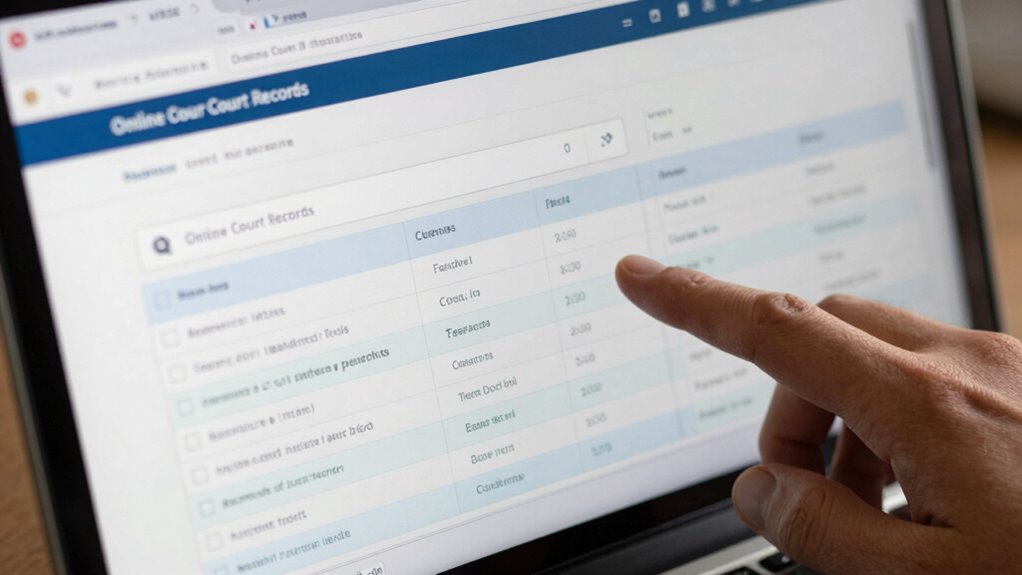
Ever wondered how to find court records quickly and accurately? When you only have part of a name, the process can seem intimidating, but with the right approach, you can navigate the system effectively. The key is understanding how to use court record databases and grasp some basic legal terminology. Court record databases are digital repositories that store legal documents, including civil, criminal, and family court records. These databases often allow searches by partial names, making it easier when you don’t have full details.
Start by identifying the jurisdiction where the case was filed. Court records are usually maintained at the county, state, or federal level, depending on the case. Once you know the jurisdiction, access the relevant court record database online. Many courts now provide free access to basic records, but some may require a small fee for detailed information. When searching, use the partial name you have, but be prepared to try variations. For instance, if you know the first few letters of a surname, enter those, and use wildcards or partial search options if available. This can help broaden your search results and increase your chances of finding the record you seek.
Identify the case’s jurisdiction and use partial names and wildcards to efficiently search online court record databases.
Legal terminology plays a vital role in refining your search. Terms like “plaintiff,” “defendant,” or “case number” can be useful if you have additional details. Some databases allow you to filter results by date, case type, or party involved, which can help narrow down your options. Keep in mind that court records may be listed under different spellings or aliases, so consider common misspellings or variations of the name. If the database offers advanced search options, use them to include these variations, ensuring you don’t miss relevant records. Understanding recordkeeping practices can help you interpret how records are organized and improve your search efficiency. Being aware of digital record storage methods can also assist in navigating online databases more effectively. Additionally, understanding how records are organized and stored can help you locate them more quickly and accurately. Familiarizing yourself with record organization can further enhance your ability to find the right documents quickly. Consulting guides or tutorials on database navigation can also streamline your search process, especially if you’re new to digital court records.
When you locate a promising record, review it carefully for accuracy. Court documents are official legal records, and understanding their structure can help you interpret the information correctly. Familiarize yourself with legal terminology used in the records, such as “complaint,” “judgment,” or “order,” to grasp the significance of each document. If you’re unsure about any legal jargon, online legal dictionaries can clarify meanings and help you understand the context.
As an affiliate, we earn on qualifying purchases.
Frequently Asked Questions
Can I Access Court Records Online for Free?
Yes, you can access some court records online for free through public access portals. Many courts offer free online databases for basic information, but record confidentiality rules may restrict access to certain sensitive details. Check your local court’s website to see what’s available. Keep in mind, while public access promotes transparency, it also aims to protect privacy, so some records might have limited or no online availability.
How Accurate Are Partial Name Searches in Court Records?
Partial name searches in court records can be quite accurate for name verification, but they’re not foolproof. Search accuracy depends on how complete or common the partial name is, and additional filters like date or case type improve results. You might get some false positives or miss records if the name is too vague. Always cross-check details to guarantee you’re viewing the correct records, especially for important legal or personal matters.
Are Juvenile or Sealed Cases Available in Court Record Searches?
Juvenile and sealed cases are generally not accessible in public court record searches due to juvenile confidentiality and sealed case procedures. Courts protect these records to maintain privacy for minors involved. If you need access, you must usually request special permission or go through legal channels. Be aware that searching for juvenile or sealed cases without proper authorization may violate privacy laws and result in legal consequences.
What Details Are Needed Besides the Partial Name?
Did you know that nearly 40% of court records involve name variations? To improve your search strategies, besides a partial name, gather details like date of birth, case number, or approximate filing date. These specifics help narrow results, especially when names are misspelled or incomplete. Having additional info boosts your chances of finding the right records quickly and accurately, making your search more effective.
How Long Does It Take to Find Court Records With Partial Info?
It typically takes anywhere from a few minutes to several hours for record retrieval when you have only partial info, depending on the database’s search efficiency. If records are well-organized and online, you might quickly find what you’re after. However, if the system is manual or complex, it could take longer. To speed up the process, provide as many details as possible, and be patient with the search efficiency.
As an affiliate, we earn on qualifying purchases.
Conclusion
Now, imagine uncovering a hidden story behind that partial name, each record a piece of the puzzle waiting to be revealed. As you navigate the online databases or visit the courthouse, the pieces start to come together, revealing more than you expected. With patience and persistence, you’ll find yourself closer than ever to uncovering the truth—just one more search away. The next discovery could change everything—are you ready to find out what’s waiting behind that partial name?
As an affiliate, we earn on qualifying purchases.
As an affiliate, we earn on qualifying purchases.
Fall Picks
fall essentials
As an affiliate, we earn on qualifying purchases.