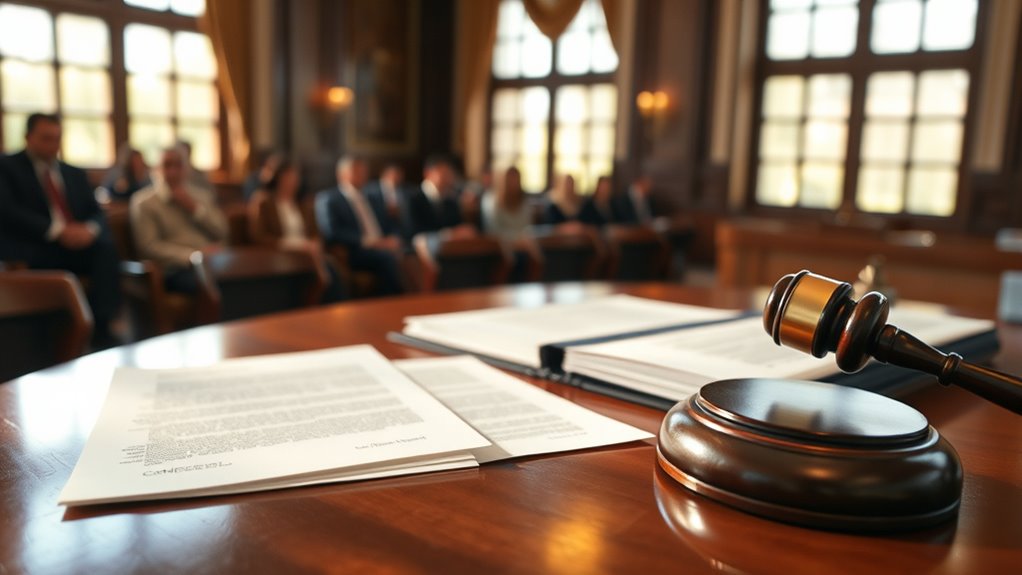

The paper trail of a lawsuit begins with your initial complaint and legal documents that set the case in motion. As the case advances, you’ll file motions, discovery responses, and gather evidence, all of which become part of the record. Communication records like emails and memos also contribute, supporting your claims. During trial and afterward, exhibits and court decisions finalize the record. Keep track of each step to guarantee clarity—if you continue, you’ll see how every document shapes the outcome.
Key Takeaways
- Initial filings like the complaint and summons establish the case’s legal foundation and inform parties of proceedings.
- Subsequent documents such as motions, discovery responses, and evidence build the case narrative and support legal arguments.
- Correspondence records, including emails and letters, serve as proof of communication and procedural compliance.
- Exhibits, witness statements, and expert reports are submitted and labeled properly to support claims during trial.
- The court’s final judgment or order concludes the paper trail, recording the case outcome and guiding potential appeals.

When you’re involved in a lawsuit, every document and correspondence leaves a paper trail that can make or break your case. This paper trail consists of legal documentation that records each step of the legal process, from initial filings to final verdict. Understanding how these records fit into court procedures helps you see why maintaining organized, accurate documentation is essential. Proper legal documentation ensures that your case is properly presented and that all procedural requirements are met, minimizing the risk of delays or dismissals.
During the early stages of a lawsuit, your complaint, summons, and subsequent filings create the foundation of your paper trail. These documents inform the court and the opposing party of your claims and defenses, setting the stage for court procedures to unfold. As the case progresses, you’ll submit additional legal documentation, such as motions, discovery responses, and evidence exhibits. Each of these contributes to building your narrative and supporting your legal arguments. Keeping copies of everything and tracking deadlines is imperative because courts often scrutinize whether proper procedures were followed.
Early filings and subsequent documents form the foundation of your legal paper trail.
Throughout the litigation process, correspondence between you, your attorney, and the court also forms an important part of the paper trail. Emails, letters, and memos serve as proof of communication and can be used to demonstrate compliance or highlight procedural errors. Court procedures require strict adherence to deadlines and formats, so maintaining detailed records ensures you can demonstrate that you’ve met all procedural requirements. Failing to do so can result in sanctions, delays, or even case dismissals. Additionally, understanding the specific legal documentation required can help streamline your case and prevent procedural setbacks.
As your case moves toward trial, your legal documentation becomes even more critical. Exhibits, witness statements, and expert reports must be properly labeled and submitted following court procedures. These documents help establish credibility and support your claims. When the case reaches a verdict, the court’s decision is documented in a judgment or order, completing your paper trail. If appeals are involved, the ongoing documentation continues to shape your case’s trajectory.

DocSafe Fireproof File Organizer with Lock, Hard-Shell Case Fireproof Document Box with 13 Pocket Accordion File Folder, Portable Home Office Travel Safe Storage for Important Documents Laptop Black
Ultimate Fireproof & Water-Resistant Protection: Keep your valuables safe with our DocSafe Hard-Shell fireproof file organizer. It is…
As an affiliate, we earn on qualifying purchases.
As an affiliate, we earn on qualifying purchases.
Frequently Asked Questions
How Long Does a Typical Lawsuit Process Take?
The lawsuit process varies depending on factors like case complexity and court procedures, but generally, it can take anywhere from several months to a few years. You should be aware of legal deadlines that affect your case timeline, and court procedures might accelerate or slow them down. Staying organized and working with a lawyer helps ensure your case moves efficiently through each stage, from filing to resolution.
What Are the Costs Involved in Pursuing a Lawsuit?
When pursuing a lawsuit, you’re looking at various costs. Legal fees can vary widely depending on your case complexity and attorney rates, while court expenses cover filing fees, summons, and other administrative costs. You should budget for potential depositions, expert witnesses, and possible appeals. Being aware of these expenses helps you plan financially and avoid surprises, ensuring you’re prepared for the overall cost of your legal journey.
Can a Lawsuit Be Settled Before Reaching Court?
Coincidences often lead to unexpected solutions. You might wonder if you can settle a lawsuit before it reaches court, and the answer is yes. During settlement negotiations, you can explore alternative dispute resolution methods like mediation or arbitration, which may resolve issues faster and more amicably. These approaches allow you to avoid lengthy trials, saving time, money, and emotional stress while reaching a mutually acceptable agreement.
What Role Does Mediation Play in the Legal Process?
Mediation plays a crucial role in the legal process by offering an Alternative Dispute Resolution method that helps parties reach an agreement without going to court. During mediation, you can explore Negotiation Strategies to resolve conflicts efficiently. It allows you to communicate directly with the other party, guided by a neutral mediator, which often results in faster, less costly solutions while maintaining control over the outcome.
How Does Appellate Review Affect the Case Timeline?
Imagine your case as a ship navigating stormy waters; appellate review acts like a turbulent current. Appellate delays occur as review procedures slow your progress, stretching the timeline. This process introduces additional layers of scrutiny, often prolonging resolution. While necessary for fairness, these delays can test your patience and extend your journey, emphasizing that every legal voyage involves steering both calm seas and turbulent currents of appellate review.

Pendaflex® Classification Folders, 2 Dividers, 2" Fasteners, Letter, Dark Blue, 10/Box (24132P)
Inner divider helps subdivide your documents within the folders
As an affiliate, we earn on qualifying purchases.
As an affiliate, we earn on qualifying purchases.
Conclusion
As the ink dries on the final page, the courtroom’s quiet hum settles into a gentle whisper. The journey from complaint to verdict has woven a delicate tapestry of truth and justice, like leaves softly falling on still waters. Though the path may seem winding, each step brings clarity, leaving behind the faint glow of resolution. In this silent dance of words and decisions, balance is restored, and the paper trail gently fades into the dawn of new beginnings.

Bankers Box 12 Pack Standard Duty File Storage Boxes, Standard Assembly, Removable Lid, Letter/Legal (0071301)
Reliable Storage for Everyday Use: These cardboard file boxes with lids are perfect for everyday storage – ideal…
As an affiliate, we earn on qualifying purchases.
As an affiliate, we earn on qualifying purchases.

The Articulate Advocate: Persuasive Skills for Lawyers in Trials, Appeals, Arbitrations, and Motions
As an affiliate, we earn on qualifying purchases.
As an affiliate, we earn on qualifying purchases.