
State-by-state, background check laws vary widely, affecting employment screens, criminal record disclosures, and firearm transactions. Some states restrict questions until after a conditional job offer, while others prohibit disclosing sealed or expunged records. Regulations on data sources, penalties, and employer obligations differ as well. Firearm laws also change by location, with different background check requirements and private sale rules. To navigate these complex differences and stay compliant, explore how each state’s laws influence your actions.
Key Takeaways
- States vary on when employers can ask about criminal history, often restricting inquiries until after a conditional job offer.
- Background check laws differ in scope, data sources, and restrictions on sealed, expunged, or outdated records.
- Firearm background check requirements are inconsistent, with some states mandating universal checks and others regulating private sales differently.
- Employer notification and adverse action procedures, including dispute rights and timelines, vary significantly across states.
- Enforcement, penalties, and compliance obligations differ, with some states imposing heavy fines and others offering limited enforcement resources.

Green High Security Checks on Top Compatible w/QB accounting software – Custom Computer Checks on Top (500)
After placing your order, we will contact you via Amazon messaging for printing and account information. Or you…
As an affiliate, we earn on qualifying purchases.
As an affiliate, we earn on qualifying purchases.
Variability in Ban-the-Box Implementation Across States

States vary considerably in how they implement ban-the-box laws, affecting when and how employers can inquire about criminal history. Some states prohibit asking about criminal records until after making a conditional job offer, while others allow questions after an initial interview. Employer size thresholds differ, with California applying the law to employers with five or more employees, and Illinois setting it at 15 or more. Additionally, certain states include exceptions for background checks required by law in sensitive roles such as law enforcement or education. Enforcement mechanisms and penalties also vary; some states impose fines, while others provide applicants with avenues for appeal. This patchwork of rules means that your hiring process must adapt to each state’s specific restrictions to stay compliant. Regularly assessing and adjusting policies ensures continued adherence to evolving legislation.

BELECO 7x5ft Fabric True Crime Bloody Photography Backdrop Crime Scene Blood Splatter Criminal Investigation Background Police Birthday Party Supplies Murder Mystery Party Decor Photo Booth Props
【Size】: 7x5FT / 2.1m x 1.5m / 82 inch x 59 inch
As an affiliate, we earn on qualifying purchases.
As an affiliate, we earn on qualifying purchases.
State-Specific Requirements for Criminal Background Disclosures
Criminal background disclosure requirements vary considerably depending on jurisdiction, and understanding these differences is essential for guaranteeing compliance. Some states limit the types of records you can consider, such as sealing or expunged records, or restrict disclosures for arrests without convictions. Others specify strict time limits—like Massachusetts, which caps disclosure periods at seven years—and require employers to provide copies of criminal records before inquiring. Certain states, such as California, mandate individualized assessments and written explanations for adverse decisions, while others, like Illinois, restrict inquiries to after interviews or conditional offers. Additionally, some states prohibit questions about criminal history until after an initial interview or conditional job offer. Staying aware of these state-specific rules helps you avoid legal pitfalls and ensures fair employment practices. Implementation of multi-factor authentication (MFA) can further strengthen the security of background checks and related data handling processes, especially considering the importance of safeguarding sensitive information and data privacy laws. Incorporating compliance with data privacy laws ensures that background check procedures respect individual rights and legal standards. Moreover, understanding the regional variations in these laws can assist employers in tailoring their screening processes appropriately.

Background Check Authorization Forms Book: History Verification Consent Approval Doc for Employee, Renters and Others
As an affiliate, we earn on qualifying purchases.
As an affiliate, we earn on qualifying purchases.
Differences in Background Check Data Sources and Processes
Background check processes vary depending on the data sources used and the procedures each jurisdiction permits. You’ll typically search state and local criminal repositories, courts, and corrections departments, but access rules differ. Some states restrict direct employer access to certain records; for example, California limits this. Federal checks pull data from nationwide databases, including federal courts, which is essential for crimes crossing state lines. Fees, turnaround times, and record processing methods also vary by state and agency. Certain states require background checks for specific industries or jobs, shaping which sources you can use. Additionally, some jurisdictions restrict the types of records you can consider, like expunged or sealed records, influencing the scope of your search. The types of records available and permissible can significantly affect the completeness of your background check. In some cases, the accuracy of data can be compromised by outdated or incomplete records, emphasizing the importance of understanding local record-keeping practices. Understanding these differences helps you comply with local regulations and conduct thorough, lawful background checks.

Background Screening and Investigations: Managing Hiring Risk from the HR and Security Perspectives
Used Book in Good Condition
As an affiliate, we earn on qualifying purchases.
As an affiliate, we earn on qualifying purchases.
State Regulations on Consideration of Expunged and Sealed Records

If you’re conducting a background check, understanding how different jurisdictions treat expunged and sealed records is crucial. Many states restrict or prohibit employers from considering these records during employment decisions. For example, Alabama’s Redeemer Act explicitly bans the use of expunged records, meaning you cannot rely on them in screening. In contrast, states like California limit disclosure of criminal convictions beyond seven years after sentencing or discharge, affecting whether sealed records are accessible. Some states automatically seal certain records, preventing employers from viewing them, while others require specific procedures for sealing or expungement. Knowing each state’s rules helps you avoid legal pitfalls and guarantees compliance, especially when dealing with multi-jurisdictional employment or background screening. Additionally, understanding how background check laws impact the consideration of sealed and expunged records is vital for ensuring lawful hiring practices. Being aware of record sealing procedures in different states can help prevent unintentional violations and ensure compliance with the legal framework. A thorough knowledge of family background influences can also shed light on potential biases or considerations in the screening process.
Firearm Background Check Laws and Their State Variations
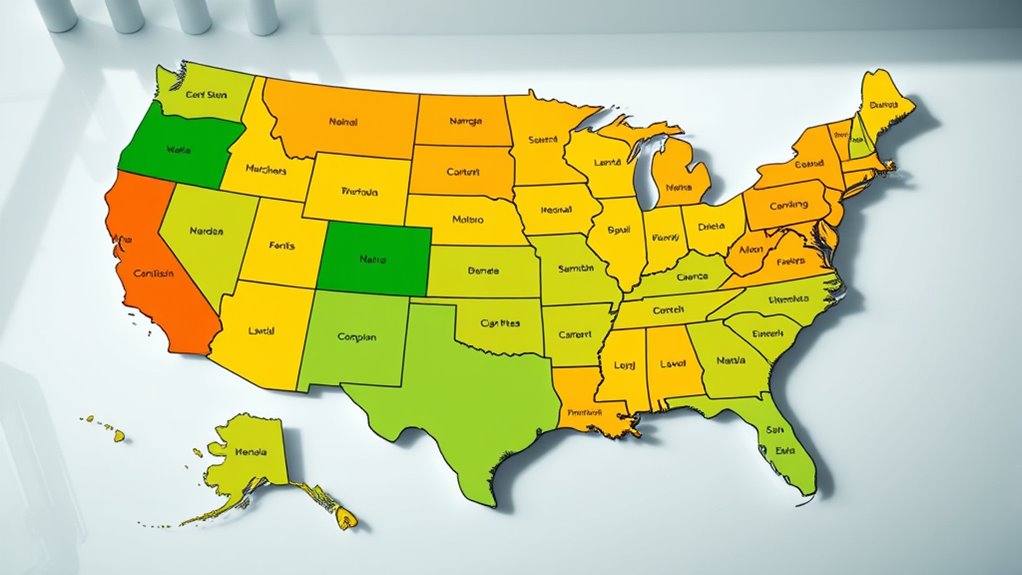
States have established diverse firearm background check laws that considerably impact how gun sales are regulated. Some require background checks for all firearm purchases, while others limit checks to specific weapons or transactions. You’ll find that certain states mandate permits in addition to background checks, adding an extra layer of regulation. Others, like South Carolina and Texas, have no universal checks, allowing private sales without screening. Many states align with federal NICS requirements but implement unique procedures or restrictions. For example:
- 22 states require background checks at point-of-sale for handguns and sometimes rifles.
- Some states, like Vermont and Virginia, extend checks to all firearms.
- States such as Pennsylvania only require checks for handguns.
- Certain states impose permit-to-purchase laws alongside background checks.
- The trustworthiness of the background check system varies by state, affecting the overall effectiveness of firearm regulations.
- Variations in background check laws are influenced by state-specific legal frameworks, which can change over time to reflect local policies and priorities.
These variations shape how easily and securely firearms are bought and sold across different jurisdictions.
Employer Protections and Obligations Under State Laws

You need to understand each state’s requirements for notifying applicants about adverse background check decisions. Some states mandate that employers give written notices and offer a chance to respond or appeal. Failing to follow these procedures can lead to penalties, lawsuits, or sanctions. Incorporating creative practice principles, employers can also foster a more transparent and supportive hiring process that encourages trust and fairness. Recognizing the specific hours during which stores operate can help employers coordinate background screening processes more effectively. Additionally, understanding the background check laws specific to each state can help ensure compliance and reduce legal risks.
Employer Notification Requirements
Do employers have clear obligations when it comes to notifying applicants about adverse background check decisions? In many states, yes. Laws specify when and how you must inform candidates of unfavorable results. You’re often required to provide a copy of the background report and explain the reasons for the adverse decision. Some states also give applicants a chance to respond or dispute findings before finalizing decisions. Failing to meet these requirements can lead to penalties or lawsuits. Additionally, compliance with privacy policies ensures that sensitive applicant information is handled appropriately during the notification process. Understanding background check laws helps employers navigate legal responsibilities and protect applicant rights effectively.
Adverse Action Procedures
Employers must follow specific adverse action procedures to guarantee compliance with state laws, which often require clear communication and fair treatment of applicants. You need to inform applicants promptly if you’re denying employment based on background checks and give them an opportunity to respond. Different states set varying timelines, notice formats, and documentation requirements. Failure to follow these procedures can lead to fines, lawsuits, or administrative penalties. Below is a table illustrating some key protections:
| State | Notice Requirements | Response Time | Additional Protections |
|---|---|---|---|
| California | Written notice with reasons sent within 5 business days | 5 business days to respond | Individualized assessments required |
| Maryland | Notice before adverse action, with copy of report | 3 days after notice | Right to dispute report |
| Massachusetts | Written notice, including record details | 5 business days | Time limits on record disclosure |
| New York | Notice with detailed analysis | 3 days | Presumption of irrelevant old records |
| Illinois | Conditional notice, providing info on process | 5 days | Enforcement by Department of Labor |
| Some states also require that timely communication be maintained throughout the background check process to ensure compliance.
Enforcement, Penalties, and Compliance Challenges by State
Enforcement, penalties, and compliance challenges vary widely across states, reflecting differences in legal frameworks and resource allocation. Some states impose hefty fines—California, for example, can fine employers up to $10,000 per violation—while others offer appeals or informal resolutions. You may find that enforcement agencies have limited staff or unclear guidance, making compliance difficult.
Compliance challenges vary widely due to differing legal frameworks and limited enforcement resources across states.
- States like Maryland require notification and opportunities for applicants to respond to adverse decisions.
- Penalties can include civil suits, monetary fines, or administrative sanctions.
- Some states mandate detailed documentation, increasing administrative burdens.
- Variability in resources and legal requirements means employers often struggle to stay compliant across multiple jurisdictions.
Frequently Asked Questions
How Do State Laws Interact With Federal Background Check Regulations?
You need to understand that state laws often add to or override federal background check regulations. While federal laws like the FCRA set minimum standards, states may impose stricter rules on what records can be used, how they’re accessed, and when inquiries happen. This means you must comply with both federal and state requirements, which can vary widely, especially across jurisdictions.
Are There Specific States With the Strictest Ban-The-Box Policies?
California, Illinois, Massachusetts, and New York have some of the strictest ban-the-box policies. You can’t ask about criminal history until after a conditional offer or interview, and they require written explanations or individualized assessments. These states also limit the types of records considered and impose strict timelines. If you’re an employer, you must follow their detailed procedures to avoid penalties and guarantee fair hiring practices.
What Are the Common Penalties for Non-Compliance With State Background Check Laws?
If you don’t conform with state background check laws, you could face fines, civil lawsuits, or administrative sanctions. Some states impose hefty penalties, like California’s fines up to $10,000 per violation. You might also be required to pay restitution or damages if an applicant sues. Non-compliance can damage your reputation and lead to job bans or licensing issues, so always make certain your background screening processes follow local regulations.
How Do State Laws Affect the Use of Criminal Records From Out-Of-State Jurisdictions?
You can’t rely solely on out-of-state criminal records because many states restrict or prohibit using records from jurisdictions where laws are stricter or records are sealed or expunged. States often require you to verify the records are valid and relevant, and some restrict considering records beyond their own borders. To stay compliant, you need to understand each state’s rules about using out-of-state criminal histories in employment decisions.
Which States Have the Most Comprehensive Firearm Background Check Requirements?
You’ll find that states like Rhode Island, Vermont, Virginia, and Washington have the most thorough firearm background check requirements. They mandate background checks for all firearm sales, including private transactions, and often require purchase permits. Some states also extend checks to rifles and shotguns, not just handguns. These laws often integrate with federal NICS checks, creating stricter screening processes to enhance public safety and prevent gun-related crimes.
Conclusion
As you steering these varied laws, picture stepping through a landscape dotted with different signposts—some clear, some tangled. Each state’s regulations shape your journey, from background check procedures to firearm laws. By understanding these differences, you can confidently move forward, aware of the rules that guide your path. Navigating this mosaic may seem complex, but with awareness, you’ll find your way through the shifting terrain of state-by-state background check laws.