
To conduct a background check on yourself, start by verifying your Social Security details and personal information through official government sites. Then, request your free credit reports from Equifax, Experian, and TransUnion and review them for errors. Search for criminal records, court filings, and verify your employment, education, and licenses through official channels. Check your public records and online profiles to manage your reputation. If you want to learn how to do each step thoroughly, keep exploring for detailed guidance.
Key Takeaways
- Access free credit reports from Equifax, Experian, and TransUnion via AnnualCreditReport.com to review for errors or suspicious activity.
- Verify your personal information and SSN details on the SSA’s online platform; correct discrepancies promptly.
- Conduct online searches of your name and public records to identify any inaccurate or outdated information.
- Contact previous employers and educational institutions to confirm employment and academic credentials.
- Organize and securely store all background check documents for future reference and dispute resolution.

Weenkilly 11-in-1 Credit Card Multitool For Men, 10 Pack Survival Pocket Tools, Thickened Stainless Steel Bottle Opener, Credit Card Wallet Tool, Double Row Sawtooth Pocket Tool
11-in-1 Multi-tool for Versatile Use: Can Opener, Cutting Edge, Flat Screwdriver, Ruler, Beer Bottle Opener, 4 Position Wrench,…
As an affiliate, we earn on qualifying purchases.
As an affiliate, we earn on qualifying purchases.
Verify Your Social Security Number and Personal Details

Have you ever wondered if your Social Security records are accurate? Verifying this information is a vital first step. You can access the Social Security Administration’s online platform to confirm that your name, SSN, and any legal name changes are correctly recorded. It’s also important to review your past and current addresses linked to your SSN, as these details are often checked during background screenings. It’s crucial to ensure the trustworthiness of your personal data by cross-referencing official records with your identification documents. Make sure there are no discrepancies between government records and your personal identification documents. Any inconsistencies could delay employment, housing, or other essential processes. Correcting errors promptly with the SSA ensures your records are accurate. Verifying your Social Security information lays a solid foundation for a thorough background check, helping you avoid potential issues down the line. Additionally, understanding the importance of Beginners Guides can remind you to stay proactive and organized in managing your personal records. Regularly reviewing your Retirement Planning information can further safeguard your financial future, especially given the Gold IRA Markets and their evolving landscape.

SPOT SCAMMERS: Phone Calls & Texts: IRS, Social Security, “Urgent” Calls & Spoofed Numbers
As an affiliate, we earn on qualifying purchases.
As an affiliate, we earn on qualifying purchases.
Obtain Your Free Credit Reports From Major Bureaus

To guarantee your financial history is accurate and free of errors, obtaining your free credit reports from the three major bureaus—Equifax, Experian, and TransUnion—is essential. You can request these reports once a year at AnnualCreditReport.com, the official site authorized for free disclosures. Review each report carefully, checking for unfamiliar accounts, incorrect personal information, or missed payments. Remember, credit reports for employment background checks don’t include your credit score or account numbers, but they do show your payment history and public records. If you spot any inaccuracies, dispute them directly with the bureau through their online portals. Regularly reviewing your credit reports helps you identify potential issues early and guarantees your financial profile is accurate before any background checks. Incorporating credit report monitoring into your routine can help detect suspicious activity promptly and maintain your financial integrity. Staying informed about your financial history is a crucial step in protecting your creditworthiness and preventing identity theft. Being proactive in understanding and managing your credit profile can also improve your chances during important life events like applying for loans or housing.

Gisafai Metal Check Sorter Organizer 8 Pocket, 2 Tier Black Iron Document Holder, 16 x 8 x 7.5 Inch, Wall Mountable, Heavy Duty Countertop Receipt Storage Rack for Bank, Office, Retail, Restaurant
Ideal Metal Construction: crafted from strength iron, this check organizer offers quality durability and scratch resistance, ensuring reliable…
As an affiliate, we earn on qualifying purchases.
As an affiliate, we earn on qualifying purchases.
Review Your Credit History and Dispute Errors

Reviewing your credit history thoroughly is a vital step before any background check, as it helps guarantee all information is accurate and up to date. Start by obtaining your credit reports from the major bureaus—Equifax, Experian, and TransUnion—and examine them closely. Look for any errors or unfamiliar accounts, late payments, or outdated information that could negatively impact your profile. If you find discrepancies, dispute them promptly with the respective bureau, providing supporting documentation if possible. Correcting errors ensures your credit report reflects your true financial history. Additionally, understanding credit report accuracy is essential for maintaining a positive financial profile and avoiding potential issues during background checks. Maintaining self-awareness of personal information is crucial to prevent identity theft and ensure your records are correct. Keeping your credit report accurate not only improves your chances for employment and housing but also protects your reputation. Regularly monitoring your credit report is a proactive way to stay in control of your financial and personal information.

Guard Your ID Advanced 2.0 Roller 3-Pack for Identity Theft Protection, Confidential Security Stamp Mixed Color Kit (Turquoise, Green, White)
Robust Identity Theft Protection: Shields personal information; effectively masks sensitive data to prevent identity theft
As an affiliate, we earn on qualifying purchases.
As an affiliate, we earn on qualifying purchases.
Search for Criminal Records and Court Files

Are there criminal records or court files related to you that potential employers or landlords need to know about? You should verify for any legal issues that might appear in background screenings. Use paid online services like Checkr or GoodHire for thorough searches, or contact local courthouses directly to request records. Review all findings carefully for errors; incorrect information can unfairly damage your reputation. If you find inaccuracies, dispute them promptly with the reporting agency or court. Be especially aware of records such as:
- Past arrests or charges that may no longer be relevant
- Civil judgments or legal actions against you
- Sex offender registry entries or other sensitive information
Confirm that all records are accurate to ensure your background check reflects your true history. Additionally, understanding the significance of regional legal resources can help you access the most relevant and up-to-date information for your area. Properly utilizing public records access ensures a comprehensive and accurate background check.
Confirm Your Past and Current Employment Details
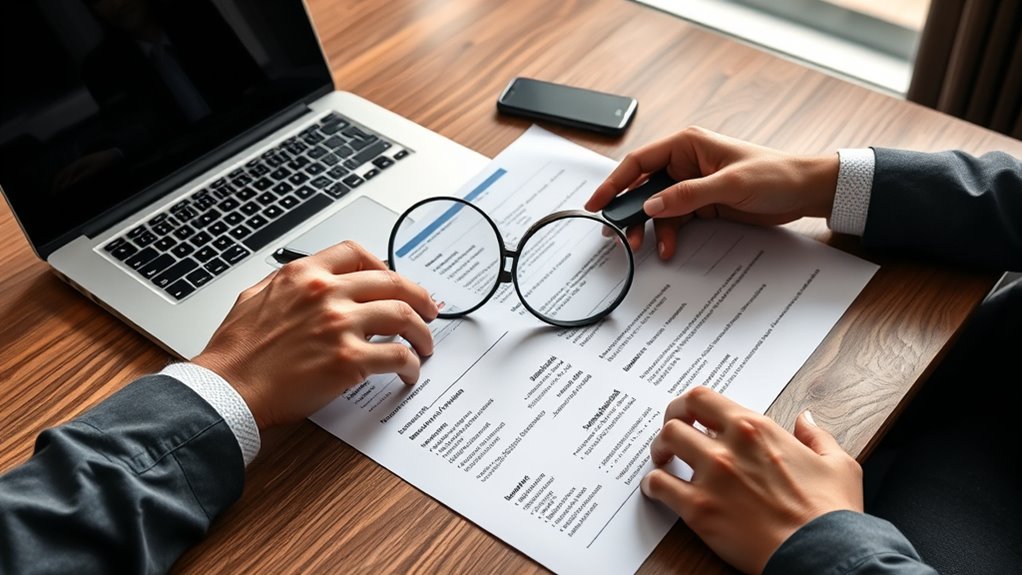
Have you verified that your employment history matches the records employers might check? Start by reviewing your resume and any job records you kept. Contact previous employers directly to confirm your job titles, dates of employment, and responsibilities. Keep copies of pay stubs or employment contracts as proof. If you notice discrepancies, reach out to your former employers to correct them or request written verification. For added assurance, consider using third-party verification services—they can streamline the process and provide official documentation. Ensuring your employment details are accurate helps prevent red flags during background checks and maintains your credibility. Additionally, be aware of digital literacy programs that can help you better understand how your online and offline records are managed. Understanding background check procedures can further prepare you for any inquiries or discrepancies that may arise during the verification process, especially considering divorce-related financial records that might be scrutinized during background assessments. Staying informed about employment verification processes and the role of powerful persuasive words can help you navigate potential challenges more effectively.
Verify Educational Credentials and Degrees
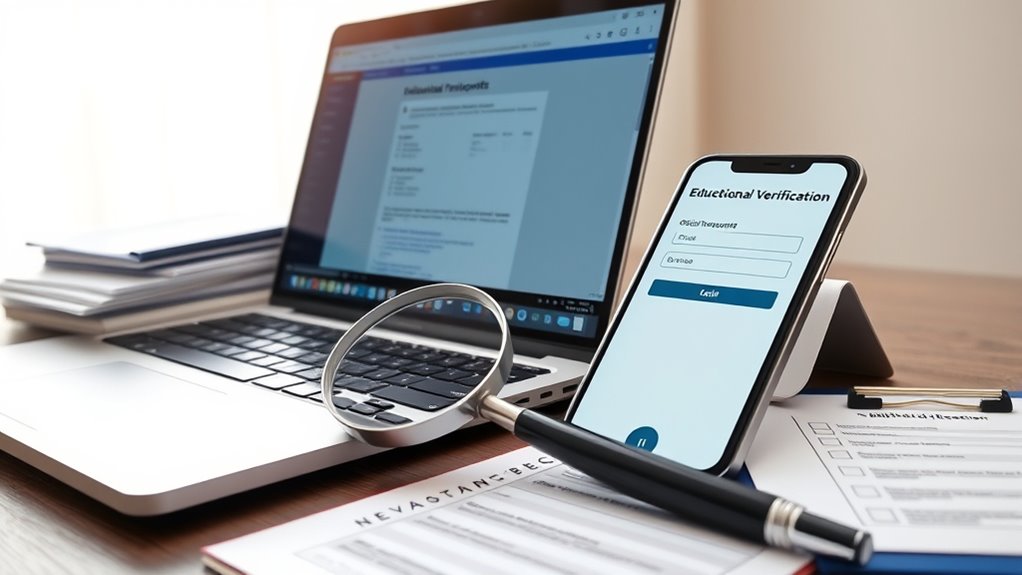
Start by verifying your academic records to guarantee your degrees and certifications are accurate. Contact your educational institutions directly or use official verification services to confirm your credentials. This step helps prevent discrepancies that could affect job opportunities or professional licensing. Implementing organizational strategies can further streamline the verification process and ensure all records are up-to-date. Additionally, understanding the importance of accurate credentials can reinforce the need for thorough verification.
Verify Academic Records
Verifying your academic records guarantees that your claimed degrees and certifications are legitimate and accurately represented. You should contact the educational institutions directly or use official verification services to confirm your attendance, graduation dates, and degrees awarded. This step helps prevent misunderstandings and ensures your credentials are trustworthy. Be proactive; mistakes or outdated information can cause delays or questions during background checks.
Consider these points for peace of mind:
- Rest assured knowing your credentials are verified and correct
- Protect yourself from potential fraud or misrepresentation
- Strengthen your credibility with employers and institutions
Taking these steps ensures your academic background stands up to scrutiny, giving you confidence in your professional reputation. Accurate records can make or break opportunities, so verify thoroughly.
Contact Educational Institutions
Contacting educational institutions directly is a reliable way to confirm that your claimed degrees and certifications are legitimate. Reach out to the registrar’s office or use their online verification services to request confirmation of your attendance, graduation date, and degrees earned. Be prepared to provide your full name, date of birth, and graduation year or student ID if available. Some institutions require a formal request or a small fee, especially for detailed transcripts. Verifying directly ensures the information matches official records and helps identify any discrepancies early. Keep copies of your diplomas and transcripts handy, as they support your claims. Accurate validation from educational institutions adds credibility to your background check and prevents potential issues during employment or background screening processes.
Check Your Driving Records and Professional Licenses
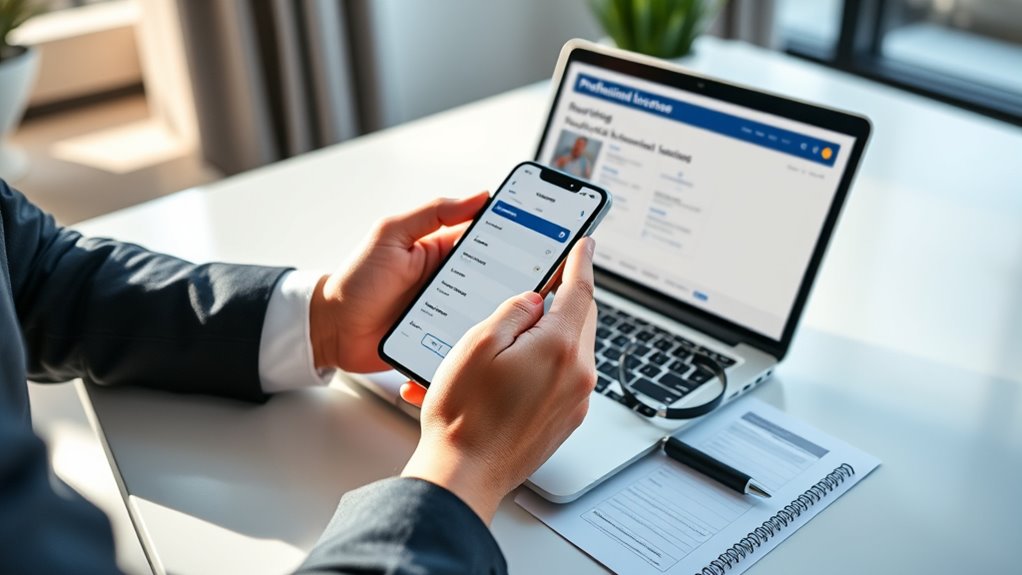
Start by obtaining your driving record from your state motor vehicle department to check for any violations or issues. Next, verify that your professional licenses or certifications are current and accurate through the appropriate licensing boards. Ensuring these records are correct helps you stay compliant and ready for any background checks employers may conduct.
Obtain Driving History
Have you checked your driving history lately? Accessing your driving records helps you identify errors or violations that could affect your employment or insurance. You can request your official Motor Vehicle Record (MVR) from your state’s DMV, often online or by mail. Reviewing your driving history lets you:
- Spot inaccuracies, such as wrongful tickets or outdated information, that might unfairly impact your record.
- Confirm your license status, ensuring it’s valid and current.
- Detect any unauthorized or suspicious activity that could suggest identity theft or fraud.
Verify Licenses Properly
To verify your licenses properly, begin by obtaining official records directly from the relevant authorities. For driving records, request your Motor Vehicle Record (MVR) from your state’s Department of Motor Vehicles. This report shows violations, accidents, and license status, helping you identify any discrepancies. For professional licenses, contact the licensing board or check their online database to confirm your current, valid credentials. Confirm there are no expired or revoked licenses that could impact employment or compliance. Review all details carefully; errors may require correction through the issuing agency. Verifying these records ensures your licenses are accurate and up to date, reducing potential legal or professional risks. Proper verification also protects you from issues during background checks for jobs or housing.
Explore Public Records and Legal Filings
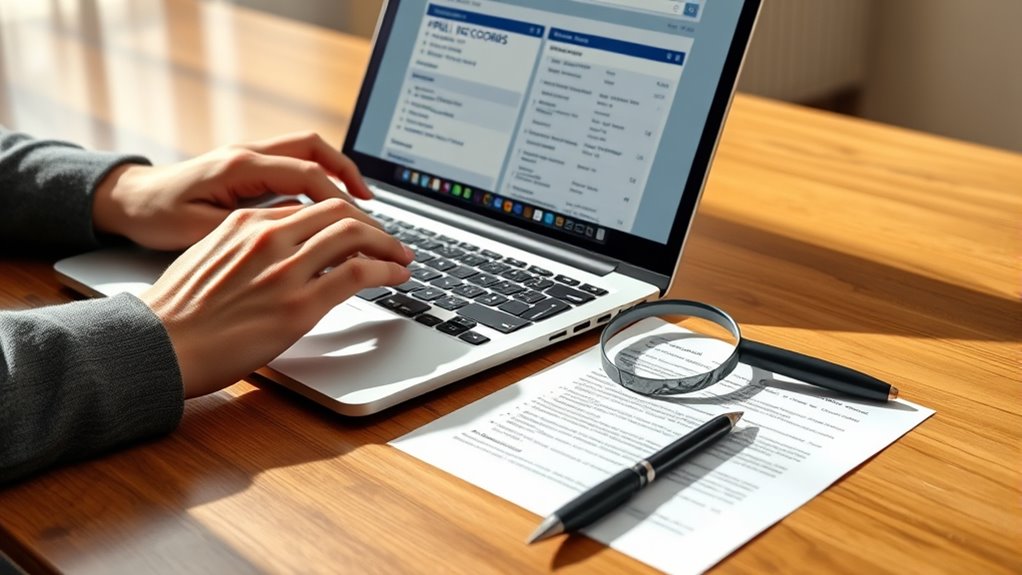
Exploring public records and legal filings provides an all-encompassing view of your financial and legal history that may impact your personal and professional life. By checking liens, judgments, bankruptcies, and other filings, you gain insight into how your past actions might be perceived. This process also helps you identify any inaccuracies or outdated information that could unfairly harm your reputation.
Be proactive and review:
- Legal judgments or liens that could suggest financial instability or unresolved issues.
- Bankruptcies that may impact future credit or employment opportunities.
- Other filings like civil suits or court orders that could be misinterpreted.
Understanding these records allows you to clarify or dispute inaccuracies, giving you control over your personal narrative.
Examine Your Online Presence and Social Media Profiles

Start by searching your social media profiles across platforms to see what information is publicly visible. Review your posts and images to identify anything that could be misinterpreted or outdated. Consider how your personal branding online might impact your professional reputation and make adjustments if necessary.
Search Social Media Platforms
Since employers and background screeners often review social media profiles, examining your online presence is a crucial step in conducting a thorough self-background check. Take a close look at your social media accounts to identify anything that could be misinterpreted or reflect poorly on you. Consider the following:
- Inappropriate or offensive posts that could damage your reputation
- Unwanted tags or photos that reveal personal details you’d prefer employers not see
- Public comments or messages that may be misread or misconstrued
Removing or editing content that may raise red flags helps control how others perceive you. Remember, social media is often the first impression you give to potential employers, so ensure your profiles reflect your professionalism and integrity. This proactive step can prevent surprises during the background check process.
Review Public Posts
Reviewing your public posts is a crucial step in understanding how your online presence might appear to potential employers or background screeners. Check your social media profiles and online comments for content that could be misinterpreted or viewed as unprofessional. Remove or edit posts that may harm your reputation. Keep in mind that even private accounts can be accessed or screenshot, so review everything carefully. To emphasize the importance of maintaining a positive digital footprint, consider this table:
| Potential Risks | Preventive Actions |
|---|---|
| Inappropriate comments or photos | Delete or hide risky content |
| Controversial opinions or jokes | Edit or remove sensitive posts |
| Publicly shared personal info | Limit or remove personal details |
| Discriminatory language or behavior | Clean up language and tone |
Maintaining a professional online presence helps guarantee your digital footprint supports your reputation.
Assess Personal Branding
Your online presence plays a vital role in shaping how others perceive your personal brand. Take control by reviewing your social media profiles and online activity. Look for content that may be misinterpreted or outdated, and clean up anything unprofessional or controversial. Consider these key points:
- Ensure your posts and images reflect your current values and professionalism.
- Remove or hide content that could damage your reputation or be taken out of context.
- Update privacy settings to limit who can see your personal information.
Keep Documentation of Your Findings for Future Reference

Keeping detailed records of your background check findings guarantees you have reliable evidence to address discrepancies or disputes later. Save copies of all reports, including credit, criminal, employment, and education verifications, along with any correspondence or corrections. Organize these documents in secure, clearly labeled folders—both digital and physical—to make future reference easy. Regularly update your records whenever you obtain new information or correct inaccuracies. This proactive approach ensures you have an exhaustive history of your background checks, which can be invaluable if issues arise during job applications or housing processes. Proper documentation not only provides peace of mind but also strengthens your position when verifying your background or disputing inaccuracies. Stay organized, and you’ll be prepared for any situation.
Frequently Asked Questions
How Can I Correct Errors Found in My Social Security Records?
If you find errors in your Social Security records, you should first gather proof of the correct information, like legal documents or tax records. Then, contact the Social Security Administration (SSA) either online, by phone, or in person to report the mistake. Submit your evidence and request a correction. Follow up to make certain the SSA updates your records accurately, preventing delays in employment or benefits.
What Steps Should I Take if My Credit Report Contains Fraudulent Accounts?
Imagine discovering a fraudulent account on your credit report. You should immediately dispute it with the credit bureau, providing any evidence that proves it’s not yours. Contact the creditor involved to inform them of the fraud, and consider placing a fraud alert or credit freeze to prevent further damage. Regularly monitor your credit reports to catch and address any suspicious activity early.
How Do I Verify the Accuracy of Criminal Records Across Different Jurisdictions?
You verify the accuracy of criminal records across different jurisdictions by using reputable online screening services like Checkr or GoodHire, which access multi-jurisdictional databases. You can also contact local law enforcement or courthouses directly to request records from specific areas. Always review the records carefully for errors, and dispute any inaccuracies with the reporting agency or court to guarantee your records are correct and complete.
What Is the Process to Update or Fix Inaccuracies in My Employment History?
Fixing inaccuracies in your employment history is like untangling a knot; you need patience. Start by gathering supporting documents like pay stubs, diplomas, or transcripts. Contact the previous employers directly to request corrections, providing this evidence. If they’re unhelpful, use third-party verification services or file a dispute with credit bureaus or background check agencies. Keep records of all correspondence for future reference.
How Can I Ensure My Online Presence Reflects My True Character?
You can guarantee your online presence reflects your true character by regularly reviewing your social media profiles and online activity. Clean up any posts or images that don’t align with the image you want to project. Adjust privacy settings to control who sees your content. Be mindful of what you share moving forward, and consider creating a professional online profile that highlights your skills and positive qualities.
Conclusion
By taking these steps, you can uncover more secrets about yourself than a detective on a mission. Regularly checking your background keeps you protected from identity theft and surprises lurking in the shadows. Stay proactive and organized—your future self will thank you for catching errors and safeguarding your reputation. Remember, knowing your background isn’t just smart, it’s your shield against chaos in this wild world. Stay vigilant—you’re your best defense!