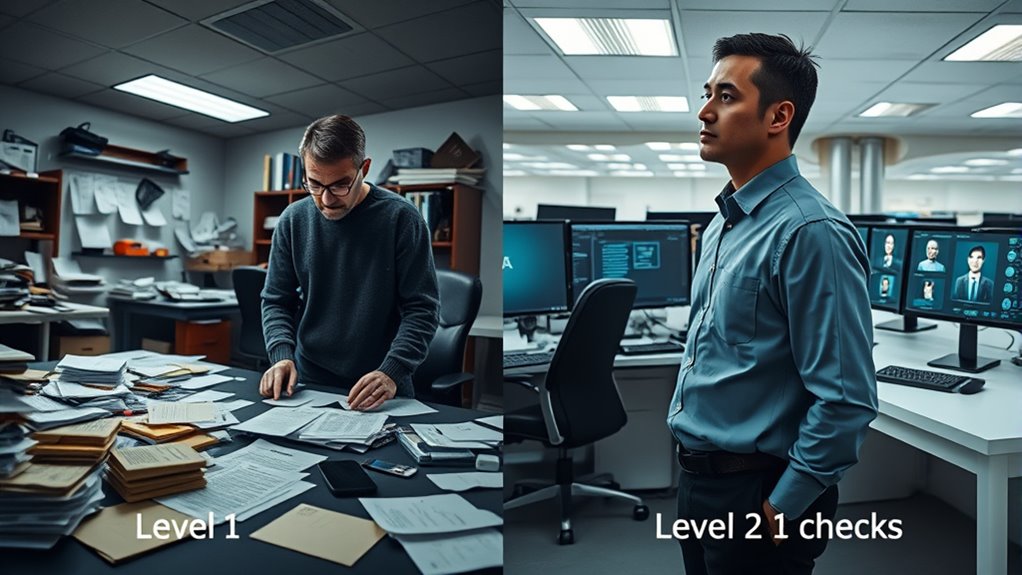

Level 1 background checks focus on basic criminal history, identity verification, and reference checks, usually completed quickly and suited for low-risk roles. Level 2 involves fingerprint-based searches, covering federal and out-of-state offenses, making it more thorough and ideal for high-risk industries. Choosing the right level depends on your industry and role. Continue to discover how these differences impact compliance, risk, and hiring effectiveness, helping you make informed decisions.
Key Takeaways
- Level 1 checks focus on criminal history, identity verification, and references, without fingerprinting, while Level 2 includes fingerprint-based federal and out-of-state searches.
- Level 2 provides more comprehensive and accurate results, uncovering federal offenses and serious crimes, unlike the basic scope of Level 1.
- Level 1 checks typically deliver results within 1-3 days, whereas Level 2 checks take 5-14 days due to fingerprinting and broader record searches.
- Level 1 is suitable for low-risk roles like retail or hospitality; Level 2 is essential for high-risk industries such as healthcare or finance.
- Compliance with legal standards is crucial for both levels, with stricter regulations applying to Level 2 checks involving fingerprinting and federal record searches.

Fingerprint Cards, Applicant FD-258, 5 Cards
Standard FBI FD-258, FBI ver 5/15/17
As an affiliate, we earn on qualifying purchases.
As an affiliate, we earn on qualifying purchases.
Key Differences in Scope and Depth of Screening

When comparing Level 1 and Level 2 background checks, the most notable difference lies in their scope and depth of screening. Level 1 checks focus on basic criminal history, identity verification, and reference checks, without fingerprinting. They typically search county and state databases using names, making them faster and suited for entry-level or low-risk roles. In contrast, Level 2 checks are more all-encompassing, involving fingerprint-based criminal searches at both state and national levels, including the FBI’s database. They examine federal offenses and out-of-state records, providing a deeper background assessment. This thorough screening captures a broader range of offenses, including serious crimes and patterns of behavior across jurisdictions. As a result, Level 2 checks are essential for roles with higher responsibility or involving vulnerable populations. High-resolution data can further enhance the accuracy of these comprehensive background checks. Additionally, background screening processes for Level 2 checks often involve more sophisticated technology to ensure thoroughness and reliability. Moreover, the use of advanced verification tools helps improve the accuracy and integrity of the screening process. Fingerprinting technology is a key component that distinguishes Level 2 checks from simpler methods, enabling more precise identification and record retrieval. Incorporating regional and federal databases ensures a more exhaustive search, reducing the risk of missed records.

Fingerprint Reader Biometric Authentication – DigitalPersona URU4500 USB – Fingerprint Scanner – Original HID Brand
New replacement old Red Logo Digital persona URU4500, HID , USB reader. Original HID Brand
As an affiliate, we earn on qualifying purchases.
As an affiliate, we earn on qualifying purchases.
Regulatory Compliance and Legal Considerations
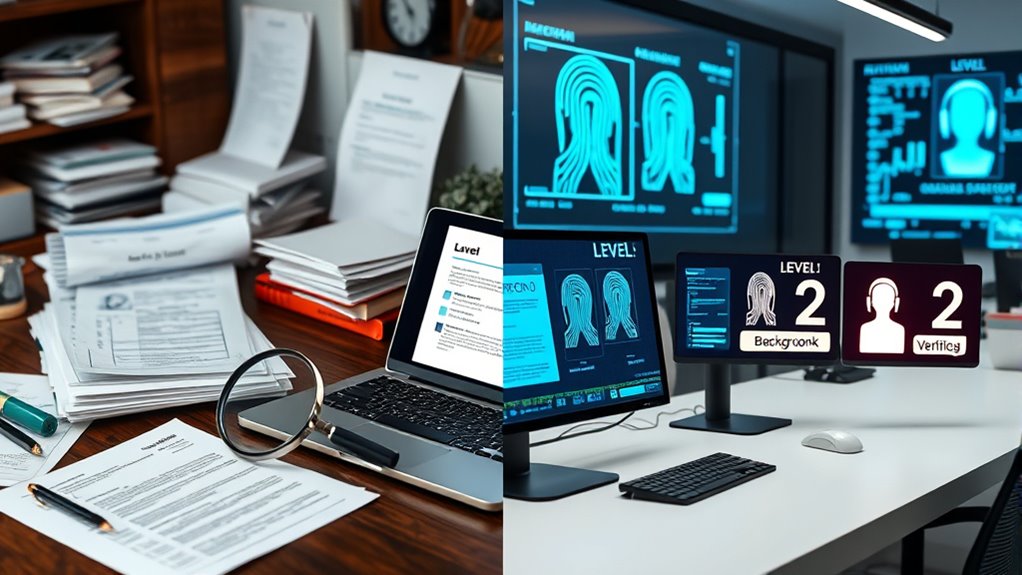
Regulatory compliance shapes how organizations conduct Level 1 and Level 2 background checks, influencing both their legal obligations and hiring practices. For Level 1 checks, laws like the FCRA set basic requirements, including disclosure and consent, with few restrictions beyond standard practices. Level 2 checks, however, involve stricter regulations, especially when fingerprinting and federal records are involved. Certain industries, such as healthcare and education, must follow specific statutes that mandate background screening protocols and disqualify candidates based on criminal history. Failing to adhere to these laws can result in legal penalties, lawsuits, or loss of license. You need to ensure your screening processes align with applicable federal, state, and industry-specific regulations to avoid legal pitfalls and uphold fair employment standards.

Official FD-258 Applicant Fingerprint Cards | Pack of 50 | For FBI Background Checks, Employment, and Immigration | New 2025 version 10/31/2023
250 FD-258 cards, used by the Federal Bureau of Investigation (FBI), U.S. Citizenship and Immigration Services (USCIS), and…
As an affiliate, we earn on qualifying purchases.
As an affiliate, we earn on qualifying purchases.
Turnaround Times and Processing Efficiency
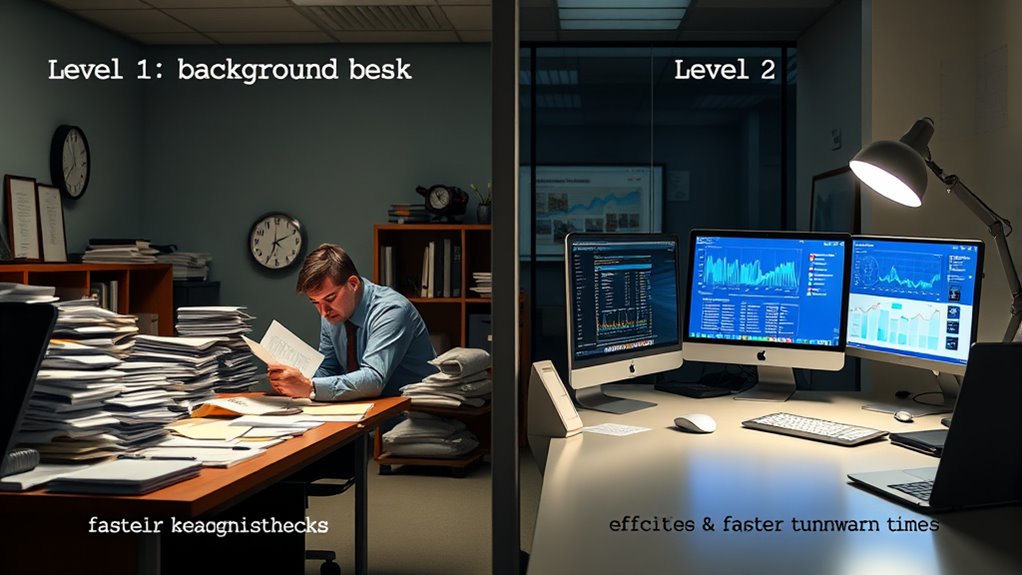
Level 1 background checks generally deliver results quickly, often within 1 to 3 business days, because their scope is limited to basic criminal records and identity verification. This fast turnaround makes them ideal for roles requiring quick hiring decisions or high-volume screenings. Their simplicity means less data retrieval and fewer steps, streamlining the process. In contrast, Level 2 checks take longer, typically 5 to 14 days, due to the need for fingerprinting, national database searches, and more all-encompassing record retrieval. The broader scope and more detailed searches increase processing time but offer a deeper, more accurate picture of an applicant’s history. Processing efficiency is enhanced through the streamlined procedures of Level 1 checks, although they may not capture as comprehensive a background as Level 2 checks. Active listening and empathy are crucial skills to interpret complex background information effectively, especially when assessing potential risks. Your choice depends on balancing urgency with the level of screening depth needed for the position. Additionally, understanding the scope of background checks helps employers make informed decisions aligned with their hiring timelines and compliance requirements.

The Manual to Online Public Records: The Researcher's Tool to Online Resources of Public Records and Public Information
Used Book in Good Condition
As an affiliate, we earn on qualifying purchases.
As an affiliate, we earn on qualifying purchases.
Types of Records and Disqualifying Offenses Covered
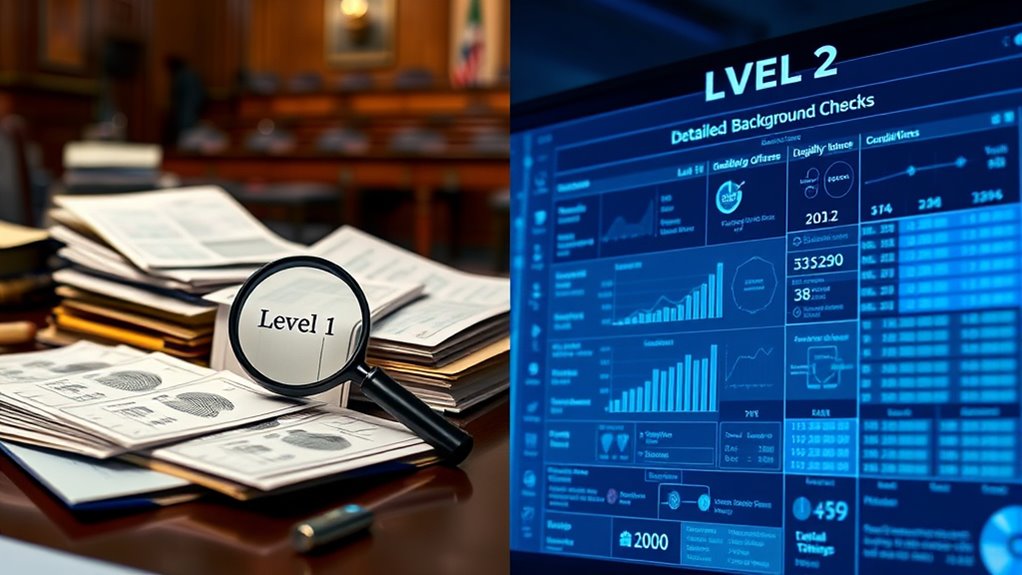
Are you aware of the different types of records and offenses that background checks can uncover? With Level 1 checks, you’ll typically see basic criminal records, local offenses, and sex offender registries. These focus mainly on misdemeanors and pending charges within the state. Level 2 checks go further, revealing a broader scope of disqualifying offenses, including felonies, federal crimes, and out-of-state violations. They also incorporate fingerprint-based searches, ensuring accuracy. Here’s what each level covers:
Level 1 checks reveal basic criminal records and local offenses; Level 2 provides a broader scope including federal and out-of-state crimes.
- Level 1: Local criminal records, sex offender registry, employment history, identity verification
- Level 2: Federal offenses, out-of-state crimes, fingerprint validation, professional license verification
- Level 1: Misdemeanors, probation violations, pending charges
- Level 2: Felonies, serious federal crimes, patterns of repeat offenses
- Advanced screening may include comprehensive record checks, which combine multiple data sources for thorough background assessments. Incorporating somatic therapy techniques can also assist individuals in addressing the emotional impact of background check revelations, especially when confronting disqualifying offenses. Additionally, understanding background check standards helps ensure compliance with legal and industry requirements.
Understanding these differences helps you choose the right level for your screening needs.
Industry Applications and Role Suitability

Different industries have distinct requirements when it comes to background screening, making the choice of check level vital for role suitability. For retail, hospitality, and general office roles, Level 1 checks often suffice, as these positions typically involve minimal access to sensitive information or vulnerable populations. However, sectors like healthcare, education, finance, childcare, and law enforcement demand Level 2 screening. These industries handle high-risk environments where protecting vulnerable individuals or sensitive data is critical. Level 2 checks provide thorough criminal history, including federal offenses, and often verify professional licenses and educational credentials. Choosing the appropriate level ensures compliance with legal regulations and aligns with the risks associated with each role, ultimately safeguarding your organization and the people it serves. Additionally, understanding background check levels helps organizations make informed decisions to mitigate potential liabilities and enhance overall safety. Incorporating comprehensive screening processes can further strengthen security measures across various sectors. Properly tailored background checks can also help organizations meet industry-specific compliance standards and foster trust with clients and stakeholders. Recognizing the importance of background screening accuracy can prevent costly oversights and ensure the right candidates are selected for sensitive positions. Moreover, selecting the correct level of background check is essential for maintaining regulatory compliance and avoiding legal penalties.
Frequently Asked Questions
Can Candidates Request a Copy of Their Background Check Report?
Yes, candidates can request a copy of their background check report. Under the Fair Credit Reporting Act (FCRA), you have the right to see the report before any adverse action is taken. Typically, the employer must provide a copy if they intend to disqualify you based on the findings. You can request a copy directly from the screening agency or employer, ensuring transparency and giving you a chance to review or dispute the information.
Are There Specific Industries That Only Allow Level 1 Checks?
You might be surprised, but yes—some industries only allow Level 1 checks. If you’re in retail, hospitality, or general office roles, these basic screenings often suffice because the risk is lower. However, if you’re working with vulnerable populations, finance, or law enforcement, higher-level checks are usually required. Always check industry regulations, because what’s allowed can vary, and certain roles demand more thorough vetting.
How Does a Company Decide Between Level 1 and Level 2 Screening?
You decide between Level 1 and Level 2 screening based on the role’s sensitivity and risk. If the position involves vulnerable populations, sensitive data, or high responsibility, opt for Level 2, which offers thorough, fingerprint-based checks. For low-risk roles with minimal access, Level 1 suffices. Consider legal requirements, industry standards, and your organization’s risk tolerance to make an informed choice.
What Are the Costs Associated With Each Level of Background Check?
Did you know that Level 1 checks typically cost between $20 and $50, while Level 2 checks can range from $50 to $100 or more? You’ll pay less for basic screenings focused on criminal history and identity verification. If you need detailed, fingerprint-based searches, expect higher costs due to the additional processing and database access involved. Your choice impacts your budget, depending on the thoroughness required for the role.
Do Criminal Records Ever Get Automatically Expunged From Reports?
Criminal records don’t automatically get expunged from reports. You need to take specific legal steps to have records sealed or erased, which varies by jurisdiction. Once expunged, they generally won’t appear in background checks, but if records aren’t legally cleared, they remain accessible. It’s important to understand local laws and process requirements to guarantee records are properly expunged if you want them removed from reports.
Conclusion
Think of level 1 and level 2 background checks as different maps for your journey. Level 1 is like a quick glance at the city skyline, giving you a broad view. Level 2 dives deep into alleyways and hidden corners, revealing details others miss. Choosing the right check is like picking the perfect map—ensure it matches your destination. By understanding these differences, you navigate hiring safely, avoiding pitfalls and steering toward success with confidence.