

Ban-the-Box laws stop employers from asking about criminal history early in the hiring process, giving applicants a fairer shot. These laws originated in Hawaii and expanded nationwide, with variations across states and cities. To stay compliant, you should delay background checks until later stages, focus only on relevant convictions, and update your application forms. Managing these rules can be complex, but understanding the differences and best practices will help you create fair, inclusive hiring policies. If you continue, you’ll gain key insights to guarantee compliance.
Key Takeaways
- Ban-the-Box laws prohibit asking about criminal history on initial job applications and early interview stages.
- These laws vary by jurisdiction, affecting timing, scope, and types of records considered, requiring tailored compliance strategies.
- Employers must delay background checks until after an initial interview or conditional offer, focusing only on relevant convictions.
- Non-compliance penalties include fines and legal sanctions; regular policy updates and staff training are essential.
- Technology tools can assist in tracking compliance, ensuring fair screening practices, and staying current with evolving regulations.

CheckBuilderPro – Windows & Mac Check Printing Software
Use Windows PC (version 10 or newer) or Mac (version 10.9 or newer, including Sequoia)
As an affiliate, we earn on qualifying purchases.
As an affiliate, we earn on qualifying purchases.
The Origins and Evolution of Ban-the-Box Laws

The origins of ban-the-box laws date back to Hawaii in 1998, marking the beginning of efforts to remove criminal history questions from initial job applications. You should know that this law aimed to give applicants a fair chance by focusing on qualifications first. Over time, the movement gained momentum, especially after the 2008 economic downturn and President Obama’s 2015 federal directive. Now, more than 37 states and numerous cities have adopted these laws, with some extending protections to private employers. High-profile companies like Starbucks and Walmart voluntarily implemented similar policies early on. The federal Fair Chance Act of 2019 further standardized delayed background checks for federal jobs, emphasizing a nationwide shift toward fairer hiring practices. Additionally, compliance requirements have become a key focus for employers to ensure adherence to evolving regulations, especially as state and local laws continue to develop and expand protections for affected individuals. Employers are also increasingly training HR staff on fair hiring practices to better understand these legal changes. Furthermore, understanding employment law compliance is essential for organizations to avoid legal penalties and foster inclusive workplaces.

Screen Roller Tool – Rolling Tool for Installing Door & Window Screens & Repair – Spline Roller with Wood Handle & Steel Bearing Wheel – Professional Rolling Tool – Double Ended Hand Spline Roller
Versatile screen installation tool: Our screen repair rolling tool is a must-have for installing a wide range of…
As an affiliate, we earn on qualifying purchases.
As an affiliate, we earn on qualifying purchases.
Core Legal Principles and Employer Responsibilities

Employers must abide by specific legal principles to guarantee fair and compliant hiring practices under ban-the-box laws. First, you cannot ask about criminal history on initial applications or during early interviews. Second, background checks should only occur after evaluating qualifications and typically after an initial interview or conditional offer. Third, you must consider only convictions relevant to the job and refrain from using arrests or charges without convictions. Fourth, you’re responsible for understanding and adhering to jurisdiction-specific timelines and scope restrictions. Failing to comply can lead to fines and legal penalties. Additionally, understanding the definition and significance of tableware can be useful for companies in the hospitality industry to ensure proper standards in employee training. Ensuring your hiring process respects these principles helps promote fairness, reduces discrimination, and aligns with legal requirements. Staying informed and updating policies regularly is essential for ongoing compliance. Incorporating employment law compliance best practices can further strengthen your hiring protocols and mitigate legal risks. Being aware of cookie types and user privacy can also help HR teams understand the importance of transparency in your company policies. Moreover, familiarizing yourself with background check procedures can help ensure thorough and lawful screening practices, including document verification to confirm candidate credentials.

Effective Employee HR Training Compliance Program: 4-in-1 Human Resource Courses (The Business Growth Blueprint Series: How to Sell More, Scale Your Team, and Lead Like a Pro)
As an affiliate, we earn on qualifying purchases.
As an affiliate, we earn on qualifying purchases.
Implementing Ban-the-Box: Practical Steps for Employers

Implementing ban-the-box requires you to take clear, deliberate steps to align your hiring process with legal requirements and best practices. Start by removing criminal history questions from initial job applications, focusing instead on qualifications and skills. Revise your screening procedures to delay background checks until after an initial interview or conditional offer. Train your HR team on legal obligations and fair screening standards to prevent bias. Establish consistent policies across all departments to ensure compliance and fairness. Document your process clearly, and communicate your approach transparently to applicants. Regularly review your hiring practices to stay updated on local and federal laws. Incorporating comprehensive preparedness strategies can help your organization better handle unforeseen challenges during hiring or operations. Additionally, staying informed about changing regulations ensures ongoing compliance and minimizes legal risks. Understanding regional legal resources can help tailor your hiring practices to local requirements and enhance fairness. Ensuring that your organization adheres to existing safety standards promotes a safer and more equitable hiring environment. Being aware of cybersecurity vulnerabilities during the hiring process can help protect sensitive applicant data from potential breaches. By taking these steps, you create a fairer, compliant process that balances safety with equal opportunity.
criminal background check delay tools
As an affiliate, we earn on qualifying purchases.
As an affiliate, we earn on qualifying purchases.
Variations in Legislation Across Jurisdictions
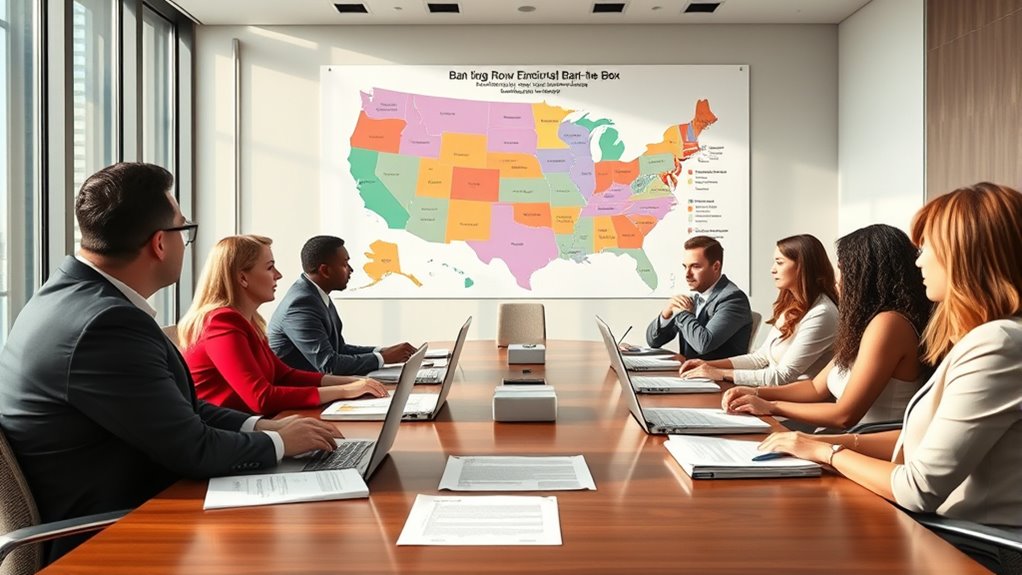
Legislation governing ban-the-box policies varies widely across jurisdictions, reflecting different priorities and legal frameworks. You’ll notice key differences such as:
- The scope of coverage, with some laws applying only to public employers and others extending to private companies above certain employee thresholds. In some areas, these laws also specify covered entities that must comply, which can include non-profit organizations and government contractors.
- The timing of when criminal history can be inquired about—some laws delay questions until after the initial interview or conditional offer.
- The types of criminal records considered, with some jurisdictions excluding arrests or charges that didn’t result in convictions. Additionally, disclosure requirements can differ significantly, impacting how employers handle criminal background checks.
- Penalties for non-compliance, which can range from fines to legal sanctions, depending on local regulations.
- Implementing compliance monitoring is essential to ensure that hiring practices stay aligned with evolving legal requirements and reduce the risk of violations. Furthermore, understanding legislative variations can help organizations adapt their policies to meet different jurisdictional standards effectively. Staying informed about ongoing legislative changes is crucial for maintaining compliance and avoiding penalties.
Challenges and Considerations in Compliance
You need to navigate complex jurisdictional variances that can make compliance challenging. Updating your hiring procedures to meet different legal requirements isn’t straightforward and requires careful attention. Managing legal risks involves understanding these differences and implementing policies that protect your organization from potential penalties. Additionally, staying informed about personal growth initiatives can help foster a more inclusive and compliant workplace environment. Recognizing the importance of vegetable juices can also promote employee wellness programs that support healthier lifestyles and enhance overall organizational well-being.
Navigating Jurisdictional Variances
Managing the patchwork of jurisdictional variances in ban-the-box laws can be complex, as employers must stay compliant across different states and localities with varying rules. To navigate this landscape effectively:
- Identify the specific laws applicable to each location where you operate, including state, city, and federal regulations.
- Track differences in timing for criminal history inquiries, such as whether background checks are permitted during initial applications or only after a conditional offer.
- Understand which employers are covered, considering size thresholds and sector-specific mandates.
- Stay updated on any amendments or new legislation, as laws frequently evolve to reflect local priorities and legal standards.
This proactive approach helps prevent violations and ensures your hiring practices remain compliant across jurisdictions.
Updating Hiring Procedures
Updating hiring procedures to comply with ban-the-box laws presents several practical challenges. You’ll need to revise application forms to remove questions about criminal history early in the process, which can require redesigning existing templates. Training your HR team is essential so they understand when and how to conduct background checks, ensuring they don’t ask about criminal records prematurely. Delaying background inquiries means adjusting your interview and screening processes to evaluate qualifications first. You must also develop fair screening standards that align with legal requirements and local policies. Balancing thorough candidate assessments with compliance can be complex, especially across multiple jurisdictions with differing laws. Ensuring consistency and avoiding unintentional violations requires careful planning, clear documentation, and ongoing staff education.
Managing Legal Risks
Guiding the legal landscape of ban-the-box laws requires careful attention to compliance risks that can arise from inconsistent application or misunderstanding of jurisdictional requirements. You need to stay vigilant to avoid costly penalties and legal challenges. Consider these key factors:
- Keep abreast of local, state, and federal regulations, as they often differ in scope and timing.
- Regularly review and update hiring policies and job applications to ensure they exclude criminal history questions early in the process.
- Train hiring managers and HR staff on lawful screening procedures and permissible inquiries.
- Document all steps taken to comply, including when background checks are conducted and how candidate information is handled.
Ignoring these considerations can lead to fines, reputation damage, or lawsuits, so proactive risk management is essential.
Impact on Hiring Practices and Workforce Diversity

By removing early criminal history questions, you can access a broader pool of qualified candidates who might otherwise be overlooked. This approach also supports your organization’s diversity initiatives by creating a fairer hiring process. Ultimately, these changes can lead to a more inclusive workforce that values skills and potential over past records.
Broader Candidate Pools
Implementing ban-the-box policies can substantially expand the pool of qualified candidates, giving you access to a more diverse range of applicants. By removing criminal history questions early in the process, you open opportunities for individuals with varied backgrounds who might otherwise be overlooked. This leads to several benefits:
- Increased access for candidates with records, promoting fairness.
- Broader talent pools, enabling more all-encompassing candidate evaluations.
- Reduced reliance on biased assumptions about criminal history.
- Enhanced diversity, reflecting broader community representation.
As a result, you can tap into a wider array of skills and experiences, improving your hiring quality. This approach not only fosters inclusivity but also strengthens your organization’s reputation as a fair and progressive employer.
Enhanced Diversity Initiatives
Removing early criminal history questions broadens your candidate pool, which naturally enhances diversity within your workforce. By focusing on skills and qualifications instead of criminal records, you open doors for individuals from varied backgrounds who might otherwise be overlooked. This approach promotes inclusion of marginalized groups, fostering a more representative and culturally rich environment. It also signals that your organization values fairness and equal opportunity, encouraging applicants to be confident in applying. As a result, you gain access to a wider range of talents and perspectives that can drive innovation and better decision-making. Implementing these initiatives helps break down barriers faced by underrepresented communities, creating a more equitable hiring process that benefits both your organization and the broader community.
Fairer Hiring Processes
Fairer hiring processes are reshaping how organizations evaluate candidates by focusing on skills and qualifications rather than criminal history. This shift promotes equal opportunities and reduces bias. To implement this effectively, you should consider:
- Removing criminal history questions from initial applications to prevent premature judgments.
- Delaying background checks until after appraising candidate qualifications and conducting interviews.
- Ensuring compliance with local laws that restrict consideration of arrests or convictions not resulting in convictions.
- Updating hiring policies to incorporate fair screening standards that prioritize relevant skills and experience.
Future Trends and Policy Developments

As awareness of the benefits of ban-the-box policies grows, future trends are likely to focus on expanding and refining these laws to promote fair hiring practices across more sectors and jurisdictions. Expect policymakers to push for nationwide standards that reduce disparities and ensure consistency across states. There’s also a chance we’ll see more emphasis on training employers to implement fair screening procedures and eliminate bias. Additionally, policies may incorporate new measures like incentivizing employers to adopt fair chance hiring or expanding protections to cover more types of criminal records. Technology will play a bigger role in compliance, with tools to help employers track and adhere to legal requirements. Overall, the trend will be toward making fair hiring practices the norm, not the exception.
Frequently Asked Questions
How Do Ban-The-Box Laws Differ Between States and Localities?
You’ll find ban-the-box laws differ across states and localities in timing, scope, and employer coverage. Some states restrict criminal history questions only in public sector jobs, while others extend protections to private employers. Local laws may add more restrictions, like prohibiting arrests without convictions or requiring fair screening standards. These variations mean you need to verify specific regulations in each jurisdiction to ensure compliance and understand your obligations.
Are There Specific Industries Exempt From Ban-The-Box Regulations?
Certain industries are exempt from ban-the-box regulations, depending on local laws. For example, some sectors like healthcare, security, and childcare often have stricter background check requirements due to safety concerns. You might find exemptions in laws that prioritize public safety, allowing employers to inquire about criminal history early in the hiring process. It’s essential to review specific jurisdiction rules to understand which industries or roles are exempt in your area.
What Penalties Exist for Non-Compliance With Ban-The-Box Laws?
If you don’t comply with ban-the-box laws, you could face penalties like fines, which vary by jurisdiction. For example, Philadelphia imposes fines up to $2,000 per violation. Additionally, you might encounter legal actions, reputational damage, or increased scrutiny from regulators. Non-compliance can also lead to lawsuits or administrative complaints, so it’s essential to follow the specific requirements in your area to avoid these consequences.
How Do Employers Balance Fair Hiring With Safety Concerns?
You need to balance fair hiring and safety because about 77 million Americans have arrest or conviction records that could impact employment. To do this, you delay criminal background checks until after evaluating qualifications, reducing bias. You also implement targeted screening for specific roles, ensuring safety without unfairly penalizing applicants. This approach helps you hire qualified candidates while maintaining a secure workplace, fostering diversity without compromising safety standards.
Can Employers Still Conduct Background Checks After the Initial Application?
Yes, you can still conduct background checks after the initial application, but you must wait until later in the hiring process. Typically, this means after an initial interview or when making a conditional job offer. You’re not allowed to ask about criminal history on the application itself. Once the candidate progresses, you can perform background checks, but always follow the legal timing and scope requirements specific to your jurisdiction.
Conclusion
Staying compliant with ban-the-box laws means understanding the laws, embracing fair hiring practices, and promoting diversity. It’s about removing barriers, opening opportunities, and fostering inclusivity. It’s about respecting legal obligations, supporting fair employment, and creating equitable workplaces. By staying informed, adapting your policies, and committing to fairness, you can navigate challenges and build a stronger, more diverse workforce. Together, you can turn legal compliance into a catalyst for positive change.