

Ignoring an arrest warrant can lead to serious consequences, like increased fines, longer jail sentences, and being labeled a fugitive. Authorities can arrest you unexpectedly during routine stops, and your warrants stay active until you resolve them, risking long-term legal trouble. Your driver’s license might be suspended, and background checks will flag the warrant, affecting jobs or housing. Staying aware of what happens next can help you protect yourself and avoid harsher penalties.
Key Takeaways
- Ignoring an arrest warrant can lead to increased fines, longer jail sentences, and additional charges such as contempt or resisting arrest.
- Warrants remain active indefinitely, increasing the risk of arrest during routine activities or travels.
- Failing to address warrants may result in being labeled a fugitive, which can trigger broader law enforcement searches and detention.
- Unresolved warrants can negatively impact background checks, employment prospects, housing opportunities, and driving privileges.
- Promptly resolving warrants through legal channels can prevent escalation, reduce penalties, and avoid further legal complications.

Legal Guide for Police: Constitutional Issues
As an affiliate, we earn on qualifying purchases.
As an affiliate, we earn on qualifying purchases.
Immediate Legal Action and Arrest Procedures

Once law enforcement locates you with an outstanding arrest warrant, they can detain you at any time—whether during a routine traffic stop, at your home, or in public. They won’t need a new warrant to arrest you; the existing one authorizes immediate detention. When they find you, officers will approach and inform you of the warrant, then take you into custody. You’ll be transported to a jail or detention center where you’ll go through booking, including fingerprinting, photographing, and recording your personal details. Ignoring the warrant can lead to more severe charges or penalties. Law enforcement’s authority to arrest doesn’t depend on your awareness or cooperation. The moment they locate you, the legal process continues, and your freedom is at risk. Having an understanding of local laws can influence how the situation unfolds and your options for legal defense. Additionally, understanding arrest procedures can help you better navigate the situation and know your rights during detention. Being aware of business-related legal procedures can also provide guidance on how to respond appropriately in a legal situation. Recognizing the importance of proper legal representation can significantly impact the outcome of your case.

POLICE POWERS, ARRESTS & YOUR LEGAL RIGHTS
As an affiliate, we earn on qualifying purchases.
As an affiliate, we earn on qualifying purchases.
Detention and Booking Process Following Warrant Execution

When law enforcement executes a warrant and detains you, the booking process begins immediately. You’ll be taken to a police station or detention center where officers record your personal information, take fingerprints, and photograph you. During booking, they’ll also review the warrant details and ask for your personal details, such as name, date of birth, and address. You might be searched for weapons or contraband, and your belongings could be confiscated and stored temporarily. The process can take anywhere from a few minutes to several hours, depending on the facility’s workload. Additionally, the location of detention can influence the speed and procedures of processing your arrest. Once booked, you’re held in custody until you’re brought before a judge or bail is posted. This process ensures your identity is verified and records are updated for legal proceedings. Understanding the detention and booking process can help prepare you for what to expect if you’re ever in this situation. Being aware of the legal procedures involved can also assist in navigating the subsequent steps after arrest. Familiarity with support resources available during this process can also be beneficial.
warrant resolution legal kit
As an affiliate, we earn on qualifying purchases.
As an affiliate, we earn on qualifying purchases.
Penalties and Additional Charges for Ignoring Warrants

Ignoring an arrest warrant can lead to harsher legal penalties and increased fines. If you’re considered a fugitive, authorities may escalate the case, resulting in more severe charges. Additional charges, like contempt of court or resisting arrest, can also be imposed, making your situation more complex. It is important to understand the legal consequences of neglecting a warrant to avoid further complications. Additionally, Waterpark amenities at hotels can sometimes be used as evidence in legal proceedings, which underscores the importance of addressing warrants promptly. Recognizing the differences between personality types, such as the 16PF traits, can also influence how individuals respond to legal stressors and navigate the justice system. Being aware of the security zone info can help you understand the potential areas affected by legal actions, including how security protocols are enforced in various jurisdictions. Consulting with a qualified attorney can help you better understand your rights and options when dealing with warrants and legal issues.
Increased Legal Penalties
Failing to address an arrest warrant can lead to substantially increased legal penalties. When you ignore a warrant, authorities may add charges such as contempt of court or failure to appear, which can escalate your case. Courts often impose higher fines or longer jail sentences if you’re found in contempt or considered a fugitive. Additionally, an outstanding warrant can trigger arrest during routine activities, leading to immediate detention and further legal complications. If you’re apprehended, you might face a more severe initial sentence because courts view ignoring warrants as disrespect for the legal process. In some cases, your bail may be increased, or additional penalties are imposed for failing to comply. Ignoring the warrant only worsens your legal situation, making resolution more difficult and costly. Recognizing the importance of warrant enforcement procedures can also prepare you for potential outcomes. Additionally, understanding legal procedures can help you better navigate the legal consequences, and being aware of warrant enforcement procedures can also prepare you for potential outcomes. Recognizing the importance of supermarket hours and their variations can also prevent unexpected delays that might complicate legal matters.
Fugitives and Warrant Escalation
Leaving an arrest warrant unresolved can substantially escalate your legal risks. When law enforcement finds you, they won’t hesitate to arrest you on the spot, and you’ll face immediate detention. If you’re caught during routine stops or at airports, authorities can quickly label you a fugitive, which leads to harsher penalties. Ignoring warrants also increases the likelihood of additional charges, such as failure to appear or contempt of court. These escalations can result in longer jail time, higher fines, and a more complicated legal process. Being a fugitive may also trigger searches for you across jurisdictions, making it even harder to resolve your case later. Ultimately, ignoring a warrant puts you at risk of severe penalties and prolonged legal trouble, especially if law enforcement pursues warrant escalation or additional charges. Recognizing the importance of addressing warrants promptly can prevent legal complications from spiraling out of control. Addressing warrants promptly can also help you avoid additional criminal charges that may arise from prolonged neglect, especially considering the potential for emotional intelligence to influence how you navigate legal issues.
Additional Charges Imposed
When law enforcement issues an arrest warrant and it goes unresolved, you can face more than just the initial charges—additional penalties and charges often follow. Ignoring a warrant can lead to charges like contempt of court or being labeled a fugitive, which worsen your legal situation. You may also face increased fines, longer jail sentences, or higher bail amounts. The table below highlights common consequences:
| Charge Type | Penalty | Effect on Case |
|---|---|---|
| Contempt of Court | Fines, jail time | Adds to legal penalties |
| Fugitive Status | Extended detention | Complicates resolution |
| Additional Charges | Increased fines or charges | Lengthens legal process |
Ignoring warrants not only escalates your penalties but also makes resolving your case more difficult and costly.

The Complete Simplified Florida Law Enforcement Handbook 2025 – 2026: Essential Rules, Procedures, and Real-World Guidance for Officers, Recruits, and Legal Professionals in Florida
As an affiliate, we earn on qualifying purchases.
As an affiliate, we earn on qualifying purchases.
Impact on Driving Privileges and Background Checks

Ignoring an arrest warrant can lead to your driver’s license being suspended or revoked, making it difficult to legally drive. When background checks are conducted, outstanding warrants often appear and can prevent you from securing employment, housing, or professional licenses. Failing to address the warrant now can cause long-term issues that follow you well beyond the initial arrest.
License Suspension Risks
A warrant that remains unresolved can lead to the suspension of your driver’s license, affecting your ability to legally operate a vehicle. When authorities discover the warrant, they may notify the DMV to suspend your license until you resolve the issue. This suspension prevents you from driving legally and can lead to fines or penalties if you’re caught on the road. Additionally, many background checks flag outstanding warrants, making it difficult to get or renew licenses, employment, or insurance. Some jurisdictions automatically suspend licenses upon warrant issuance, and reinstating your driving privileges usually requires clearing the warrant first. Ignoring the warrant prolongs the suspension, risking further legal complications and increased penalties. Addressing the warrant promptly helps restore your driving rights and reduces legal risks.
Background Check Flags
Outstanding warrants often appear on background checks, which are routinely used by employers, landlords, and licensing agencies. When a warrant shows up, it can impact your chances of getting a job, housing, or licenses. You might face:
- Denial of employment or housing applications due to unresolved legal issues
- Suspension or delay of professional or driver’s licenses
- Increased scrutiny or restrictions during security clearances or government checks
These flags can lead to immediate consequences, like detention during routine stops, and long-term effects, such as damage to your reputation. Ignoring warrants doesn’t make them disappear; they remain in the system and can be flagged during background screening. Addressing the warrant promptly helps minimize these risks and clears your record for future opportunities.
Long-Term Risks and the Persistence of Warrants

Warrants can stay active indefinitely, meaning they don’t expire or disappear over time. Even if years pass, the risk of arrest remains if you’re encountered by law enforcement. Whether during routine traffic stops, security checks, or other encounters, officers can arrest you on an outstanding warrant. Both criminal and bench warrants stay in the system until resolved, so neglecting them only prolongs the problem. An unresolved warrant can lead to being labeled a fugitive, which increases penalties and complicates future legal processes. Additionally, warrants can affect international travel, as they may be flagged during passport or customs checks. Ignoring a warrant doesn’t make it go away; it continues to pose a long-term threat to your freedom and legal standing.
How Outstanding Warrants Affect Employment and Housing

Unresolved warrants can substantially impact your chances of securing employment and housing. When background checks are performed, outstanding warrants often show up, raising red flags for employers and landlords. This can lead to immediate disqualification or increased scrutiny.
- Employers may view a warrant as a serious risk, affecting your chances of getting hired.
- Landlords might reject your application due to concerns about legal issues or potential eviction.
- Professional licenses or security clearances can be revoked if a warrant appears during a background check.
Ignoring warrants signals a lack of responsibility, making it harder to rebuild trust with potential employers and property managers. Addressing warrants promptly is essential to avoid long-term barriers in your employment and housing opportunities.
The Role of Bench Warrants and Their Specific Consequences

Bench warrants give law enforcement the authority to arrest you for missing court dates or unpaid fines. Once issued, they can lead to immediate detention, even if you’re unaware of the warrant. Understanding the arrest process and your options for resolution is essential to avoid lasting legal consequences.
Arrest Authority and Process
When court orders require your appearance or compliance, law enforcement has the authority to arrest you without additional warrants through a bench warrant. This warrant allows officers to take you into custody immediately, often without prior notice. Once arrested, you’ll be transported to jail for booking, which includes fingerprinting and photographing. Ignoring a bench warrant can lead to serious consequences, such as:
- Being detained during routine police stops or at airports
- Facing additional charges or increased penalties
- Being labeled a fugitive, which complicates legal resolution
Law enforcement can act quickly once the warrant is active, and you don’t need a new warrant for arrest. The process emphasizes the importance of addressing warrants promptly to avoid unexpected detention and further legal complications.
Resolution Options and Outcomes
Resolving a warrant promptly can prevent many of the negative consequences associated with unresolved legal issues. To do this, you can contact the court directly, pay any outstanding fines, or voluntarily surrender yourself for arrest. If you’re detained, you’ll be brought before a judge, who may set bail or dismiss the warrant if appropriate. Negotiating a plea deal or challenging the validity of the warrant can also be options. Successfully resolving the warrant restores your legal standing, allows you to reinstate licenses, and clears background checks. Ignoring the warrant, however, risks arrest during routine stops, increased penalties, or being labeled a fugitive. Prompt action minimizes these risks, helping you avoid long-term legal complications and more serious consequences.
International Travel Restrictions Due to Unresolved Warrants
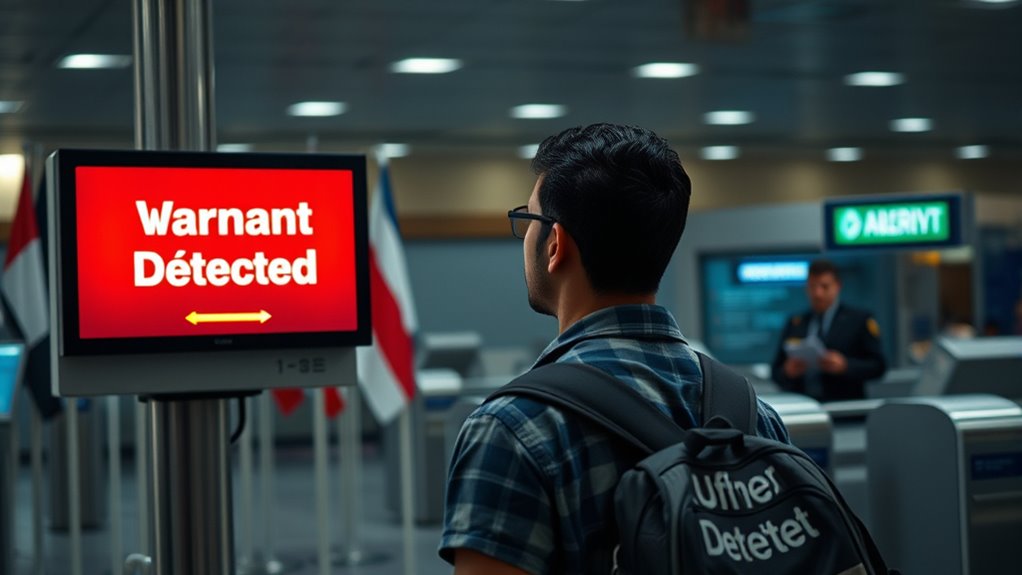
Unresolved warrants can substantially restrict your ability to travel internationally. When you try to fly abroad, border and customs officials often check for outstanding warrants, which can lead to immediate detention or denied entry. You might face:
- Detention at airports during security checks or immigration processing.
- Your passport being flagged or revoked, blocking future international travel.
- Additional scrutiny or questions that delay or prevent departure.
These restrictions occur because unresolved warrants are linked to law enforcement databases accessed during international crossings. Even if your warrant isn’t criminal, authorities can still prevent your exit to ensure court compliance. Ignoring warrants not only risks arrest but also complicates travel plans, potentially leading to detention until the warrant is resolved. Always address warrants promptly to avoid travel disruptions.
Court Outcomes and Legal Proceedings After Warrant Execution

Once a warrant is executed and you are taken into custody, the legal process begins to determine your case’s outcome. You’ll be brought before a judge quickly—often within 24 to 48 hours—for arraignment. During this hearing, charges are read, and bail may be set; if you can’t post bail, you’ll remain in custody. Your case could be dismissed if the warrant was issued in error or if evidence is lacking. Otherwise, you might negotiate a plea deal to reduce penalties. If no agreement is reached, your case proceeds to trial, where a conviction could lead to fines, probation, or jail time. The severity of penalties often increases if you ignored the warrant or were labeled a fugitive.
Strategies for Resolving and Clearing Outstanding Warrants

Clearing an outstanding warrant requires taking proactive steps to address the issue before law enforcement makes an arrest. The first move is to contact the court or law enforcement agency to verify the warrant’s details. You can then:
- Surrender voluntarily at the designated police station or court to avoid arrest.
- Arrange for legal representation to guide you through the process and negotiate bail or plea deals.
- Pay any fines or missed fees directly to the court to resolve the underlying issues.
Taking these steps promptly can prevent further legal complications, reduce potential penalties, and improve your chances of a smoother resolution. Acting quickly demonstrates responsibility and can help you regain control over your legal situation.
Frequently Asked Questions
Can a Warrant Be Challenged or Dismissed Before Arrest?
Yes, you can challenge or dismiss a warrant before arrest by filing a motion with the court, arguing that it’s invalid or lacks probable cause. You might also request a hearing to contest the warrant’s issuance. Consulting a lawyer helps guarantee your challenge is properly prepared and timely. Keep in mind, until it’s dismissed, the warrant remains active, and law enforcement can still arrest you at any moment.
What Are the Steps to Voluntarily Surrender for a Warrant?
You step into the courtroom’s spotlight, ready to face your warrant head-on. First, contact the court or law enforcement agency to arrange a surrender date. Gather your paperwork and be prepared to pay any fines or fees. On the day, go willingly, answer questions truthfully, and follow the judge’s instructions. Surrendering voluntarily shows responsibility, potentially easing your legal journey and helping you regain control of your future.
How Does Ignoring a Warrant Affect Future Legal Rights?
Ignoring a warrant can severely impact your future legal rights. It may lead to increased penalties, additional charges, and being labeled a fugitive, which complicates legal matters. Your background check could show the warrant, affecting employment, housing, and licensing opportunities. Also, the warrant stays active indefinitely, increasing the risk of arrest during routine stops or travel checks. Resolving it promptly helps protect your rights and avoid long-term legal complications.
Are There Differences in Consequences Between Criminal and Bench Warrants?
You face serious consequences with both warrants, but they differ markedly. Criminal warrants lead to arrest, detention, and possible criminal charges, risking jail time and hefty fines. Bench warrants, issued for court or fine violations, can also result in arrest but are generally less severe, often resolved by court appearance or paying fines. Ignoring either can escalate problems, turning a minor issue into a legal nightmare that follows you everywhere.
Can Unresolved Warrants Impact Passport Renewal or International Travel?
Unresolved warrants can definitely impact your passport renewal and international travel. When you apply for a new passport or renew, authorities often check for active warrants. If there’s an outstanding warrant, especially a criminal one, it can cause your application to be delayed or denied. Additionally, during border checks, law enforcement may flag your passport, leading to detention or arrest, making international travel risky until you clear the warrant.
Conclusion
Ignoring an arrest warrant might seem like avoiding trouble, but it only deepens your risks—facing arrest, penalties, and court consequences. While you might think you’re avoiding immediate trouble, long-term issues like damaged reputation and travel restrictions persist. The choice is clear: confront the warrant now, clear your name, and regain control. Because sometimes, avoiding trouble today only means facing bigger problems tomorrow. Don’t wait—take action before it’s too late.