If you have a bench warrant for unpaid fines, it’s essential to act quickly. Start by checking with the court to confirm details and avoid arrest. You can often resolve the warrant through payments, installment plans, or requesting reductions based on hardship. Working with a legal professional can help you navigate options and prevent long-term issues. Stay proactive—understanding your choices now can make a big difference if further complications arise.
Key Takeaways
- Verify the warrant by checking online court records or contacting the courthouse directly.
- Act promptly to address the warrant, avoiding arrest and additional penalties.
- Explore payment options like installment plans, waivers, or community service with the court.
- Gather documentation of financial hardship and consider working with an attorney for negotiation.
- Resolve the warrant quickly to prevent arrest, license suspension, and long-term legal or financial issues.
Understanding the Basis of Bench Warrants for Unpaid Fines

Understanding the basis of bench warrants for unpaid fines begins with knowing that these warrants are issued when you fail to comply with court orders to pay fines or appear in court. Courts issue these warrants as a way to enforce compliance, not to accuse you of a new crime. They often result from missed court dates, ignored orders to settle fines, or violations of probation. Judges consider your individual circumstances, such as financial hardship or reasons for non-payment, before issuing a warrant. Additionally, court enforcement procedures play a role in how these warrants are executed and managed. Bench warrants are common in cases involving traffic violations or minor infractions. Essentially, they serve as a tool to compel your appearance or payment, helping courts maintain authority and ensure compliance with legal obligations. Ignoring them can lead to serious consequences. Understanding the legal process can help you better navigate your options and potential defenses.
Identifying the Court That Issued Your Warrant
To effectively address a bench warrant, you first need to identify which court issued it. Start by checking online court records or contacting the clerk’s office of your local courthouse. Many jurisdictions provide searchable databases where you can enter your name or case number to find details about the warrant, including the issuing court’s name. If online options aren’t available, call the court directly and provide your personal information to get clarification. It’s essential to confirm the exact court that issued the warrant because procedures and contact details vary by location. Knowing the issuing court helps you understand your legal standing and prepares you to take appropriate steps toward resolution. Always act promptly once you identify the court involved. Understanding court procedures can help you better navigate the process once you have identified the issuing court. Additionally, being aware of specialized court processes related to warrants can facilitate a smoother resolution. Familiarizing yourself with judicial authority can also aid in understanding the scope of the court’s powers and your options for addressing the warrant. Recognizing the role of the court in issuing warrants can provide further clarity on the legal implications involved. Taking the time to understand court jurisdiction can also be crucial in ensuring you follow the correct legal procedures.
Exploring Your Options for Resolution and Payment
You have several options to resolve your unpaid fines and address the warrant. Negotiating payment plans or agreements with the court can make settling your debt easier, especially if you’re facing financial hardship. Legal assistance can help you explore these options, negotiate better terms, and guarantee your rights are protected throughout the process. Understanding the filial responsibility laws in your state can also inform your decisions regarding financial obligations related to unpaid fines. Being aware of the divorce process overview and legal considerations can help you navigate complex situations effectively, ensuring your rights and responsibilities are clear. Additionally, being aware of risk assessment strategies for merchant services can provide a framework for evaluating your options and potential consequences. Keeping informed about cybersecurity threats is also essential if you handle sensitive information during the resolution process to prevent data breaches. Recognizing the importance of emotional support during stressful legal situations can help you maintain clarity and resilience throughout your case.
Payment Options and Agreements
When facing a bench warrant for unpaid fines, exploring your payment options is a crucial step toward resolving the issue. You should contact the court to learn about available payment plans, which may include paying in full or making installment payments. Courts often consider your financial situation and might offer reduced fines, waivers, or extensions if you demonstrate hardship. Some jurisdictions allow community service as an alternative to monetary payments. Be prepared to provide proof of income, financial hardship, or previous payments. Negotiating with the court or prosecutor can sometimes lead to more manageable arrangements. Fully understanding your options and acting promptly can help you avoid arrest and further penalties, making the resolution process smoother and less stressful. Additionally, being aware of supermarket hours and other local business schedules can help you plan your visits to court or related appointments more efficiently. Knowing your financial hardship status and how it influences court decisions can also be beneficial during negotiations. Staying informed about legal information related to your case can empower you to make better decisions throughout the process. Furthermore, understanding the availability of legal assistance in your area can be instrumental if you need help navigating the court system.
Legal Assistance and Court Negotiations
Finding your way through court negotiations and seeking legal assistance can considerably improve your chances of resolving a bench warrant for unpaid fines. With the right support, you can explore options to reduce penalties or arrange payment plans. Here are key steps to contemplate:
- Contact the court directly to understand specific requirements and available options.
- Hire an attorney to help negotiate with prosecutors or request court leniency.
- Gather proof of payments or demonstrate financial hardship to present in court.
- Proactively surrender to authorities or request a warrant recall to minimize penalties.
Legal help ensures you navigate the process effectively and avoid unnecessary arrests or penalties. Negotiating with the court and presenting your case can lead to better resolution and peace of mind.
The Legal Process for Addressing a Bench Warrant

Addressing a bench warrant involves understanding the legal steps required to resolve the issue and avoid further penalties. First, confirm the warrant’s reason by contacting the court or checking online records. Next, consider consulting an attorney, especially if the warrant is complicated or you’ve missed multiple court dates. You’ll need to gather relevant documents, such as proof of payment or evidence of financial hardship. In some cases, you can voluntarily surrender to authorities or request the court to recall or quash the warrant. Attending a court hearing, explaining your situation, and demonstrating compliance can help reduce penalties. Additionally, understanding court procedures can help ensure you navigate the process effectively. It’s also important to understand legal requirements that may vary depending on the jurisdiction. Being aware of your rights and responsibilities during this process can further aid in resolving the issue efficiently. Familiarizing yourself with warrant procedures and possible defenses can also be beneficial. After resolving the warrant, make sure to follow all court orders to prevent additional legal issues and keep your record clear.
Potential Consequences of Ignoring the Warrant

Ignoring a bench warrant can lead to immediate and serious legal consequences. First, you risk being arrested, which can happen unexpectedly and disrupt your life. Second, your bail might increase if you’re taken into custody, making your release more costly. Third, failing to address the warrant can result in the suspension of your driver’s license, affecting your ability to commute. Fourth, unresolved warrants may lead to additional charges like contempt of court or failure to appear, worsening your legal situation. These consequences not only cause financial strain but also create long-term problems, such as difficulty finding employment or housing. Ignoring the warrant only compounds the issue, making resolution more difficult over time. It’s essential to understand the legal process involved in resolving warrants to effectively address the situation before these penalties escalate.
Strategies for Demonstrating Financial Hardship
Demonstrating financial hardship is essential when seeking relief from unpaid fines or a bench warrant. You should gather documentation that proves your inability to pay, such as pay stubs, bank statements, or proof of government assistance. Be prepared to explain your financial situation clearly and honestly to the court. Writing a hardship letter can also help, detailing your income, expenses, and any unexpected circumstances that hinder payment. Presenting evidence of job loss, medical bills, or other financial setbacks shows your genuine need for leniency. Remember, courts appreciate transparency and documentation. If possible, work with an attorney who can help craft your case and communicate effectively with the court about your hardship. Your goal is to demonstrate that non-payment isn’t willful but due to genuine financial difficulty.
Steps to Effectively Clear or Address a Warrant
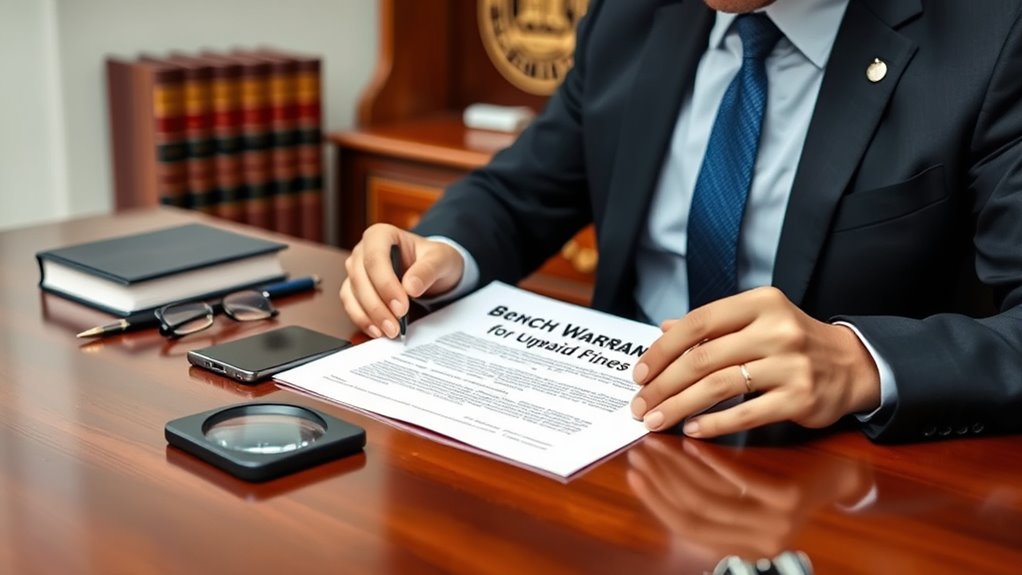
The first step is verifying the specific details of your warrant by contacting the court or checking online records. Once you have accurate information, seek legal assistance to understand your options and develop a clear plan. Acting promptly and with proper guidance can help you resolve the warrant efficiently and avoid further penalties.
Verify Warrant Details Carefully
To effectively address a warrant for unpaid fines, you first need to verify the details accurately. This ensures you understand exactly what you’re dealing with. Here are four key steps:
- Contact the court that issued the warrant to confirm its existence and get specific details.
- Check online court records or official websites for any notices or updates related to your case.
- Review the warrant for information like case number, issuing judge, and reason for the warrant.
- Gather any relevant documentation, such as payment receipts or hardship proof, to support your case.
Verifying these details prevents misunderstandings and helps you plan your next move with clarity. Accurate information is essential before taking further action.
Seek Legal Assistance Promptly
Seeking legal assistance promptly is essential because an experienced attorney can help you understand your options, negotiate with the court, and navigate complex legal procedures. They can review your case, identify hardship claims, and potentially reduce penalties or arrange payment plans. Acting quickly also prevents escalation, such as arrest or additional fines. To clarify your situation, consider this table:
| Step | Action | Benefit |
|---|---|---|
| Verify | Contact court or check online records | Know the exact reason for the warrant |
| Consult | Hire an attorney | Get expert guidance and representation |
| Prepare | Gather payment receipts or hardship proofs | Strengthen your case in court |
Prompt legal help ensures you address the warrant effectively, minimizing legal and financial consequences.
Working With Legal Professionals to Resolve the Issue

Working with legal professionals can substantially improve your chances of resolving a bench warrant for unpaid fines. They understand court procedures and can guide you through the process efficiently. Here are four ways they help:
- Assessing your situation to determine the best course of action based on your financial circumstances and compliance history.
- Negotiating with the court or prosecutors to potentially reduce fines, extend payment deadlines, or secure alternative options like community service.
- Preparing necessary documentation such as proof of hardship, payments, or compliance efforts to present a strong case.
- Representing you in court, which can help clarify your intentions, negotiate on your behalf, and minimize penalties.
Partnering with a legal professional makes the resolution process clearer and more manageable.
Broader Social and Economic Impacts of Unpaid Fines and Warrants

Unpaid fines and the resulting bench warrants have far-reaching social and economic consequences that extend beyond individual legal issues. When warrants are issued, law enforcement resources become strained, diverting attention from serious crimes to minor infractions. This disproportionately affects low-income communities, trapping residents in a cycle of poverty and legal trouble. Arrests due to warrants lead to lost income, employment instability, and housing disruptions, impacting families and communities. These consequences often worsen economic hardship, making it harder for individuals to recover and comply in the future. Courts and policymakers are increasingly recognizing the need for reform, advocating for systems that consider ability to pay and offer alternatives to arrest. Addressing unpaid fines effectively can help prevent unnecessary incarceration and promote social and economic stability.
Frequently Asked Questions
Can a Bench Warrant Be Issued for Unpaid Fines From Years Ago?
Yes, a bench warrant can be issued for unpaid fines from years ago, especially if you failed to appear in court or pay as ordered. Courts often have statutes of limitations, but these vary by jurisdiction. Ignoring overdue fines and court notices can lead to warrants even after many years. To resolve this, contact the court, verify the warrant, and consider legal advice to address the issue promptly.
Is It Possible to Prevent a Bench Warrant From Being Issued?
Yes, you can prevent a bench warrant from being issued by addressing the issue proactively. Contact the court before the scheduled court date to explain your situation and discuss payment options, such as installments or hardship considerations. If you’re already in trouble, hiring an attorney to negotiate or request a court hearing can help you resolve the matter before a warrant is issued. Acting early is key to avoiding arrest.
How Long Does It Typically Take to Resolve a Bench Warrant?
It can take anywhere from a few days to several weeks to resolve a bench warrant, depending on your actions. If you act quickly, contact the court, and address the issue—perhaps by paying fines or negotiating a payment plan—you could see the warrant quashed faster. Delaying only increases complications like arrest, fines, or license suspension. Don’t wait—take decisive steps now to clear it efficiently.
Do All Courts Automatically Issue Warrants for Unpaid Fines?
Not all courts automatically issue warrants for unpaid fines. It depends on the jurisdiction, the court’s policies, and your compliance history. Some courts may send notices or warnings before issuing a warrant, while others act quickly if you miss payments or court appearances. To avoid surprises, stay informed by checking court records or contacting the court directly about your case. Taking proactive steps can prevent warrant issuance or help resolve it promptly.
What Are the Risks of Surrendering Voluntarily Versus Waiting to Be Arrested?
Think of surrendering voluntarily as choosing to steer your boat into calmer waters before a storm hits. It’s less stressful, allowing you to control the timing and possibly negotiate terms. Waiting for arrest is like being caught in rough seas with no control, risking harsher penalties and public exposure. Voluntary surrender can reduce legal complications, while waiting may increase costs and danger, making preemptive action your safest route.
Conclusion
Facing a bench warrant for unpaid fines can feel overwhelming, but remember, many have been in your shoes and found solutions. Sometimes, a missed deadline or financial hardship is all it takes to trigger this situation. By staying proactive and seeking legal advice, you might just discover that resolving the warrant is closer than you think. After all, life has a way of surprising us when we least expect it—and so do chances for a fresh start.