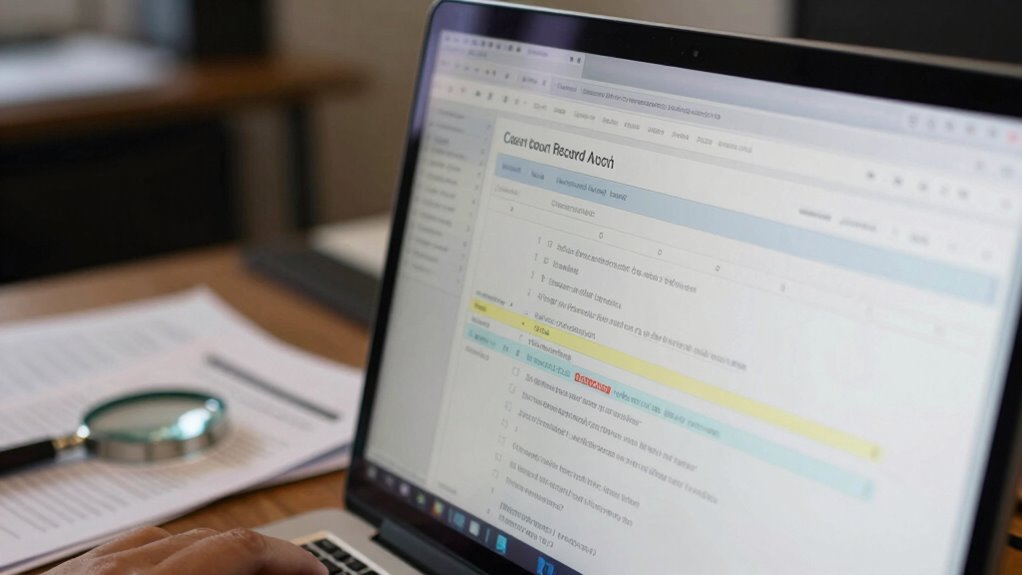

Court record search results can be misleading because the information is often incomplete, outdated, or inaccurate due to privacy restrictions, data entry errors, and jurisdictional differences. You might see redacted details or miss cases from other jurisdictions. Errors can also happen during data entry or handling, leading to misclassified or outdated cases. Keep in mind, these records are only starting points. Understanding their limitations helps you avoid false conclusions; explore further to learn more.
Play games included with Prime
Start a Prime free trial and play with Amazon Luna on your devices.
As an affiliate, we earn on qualifying purchases.
Key Takeaways
- Redactions and incomplete data can hide critical case details, leading to misinterpretation.
- Data entry errors or outdated information can cause inaccuracies in search results.
- Variations in jurisdiction and delays in record updates may omit relevant cases or provide outdated statuses.
- Technical issues and human mistakes can compromise the integrity and reliability of records.
- Records should be cross-verified with official sources, as they are not always fully comprehensive or current.
Ever wondered how to access detailed legal information about a case? When you delve into court record search results, it’s tempting to assume that what you find paints a complete and accurate picture. However, this isn’t always the case. Court records can be misleading, and understanding why requires a closer look at how these records are maintained and shared. One key factor is legal privacy. Not every detail of a case is publicly disclosed; sensitive information, such as personal identifiers or confidential documents, may be redacted or withheld entirely. This selective sharing can create gaps in the record, leading you to draw conclusions based on incomplete data. Conversely, some information might be publicly accessible but outdated or inaccurately documented, which can give a skewed view of the case’s details or outcomes.
Data accuracy is another critical concern. Court records are often compiled from multiple sources, and errors can creep into the data at any stage—be it during entry, transmission, or storage. Mistakes like misspelled names, incorrect dates, or misclassified case types aren’t uncommon, and these inaccuracies can considerably distort your understanding of the case. For example, a case might be listed as dismissed when it’s still pending, or a criminal record may have outdated charges that were later dropped. Relying solely on these records without cross-referencing other sources increases the risk of misinterpretation. Additionally, data verification is essential to ensure the information you’re viewing is reliable and current. This is especially important because data integrity can be compromised by technical issues or human error, impacting the completeness of the records. A comprehensive approach involves checking multiple sources and understanding the limitations inherent in court records. Moreover, understanding the jurisdictional limitations is crucial, as records from one court system might not include cases that are relevant but handled elsewhere. It’s also important to recognize that the timeliness of records can vary, and delays in updating case information can lead to outdated perceptions of a case’s status or outcome.
Furthermore, court record search results are often subject to jurisdictional limitations. Records from one court system might not include cases that are relevant but handled elsewhere. This can lead you to underestimate the scope or prevalence of certain legal issues in a community or industry. Additionally, some records might be incomplete because of technical issues, delays, or omissions during the filing process. These gaps make it easy to misjudge the significance or outcome of a case.
Ultimately, while court record searches are valuable tools, they’re not infallible. Legal privacy considerations mean not every detail is available, and data inaccuracies can mislead. You should treat these records as starting points rather than definitive sources. Cross-check information with official court websites, legal professionals, or multiple records whenever possible. This approach helps you avoid the trap of being misled by flawed or incomplete data, ensuring your understanding of legal matters remains as accurate as possible.
As an affiliate, we earn on qualifying purchases.
Frequently Asked Questions
How Recent Are Court Record Updates Typically?
Court record updates typically happen weekly or monthly, but the record update frequency varies by jurisdiction. You might encounter data refresh delays, meaning recent cases or changes could take days or even weeks to appear. To guarantee accuracy, always verify the latest information directly with the court or official sources. Keep in mind, understanding these data refresh delays helps you interpret search results more effectively and avoid potential misunderstandings.
Can Court Records Be Sealed or Hidden From Public Searches?
Think of court records as open books in a library—some pages, like sealed records, are locked away, hiding information from public searches. Yes, court records can be sealed or hidden from public view, making certain cases and details inaccessible. Sealed records protect privacy, but this means some hidden information remains out of reach, so your search might not reveal the full story. Always verify if records are sealed before drawing conclusions.
Do All Jurisdictions Have Accessible Online Court Records?
Not all jurisdictions have accessible online court records. While many states offer public access to certain case information, others restrict or limit access to protect record confidentiality. You might find some records available online, but sensitive cases or sealed records are often kept private. Always check specific jurisdiction rules, as online access varies, and some courts may require in-person requests to view certain records.
Are There Differences in Record Accuracy Between Courts?
Think of court records like a patchwork quilt—some patches are pristine, others worn. Record accuracy varies by court, influenced by local data verification practices. You might find a court with meticulous record authenticity, while another’s data could be outdated or incomplete. This inconsistency means you should verify records across multiple sources to guarantee reliability. Always double-check information to avoid relying on potentially misleading or inaccurate court record search results.
How Do Court Record Errors Impact Legal Proceedings?
You might face issues in legal proceedings because record discrepancies can lead to incorrect assumptions or decisions. Court record errors can cause delays, misjudgments, or wrongful convictions. It’s essential to verify data carefully through data verification processes, as inaccuracies might be overlooked. Recognizing how record discrepancies influence your case helps you take proactive steps to guarantee the information used in court is accurate, reducing the risk of unfair outcomes.
legal record verification software
As an affiliate, we earn on qualifying purchases.
As an affiliate, we earn on qualifying purchases.
Conclusion
So, next time you delve into court record searches, remember they’re just a snapshot, not the full story. Don’t let misleading results shape your judgment or assumptions. Are you truly seeing the complete picture, or just a fragment? Always dig deeper and verify information before drawing conclusions. After all, relying solely on court records might leave you with a skewed perspective—are you prepared to uncover the truth beyond the surface?
As an affiliate, we earn on qualifying purchases.
As an affiliate, we earn on qualifying purchases.
Fall Picks
fall essentials
As an affiliate, we earn on qualifying purchases.