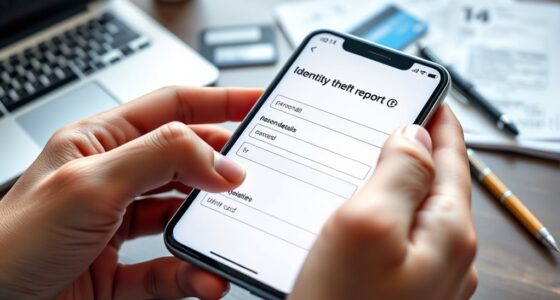

Account takeovers happen when cybercriminals exploit weak security, such as reused or weak passwords, and social tricks like phishing to gain access. Once they break in, they often use automated tools to quickly test stolen credentials across multiple sites, causing the spread to accelerate. If they succeed, they can access connected accounts, turning a single breach into a larger problem. Stay tuned to discover how these attacks rapidly multiply and how to protect yourself.

Get smart everyday buys delivered free with Prime
- Fast, free delivery on millions of items
- Prime Video, Amazon Music and more included
- Member-only deals all year
Key Takeaways
- Account takeovers often start with phishing scams or fake websites that steal login credentials from unsuspecting users.
- Reusing weak passwords across multiple accounts facilitates rapid access once credentials are compromised.
- Automated credential stuffing tools quickly test stolen login details across numerous sites, enabling fast account access.
- Interconnected online accounts allow attackers to cascade from one compromised account to others.
- The widespread availability of stolen data on dark web marketplaces accelerates the spread and scale of attacks.

Have you ever wondered how account takeovers happen so quickly and widely? It’s often because cybercriminals use a combination of tactics, with phishing scams and credential stuffing being the most common. Phishing scams tricks you into revealing your login details by pretending to be a trustworthy entity, often through fake emails or messages that look legitimate. Once you fall for it and enter your credentials on a fake website, the attacker gains access to your account almost instantly. These scams are crafted to exploit your trust and curiosity, making it easier for hackers to steal your information without raising suspicion.
Credential stuffing is another major method hackers use to take over accounts. They rely on automated tools that test stolen username and password combinations across multiple sites. If you reuse passwords or use weak ones, hackers can quickly gain access to your accounts. Once they succeed, they often use your account to spread malware, send spam, or commit fraud. The speed at which credential stuffing works is staggering because these tools can try thousands of combinations in just seconds. When hackers manage to log in, they often change your account details or set up new recovery options, locking you out and making it even harder to regain control. The widespread availability of stolen data from data breaches makes it easier for hackers to quickly identify and exploit vulnerable accounts.
These tactics spread rapidly because of the interconnected nature of online accounts. When a hacker takes over one account, they can use it as a stepping stone to access your other linked accounts—email, social media, banking, and more. This interconnectedness creates a domino effect, which accelerates the spread of account takeovers. Additionally, once a hacker gains access to an account, they often sell or share the login details on dark web marketplaces, fueling a cycle of ongoing attacks on other users. If your information is part of a data breach, hackers can easily test your credentials across multiple platforms, increasing the chances of a swift takeover. The interconnected nature of online accounts amplifies the speed and impact of these attacks, allowing hackers to move quickly from one account to another. The widespread availability of stolen data from data breaches further enables hackers to execute these attacks rapidly and on a large scale. This widespread availability of stolen information makes account takeovers not just a threat to individuals, but a systemic problem that spreads quickly across the digital landscape. That’s why staying vigilant, using strong, unique passwords, and enabling two-factor authentication are essential steps to protect yourself from these fast-moving threats. Additionally, the use of advanced security measures like biometric authentication can significantly reduce the risk of unauthorized access.
password manager for secure passwords
As an affiliate, we earn on qualifying purchases.
As an affiliate, we earn on qualifying purchases.
Frequently Asked Questions
How Can I Tell if My Account Has Been Compromised?
You can tell if your account’s been compromised by noticing unusual activity, like login attempts from unfamiliar locations or changes to your info. Check for password reuse, which makes accounts vulnerable, and be alert to social engineering tactics that trick you into revealing details. If you see suspicious emails, messages, or password resets you didn’t initiate, act quickly—change your passwords, enable two-factor authentication, and review your account activity.
What Are the Common Methods Hackers Use to Gain Access?
Hackers often use sneaky methods like phishing scams and credential stuffing to break into your accounts. They send fake emails that look real, tricking you into revealing your info—like a wolf in sheep’s clothing. Or, they automate login attempts with stolen passwords across many sites, hoping one matches. Staying vigilant, using strong, unique passwords, and enabling two-factor authentication can help you block these digital intruders.
How Quickly Can an Account Takeover Affect My Personal Data?
An account takeover can quickly expose your personal data within minutes or hours once hackers gain access. They often use social engineering tactics to trick you or exploit weak password complexity. If your passwords are simple or reused across sites, attackers can breach your account fast. That’s why it’s essential to use strong, unique passwords and stay vigilant against social engineering tricks to slow down or prevent unauthorized access.
Are Certain Industries More Vulnerable to Account Takeovers?
Yes, certain industries are more vulnerable to account takeovers due to industry trends and targeted attacks. Financial services, healthcare, and retail often attract hackers because they hold valuable data and money. These sectors face frequent targeted attacks that exploit weak security measures or phishing campaigns. You should stay alert and implement strong authentication methods to protect your accounts, especially in industries where the stakes are higher and risks greater.
What Steps Can I Take to Prevent Account Takeovers?
Think of your account as a treasure chest. To keep it safe, use strong password management, creating unique, complex passwords for each account. Enable multi-factor authentication, like an extra lock, so even if someone guesses your password, they can’t access your account. Regularly update your passwords and monitor activity. These steps fortify your defenses, making it much harder for hackers to take over your digital treasure chest.
multi-factor authentication device
As an affiliate, we earn on qualifying purchases.
As an affiliate, we earn on qualifying purchases.
Conclusion
Understanding how account takeovers spread fast helps you stay protected. Did you know that over 30% of breaches start with compromised credentials? This means a single weak password can open the floodgates for cybercriminals. By staying vigilant, using strong, unique passwords, and enabling two-factor authentication, you reduce your risk considerably. Don’t wait for an attack—take proactive steps now to safeguard your accounts and keep your personal info out of reach.
As an affiliate, we earn on qualifying purchases.
As an affiliate, we earn on qualifying purchases.
Fall Picks
fall essentials
As an affiliate, we earn on qualifying purchases.