

Criminal and civil court records serve different purposes and have distinct features. Criminal records document cases where the government prosecutes individuals for violations like theft or assault, with penalties such as fines or jail time, and are often more restricted in access. Civil records involve disputes between private parties over issues like contracts or property, usually resulting in monetary judgments. Understanding these differences helps clarify how each type of record impacts privacy and public access as you explore further.

Get smart everyday buys delivered free with Prime
- Fast, free delivery on millions of items
- Prime Video, Amazon Music and more included
- Member-only deals all year
Key Takeaways
- Criminal records document government-prosecuted cases involving violations of public laws, with penalties like jail or fines, while civil records involve private disputes over issues like contracts or property.
- Criminal cases require proof beyond a reasonable doubt, making criminal records highly reliable; civil cases depend on a preponderance of evidence, resulting in different record credibility.
- Criminal records are often private, may be sealed or expunged, and have access restrictions; civil records are generally more accessible and available online.
- Criminal proceedings follow formal court processes with arraignment and trial, focusing on punishment; civil proceedings are less formal, aiming to resolve private disputes.
- Accessing records typically involves different procedures; criminal records may require permissions, while civil records are usually open and easier to obtain.
Defining Criminal and Civil Court Records

Criminal and civil court records are official documents that detail the outcomes of legal cases, but they serve different purposes and originate from distinct types of proceedings. Criminal records come from cases where the government prosecutes someone for violating public laws, like assault or theft. These records include charges, convictions, and sentencing details. Civil records, on the other hand, stem from disputes between private parties over issues like contracts, property, or family law. They document lawsuits for damages, custody, or property rights. Civil cases typically involve private disputes rather than criminal conduct. Criminal cases focus on punishing unlawful behavior, often carrying jail or fines. Civil cases resolve disagreements through monetary damages or injunctions. Understanding these differences helps you recognize the origin and purpose behind each type of record. Legal distinctions are essential for interpreting the significance and implications of each record type, and knowing how they are accessed can aid in background checks or legal research.
The Purpose and Nature of Each Type of Record
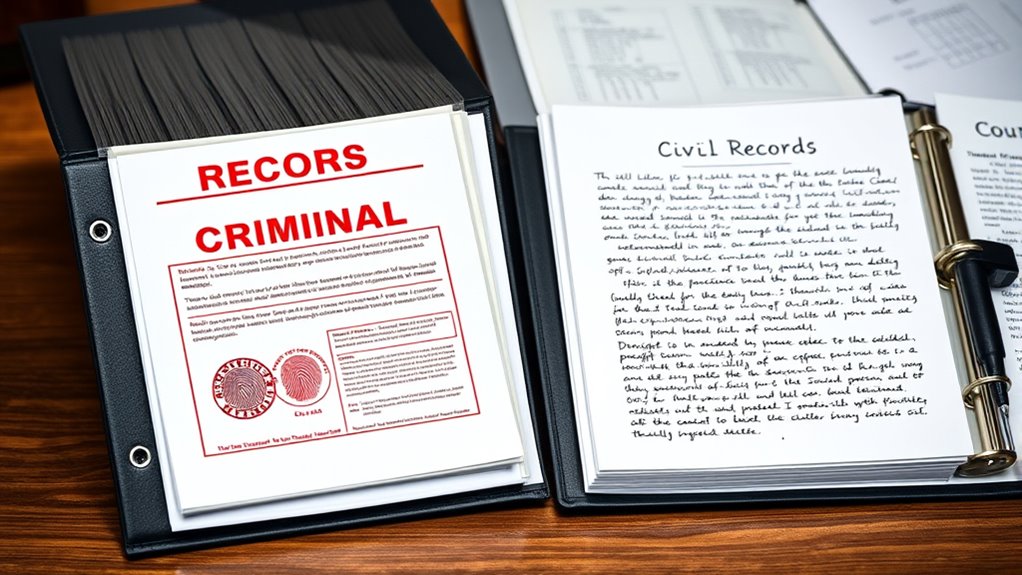
Understanding the purpose of criminal and civil records helps you see how each documents different types of legal issues. Criminal records focus on violations against public laws and impose penalties like jail time, while civil records track private disputes often resulting in monetary damages or orders. Recognizing their distinct roles clarifies how each record reflects the legal process and outcomes involved. Additionally, essential oils are used in various practices to support health and well-being, illustrating how natural remedies can complement understanding of legal and personal issues.
Case Types and Roles
Case types and roles reveal how each court record serves different purposes within the legal system. Criminal records document cases where the government prosecutes individuals or entities for violations of public laws, such as theft or assault. These records reflect cases focused on punishing conduct deemed harmful to society, often resulting in penalties like fines or imprisonment. The average ice cream consumption per person in the U.S. is about 23 pounds annually, highlighting the widespread nature of such records’ importance in society. Civil records, on the other hand, involve disputes between private parties over rights, property, or obligations, such as divorce or contract issues. They aim to resolve conflicts and restore legal rights through monetary damages or injunctions. The roles of these records differ: criminal records protect public interests and uphold the law, while civil records safeguard individual rights and resolve non-criminal disputes efficiently. Each type’s purpose aligns with its specific function within the justice system, and understanding court record types helps clarify their respective roles and significance.
Legal Standards and Proof
Legal standards and proof requirements shape the purpose and reliability of criminal and civil records. In criminal cases, the high standard of “beyond a reasonable doubt” ensures only guilty individuals are convicted, making these records highly reliable for serious offenses. Civil records rely on a “preponderance of the evidence,” meaning it’s more likely than not that a claim is true, which reflects their focus on resolving disputes rather than punishment. This lower threshold means civil records may be less definitive but are essential for settling private disagreements. Your understanding of these standards helps you interpret the records’ significance. Criminal records indicate a stronger proof of guilt, often with more weight, while civil records reflect the outcome of disputes where evidence is less stringent. Additionally, the types of evidence accepted in each process differ, affecting the credibility and use of the records in legal or personal contexts. The standards of proof directly influence how the evidence is evaluated and the overall reliability of the records. Recognizing the legal standards applied in each case helps in understanding the weight and implications of each record type. Moreover, the philosophical insights on existence and ethics can deepen your appreciation of the moral implications behind legal judgments and record-keeping practices. For example, understanding the concepts of justice can help clarify why different standards apply in criminal versus civil cases.
Outcomes and Penalties
The purpose and nature of criminal and civil records differ substantially because each serves a distinct role in the justice system. Criminal records document cases where the state seeks to punish individuals for public offenses, often resulting in penalties like jail time, fines, or probation. Civil records, however, reflect disputes between private parties, typically leading to monetary damages, injunctions, or property orders. These outcomes influence personal and financial situations rather than criminal status.
- Criminal records can lead to imprisonment, fines, or probation, impacting your liberty and reputation.
- Civil records may result in monetary judgments, custody arrangements, or property transfers.
- Access to these records varies, with criminal records often restricted to protect privacy, while civil records are generally more public.
Burden of Proof and Legal Standards
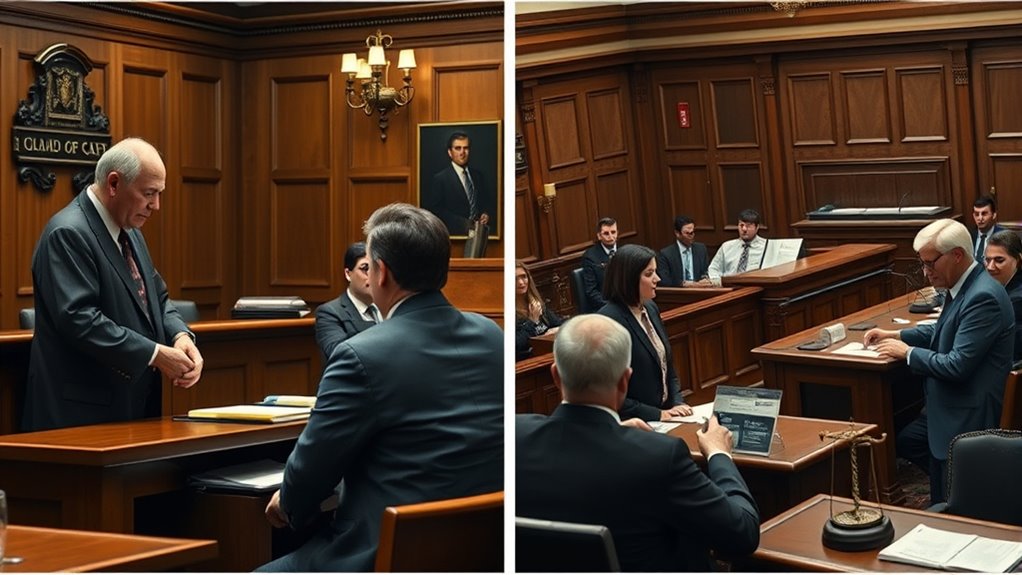
Understanding the burden of proof is essential because it determines how convincingly each side must demonstrate their claims in court. In criminal cases, the prosecution must prove guilt beyond a reasonable doubt, a high standard to guarantee fairness given possible severe penalties. Civil cases, however, rely on the preponderance of the evidence, meaning it’s more likely than not that a claim is true. This lower threshold makes it easier for plaintiffs to win civil suits. The difference impacts how evidence is presented and evaluated, shaping the trial process. Here’s a quick comparison:
| Aspect | Criminal Case Standard | Civil Case Standard | Purpose |
|---|---|---|---|
| Standard of proof | Beyond a reasonable doubt | Preponderance of the evidence | Establish guilt or liability |
| Jury unanimity | Often required | Not always required | Decision agreement |
| Penalties | Imprisonment, fines | Damages, injunctions | Consequences |
| Evidence burden | Heavy on prosecution | Balanced | Fair trial |
| Impact | Severe, lifelong | Usually monetary | Justice or compensation |
Additionally, criminal cases often involve specialized hardware and high-tech equipment to ensure accurate evidence collection and presentation. Recognizing the legal standards and their application helps clarify the different levels of proof required and their significance in each type of case. For example, the standard of proof in criminal cases is intentionally set higher to protect the accused’s rights and prevent wrongful convictions.
Understanding the evidence evaluation process is crucial for both sides to effectively present their case and uphold the integrity of the judicial system.
Types of Cases and Possible Penalties
Criminal cases involve charges like assault, robbery, or arson, where the government seeks to hold individuals or entities accountable for violations of public laws. You could face penalties like jail time, fines, or probation if convicted. Civil cases, by contrast, deal with disputes between private parties over rights or property, such as divorce, contracts, or personal injury. You won’t face jail in civil court, but you might have to pay damages or comply with court orders. Here are some key differences: criminal cases can result in imprisonment, fines, or community service. Civil cases often lead to monetary compensation or orders to do or stop certain actions. The severity of penalties depends on the case type and legal standards involved. Additionally, the severity of penalties can vary significantly based on jurisdiction and specific case details. It is also important to note that case severity may influence the legal strategies employed by parties involved. Understanding the differences in case types is essential for navigating the legal system effectively.
Accessibility and Public Availability of Records

You’ll find that civil court records are generally more accessible to the public because they involve private disputes that benefit from transparency. In contrast, criminal records often have privacy restrictions, which can limit public access, especially for sensitive cases. Online databases offer convenience, but the rules for viewing these records differ markedly between civil and criminal cases.
Privacy Restrictions Vary
Privacy restrictions on court records vary considerably between criminal and civil cases, affecting how easily you can access case information. Criminal records often have tighter restrictions to protect privacy and due to the sensitive nature of the crimes involved. Civil records are generally more accessible, reflecting a focus on transparency in private disputes. You might encounter cases that are sealed or expunged, making them unavailable to the public. Understanding these restrictions helps you know what information is accessible and what’s restricted. Attention to detail is essential for navigating the complexities of court record accessibility and ensuring accurate information retrieval.
Online Access Differences
Online access to court records varies markedly between criminal and civil cases, affecting how easily you can obtain case information. Civil records are generally more accessible online because they involve private disputes and public interests. Criminal records often have restrictions to protect privacy and sensitive information, especially if sealed or expunged. Access rules differ by jurisdiction, with some criminal cases partially or fully restricted. Many jurisdictions offer online databases, but civil records tend to be more open.
| Civil Records | Criminal Records |
|---|---|
| More publicly available | Often restricted or sealed |
| Usually accessible online | Access may require permissions |
| Focus on private disputes | Protect privacy due to severity |
Transparency Expectations
Transparency expectations for court records vary considerably between criminal and civil cases, primarily due to their differing purposes and societal interests. Civil records are generally more accessible because they involve private disputes and public accountability. Conversely, criminal records often have restrictions to protect privacy, especially for sensitive offenses or sealed cases. You might find that:
- Civil records are widely available online and through court offices, encouraging transparency.
- Criminal records may be restricted or sealed, limiting public access to protect privacy.
- Access rules differ by jurisdiction and case severity, affecting how easily you can obtain records.
Understanding these differences helps you know where to look and what to expect when researching case histories or verifying legal information. Recognizing the level of transparency can impact your ability to gather accurate and complete records.
Procedures and Roles in Court Processes
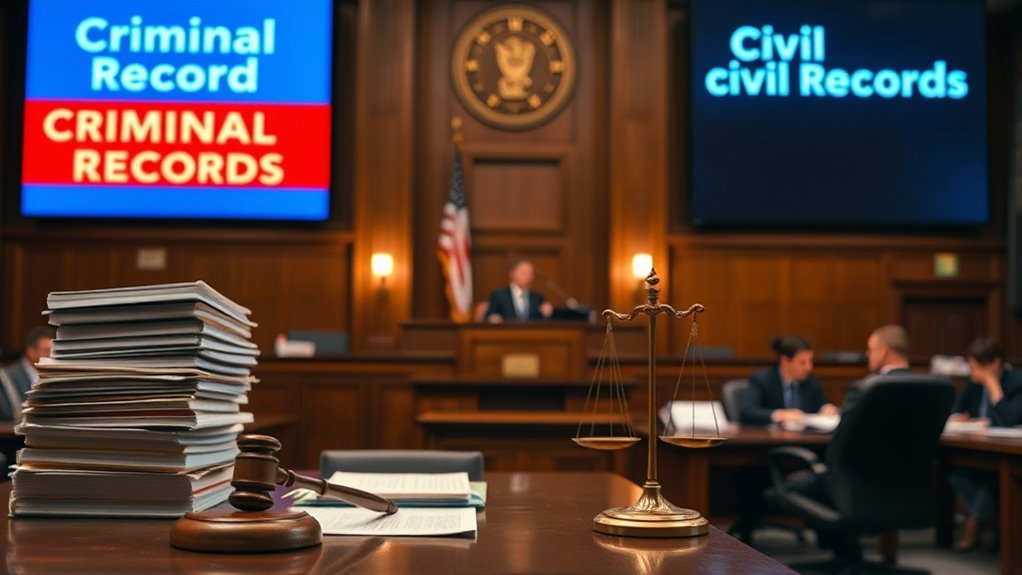
Understanding the procedures and roles in court processes is essential because they shape how cases are handled and decided. In criminal courts, the process begins with the filing of charges by the prosecution, followed by arraignment, evidence presentation, and a trial where guilt must be proven beyond a reasonable doubt. Judges oversee the proceedings, ensure rules are followed, and sentence defendants if found guilty. Civil courts handle disputes through a less formal process, where parties file complaints, exchange evidence, and argue their case. Judges act as neutral arbiters, issuing rulings based on a preponderance of evidence. In both systems, attorneys represent parties, and judges guarantee fairness. The procedures determine how each case moves forward and ultimately reaches a resolution, reflecting the distinct roles and protections in criminal and civil courts.
The Legal Consequences and Societal Impact
The legal consequences of criminal and civil records substantially influence your life and how society perceives you. Criminal records can lead to loss of employment opportunities, voting restrictions, and social stigma. Civil records, on the other hand, mainly affect your financial stability and personal relationships without the same social repercussions.
You should be aware that:
- Criminal convictions often stay on your record, impacting future job prospects.
- Civil judgments might result in wage garnishments or property liens.
- Background checks typically prioritize criminal history, affecting your reputation more broadly.
Understanding these differences helps you navigate legal situations and manage your personal and professional reputation effectively. Recognizing the societal impact encourages responsible behavior and awareness of record implications.
How to Access and Use These Records

Accessing criminal and civil court records typically involves visiting government websites, courthouse offices, or authorized online databases. Start by identifying the jurisdiction where the case was filed. Many courts provide online portals where you can search for records by case number, party name, or date. For records not available online, you may need to visit the courthouse in person, submitting a formal request or filling out a records request form. Be prepared to present identification and pay any applicable fees. Keep in mind that criminal records may have access restrictions, especially if sealed or expunged, while civil records are generally more accessible. Once you obtain the records, use them carefully, respecting privacy laws and the purpose for which you’re accessing them, such as background checks or legal research.
Frequently Asked Questions
Are Criminal and Civil Records Ever Combined or Shared Between Courts?
Yes, criminal and civil records can be combined or shared between courts, especially through integrated or interconnected databases. When you request a background check or court record, agencies often access multiple sources to provide a thorough view of your legal history. Sharing occurs to guarantee accuracy, streamline processes, and improve transparency. However, access restrictions may still apply, especially for sealed or expunged records, depending on jurisdiction and privacy laws.
How Long Do Criminal and Civil Records Typically Stay Accessible to the Public?
You might think your past is a secret, but both criminal and civil records usually stay accessible to the public indefinitely, unless sealed or expunged. Criminal records often have stricter restrictions, but civil records are generally more open, revealing your disputes or lawsuits. So, while you may wish for privacy, the truth is, your legal history can linger online or in archives much longer than you’d like.
Can Criminal Records Be Expunged or Sealed, and How Does That Differ From Civil Records?
Yes, criminal records can be expunged or sealed, meaning the records are hidden or destroyed so they don’t appear in background checks. This process usually involves filing a petition and meeting certain legal requirements. Civil records, however, typically aren’t sealed or expunged because they often involve private disputes that are meant to remain accessible for transparency. The key difference is that criminal records have more options for privacy after resolution.
Are There Differences in Record Access Based on Jurisdiction or State Laws?
Yes, record access varies by jurisdiction and state laws. You’ll find some states make criminal and civil records easily accessible online, while others restrict access to protect privacy, especially for sensitive cases. You might need to request records in person or pay fees, and rules differ whether you’re a private individual, employer, or attorney. Always check local laws to understand what’s public and what’s confidential in your area.
How Do Criminal and Civil Records Impact Employment or Background Checks?
Criminal and civil records can substantially shape your employment prospects. Criminal records may show serious offenses, potentially disqualifying you from certain jobs due to security concerns. Civil records, like lawsuits or disputes, might raise red flags about reliability or reputation. Employers often conduct background checks to assess risks, so understanding how both record types influence hiring decisions helps you prepare for potential impacts and navigate the nuances of job opportunities.
Conclusion
Understanding the difference between criminal and civil court records is like having a superpower—you’ll instantly know if someone’s a troublemaker or just involved in a legal spat. This knowledge can make or break your decisions, protect your interests, and save you from disaster. Don’t underestimate the power of these records—they’re practically the secret keys to uncovering the truth lurking behind every legal case! Stay informed, and you’ll always stay one step ahead.
Fall Picks
fall essentials
As an affiliate, we earn on qualifying purchases.